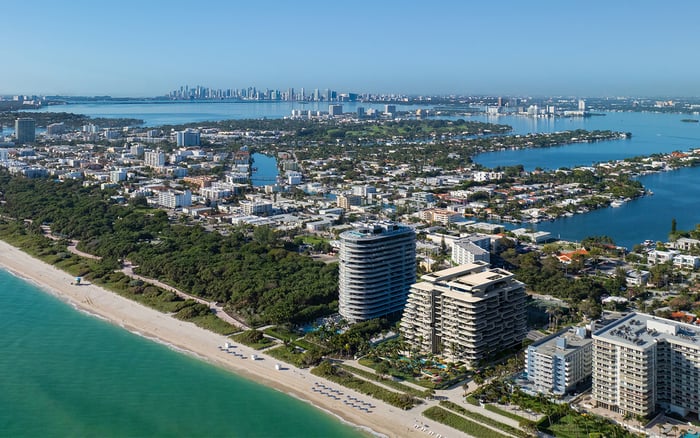
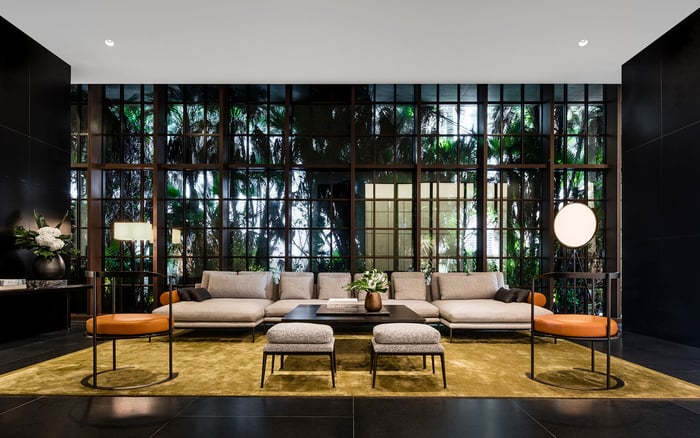
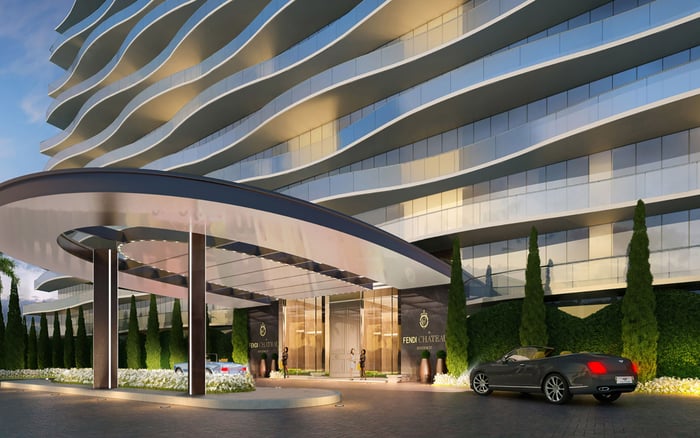
A buyer-focused comparison of Arte Surfside and Rivage Bal Harbour, contrasting minimalist oceanfront design with a curated Bal Harbour lifestyle statement.
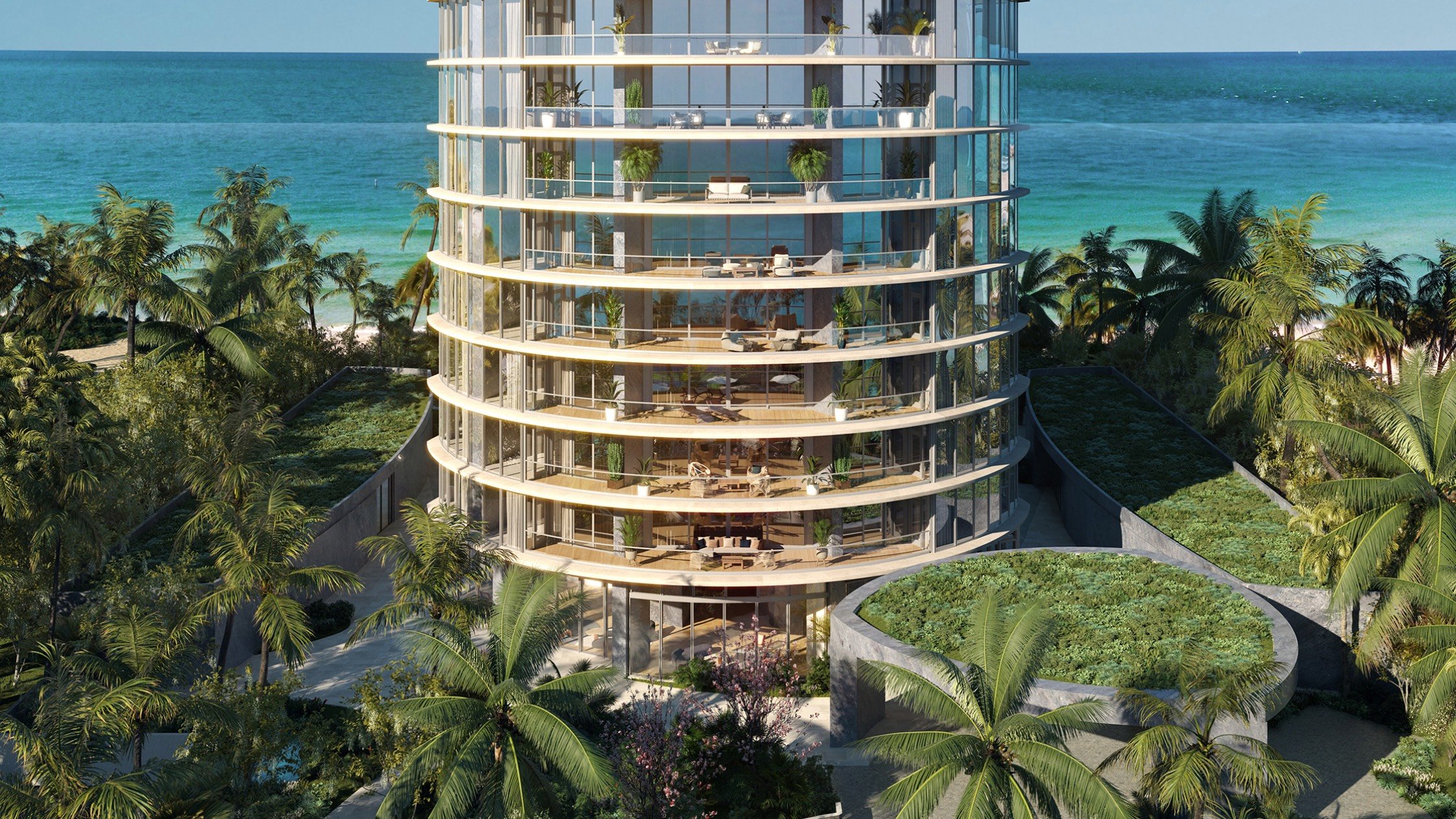
At the upper end of the Surfside and Bal Harbour market, the most meaningful decision is not simply square footage, views, or amenities. It is temperament. Arte Surfside speaks to the buyer who sees oceanfront ownership as an architectural experience: restrained, clear, private, and residential in its long-term rhythm. Rivage Bal Harbour speaks to the buyer who wants the prestige of Bal Harbour embedded in daily life, with a more curated, amenity-forward, lifestyle-led presentation.
Both belong in the same conversation because both occupy the rarefied coastal band where South Florida luxury becomes intensely personal. Yet they are not interchangeable. One is more design-purist, quiet, and independent in tone. The other is more place-driven, polished, and connected to the social and retail ecosystem that gives Bal Harbour its international reputation.
Search labels such as Bal-harbour, Oceanfront, Boutique, Arte Surfside, Rivage Bal Harbour, and Surfside capture the category. The deeper choice is emotional: do you want the building to recede into the horizon, or do you want the address to announce a very specific way of living?
Arte is best understood as an oceanfront residence for buyers who value design discipline. Its identity is not built around an overt hospitality operator or resort-brand halo. Its appeal is rooted instead in minimalist modern architecture, glass-forward composition, ocean views, clean lines, and a sense of visual calm.
That matters for a certain class of owner. In a market where many towers compete by layering services, labels, and increasingly theatrical amenity stories, Arte’s strength is its comparative quiet. The architecture frames the ocean rather than competing with it. The interiors and floor-plan narrative emphasize open layouts, flexible living space, integrated technology, and a residential cadence suited to owners who are not chasing a hotel-like environment.
This makes Arte especially compelling for privacy-focused buyers who intend to live with the property over time. The value proposition is not only that the building sits on the ocean. It is that the oceanfront setting is interpreted through design restraint. The likely buyer appreciates the difference between a residence that is merely expensive and one with a coherent point of view.
Within Surfside, Arte also sits within a broader design conversation that includes projects such as The Delmore Surfside and Fendi Château Residences Surfside, each appealing to a different expression of low-key coastal luxury. Arte’s lane is more distilled: fewer distractions, with greater emphasis on proportion, light, and privacy.
Rivage approaches luxury from a different angle. Its value proposition is tightly connected to Bal Harbour itself. This is not just a beachfront residential decision; it is a statement about proximity, curation, and participation in one of South Florida’s most established luxury ecosystems.
The project’s positioning is more resort-like and hospitality-influenced than Arte’s minimalist, design-purist frame. Its interiors and shared spaces are presented as designer-curated and amenity-forward, creating a more turnkey luxury feeling for owners who want the building to carry a sense of arrival. That does not require treating the property as a hotel-managed rental product. Rather, it suggests a residential experience with more emphasis on service, mood, and polished common spaces.
For many buyers, the Bal Harbour address is the point. The nearby luxury retail and dining environment reinforces the appeal, particularly for owners who want the convenience of a globally recognized shopping and lifestyle anchor close to home. In this context, Rivage becomes less about retreating from the world and more about occupying a highly composed version of it.
Rivage also sits in conversation with established Bal Harbour prestige, including Oceana Bal Harbour. The distinction is that Rivage’s buyer is likely drawn to a contemporary, curated interpretation of the address, where the lifestyle ecosystem is as important as the residence itself.
The clearest way to compare these two properties is through the role design plays in the ownership experience. At Arte, design is the thesis. The glass, openness, and minimalist vocabulary are intended to preserve visual clarity and create a private oceanfront environment. Amenities such as wellness, fitness, spa, and private club-style spaces support the residence, but they do not overwhelm the story.
At Rivage, design operates in tandem with address and lifestyle. The amenity-forward framing, designer-curated spaces, and Bal Harbour setting work together to create a more complete luxury stage. For buyers who travel often, entertain selectively, or want an effortless lock-and-leave coastal base, that kind of curation can be highly persuasive.
Neither approach is inherently superior. Arte is more appealing if the buyer wants a quieter architectural object on the ocean, with fewer overt signals of brand lifestyle. Rivage is more appealing if the buyer wants the residence to feel connected to the prestige and convenience of Bal Harbour from the moment they arrive.
Arte is likely the better fit for the owner who wants privacy, architectural pedigree, and a more residential atmosphere. This buyer may already understand South Florida’s luxury map and may not need the building to explain itself through a familiar brand or a dense lifestyle narrative. The attraction is understatement.
The Arte buyer may also be more sensitive to long-term livability than spectacle. Open layouts, clean lines, flexible space, and technology integration speak to daily use, not just presentation. The amenity package supports wellness and private-club comfort without making the building feel like a resort operation.
For this buyer, Surfside is not a compromise. It is part of the point. It offers oceanfront living with a more intimate tone than Miami Beach’s most public corridors and a different rhythm from Bal Harbour’s retail-centered prestige.
Rivage is likely the better fit for the buyer who values address, arrival, and the convenience of a curated luxury environment. This is the owner who wants Bal Harbour to be part of the residence’s identity, not merely a line on the contract.
The appeal is especially strong for buyers who want access to luxury retail, dining, and a polished coastal lifestyle without needing to construct that experience themselves. Rivage’s more hospitality-influenced posture can feel efficient and elegant, particularly for second-home owners or international buyers who prize turnkey comfort.
The tradeoff is philosophical. Buyers who prefer silence, austerity, and pure architectural independence may find Arte more aligned. Buyers who want the residence to participate in the Bal Harbour lifestyle ecosystem may find Rivage more satisfying.
Current inventory, sales velocity, condo fees, resale comparables, pricing, and rental-program details should be confirmed directly before any decision. These are not cosmetic details. They affect ownership cost, flexibility, and long-term strategy.
The more disciplined comparison begins with lifestyle, then moves to documents. Start with the question of identity: quiet oceanfront design purism or curated Bal Harbour statement. Then evaluate floor plans, exposure, amenity access, monthly carrying costs, house rules, rental permissions, and resale context. At this level, the best purchase is rarely the loudest one. It is the one whose operating reality matches the life the buyer actually intends to live.
Is Arte Surfside more design-focused than Rivage Bal Harbour? Yes. Arte is positioned around minimalist, glass-forward oceanfront architecture and a quieter residential identity.
Is Rivage Bal Harbour more lifestyle-oriented? Yes. Rivage places more emphasis on the Bal Harbour address, curated spaces, amenities, and proximity to luxury retail and dining.
Which property is better for privacy-focused owners? Arte appears better suited to buyers seeking a more private, architecture-forward oceanfront residence without an overt hospitality-brand layer.
Which property is better for a turnkey luxury lifestyle? Rivage appears better suited to buyers who want curated services, polished common spaces, and connection to the Bal Harbour lifestyle ecosystem.
Should buyers compare pricing from public summaries alone? No. Pricing, availability, fees, and rental terms should be confirmed with current offering materials and the sales team.
Is Rivage a hotel-managed rental product? That should not be assumed. Buyers should verify any rental or management structure directly before relying on it.
Does Arte have an amenity program? Yes. Its amenity narrative emphasizes resident-exclusive wellness, fitness, spa, and private club-style spaces.
Why does the Bal Harbour address matter? Bal Harbour carries a recognized luxury identity, reinforced by nearby high-end retail, dining, and a polished coastal environment.
Is Surfside a different buyer mood from Bal Harbour? Generally, yes. Surfside reads more intimate and residential, while Bal Harbour is more closely tied to prestige retail and lifestyle infrastructure.
What is the best way to shortlist comparable options for touring? Start with location fit, delivery status, and daily lifestyle priorities, then compare stacks and elevations to validate views and privacy.
For a tailored shortlist and next-step guidance, connect with MILLION.
If branded residences are on your mind — as a home or as an allocation — we would be glad to share what we are seeing, privately.
Begin a quiet conversation