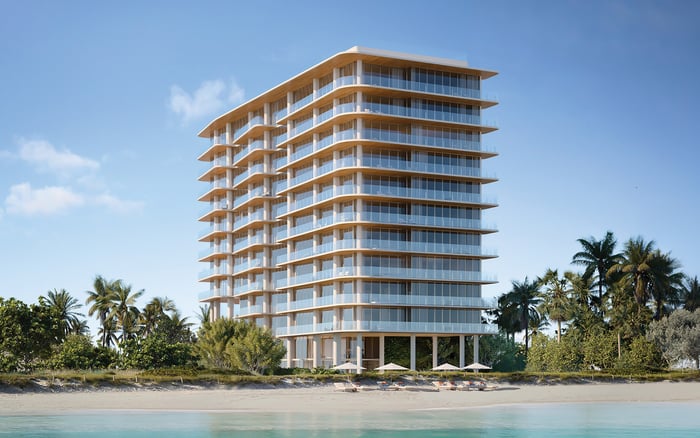
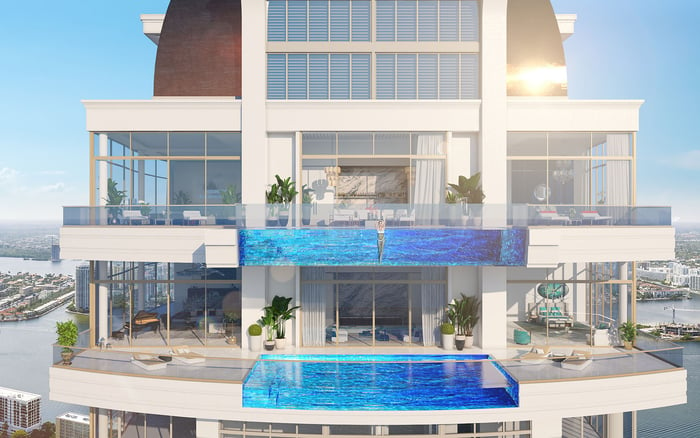
A contract-stage guide for evaluating whether Ocean House Surfside can support teenagers’ academic, social, wellness, safety, and independence needs in daily life.

For family buyers evaluating Ocean House Surfside, the most revealing question is not whether the residence feels luxurious during a walkthrough. It is whether the building can support the daily life of a teenager after the novelty of the move has passed. Finishes, views, and arrival sequences matter, but for parents with adolescents, amenity practicality belongs in the same category as floor plan, storage, privacy, and security.
Teen-space practicality means asking whether a building can support academics, social life, sports or creative interests, and the gradual independence that defines the high-school years. A space that appears calm in a rendering may function very differently at 4:30 p.m., when one teen needs quiet for tutoring, another wants to meet friends, and adults are using the same lounges for calls, guests, or relaxation.
The search terms may be simple: Ocean House Surfside, Surfside, Oceanfront, Beach-access, Pool, Private-school. The evaluation should be more disciplined. At contract stage, parents should convert the vague question, “Is this good for the kids?” into inspectable criteria that can be verified, negotiated, or mitigated before the deal becomes harder to unwind.
The first review should focus on spatial configuration. Teenagers need more than a place to sit. They need a realistic mix of quiet, semi-social, and recreational settings that do not constantly collide with adult amenity use. A lounge that works beautifully for cocktails may be less suitable for algebra homework, online tutoring, or a group project. Likewise, a study-friendly corner may fail if it sits directly beside a noisy route to shared amenities or the lobby.
Ask how teens will actually use the amenity areas on a weekday. Can one child study while another gathers with friends? Is there enough acoustic separation between calm and social zones? Are seats arranged for work, conversation, and casual downtime, or are they primarily staged for visual effect? Furniture durability matters as well, because teen spaces often absorb backpacks, laptops, snacks, sports gear, and repeated use in ways formal lounges may not.
For younger teens, parents may want proximity and visibility. For older teens, the priority may shift toward autonomy without isolation. The strongest buildings allow that progression, offering spaces that feel age-appropriate at 13 without becoming irrelevant at 17.
Circulation is one of the most under-discussed elements of family due diligence. Parents should understand how a teenager moves from the residence to the lobby, amenity areas, elevators, parking, exterior entries, and any pool or beach-related areas included in the building’s offering. These routes shape independence as much as the amenity program itself.
The goal is not to restrict movement. It is to know where freedom begins and where supervision becomes thinner. If a teen can move from the residence to a gathering area without crossing unmanaged zones, that may support healthy autonomy. If the same route passes through parking, service areas, or poorly monitored thresholds, the practical risk profile changes.
Pool and beach routines, when relevant, deserve particular scrutiny. Parents should ask how access is controlled, what rules apply to minors, whether guests are allowed, and how the building manages transitions between wet areas, elevators, and private residences. The issue is not simply whether amenities exist. It is whether daily movement through those amenities feels coherent, safe, and predictable.
For teenagers, connectivity is infrastructure. Homework, tutoring, test prep, streaming, gaming, group chats, and social coordination all depend on reliable digital performance. A family should not assume that a polished amenity space automatically has the Wi-Fi quality, outlet placement, or signal consistency required for modern teen routines.
Before contract, ask specific questions about Wi-Fi performance in amenity areas, outdoor-adjacent spaces, and transitional zones. Are there places where teens can take a video tutoring session without disruption? Are there enough charging points in the areas where they are likely to work? Does connectivity hold up when multiple residents are using the same common spaces after school or on weekends?
This is especially important for families balancing school, enrichment, and travel. If a teen depends on remote tutoring or online assignments, weak connectivity can turn a glamorous common area into a purely decorative room.
Building rules can determine whether teen-oriented spaces are truly usable. Age restrictions, guest policies, quiet hours, pool rules where applicable, amenity reservation systems, and permitted activities should be reviewed carefully. A space may appear ideal for teens yet become impractical if it requires adult presence, blocks guests, closes during key after-school hours, or restricts the activities teenagers actually need.
Parents should ask for clarity on occupancy limits, guest access, security coverage, monitoring, and reservation requirements. Is a teen allowed to bring a classmate to study? Can a small group gather without reserving a room? Are there limits on gaming, music, food, or sports-related use? If rules are vague, the family should understand who interprets them and how consistently they are enforced.
Staffing also matters. Some amenity areas may be concierge-controlled, monitored, periodically checked, or effectively unsupervised. Each model can work, but parents should know which applies. The practical question is whether supervision supports independence or creates uncertainty.
Teen independence expands quickly, and safety protocols should be examined before contract rather than after move-in. Parents should review how access is handled for fitness or wellness spaces, pool or rooftop areas if applicable, parking, elevators, exterior entries, and any beach-related access included in the property. The concern is not only major risk. It is also the accumulation of everyday details that shape comfort.
Can teens access fitness or wellness spaces alone, and at what age? How are guests identified? What happens if a teen returns late from a friend’s home or nearby café? Are elevator permissions, lobby protocols, and amenity access aligned with the family’s expectations? These are practical household questions, not secondary legal details.
Nearby independence also deserves attention. Parents should consider whether teenagers can safely reach food, cafés, tutoring, recreation, or friends without relying entirely on parental driving. In a luxury setting, walkability and controlled access are not opposites. The best family fit often comes from the right balance of freedom, visibility, and boundaries.
A teen-space review should not be frozen at the child’s current age. What works for a seventh grader may feel restrictive for a junior preparing for exams, sports commitments, creative work, college visits, and a fuller social calendar. Parents should ask how the building supports that arc.
Think of amenity spaces as after-school third places between the private residence and the broader neighborhood. The residence provides privacy. The city provides possibility. The building’s shared spaces can bridge the two if they are comfortable, safe, connected, and governed by rules that match family life.
Contract-stage diligence should therefore include both present and future scenarios. Where will a younger teen study while a parent is nearby? Where will an older teen meet a friend without disrupting adult residents? How will the building handle guests, noise, devices, and movement as independence increases? These answers may not appear in glossy materials, but they are essential to long-term fit.
Before signing, buyers should request specifics rather than impressions. Ask about occupancy limits, guest policies, quiet hours, security coverage, Wi-Fi performance, furniture durability, permitted activities, and amenity access for minors. Request explanations in writing where possible, especially if the family’s decision depends on teen usability.
It is also wise to walk the imagined day. Start at the residence after school. Move to the study area, then any recreation or outdoor-adjacent space the family expects to use, then the lobby, then exterior access. Consider where a backpack goes, where a laptop charges, where a friend waits, where staff can see, and where parents would want alerts or boundaries. This exercise often reveals more than an amenity checklist.
For affluent families, the highest standard is not simply privacy or polish. It is a residence that supports the family’s rhythm without constant friction. Ocean House Surfside should be evaluated through that lens before contract, with teen-space practicality treated as a core measure of livability.
Why should teen-space practicality be reviewed before contract? Because amenity rules, access, supervision, and spatial function can affect daily family life, and those issues are easier to evaluate before signing.
What does teen-space practicality include? It includes study needs, social gathering, wellness routines, digital connectivity, guest policies, safety, and age-appropriate independence.
Are luxury amenity spaces automatically useful for teenagers? Not always. A space can be beautifully designed yet poorly suited to homework, tutoring, group projects, or casual teen gatherings.
What circulation routes should parents examine? Parents should review movement between the residence, lobby, amenity areas, elevators, parking, exterior entries, and any pool or beach-related areas included in the building’s offering.
Why is Wi-Fi part of the teen-space review? Homework, tutoring, gaming, streaming, and communication all depend on reliable connectivity in the places teens actually use.
Which building rules matter most for teens? Age restrictions, guest access, quiet hours, reservation systems, occupancy limits, permitted activities, and pool rules where applicable are especially important.
How should parents think about supervision? They should understand whether areas are staffed, monitored, concierge-controlled, periodically checked, or effectively unsupervised.
Why does long-term adaptability matter? A space that works for a younger teen may not support the academic, social, and independence needs of an older high-school student.
Should nearby neighborhood access be part of the review? Yes. Parents should consider whether teens can safely reach food, cafés, tutoring, recreation, or friends without total reliance on driving.
What is the best way to shortlist comparable options for touring? Start with location fit, delivery status, and daily lifestyle priorities, then compare stacks and elevations to validate views and privacy.
To compare the best-fit options with clarity, connect with MILLION.
If branded residences are on your mind — as a home or as an allocation — we would be glad to share what we are seeing, privately.
Begin a quiet conversation