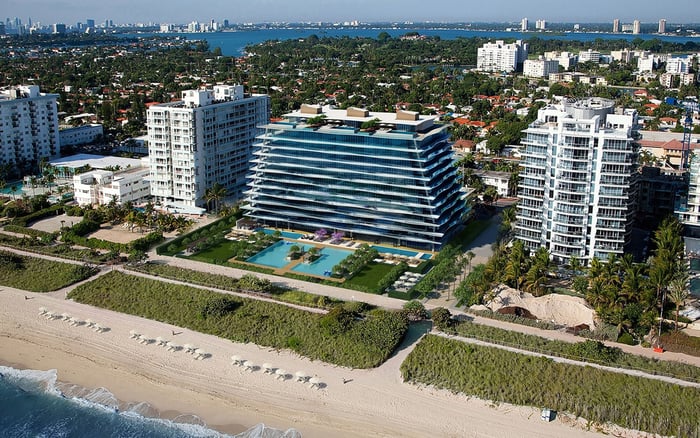
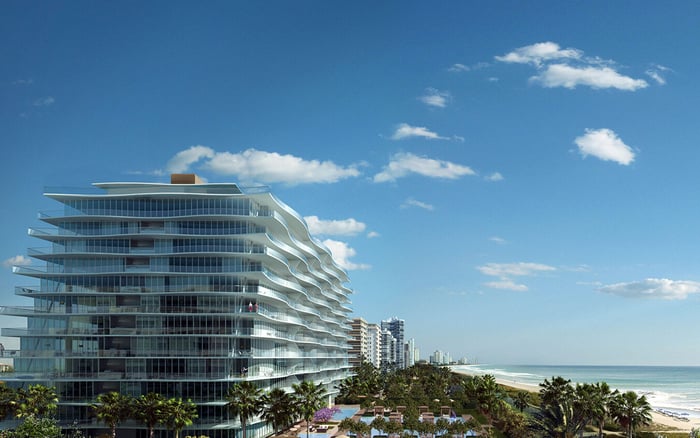
A discreet buyer’s guide to evaluating accessible beach living at The Estates at Acqualina and 900 Ocean Surfside, focused on the complete path from private residence to shoreline comfort.
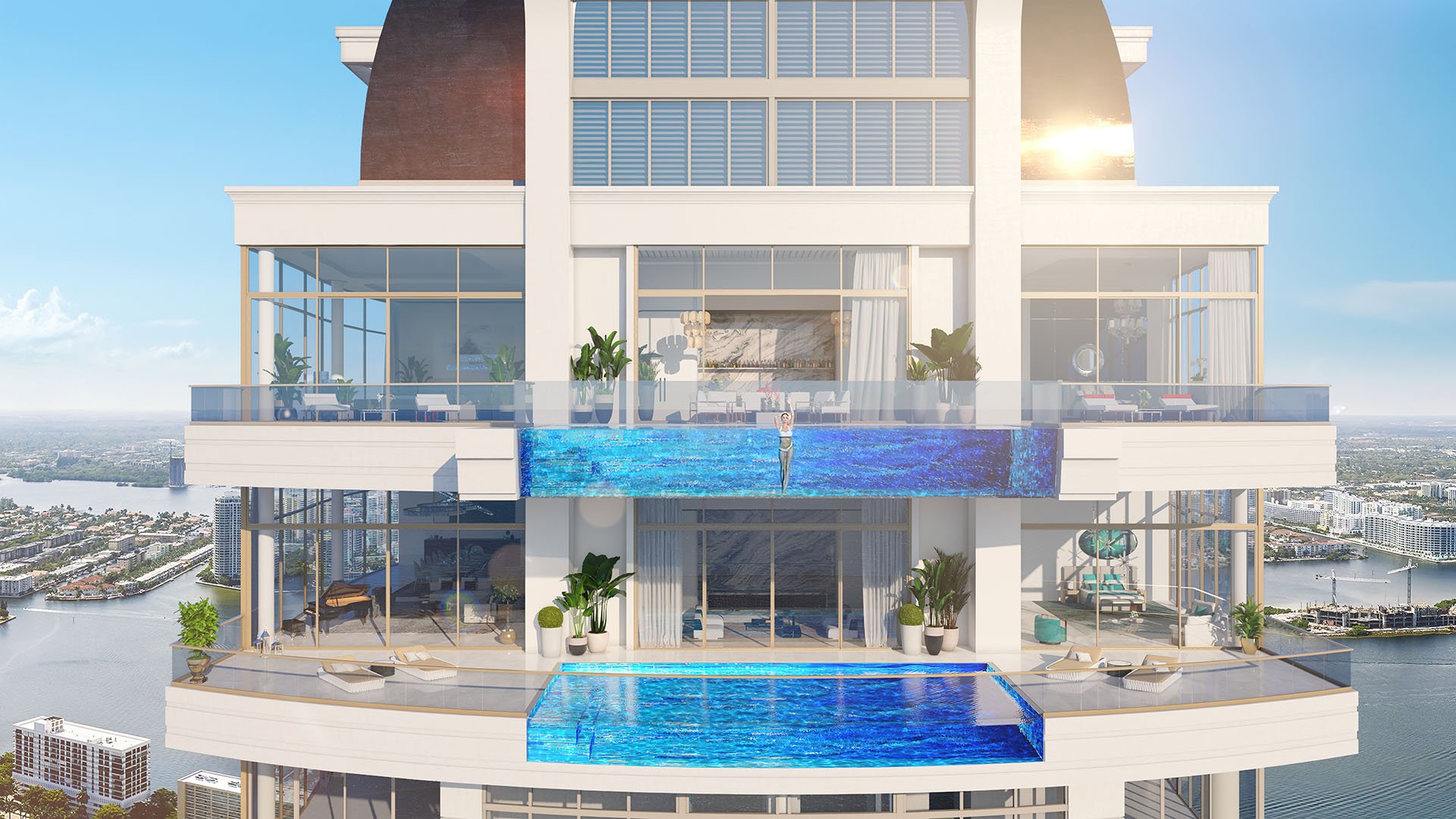
Beach access for disabilities is one of the most consequential subjects in oceanfront real estate, yet it is often addressed too casually. For a buyer considering The Estates at Acqualina and 900 Ocean Surfside, the question is not simply whether the beach is nearby. The more refined question is whether the journey from residence to sand can be made comfortably, predictably, privately, and with dignity.
That journey is never a single feature. It is a sequence. It begins at the private entry, continues through elevators and corridors, passes across lobby and amenity levels, reaches the property’s exterior edge, and finally meets the shifting conditions of coastal terrain. A beautiful address can feel incomplete if one link in that sequence is difficult to navigate.
For South Florida’s luxury buyer, accessibility should be treated with the same seriousness as view exposure, privacy, service culture, and long-term building stewardship. Oceanfront ownership is emotional, but the best acquisitions are also practical. A residence that supports daily ease for a family member, guest, or future self carries a deeper form of value than spectacle alone.
The topic places two distinct luxury references in conversation: The Estates at Acqualina and 900 Ocean Surfside. Both belong in a buyer’s review of South Florida coastal living, where beach proximity can be central to the experience. Yet disability access requires verification that goes beyond brand perception or architectural beauty.
For The Estates at Acqualina, buyers should focus on the practical relationship between private living, staffed areas, outdoor amenity zones, and the beach approach. The relevant question is not whether the setting is impressive, but whether a person using a wheelchair, walker, cane, mobility scooter, or assisted transfer can move through the property with confidence.
For 900 Ocean Surfside, the evaluation should be equally disciplined. Buyers should inspect transitions, slopes, thresholds, exterior surfaces, and assistance protocols rather than relying on assumptions about any oceanfront setting.
In both cases, a buyer should request direct confirmation from the parties who control day-to-day operations and physical access. The most valuable answers are specific, current, and operational rather than decorative.
Beach access, in this context, is not a marketing phrase. It is a route that should be experienced in person, ideally at the same time of day and under the same conditions the resident expects to use it. The difference between a pleasant route and a difficult one may be a heavy door, a narrow turn, a small lip at a threshold, a loose surface, or a lack of timely assistance.
A practical inspection begins inside the residence. Door clearances, bathroom layouts, shower entries, kitchen circulation, and terrace thresholds can determine whether the home itself supports accessible living. From there, the buyer should move through the building as a resident would: elevator, corridor, lobby, amenity level, exterior deck, beach gate, path, and sand.
Pool decks deserve their own attention. Pool areas may be central to the coastal lifestyle when beach conditions are challenging, so accessible routes to lounges, shaded areas, restrooms, food service, and water entry should be reviewed with care. If a beach day becomes impractical because of tides, weather, or mobility fatigue, the amenity deck should still deliver the promise of resort living.
The final transition to the sand is often the most complex. Sand shifts, temporary mats move, equipment may require reservation, and staffing practices can vary. A buyer should understand what is permanently available, what is seasonal, what is provided by the building, and what is handled by municipal beach services.
Minimum accessibility is not the same as gracious accessibility. Luxury buyers should look for spaces where assistance feels natural, not improvised. The highest standard is a property culture in which staff understand privacy, timing, and discretion, and where a resident does not need to explain basic needs repeatedly.
This is especially important for multigenerational families. A household may include a grandparent with limited mobility, a child with a disability, a guest recovering from surgery, or an owner planning for long-term aging in place. The best oceanfront residence accommodates changing needs without making those needs feel exceptional.
A discreet service plan can be as meaningful as a physical ramp. Buyers should ask how assistance is requested, how quickly it is typically provided, whether staff are trained on mobility equipment, and whether beach wheelchairs or transfer support are available through the property or nearby public services. Answers should be documented before contract deadlines, not discovered after closing.
A serious buyer should treat accessible beach living as a due diligence category. The first questions should be physical. Are there step-free routes from the residence to the primary amenity areas? Are doors automated or easily managed? Are exterior surfaces stable and wide enough for mobility devices? Are ramps permanent, temporary, or dependent on staff?
The second set of questions should be operational. Who manages beach access requests? Is assistance available daily? Are there limits by hour, season, weather, or staffing? If equipment is available, where is it stored, how is it reserved, and who maintains it?
The third set should be legal and governance related. Condo documents, association rules, and building policies can affect modifications, storage of mobility devices, service animals, guest access, and use of common areas. A luxury purchase should not rest on assumptions when written clarity is available.
The final questions should be personal. Can the intended resident use the route without fatigue? Does the beach experience feel independent enough? Is there shade along the way? Is there a comfortable place to pause? Does the property make access feel like part of everyday life rather than a special request?
At this level of the market, comparison is less about which property sounds more accessible and more about which property can prove it. The Estates at Acqualina and 900 Ocean Surfside should each be evaluated through a private walk-through designed around the buyer’s actual needs. A generic tour is not enough.
For some buyers, the ideal outcome is direct, simple movement from residence to beach with limited staff interaction. For others, the priority is an attentive team that can coordinate equipment, timing, and comfort without making the resident feel observed. Both preferences are legitimate, and each should shape the showing.
Surfside buyers may also weigh the broader neighborhood experience, including sidewalks, crossings, nearby services, and the feel of the surrounding streets. A residence can be excellent within its own boundaries, but the daily lifestyle extends beyond the property line.
The most successful purchase is one in which the buyer’s mobility profile is matched with the building’s real behavior. That means testing, asking, documenting, and revisiting the route before final decisions are made.
Accessibility is often framed as a specialized need, but it is also a marker of enduring quality. Homes that are easier to enter, navigate, visit, and enjoy appeal to a wider circle of owners and guests. In the luxury market, this can support both personal utility and future marketability.
As South Florida continues to attract buyers focused on wellness and long-term comfort, the strongest residences are not only dramatic on arrival. They remain comfortable over time. Accessible design supports that longevity because it anticipates life as it is actually lived.
For families choosing between The Estates at Acqualina and 900 Ocean Surfside, the right answer may be discovered less in the brochure and more in the route. Walk it. Time it. Test it. Ask who helps, when they help, and what happens on an imperfect day. In true luxury, the ocean should feel close not only in view, but in lived experience.
What should buyers ask first about beach access for disabilities? Start by asking for the complete step-free route from the residence to the beach, including elevators, doors, exterior paths, and sand access.
Is proximity to the beach enough to confirm accessibility? No. Proximity does not confirm usable access, because thresholds, slopes, surfaces, and staffing can change the experience significantly.
Should accessibility be verified before making an offer? Yes. Buyers should review the route, policies, and available assistance before key contract deadlines whenever possible.
Can staff support matter as much as physical design? Yes. Discreet, consistent staff protocols can make beach access smoother, especially when equipment or timing coordination is needed.
What should be checked inside the residence? Review door widths, bathroom access, shower entries, circulation space, and balcony or terrace thresholds for daily usability.
Why is the pool area important for accessibility? The pool deck may become the preferred outdoor experience when beach conditions are difficult, so its routes and amenities should be reviewed.
How should buyers compare The Estates at Acqualina and 900 Ocean Surfside? Compare the actual route, assistance protocols, governance rules, and comfort level during a private accessibility-focused walk-through.
Does Surfside require neighborhood-level accessibility review? Yes. Sidewalks, crossings, nearby services, and street conditions can affect the daily experience beyond the building itself.
Can accessible features influence resale appeal? They can. Residences that are easier for more people to enjoy may appeal to multigenerational and long-term lifestyle buyers.
What is the best sign of truly luxurious accessibility? The best sign is when access feels calm, private, and routine rather than improvised or dependent on repeated explanations.
For a tailored shortlist and next-step guidance, connect with MILLION.
If branded residences are on your mind — as a home or as an allocation — we would be glad to share what we are seeing, privately.
Begin a quiet conversation