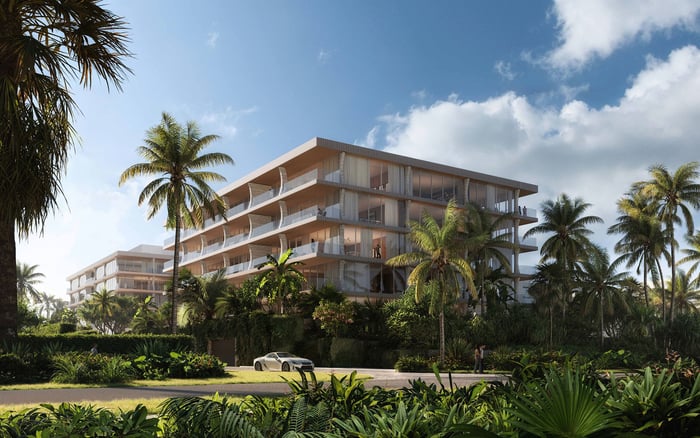
A buyer-focused guide to punch-list strategy at Mr. C Residences West Palm Beach, including inspection timing, workmanship standards, closing leverage, warranty boundaries, and remote-buyer logistics.

For a luxury buyer, a punch list is not a clipboard exercise reserved for the celebratory closing. It is a negotiation, documentation, and risk-management issue that should be understood before signing at Mr. C Residences West Palm Beach. In a branded condominium environment, the expectation is not simply that the residence be complete, but that delivery reflects the design, service, and finish quality that drew the buyer to the building.
The relevant lens is deliberately focused: West Palm Beach and Palm Beach lifestyle expectations, new-construction and pre-construction delivery risk, and second-home timing all converge at the walk-through. A buyer who will occupy seasonally, furnish immediately, or rely on a representative after closing should understand exactly how defects, incomplete work, substitutions, and warranty claims will be handled.
This is not about presuming problems. It is about preserving clarity. Before contract execution, buyers should ask which documents govern the punch-list process, what discretion the developer retains, and whether the buyer has meaningful leverage if important items remain unfinished at closing.
The first question is simple, but consequential: when does the buyer first enter the residence for punch-list purposes? Some buyers may expect an inspection before closing, others may be shown the home at substantial completion, and others may learn that meaningful review occurs only after title transfers. The distinction matters because leverage changes once closing has occurred.
Buyers should ask whether the walk-through is a formal contractual step or an informal courtesy. They should also confirm whether power, water, appliances, lighting, HVAC, terrace access, and installed finishes will be available for a meaningful review. A quiet five-minute preview is not the same as a structured inspection of flooring, paint, millwork, stone, appliances, glazing, hardware, doors, and mechanical systems.
This is particularly important for buyers comparing West Palm Beach opportunities such as Alba West Palm Beach or The Ritz-Carlton Residences® West Palm Beach, where the broader decision is often less about square footage and more about certainty of delivery, documentation, and the post-closing experience.
A sophisticated buyer should not assume the inspection is limited to the purchaser and a sales representative. Ask in advance whether the buyer’s broker, attorney, interior designer, contractor, or third-party inspector may attend. For many luxury residences, the practical eye of a designer or contractor can be valuable because installation details often determine whether a space feels truly finished.
Attendance rights should be clarified in writing. If the developer restricts who may enter, ask whether a representative can attend by power of attorney, whether video participation is permitted, and whether detailed photo documentation will be provided. Seasonal and remote buyers should address this before travel schedules, movers, and furniture deliveries are set.
A strong punch-list review is not adversarial. It simply places the right people in the residence at the right time, with authority to identify items that require attention and to confirm how they will be resolved.
Luxury buyers often speak in visual terms: the stone should align, the millwork should sit cleanly, the paint should be crisp, the hardware should feel solid, and the appliances should be installed with precision. The contract may speak differently. It may reference construction tolerances, substantial completion, developer discretion, warranty language, or other standards that determine whether an item is treated as a defect.
Ask what standard will be used to evaluate workmanship and finishes. Are visible seams, uneven paint, imperfect stone, flooring variation, glass marks, hardware alignment, cabinetry gaps, or appliance installation issues judged by a written tolerance standard? Does the developer have discretion to decide whether something requires correction? Are model-unit finishes, sales-gallery samples, renderings, and marketing descriptions binding, or merely illustrative?
These questions are especially relevant in design-led and service-led properties. Buyers exploring Forté on Flagler West Palm Beach and South Flagler House West Palm Beach will often bring highly specific expectations around materiality and execution. Expectations are useful, but enforceable standards determine the remedy.
The most important punch-list question may be whether unresolved items can delay closing. If the buyer must close while work remains outstanding, ask whether any escrow, holdback, written completion schedule, or other leverage is available for important unfinished items. Do not assume that a visible issue automatically creates a right to postpone closing.
Buyers should also ask who signs off on completion. Is it the developer, construction team, sales team, building management, brand or operator, or the buyer? If an item is marked complete by one party but still appears unresolved to the buyer, what is the escalation process?
Tracking is equally important. Ask whether the developer uses a written punch-list log, dated photographs, a portal, email confirmations, or signed completion forms. Each item should ideally have a description, location, date, responsible party, status, and completion evidence. In a premium residence, memory should not be the record.
Not all punch-list items carry the same urgency. A paint touch-up is different from an HVAC issue, plumbing concern, electrical fault, appliance failure, door or window problem, or leak-related condition. Buyers should ask how quickly cosmetic items are expected to be completed compared with functional issues that affect habitability, access, systems performance, or risk of damage.
The boundary between private and common elements also deserves attention. Balcony doors, windows, terraces, risers, mechanical systems, and shared infrastructure can fall into gray areas. Ask who is responsible for defects at those boundaries and whether common-area or amenity deficiencies are handled separately from in-unit items.
In a branded, service-oriented condominium, common areas matter because they shape the lived experience as much as the private residence. Still, the buyer should understand whether amenity or buildingwide deficiencies create any rights for the individual owner, or whether those matters are handled through separate building-management or association processes.
A punch-list item identified before or at closing is not always treated the same as a warranty claim that arises later. Ask how the developer distinguishes between the two. If an issue is discovered after closing, what notice method is required? Is there a written response time? Who handles emergencies? What exclusions apply?
The warranty process should be obtained in writing, including the procedure for HVAC, plumbing, electrical, appliance, door, window, leak-related, and finish issues. Buyers should also ask whether substitutions in materials, appliances, fixtures, layouts, or finishes may occur before delivery and how they will be notified. If the residence will participate in any rental, hotel, or managed-use program, ask whether additional inspection, furnishing, maintenance, or guest-readiness standards apply.
Most importantly, ask Florida condominium counsel to review the purchase agreement, condominium documents, warranty provisions, closing conditions, and dispute-resolution language specifically through the lens of punch-list leverage. The elegance of a residence begins with design, but the buyer’s protection begins with the contract.
Should I ask about punch-list strategy before signing? Yes. Treat the punch-list process as a core acquisition issue, not a post-closing afterthought.
When should the first in-unit inspection occur? Ask whether it occurs before closing, at substantial completion, or only after title transfers.
Can my inspector or designer attend the walk-through? Ask in writing whether your broker, attorney, designer, contractor, or third-party inspector may participate.
What workmanship standard should apply? Ask how finishes, millwork, stone, flooring, paint, glass, hardware, and appliance installation will be judged.
Can unresolved items delay closing? Do not assume so. Ask whether unfinished items can postpone closing or whether you must close with repairs outstanding.
Is an escrow or holdback possible? Ask whether the contract allows any escrow, holdback, completion schedule, or similar leverage for significant items.
Who signs off when work is complete? Clarify whether signoff belongs to the developer, construction team, management, brand, sales team, or buyer.
How should punch-list items be tracked? Ask for a written log, dated photos, portal updates, email confirmations, or signed completion forms.
What if I am a seasonal or remote buyer? Ask whether review can be completed by video, representative, power of attorney, or detailed photo documentation.
Should an attorney review the punch-list provisions? Yes. Florida condominium counsel should review the contract, closing conditions, warranty language, and dispute provisions.
When you're ready to tour or underwrite the options, connect with MILLION.
If branded residences are on your mind — as a home or as an allocation — we would be glad to share what we are seeing, privately.
Begin a quiet conversation