A discreet underwriting framework for comparing Mr. C Residences West Palm Beach and The Links Estates at Fisher Island across reserve obligations, insurance architecture, delivery certainty, and long-horizon ownership risk.
Mr. C Residences West Palm Beach vs The Links Estates at Fisher Island is, at first glance, a study in two distinct expressions of South Florida luxury. One is shaped by the momentum of West Palm Beach, where private residential demand has matured alongside a more sophisticated cultural, dining, and office landscape. The other occupies the rarefied privacy of Fisher Island, where scarcity, controlled access, and estate-scale expectations define the ownership conversation.
For serious buyers, however, the more important comparison is not atmosphere alone. It is underwriting. In today’s luxury market, the question is less “Which address feels more glamorous?” and more “Which ownership profile is cleaner, more predictable, and better aligned with the buyer’s hold period?”
That is where reserve exposure, insurance structure, and completed-building certainty become central. These factors do not diminish the emotional pull of architecture, service, views, or privacy. They sharpen the decision. They help a buyer distinguish between a beautiful acquisition and a resilient one.
Reserve exposure is one of the least romantic subjects in luxury real estate, yet it can become one of the most consequential. Buyers comparing Mr. C Residences West Palm Beach and The Links Estates at Fisher Island should look beyond the headline purchase price and examine how future capital needs may be handled, funded, and disclosed.
The first question is whether the ownership structure creates predictable obligations for residents or leaves room for special assessments tied to future repair, replacement, or insurance-driven capital planning. In a new or newer luxury setting, the reserve conversation may feel remote. Sophisticated buyers know it is not. Buildings, club components, seawalls, mechanical systems, elevators, roofs, amenities, and exterior envelopes all require long-term funding discipline.
A West Palm Beach condominium buyer may focus on association budgets, reserve line items, shared amenities, and the governance framework supporting future capital planning. A Fisher Island estate buyer may need to think more broadly about private property obligations, community-level charges, club or island-related costs, and any shared infrastructure that affects the total ownership picture. The labels differ, but the underwriting principle is the same: identify who pays, when they pay, and how much discretion exists in future calls for capital.
For a buyer who values liquidity, clean reserve planning can matter at resale. A residence with transparent financial obligations is easier to explain to the next buyer, particularly if market conditions are more selective at the time of exit.
Insurance is no longer a back-office detail. In coastal South Florida, it has become a primary underwriting category. The right question is not simply whether a property can be insured. It is how the insurance is structured, what is covered at the association or community level, what remains the owner’s responsibility, and how deductibles may be allocated after an event.
For Mr. C Residences West Palm Beach, buyers should understand the master insurance framework, including property coverage, windstorm considerations, flood-related provisions, liability coverage, deductible treatment, and the owner’s supplemental policy requirements. They should also examine whether interior improvements, personal property, loss assessment exposure, and temporary relocation needs are adequately addressed.
For The Links Estates at Fisher Island, the insurance review may resemble a private-home analysis. Estate-scale ownership can require more tailored attention to structure, contents, flood zones, wind coverage, excess liability, domestic staff exposure, and any coverage gaps between individual property policies and broader community arrangements. Privacy and exclusivity do not simplify insurance. Often, they make the review more bespoke.
The premium itself is only one variable. Deductibles, exclusions, claims history, carrier quality, renewal flexibility, and policy coordination can carry equal weight. A buyer who waits until contract deadlines to address insurance may lose leverage. The stronger approach is to begin the insurance conversation early, with counsel, an experienced insurance advisor, and the buyer’s financial team aligned before final terms are set.
Completed-building certainty has become a luxury in its own right. Buyers who can walk the building, review finished amenities, experience the arrival sequence, assess construction quality, and understand actual monthly carrying costs may be willing to pay for that visibility. The value is not only aesthetic. It is informational.
If a residence is complete or substantially complete, the buyer can evaluate light, sound, privacy, elevator experience, lobby execution, parking flow, service culture, and amenity quality in real time. That reduces interpretation risk. It also helps advisors compare the residence against resale alternatives with greater confidence.
If an offering remains earlier in its lifecycle, the buyer may gain different advantages: selection, customization potential, preferred positioning, and entry before the finished product is fully digested by the market. But that opportunity comes with questions about delivery, specifications, final finishes, association formation, budget stabilization, and the translation of renderings into lived experience.
The key is not to declare one path superior. It is to price certainty correctly. Some buyers should pay more for a known asset. Others are comfortable underwriting controlled uncertainty if the upside, optionality, and contractual protections are compelling.
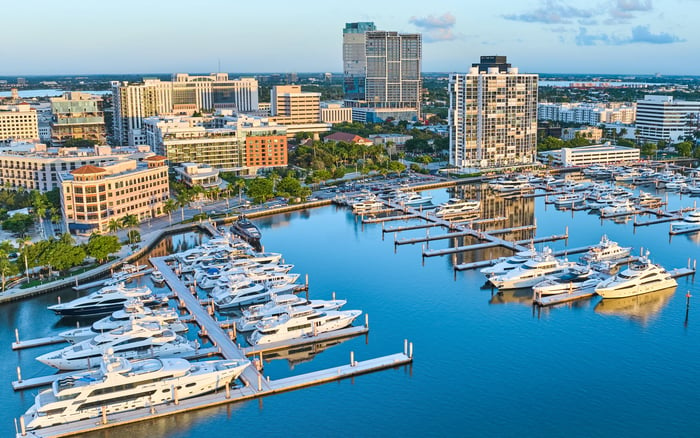
Mr. C Residences West Palm Beach belongs in a conversation shaped by the city’s evolution into a more polished, full-service luxury market. The appeal is not simply proximity to Palm Beach. It is the possibility of a residential lifestyle that blends design, hospitality, walkability, culture, and access to the broader financial and social ecosystem of the area.
For the buyer focused on West Palm Beach, the underwriting should start with the association budget and extend into lifestyle usage. Will the residence be used seasonally, year-round, or as part of a broader portfolio? How important is immediate access to dining, private aviation corridors, marinas, offices, and Palm Beach social life? Will the owner prioritize lock-and-leave convenience over estate-scale privacy?
A branded or hospitality-influenced condominium can offer a highly managed experience, but buyers should distinguish between service value and service cost. Amenities, staffing, maintenance, and reserves all influence monthly obligations. If the buyer expects a long hold, the question becomes whether the building’s operating model is sustainable, well-governed, and attractive to the next generation of purchasers.
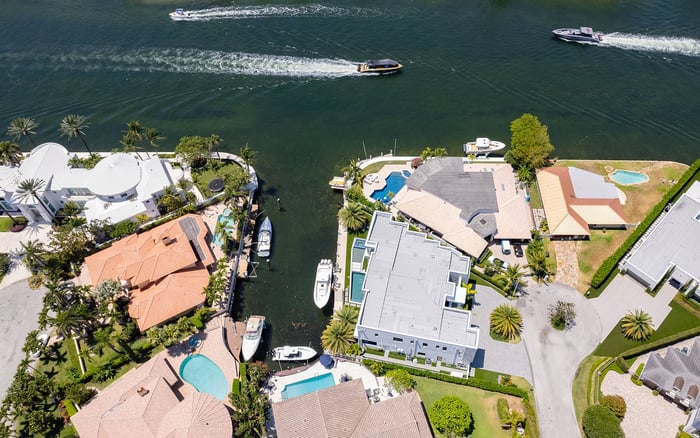
The Links Estates at Fisher Island sits in a different psychological category. Fisher Island ownership is often less about convenience in the conventional urban sense and more about control, privacy, space, and membership in a highly selective island environment. That scarcity can be powerful, but it should still be underwritten with discipline.
Estate-style ownership may appeal to buyers who want separation from the city, a private rhythm, and a residential setting that feels insulated from the broader market. Yet the same attributes that make the island exceptional can also create bespoke obligations. Access, staffing, maintenance, insurance, community costs, club-related expectations, and long-term property stewardship should be assessed as part of the total acquisition.
Investment logic here is often different from a standard condominium analysis. The buyer may be underwriting rarity, privacy, land-like attributes, and the limited nature of comparable inventory. That does not eliminate the need for cost clarity. It elevates it. When an asset is deeply specialized, buyers should be especially careful about the assumptions they make regarding future demand, carrying costs, and resale timing.
The cleanest approach is to build a side-by-side ownership model. Include purchase price, closing costs, anticipated monthly or annual carrying costs, taxes, insurance, reserves, maintenance, club or community obligations where applicable, and capital improvements. Then test those costs across multiple hold periods.
Next, stress-test liquidity. A West Palm Beach condominium may appeal to a buyer pool seeking managed luxury, urban access, and brand-adjacent service. A Fisher Island estate may appeal to a narrower but highly qualified buyer pool seeking privacy and scarcity. Neither buyer pool is inherently better. They are different, and each carries implications for marketing time, negotiation dynamics, and exit strategy.
Finally, weigh certainty. If one option provides clearer documentation, completed conditions, stable governance, and more transparent insurance obligations, that clarity has value. If the other offers irreplaceable privacy or scarcity, that too has value. The discipline is to avoid confusing personal preference with financial resilience.
Which is easier to underwrite, a condominium or an estate-style residence? A condominium may offer more standardized documents, while an estate-style residence may require a more bespoke review. The easier choice depends on transparency, insurance, governance, and the buyer’s intended use.
Why does reserve exposure matter for luxury buyers? Reserve exposure can influence future assessments, monthly carrying costs, and resale confidence. Even affluent buyers benefit from clarity around long-term capital planning.
Should insurance be reviewed before making an offer? Yes, early insurance review can reveal cost, deductible, exclusion, and coverage issues before leverage is reduced. It should be coordinated with legal and financial advisors.
Is completed-building certainty worth paying more for? It can be, especially when the buyer values verified finishes, actual operating costs, and the ability to experience the property before closing. Certainty reduces interpretation risk.
Can a pre-completion opportunity still be attractive? Yes, if selection, customization, pricing, or scarcity justify the uncertainty. The buyer should evaluate contract protections and delivery assumptions carefully.
How should buyers compare West Palm Beach and Fisher Island lifestyles? West Palm Beach may emphasize urban access and managed convenience, while Fisher Island may emphasize privacy and scarcity. The better fit depends on daily use patterns.
What documents should be reviewed for a condominium purchase? Buyers should review budgets, reserves, insurance, declarations, rules, meeting materials, and any disclosed capital plans. Counsel should interpret obligations before closing.
What makes Fisher Island underwriting distinctive? Its privacy and scarcity can create a more specialized buyer pool and a more bespoke ownership profile. Costs and obligations should be modeled beyond the purchase price.
Is resale liquidity different between these two ownership types? Yes, a managed condominium and a private island estate may attract different buyer pools. Liquidity should be tested against realistic hold periods and market conditions.
What is the best way to shortlist comparable options for touring? Start with location fit, delivery status, and daily lifestyle priorities, then compare stacks and elevations to validate views and privacy.
To compare the best-fit options with clarity, connect with MILLION.
If branded residences are on your mind — as a home or as an allocation — we would be glad to share what we are seeing, privately.
Begin a quiet conversation