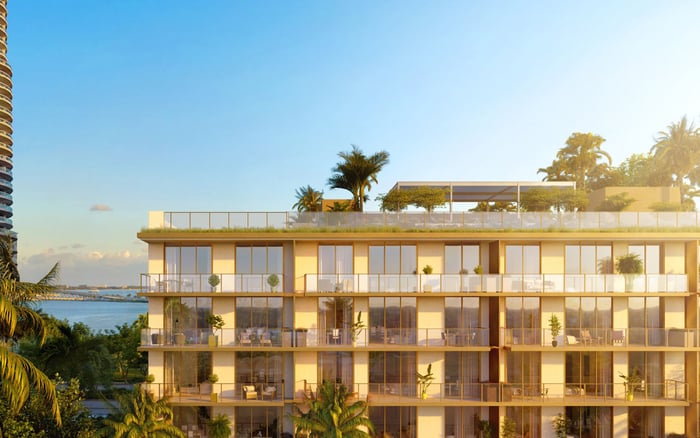
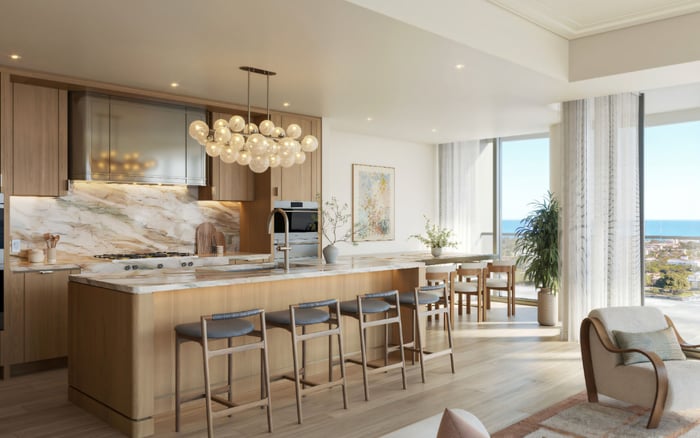
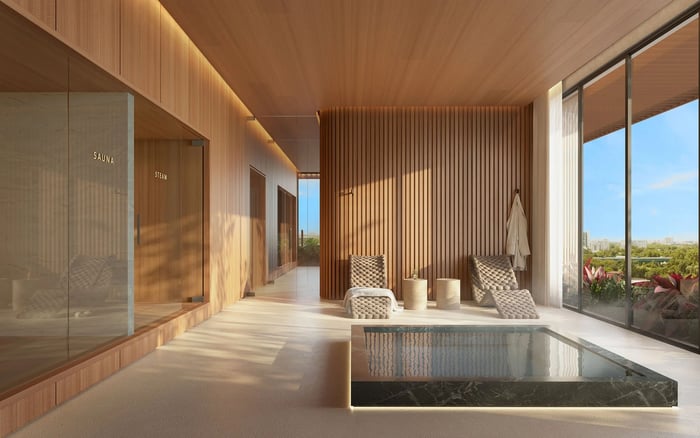
A discreet buyer’s guide to evaluating the porte-cochère at Mr. C Residences Boca Raton beyond the visual promise of renderings, with focus on drawings, materials, weather performance, vehicle flow, accessibility, lighting, and long-term maintenance.
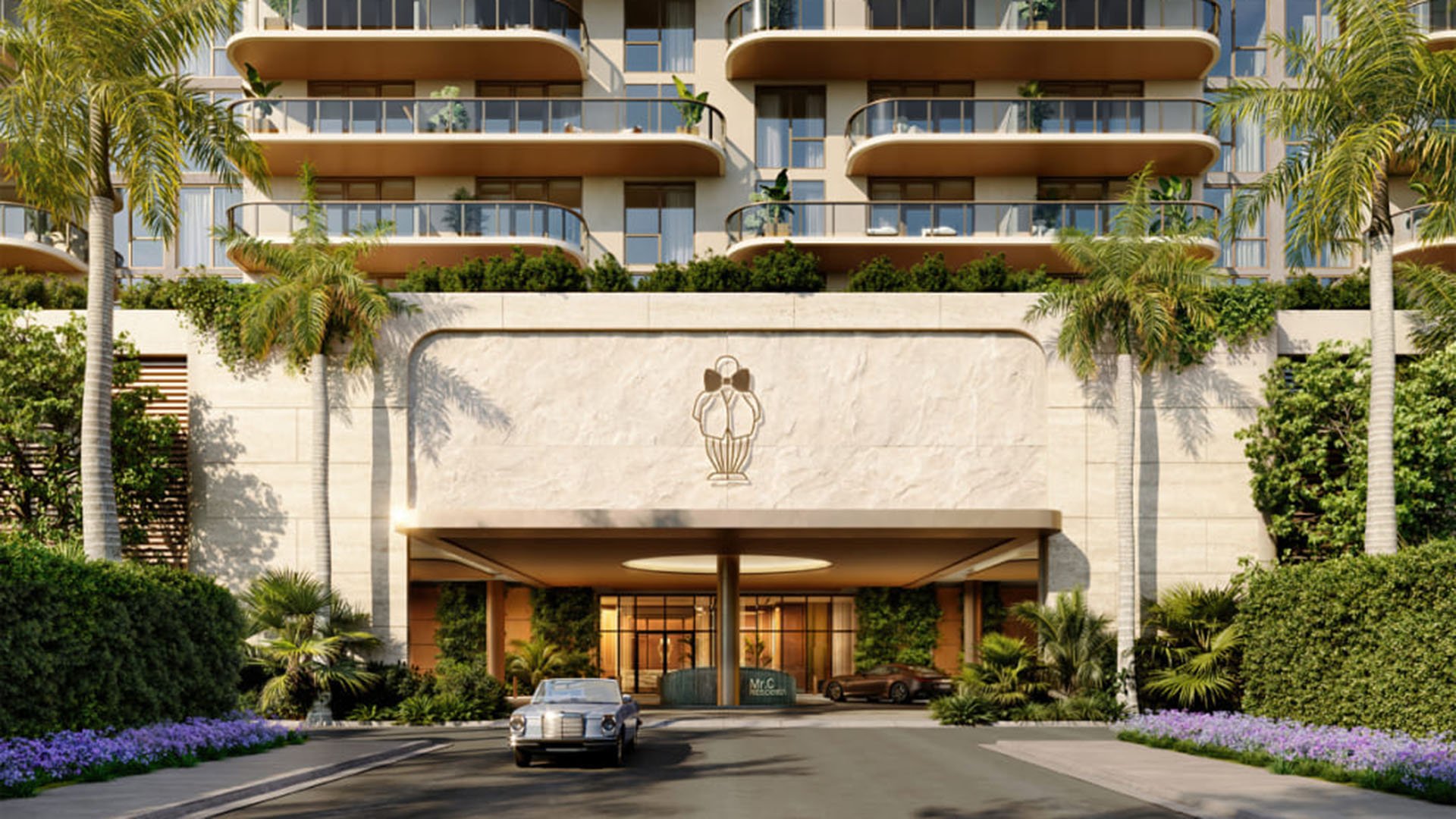
At a luxury residential address, the porte-cochère is more than a photogenic threshold. It is the first act of choreography between architecture, weather, vehicle movement, valet service, pedestrian comfort, lighting, and brand tone. At Mr. C Residences Boca Raton, that makes the covered arrival area a serious due-diligence item, not a decorative detail to admire in a sales image.
Renderings are useful because they communicate intent: proportion, atmosphere, landscaping, lighting mood, and the desired sequence from car door to lobby. They are not, on their own, the final word on construction. A buyer should understand whether the porte-cochère has advanced from marketing geometry to permitted construction drawings, approved materials, coordinated lighting, drainage design, and service planning.
The right question is not simply whether the arrival looks elegant. It is whether it will work beautifully during a humid afternoon storm, a busy dinner-hour valet sequence, a family drop-off with luggage, or a guest arrival in an SUV. That is where the distinction between image and built experience becomes material.
The first verification point is documentation. Buyers should ask whether the porte-cochère design is represented in permitted construction drawings rather than only in renderings, presentation boards, or conceptual marketing imagery. The drawings should clarify the final geometry of the canopy, column locations, the relationship to the lobby doors, the ceiling plane, lighting positions, paving fields, drainage lines, landscape edges, signage, and pedestrian paths.
This does not require a buyer to become an engineer. It does require asking the sales team or developer to explain what is final, what remains subject to refinement, and what has been coordinated across architecture, landscape, lighting, civil drainage, and traffic circulation. In an ultra-premium setting, those disciplines cannot be treated separately. A column that looks sculptural in a rendering may affect turning movement. A lighting fixture that appears warm and cinematic may lower perceived clearance or create glare. A landscape bed that softens the image may narrow the walking path at peak arrival.
For a buyer comparing Boca Raton opportunities across new-construction and pre-construction inventory, the arrival court belongs in the same investment conversation as plan efficiency, amenity depth, exposure, and service staffing. It is one of the rare spaces every resident, guest, driver, and valet will encounter.
A rendering can flatter finishes. Stone can appear more continuous, metal more refined, paving more seamless, glass more luminous, and lighting warmer than the installed result. For that reason, buyers should ask for final material schedules for the porte-cochère, including stone, metal, glass, ceiling finishes, lighting, drainage components, and paving selections.
The most useful review is tactile. Physical samples show texture, reflectivity, color variation, slip resistance, edge detailing, and the way materials respond to light. A glossy surface may read glamorous in an image but behave differently under rain, headlamps, or Florida humidity. A pale stone or paving field may deliver the desired resort tone but require a clear cleaning protocol. A dark metal finish may look elegant, yet the long-term durability and maintenance plan should still be understood.
If mockups, shop drawings, or approved samples exist, they are especially valuable. They help translate the small-scale rendering into real junctions: where ceiling meets column, where drainage meets paving, where lighting is recessed, where glass or metal edges resolve, and how landscape borders are protected from daily vehicle and pedestrian activity.
In Boca Raton, the porte-cochère should be evaluated as weather protection, not only architectural theater. Wind, rain, humidity, salt air, and drainage all affect the quality of the resident experience. A graceful canopy is less persuasive if wind-driven rain reaches the door approach, if water sheets across the drop-off zone, or if puddling forms near pedestrian paths.
Drainage is one of the least glamorous and most important topics. Buyers should ask how runoff is directed, where drainage grates are located, whether pedestrian paths remain dry and legible, and whether the paved area is sloped to move water without creating awkward walking conditions. A luxury arrival can fail functionally if residents must step around pooling water after a storm.
Durability is also part of the weather discussion. Stone, metal, glass, ceiling materials, lighting fixtures, landscape edging, and drainage grates all need to withstand a South Florida environment. The point is not to demand unsupported technical claims. The point is to verify that the final specifications, maintenance obligations, and replacement expectations are clear before relying on the emotional power of the rendering.
The porte-cochère is a stage for movement. It must accommodate residents, guests, valet attendants, ride-share vehicles, deliveries, luggage, and occasional moments of peak demand. Buyers should evaluate how vehicles enter, pause, unload, and exit. They should also ask how valet staging is managed when several arrivals occur at once.
The practical checklist includes turning radius, drop-off depth, guest waiting areas, ride-share access, resident priority, and whether a stopped vehicle blocks another from moving through. The most refined arrival sequence feels unhurried even when the building is active. That requires more than a beautiful canopy. It requires circulation that has been tested against real behavior.
Clear vertical clearance is another essential point. Buyers should verify how the arrival accommodates SUVs, vans, delivery vehicles, emergency access, and any signage or lighting fixtures mounted within the covered zone. The final built condition should be understood in relation to the types of vehicles likely to use the property, not merely the cars shown in a rendering.
Lighting should be evaluated beyond mood. A rendering may suggest a warm evening glow, but buyers should ask how the final lighting performs at night. Important questions include whether pedestrians are clearly visible, whether drivers experience glare, whether the color temperature supports the intended hospitality tone, and whether fixtures are durable and serviceable.
Accessibility deserves the same attention. Curb transitions, protected walking paths, door approach zones, slopes, and non-slip paving all shape the dignity of arrival. A porte-cochère should feel effortless for residents carrying bags, guests stepping out in evening attire, older family members, children, and anyone navigating the threshold in wet weather.
This is where an ultra-modern visual language must be matched by practical restraint. Clean lines, flush details, and dramatic lighting are only successful if they preserve comfort, legibility, and safety. For a new project, the best design outcome is not the most theatrical arrival. It is the one that feels calm, intuitive, and resilient every day.
Long-term maintenance is often overlooked because renderings show the first day, not the fifth year. Buyers should ask how the porte-cochère will be cleaned, inspected, repaired, and funded through association operations. Stone may need sealing or specialized cleaning. Metal may require finish care. Glass may demand regular access. Lighting will eventually need replacement. Drainage grates must remain clear. Landscape edges must be protected from tires, luggage carts, and foot traffic.
The maintenance question is not merely operational. It affects value preservation and the consistency of the arrival experience. A porte-cochère that looks exquisite at delivery but is difficult to maintain can become a visible weak point in an otherwise polished property.
For buyers at Mr. C Residences Boca Raton, the most disciplined approach is to treat the rendering as the beginning of the conversation. Ask for the drawings. Review the materials. Understand the drainage. Study the traffic movement. Confirm accessibility. Test the lighting logic. Clarify the maintenance plan. In a luxury building, arrival is not a backdrop. It is a promise that must be built, operated, and sustained.
Why should buyers look beyond the porte-cochère rendering? A rendering communicates design intent, but it may not confirm final geometry, materials, drainage, lighting, or vehicle circulation.
What is the first document to request? Buyers should ask whether the porte-cochère is reflected in permitted construction drawings rather than only in marketing imagery.
Which materials should be verified? Ask for final schedules covering stone, metal, glass, ceiling finishes, lighting, paving, drainage components, and landscape edges.
Why do physical samples matter? Samples reveal texture, color, reflectivity, slip feel, and finish quality that may appear more flattering in a rendering.
What should be checked for Boca Raton weather? Focus on rain protection, drainage performance, humidity exposure, salt-air durability, and wet pedestrian paths.
How should vehicle movement be evaluated? Review valet staging, resident and guest drop-off, ride-share access, turning movement, and peak-arrival congestion.
Why is vertical clearance important? The arrival should accommodate common SUVs, vans, deliveries, emergency access, and any overhead lighting or signage.
What lighting questions should buyers ask? Confirm nighttime visibility, driver glare, color warmth, fixture durability, and whether the intended mood is achievable.
What accessibility details matter most? Review curb transitions, protected pedestrian paths, door approach areas, slopes, and non-slip paving conditions.
What is the best way to shortlist comparable options for touring? Start with location fit, delivery status, and daily lifestyle priorities, then compare stacks and elevations to validate views and privacy.
To compare the best-fit options with clarity, connect with MILLION.
If branded residences are on your mind — as a home or as an allocation — we would be glad to share what we are seeing, privately.
Begin a quiet conversation