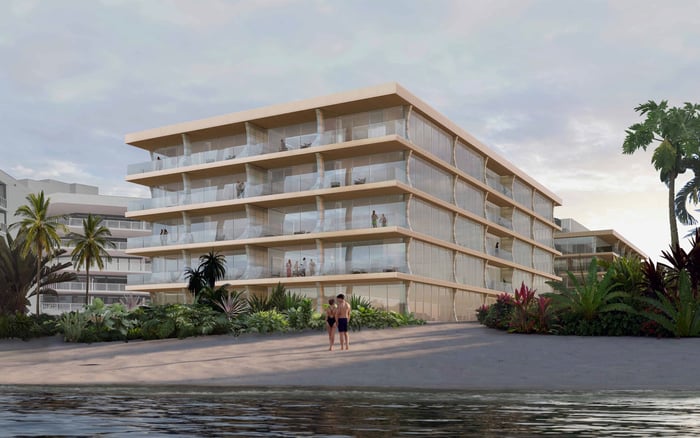
A discreet negotiation guide for South Florida waterfront buyers balancing bridge clearance, boating requirements, lifestyle value, and contract discipline.

In South Florida waterfront real estate, bridge clearance is often treated as a binary condition: either the residence works for the boat, or it does not. That framing is too blunt for a serious buyer. The better question is whether the property supports the owner’s actual boating life, and whether the market has priced that utility correctly.
A fixed bridge can narrow the buyer pool, but it can also protect value for someone whose vessel, itinerary, and household priorities fit the location. The right residence may offer privacy, architecture, entertaining space, proximity to schools or clubs, and a dock configuration that would be difficult to replicate. Losing it over an unexamined clearance concern can be as costly as ignoring the concern altogether.
The negotiation should begin with discipline. Separate emotional resistance from physical limitation. A buyer does not need to pretend clearance is irrelevant. The buyer needs to quantify how relevant it is to the intended use, then convert that relevance into contract language, price logic, or both.
The first mistake is negotiating around an imagined boat. Many buyers say they want unrestricted water, but their true use may involve a smaller day boat, a tender, a center console, or seasonal cruising on a vessel kept elsewhere. Others know they want a larger yacht with a tower, antennas, outriggers, radar, or a high hardtop. Those are different purchase cases.
Before presenting a clearance objection, establish the vessel profile. Consider air draft, fixed equipment, collapsible elements, fuel and water load, passengers, gear, and the owner’s comfort level navigating tidal conditions. A property that is impractical for one vessel may be entirely rational for another.
This is where the buyer’s advisory team should slow the process down. The goal is not to create friction with the seller. It is to prevent a vague concern from becoming a weak negotiating position. “This bridge does not work” is less persuasive than “this bridge changes the usable boating profile for this buyer, and the offer reflects that narrower use.”
Bridge clearance affects value through utility and future demand. If a home can serve fewer boating households, the buyer should account for that in the offer. But a constraint is not always a defect. Some buyers prioritize calm canals, a quieter setting, architectural quality, or a superior land position more than direct ocean access for a large vessel.
The cleanest negotiation is a value adjustment that reflects the narrower buyer universe without overstating the issue. Sellers are more receptive when the argument is framed around marketability, not personal disappointment. A buyer can acknowledge the property’s strengths while explaining that the bridge reduces the range of vessels that can use the dock comfortably.
For example, a residence with strong water views, a generous terrace, a pool, and a boat slip may still justify a premium if the boating limitation is modest for the buyer’s intended use. In that case, the negotiation may focus less on a large price reduction and more on certainty: inspection windows, survey rights, dock documentation, and a closing timeline that allows the buyer to validate the boating plan.
Not every bridge-clearance issue should be solved with price. In luxury transactions, structure can be more valuable than a headline discount. A buyer may request time to verify vessel fit, obtain marine input, review dock permissions, and confirm whether modifications to removable equipment are realistic.
Contingencies should be precise. A broad boating contingency can make a seller nervous. A defined due diligence period tied to vessel clearance, dock access, and navigational suitability is cleaner. If the buyer already owns the vessel, the contract can allow a coordinated inspection of the route and docking arrangement, subject to reasonable logistics and permissions.
Deposits, closing dates, and inspection deadlines can also become negotiating levers. A seller may accept a modest price adjustment if the buyer offers a reliable timeline. Conversely, a buyer may pay closer to ask if the contract provides enough certainty to avoid inheriting a boating problem after closing.
The sophisticated move is to treat clearance as one component in a balanced exchange. Price, time, risk, and certainty all have value. The best negotiation often blends them rather than forcing the entire discussion into a single number.
Different waterfront submarkets attract different boating expectations. A buyer studying Miami Beach may be comparing privacy, beach proximity, canal width, and access routes in one conversation. A buyer looking at Fort Lauderdale may be more focused on yachting infrastructure, dock depth, and the relationship between home and marina life. In each case, the bridge question must be evaluated against the lifestyle the address is supposed to deliver.
A marina-adjacent lifestyle can be compelling even when a private dock has limitations. Some owners prefer to keep a larger vessel in a dedicated berth and use the residence for smaller craft, paddleboards, tenders, or water views. Others want the yacht at home and will not compromise. Neither position is inherently better. The negotiation changes because the buyer’s definition of utility changes.
This is why comparable sales should be interpreted carefully. Waterfront is not a single category. A protected canal behind a bridge, a point lot with broader turning area, an open-bay setting, and a residence with direct ocean access can all appeal to different buyers. The relevant comparison is not merely another waterfront home. It is another waterfront home with a similar boating proposition.
Even if the bridge works for the buyer today, resale should remain part of the underwriting. Future buyers may have different vessels, different risk tolerance, or less patience for navigational nuance. A residence behind a bridge can still be highly desirable, but the limitation should be documented, understood, and priced with a future audience in mind.
The buyer should preserve records of marine consultations, dock details, route observations, and any seller representations that are contractually included. Informal assurances are not enough. If the property is later marketed, clear documentation can help convert a perceived obstacle into a known condition.
Resale thinking also tempers over-negotiation. If the buyer loves the home for reasons beyond boating, pushing too hard on clearance can risk losing the residence to another buyer whose vessel fits. The right strategy is not to punish the property for being imperfect. It is to avoid paying as though it has no boating limitation.
There are moments when the best negotiation is no negotiation. If the buyer’s vessel cannot reasonably use the route, if the household’s boating life depends on unrestricted access, or if the seller refuses reasonable verification, the residence may not be the right match.
Walking away should be based on fit, not frustration. A beautiful home can still be wrong for a yacht-centered lifestyle. Equally, a bridged location can be ideal for an owner who values privacy, convenience, and a particular residential setting more than unlimited vessel height.
The discipline is to decide before emotions peak. Define the non-negotiables, validate the technical issues, and negotiate only within a range that still makes the home feel like a prize after closing. Luxury real estate is not about winning a concession. It is about securing the right life with eyes open.
Is bridge clearance always a reason to reduce an offer? No. It becomes a pricing issue when it limits the buyer’s intended vessel use or narrows future marketability in a meaningful way.
Should I verify bridge clearance before making an offer? You should understand the concern before offering, then use contract terms to complete detailed verification during due diligence.
Can a smaller boat make a bridged property a smart buy? Yes. If the vessel fits comfortably and the home excels in other lifestyle categories, the bridge may be a manageable tradeoff.
What should my offer language address? It should address due diligence timing, dock suitability, vessel access, and any documents or permissions needed to evaluate boating use.
Is price the only way to negotiate clearance concerns? No. Inspection periods, closing timing, deposits, and documentation can be valuable negotiation tools.
How should I think about resale? Consider whether a future buyer will view the bridge as a known limitation, a modest inconvenience, or a major obstacle.
Can a property behind a bridge still be luxurious? Absolutely. Architecture, privacy, views, land position, and amenities may outweigh boating limitations for the right owner.
When should I walk away from a bridged residence? Walk away when the vessel requirement is central to the lifestyle and the route cannot reasonably support it.
Should seller comments about clearance be enough? No. Important boating assumptions should be verified independently and reflected in the transaction documents when relevant.
What is the best mindset for this negotiation? Treat clearance as a measurable lifestyle variable, then negotiate with precision rather than emotion.
For a tailored shortlist and next-step guidance, connect with MILLION.
If branded residences are on your mind — as a home or as an allocation — we would be glad to share what we are seeing, privately.
Begin a quiet conversation