A look at where sophisticated buyers are directing capital in South Florida real estate, from waterfront estates and turnkey condos to branded residences and flexible-use urban properties.
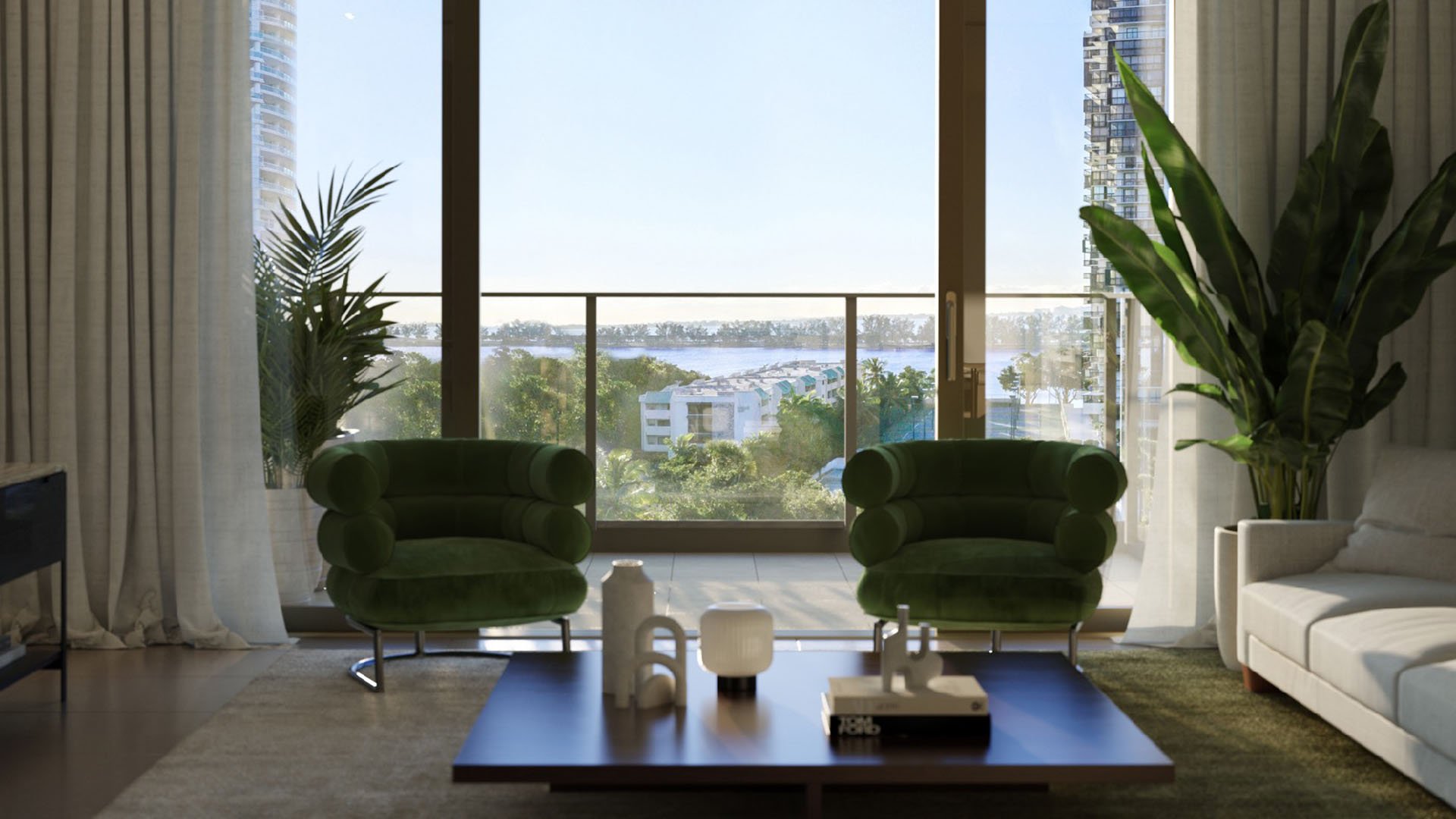
For all the conversation around migration, tax strategy, and headline-grabbing purchases, buyers moving capital into Florida real estate are making notably disciplined choices. In South Florida, the pattern is less about speculative accumulation and more about acquiring property that answers to lifestyle, privacy, service, resilience, and long-term usability.
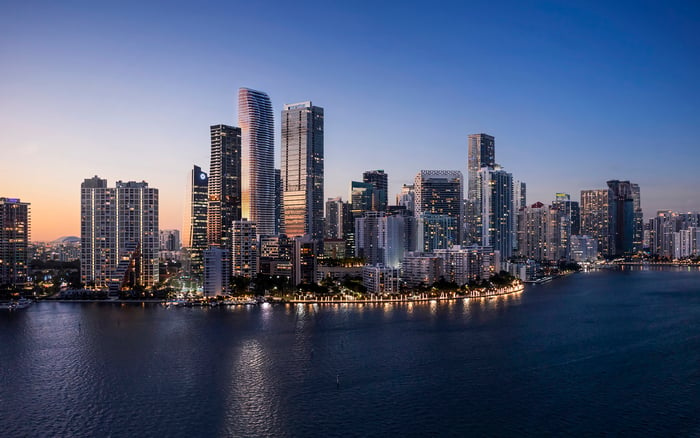
The center of gravity remains clear. Waterfront and beachfront homes continue to draw serious interest, particularly in Miami Beach, Coral Gables, and Coconut Grove, where direct water access, privacy, and proximity to urban amenities create lasting premiums. At the same time, new-construction condominiums in Brickell, Downtown Miami, and Wynwood are capturing a meaningful share of capital from buyers seeking contemporary design, managed amenities, and less exposure to the maintenance concerns that can come with older buildings.
Current data supports the broad demand story, but it also calls for precision. According to MIAMI Realtors, Miami-Dade total residential sales rose 6.6% year over year in March 2026, while $1 million-plus single-family sales increased 19.83% and $1 million-plus condo sales increased 9.77%. The same report showed 5.7 months of single-family supply and 13 months of existing condominium supply, so the market is not uniformly tight. Buyers are rewarding the best assets, not every asset.
Florida’s lack of state personal income tax remains a meaningful motivation for many private households, especially those arriving from high-tax states. But once capital arrives, it is not being deployed indiscriminately.
The sophisticated buyer is not simply asking where to park wealth. The more important question is what kind of ownership aligns with how the household intends to live. For some, that means a primary residence with enough scale for family, staff, and entertaining. For others, it means a second home that can evolve into a more permanent base. Increasingly, international and domestic buyers alike are also screening for flexibility, favoring assets that can function first as a residence while still offering long-term value, optional rental potential, or lock-and-leave convenience.
This is one reason Brickell continues to attract interest. Buyers drawn to the district’s density and convenience are often less interested in legacy stock and more focused on contemporary product such as 888 Brickell by Dolce & Gabbana or The Residences at 1428 Brickell, where new systems, modern layouts, and service infrastructure align with current expectations for a primary or semi-primary urban residence.
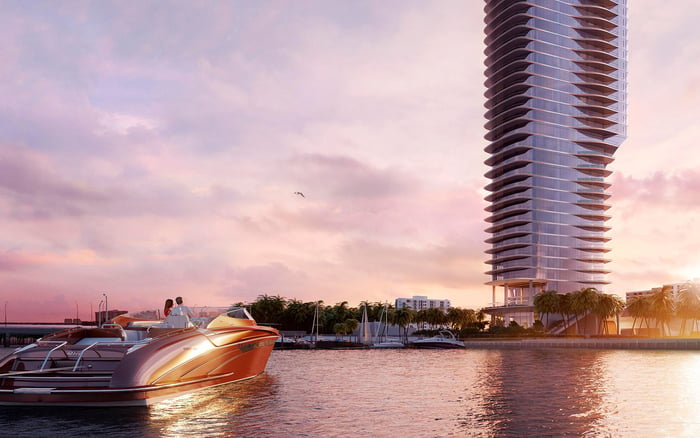
On the waterfront, capital still chases a very specific mix: views, boating access, privacy, elevation, resilience, and a finished product that feels immediately usable. Bayfront and canal-front homes remain especially compelling because they pair seclusion with quick access to walkable districts, marinas, dining, and cultural anchors. In a market where time has become its own luxury, convenience matters nearly as much as frontage.
Beachfront condominium buyers are equally selective. The most desirable inventory tends to be penthouses, corner residences, and larger layouts with expansive terraces, protected views, private arrival sequences, and credible building operations. Buyers increasingly expect smart-home systems, private elevator access, entertainment space, and substantial outdoor living. The emphasis is shifting from interior square footage alone to a more complete residential experience.
That logic explains the continuing appeal of highly curated oceanfront product in Miami Beach and South of Fifth settings. Residences such as 57 Ocean Miami Beach and The Perigon Miami Beach fit the prevailing preference for direct water orientation, strong design identity, and turnkey finishes. In the most prized enclaves, buyers are still willing to pay a premium for immediate views, walkability, and a residence that does not require a prolonged repositioning effort.
The advantage new construction holds in South Florida is not merely aesthetic. It is operational and psychological.
Condo buyers have become notably more attentive to building condition, reserve funding, insurance, and engineering oversight, particularly when comparing newer towers with aging inventory. Florida DBPR confirms that many condominium and cooperative buildings of three or more habitable stories are subject to milestone-inspection and structural-integrity reserve-study requirements. In that environment, recently delivered or newly planned residences benefit from cleaner narratives around systems, design standards, amenity programming, and ownership experience.
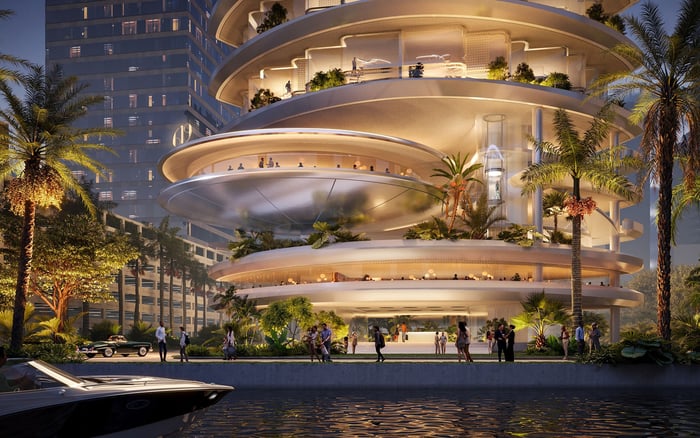
This is especially visible in Downtown and adjacent urban nodes, where product such as Waldorf Astoria Residences Downtown Miami and Aston Martin Residences Downtown Miami speaks to buyers seeking brand clarity, service density, and immediate access to business and entertainment districts. Service-heavy branded residences and club-style buildings have widened the buyer pool by appealing to owners who want concierge support, security, and hospitality-level amenities embedded into everyday ownership.
For many households, that package is now worth paying for. It reduces friction, supports lock-and-leave use, and helps the home function whether the owner is in residence full time or only part of the year.
Even as towers gain market share, the single-family and estate segment remains central to capital allocation. Coral Gables continues to attract buyers who want larger lots, architectural distinction, and privacy that high-rise living cannot fully replicate. Coconut Grove holds a similarly durable position for buyers who value greenery, bay access, and a more residential cadence without giving up the urban core.
That is why low-density and boutique opportunities still resonate. In the Grove, projects such as Park Grove Coconut Grove blur the line between vertical living and estate-style privacy, appealing to buyers who want services without sacrificing scale or discretion. The appeal is not novelty. It is control: more private arrival sequences, more meaningful outdoor space, and a setting that feels residential rather than transient.
For estate buyers, the acquisition is often less about short-term upside and more about permanence. Land, frontage, and privacy remain irreplaceable. In a region where many premium condominiums can be developed or reimagined over time, a truly exceptional lot or water position is far harder to replicate.
International demand remains one of South Florida’s defining advantages. According to MIAMI Realtors’ 2025 International Report, foreign buyers purchased $4.4 billion of South Florida residential property in 2025, up from $3.1 billion in 2024, and Miami-Dade accounted for 73% of South Florida foreign-buyer purchases. The same report said 51% of international residential transactions in South Florida were all-cash.
The new-construction channel is even more internationally exposed. According to MIAMI Realtors’ November 2025 New Construction Global Report, global buyers purchased 52% of new South Florida construction, pre-construction, and condo-conversion sales over the prior 22 months, with buyers from 73 countries. That helps explain why branded, service-heavy, and turnkey projects continue to command attention.
The important caveat is that demand depth does not replace underwriting. It supports liquidity in the best assets, but buyers still need to review pricing, competing supply, delivery timeline, developer incentives, reserve requirements, insurance, flood exposure, and resale assumptions.
In South Florida, the most compelling opportunities are often defined by timing, discretion, and access as much as by price. MILLION helps buyers navigate trophy and luxury inventory through a tailored process that can include public listings, new-development allocations, and select off-market or pre-market opportunities where available. For buyers who want the best real estate solution for a focused South Florida search, MILLION brings the process back to what matters most: scarcity, privacy, livability, and fit.
Private buyers are not purchasing purely for appreciation. Increasingly, they are evaluating whether a residence can support more than one use case over time.
Rental potential has become a secondary screening factor, particularly in neighborhoods tied to tourism, business travel, and urban lifestyle demand such as Wynwood, Miami Beach, and Brickell. That does not mean the luxury buyer is suddenly acting like a yield-first investor. It means optionality matters. A property that can perform as a primary home, second home, or selectively rented asset offers a more resilient ownership profile.
At the same time, pricing and liquidity should be tested property by property. Individual and institutional capital remain active, but both are behaving with greater selectivity. Buyers willing to spend at the top of the market now want conviction around location, building quality, insurance, resilience, and future livability.
The buyer moving capital into Florida real estate is not buying indiscriminately and is not buying only for prestige. The strongest demand is concentrating around a clear hierarchy of priorities: waterfront first, new construction where the risk profile is strong, branded or service-rich residences for ease, and estate-quality privacy where density feels like a compromise.
In practical terms, the most competitive properties are those that combine tax efficiency with daily usefulness. They are homes that can host family, support hybrid living, protect privacy, and preserve optionality. They feel finished, operational, and emotionally convincing from day one.
Risk management is now part of the luxury definition. The Florida Office of Insurance Regulation’s July 2025 Property Insurance Stability Report points to a stabilizing market, but South Florida insurance costs remain important to underwriting. Miami-Dade County’s sea-level-rise materials show why elevation, storm hardening, drainage, and flood exposure belong in any serious acquisition review.
That is the real story behind luxury demand in South Florida. Capital is still flowing, but it is flowing toward residences that function as complete assets, not simply expensive addresses. This article is general editorial information, not legal, tax, insurance, or investment advice.
Why are buyers moving capital to Florida real estate? Tax efficiency remains part of the appeal, but most buyers are ultimately seeking lifestyle, privacy, and a residence that works as a long-term base.
What types of properties are most in demand? Waterfront estates, beachfront residences, and new-construction luxury condominiums are drawing strong interest, especially when they combine scarcity with strong operations.
Is the South Florida market uniformly tight? No. Current Miami-Dade data shows a split market, with tighter single-family supply and more available existing condo inventory.
Why is new construction attracting so much capital? Buyers value modern design, amenity packages, lower-friction ownership, and greater confidence around building systems and reserve planning.
Which condo layouts are most desirable right now? Penthouses, corner units, and larger residences with expansive terraces, protected views, and private arrival sequences are especially sought after.
Are buyers still focused mainly on appreciation? No. Many are prioritizing primary-residence quality, flexibility, and, in some cases, modest rental optionality over purely speculative upside.
Why do branded residences appeal to this audience? They offer concierge service, security, and hospitality-level amenities that make ownership more seamless.
Is older condo stock losing relevance? Not entirely, but buyers are scrutinizing reserves, engineering, milestone-inspection status, insurance, and physical condition more carefully than before.
What makes Coral Gables and Coconut Grove stand out? Both offer privacy and a more residential feel, while Coral Gables is particularly appealing for larger lots and distinctive estates.
Does rental potential matter to luxury buyers? Yes, though usually as a secondary consideration rather than the main reason to buy.
To compare the best-fit options with discretion and reach South Florida’s scarce luxury and trophy inventory, connect with MILLION for a tailored shortlist and access to select residences.
If branded residences are on your mind — as a home or as an allocation — we would be glad to share what we are seeing, privately.
Begin a quiet conversation