Florida luxury real estate appeals to sophisticated buyers for far more than the absence of state income tax. In South Florida, ownership blends tax efficiency with homestead benefits, estate-planning considerations, global connectivity, waterfront access, and a lifestyle built around climate, culture, and service. From Brickell and Miami Beach to Fisher Island and Palm Beach, the state’s premium residential market offers a rare mix of privacy, convenience, and long-term wealth utility.
The shorthand explanation for Florida’s enduring draw is simple: no state income tax. For sophisticated buyers, however, that is only the beginning. The real appeal of Florida real estate, especially in South Florida, is that ownership can sit at the intersection of lifestyle, balance-sheet strategy, and everyday convenience.
The legal framework matters. The Florida Constitution limits state taxation of the income of natural persons, and the Florida Department of Revenue confirms that Florida’s estate tax was eliminated for decedents dying after December 31, 2004. A qualifying permanent residence may also benefit from Florida’s homestead exemption, which the Department says can reduce taxable value by as much as $50,000 and qualify the home for Save Our Homes assessment limitations. For 2026, the Department’s Save Our Homes publication lists the annual cap at 2.7%.
Those advantages are meaningful, but they should be described accurately. Homestead treatment depends on eligibility and permanent residence. Asset-protection, estate, and domicile considerations are fact-specific and require professional advice. The strongest Florida ownership case is not a slogan; it is a combination of legal structure, actual use, property quality, and lifestyle fit.
South Florida offers something many prime markets cannot: true four-season livability without a winter shutdown. The climate supports boating, golf, tennis, and outdoor entertaining throughout the year, which directly shapes how a residence is used. A waterfront terrace in January is not a theoretical amenity. It is part of daily life.
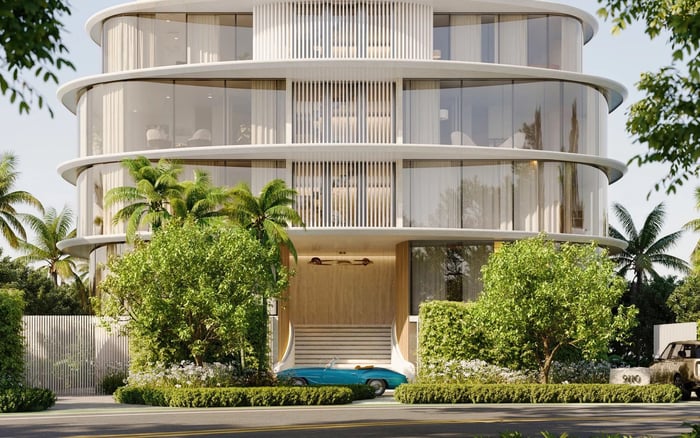
This practical luxury helps explain why the region’s best homes are valued not only for their finishes, but for what they make possible. In Miami Beach, projects such as 57 Ocean Miami Beach appeal to buyers who want immediate access to the water and a residence that feels integrated with health, leisure, and service. In Brickell, full-service addresses like The Residences at 1428 Brickell reflect a different but equally compelling advantage: the ability to move between private home, office, dining, and international travel with minimal friction.
The luxury buyer in Florida is often purchasing time as much as square footage. Time outdoors. Time on the water. Time saved through concierge infrastructure and turnkey management.
The strongest luxury markets combine pleasure with utility. South Florida does this exceptionally well. Miami International Airport reported 55.3 million passengers in 2025, including 24.8 million international passengers, and lists nonstop service to 190 destinations through 57 passenger carriers. For owners with business, family, or philanthropic commitments in multiple countries, that connectivity matters.
Miami’s role as a gateway to Latin America adds another layer of relevance. The city is not simply a resort market. It functions as an international base, supported by legal, banking, and advisory infrastructure designed for cross-border lives. For many global buyers, Miami real estate is more than a residence. It becomes a U.S.-dollar-denominated foothold with practical reach.
The surrounding culture reinforces the appeal. The Design District, Wynwood, and the city’s broader dining and fashion scene create an ecosystem that feels globally fluent. Owners can move from private meetings in Brickell to gallery dinners and waterfront entertaining without leaving a compact geography. That blend of commerce and culture is a major reason neighborhoods such as Brickell, South Beach, and Coral Gables continue to command high-end demand.
For buyers who want a home that mirrors this polished urban rhythm, 888 Brickell by Dolce & Gabbana captures the branded, service-oriented direction of the district, while Ponce Park Coral Gables aligns with the quieter, legacy-minded appeal of Coral Gables living.
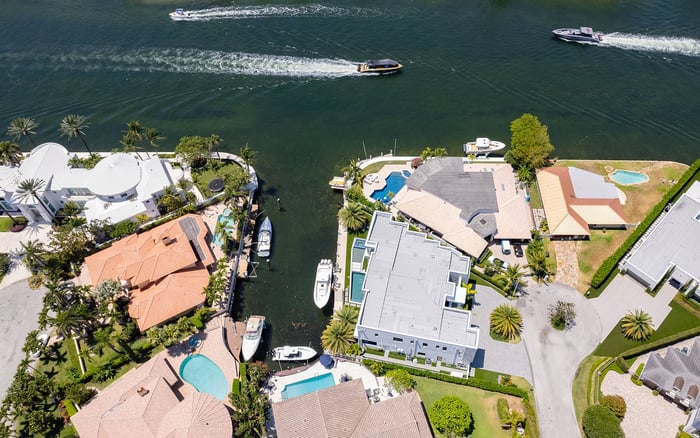
At the top of the market, water remains the great differentiator. South Florida offers direct ocean and bay access, private docks in many enclaves, and immediate proximity to major yachting routes. In luxury real estate, scarcity is rarely abstract. It is geographic. There are only so many truly prime shorelines, protected views, and private marinas.
That is why neighborhoods and islands with constrained inventory maintain such strong prestige. Fisher Island is the clearest example. Controlled access, a private island setting, and limited residential supply create a level of separation that is increasingly difficult to replicate. The appeal is not only privacy, but the way residential ownership merges with club-style living: marina access, beach amenities, and resort-caliber services in one environment.
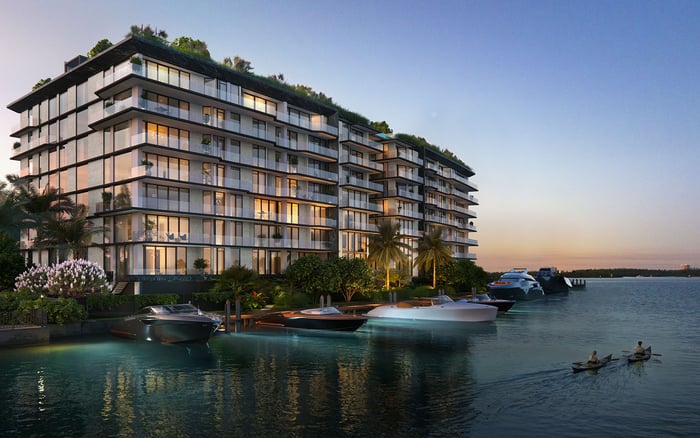
For buyers drawn to that rarefied setting, The Links Estates at Fisher Island represents the kind of scarcity-driven offering that defines the state’s uppermost tier. Elsewhere, waterfront product in Miami Beach and along Biscayne Bay continues to attract buyers seeking turnkey residences with hotel-style amenities and a stronger sense of service than traditional ownership once offered.
For buyers drawn to Florida’s tax, lifestyle, and access advantages, the practical challenge is separating truly scarce inventory from attractive marketing. MILLION offers a discreet real estate solution for South Florida’s trophy and luxury property search, combining tailored guidance with access to public listings, new-development opportunities, and select inventory that may not be broadly available. That approach is especially valuable where privacy, service, waterfront positioning, and building quality matter as much as the address itself.
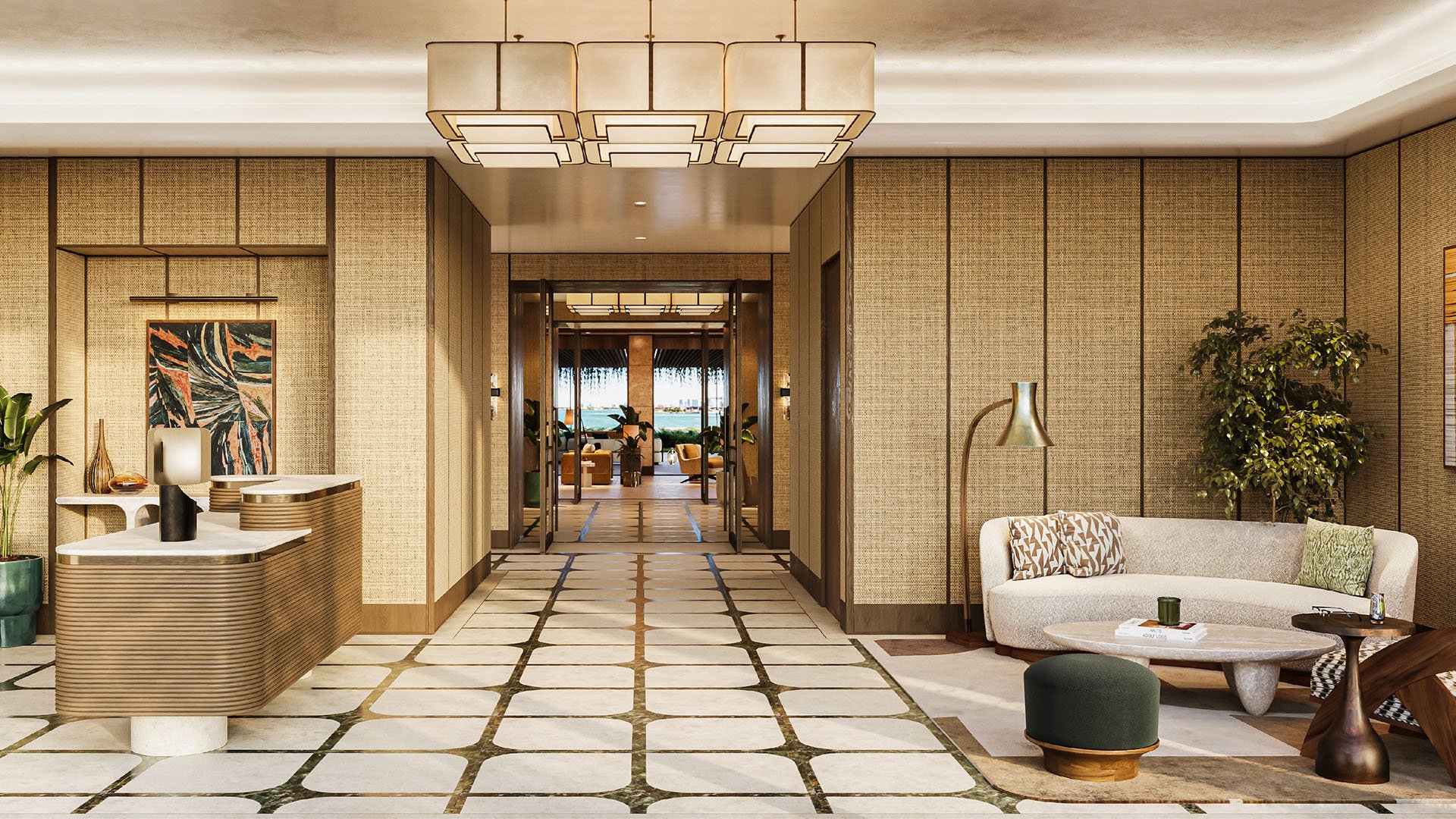
One of the clearest shifts in Florida’s premium market is buyer preference for homes that operate almost like private resorts. New development across Miami-Dade has leaned heavily into spas, concierge programs, wellness spaces, entertainment suites, and other full-service elements. This is not decorative excess. It reflects a fundamental expectation that a modern luxury residence should reduce operational burdens while elevating daily life.
That is especially relevant for second-home owners, international families, and entrepreneurs who split time between markets. They often want a home that is ready upon arrival and easy to manage in their absence. Branded residences and newer condominiums have responded by building hospitality-level service structures around private ownership.
In Edgewater, Aria Reserve Miami exemplifies demand for newer waterfront product that combines dramatic outlooks with deep amenity offerings. The trend is equally visible across Miami Beach, Brickell, and other prime districts, where buyers increasingly favor residences that deliver privacy without sacrificing support.
The demand story is real, but it should be framed with current data rather than broad claims. According to MIAMI Realtors, foreign buyers purchased $4.4 billion of South Florida residential property in 2025, up from $3.1 billion in 2024. MIAMI Realtors also reported that global buyers purchased 52% of new South Florida construction, pre-construction, and condo-conversion sales over a recent 22-month period, with buyers from 73 countries.
The domestic migration story is more nuanced. The U.S. Census Bureau reported in January 2026 that Florida’s net domestic migration slowed sharply in 2025 from the levels seen in 2022 and 2023. That does not diminish Florida’s luxury appeal. It simply means the most reliable argument is not “everyone is moving here.” It is that South Florida continues to combine tax advantages, international liquidity, lifestyle infrastructure, and scarce prime product.
The market itself is also segmented. According to MIAMI Realtors’ March 2026 release, Miami-Dade total sales rose 6.6% year over year, and $1 million-plus single-family and condo sales both increased. Yet existing condominium supply stood at 13 months, while single-family supply stood at 5.7 months. Buyers should therefore distinguish best-in-class assets from broader inventory.
Florida’s luxury identity is not monolithic. Miami brings international energy, entrepreneurial momentum, and cultural density. Palm Beach offers something different: private clubs, social continuity, and a long-established network of prestige. For many private buyers, these are complementary rather than competing propositions.
Miami is dynamic and globally connected. Palm Beach is deeply established and socially codified. Together, they explain why Florida performs so well with buyers seeking both opportunity and permanence. Some want a city-facing base near finance, art, and aviation. Others prioritize quieter prestige and club-centered life. Many ultimately choose both.
This dual-market character is one reason Florida remains unusually resilient in the luxury imagination. It can serve the founder, the collector, the international family, and the legacy buyer at once.
When buyers choose premier Florida real estate, they are not simply minimizing state tax exposure. They are acquiring a warmer annual rhythm, easier access to global travel, a more usable relationship to waterfront living, and, in many cases, an ownership structure that complements broader wealth planning.
They are also buying into a region that understands luxury as service. The most compelling residences are not just beautiful. They are efficient, private, and aligned with how sophisticated owners actually live now: internationally, seasonally, and with high expectations for discretion.
The diligence file should be equally sophisticated. The Florida Office of Insurance Regulation’s July 2025 Property Insurance Stability Report points to market stabilization, but insurance remains a material ownership cost in coastal South Florida. Miami-Dade County’s sea-level-rise materials also make elevation, flood exposure, and resilience planning central to long-term ownership. Florida DBPR’s condominium inspection and reserve-study requirements should be reviewed carefully for applicable buildings.
That is the deeper story behind Florida’s sustained pull. Tax policy may open the conversation. Lifestyle, access, scarcity, service, and disciplined risk management are what close it. This article is general editorial information, not legal, tax, insurance, or investment advice.
Is Florida luxury real estate mainly attractive because there is no state income tax? No. For many buyers, the broader appeal is the combination of tax efficiency, lifestyle quality, global access, premium inventory, and service infrastructure.
What is the homestead exemption in Florida? A qualifying permanent residence may receive a homestead exemption that can reduce taxable value by as much as $50,000.
Why do buyers value Florida homestead status? Beyond property-tax relief, homestead status may qualify the property for Save Our Homes assessment limitations, but eligibility depends on permanent-residence facts.
Does Florida have a state estate or inheritance tax? Florida’s estate tax was eliminated for decedents dying after December 31, 2004, according to the Florida Department of Revenue.
Why is Miami especially important in the luxury market? Miami combines international connectivity, business infrastructure, culture, and strong demand for high-end residences.
What makes waterfront homes in South Florida so desirable? Prime residences often offer direct ocean or bay access, private docks, protected views, and proximity to major boating routes.
Why does Fisher Island stand out among luxury enclaves? Its private island setting, controlled access, and limited inventory create a rare level of exclusivity and scarcity.
How important are amenities in today’s luxury developments? Very important. Buyers increasingly expect wellness, concierge, entertainment, security, and resort-style services within the residence.
Why do international buyers continue to choose South Florida? Many value Miami’s role as a gateway city and see Florida real estate as a U.S.-dollar-denominated asset in a globally recognized market.
How should buyers think about Florida’s luxury appeal overall? The strongest view is holistic: tax advantages matter, but enduring value comes from lifestyle, access, scarcity, service, and risk-aware underwriting.
For a discreet path into South Florida’s most limited luxury and trophy inventory, connect with MILLION for tailored guidance, private comparisons, and access to select residences.
If branded residences are on your mind — as a home or as an allocation — we would be glad to share what we are seeing, privately.
Begin a quiet conversation