A buyer-focused comparison of Midtown Miami and Edgewater, examining how daily walkability, arrival experience, privacy, and service expectations shape the luxury residential decision.

Midtown Miami and Edgewater sit close enough to be compared in the same conversation, yet they answer different instincts. Both speak to buyers who want an urban Miami address without sacrificing design, convenience, or a polished residential experience. The distinction is not simply distance. It is how the day feels from the moment one leaves the lobby.
In Midtown, walkability is often defined by immediacy. The neighborhood experience tends to revolve around short, practical movements: coffee, a fitness class, a casual dinner, a quick retail stop, then back home without turning the day into an itinerary. It is convenience at street level, valuable to buyers who want the city to feel usable rather than ceremonial.
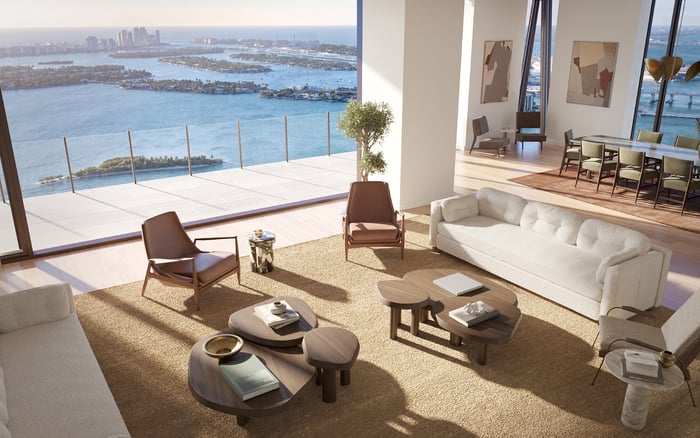
Edgewater, by contrast, tends to attract residents who want proximity to urban life while preserving a more composed residential atmosphere. The daily experience often places greater weight on arrival, privacy, view orientation, and the feeling of returning to a calm vertical home. For a buyer considering Aria Reserve Miami or EDITION Edgewater, the question is not whether the city is close. It is how much of the city should enter the residence.
Midtown Miami is best understood as a neighborhood for buyers who value frictionless errands and spontaneous plans. Its version of walkability is not only scenic strolling. It is the density of daily uses, the ability to keep a schedule fluid, and the sense that one can leave the car behind for meaningful portions of the week.
That makes Midtown especially appealing to residents who dislike over-programming their lives. A buyer drawn to Miami Design Residences Midtown Miami may be thinking less about a resort-style escape and more about an address that supports a full, active, culturally adjacent routine. The neighborhood’s value proposition is practical but still elevated: live near energy, keep movement simple, and make home feel connected rather than secluded.
Service expectations in Midtown often follow the same logic. Residents may prize efficiency, secure access, responsive management, package handling, and easy guest arrival. The service layer matters, but it is frequently measured by usefulness. Does the building make life easier? Does the staff understand pace? Does the lobby transition smoothly from workday to dinner plan to weekend errand?
Edgewater’s walkability is more nuanced. It can offer access to surrounding districts, but its luxury appeal often comes from the balance between connection and retreat. Many buyers are not trying to live in the most animated street environment. They want the advantages of urban proximity while returning to a residence that feels buffered, private, and deliberate.
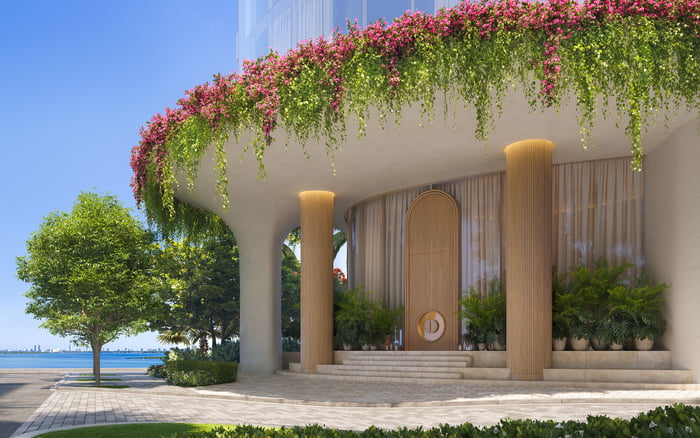
That is why the Edgewater conversation often begins at the entrance. A porte cochere, lobby sequence, elevator experience, and staff choreography can matter as much as what is within a short walk. The buyer is asking whether the building creates a graceful threshold between Miami’s movement and the private life above it.
Projects such as The Cove Residences Edgewater and Villa Miami naturally sit in this conversation because Edgewater buyers often evaluate the full residential ritual: arrival, privacy, service, views, wellness, entertaining, and the ease with which household routines can be managed discreetly.
The most important difference may be emotional rather than geographic. Midtown service expectations often lean toward speed, access, and everyday competence. The ideal building feels intelligent and unfussy. Residents want the staff to solve practical details without making the experience feel overly formal.
Edgewater expectations can be more layered. Buyers may look for hospitality cues, a higher level of discretion, and a building culture that anticipates needs before they become requests. The residence is not just a place to sleep between engagements. It is a private environment that should protect time, reduce noise, and support entertaining without compromising personal space.
Neither model is superior. They serve different definitions of luxury. One buyer may view walkable retail as the ultimate amenity. Another may see a quiet elevator ride, a well-managed arrival, and a serene primary suite as more valuable than being steps from every daily need.
A serious comparison should begin with the week, not the brochure. How often will you walk for coffee, meals, fitness, or errands? Do you entertain at home or meet friends out? Do you want your building to feel like an urban launchpad or a private retreat? Do you prefer visible neighborhood energy, or do you prefer to access that energy selectively?
For new-construction buyers, the decision should also include the building’s operating philosophy. A beautiful amenity deck is not the same as excellent service. A dramatic lobby is not the same as a seamless arrival. The right residence is the one where the building’s rhythm matches the owner’s rhythm.
Midtown may suit the buyer who wants a more casual, kinetic, street-connected lifestyle with less dependence on formal planning. Edgewater may suit the buyer who wants Downtown adjacency, water-oriented calm, and a more curated transition between public and private life. The best choice is not the louder address. It is the address that makes daily life feel most natural.
Midtown Miami and Edgewater are neighboring markets, but they are not substitutes. Midtown is compelling when walkability means convenience, spontaneity, and an active urban routine. Edgewater is compelling when walkability is secondary to atmosphere, privacy, and a refined service envelope.
The right decision depends on temperament. If the pleasure of ownership comes from stepping directly into the city, Midtown has a persuasive logic. If the pleasure comes from being close to the city while living above it with composure, Edgewater may feel more aligned. In either case, the most discerning buyers will look beyond finishes and views to the subtle question that determines long-term satisfaction: how well does the building understand the way you actually live?
Is Midtown Miami more walkable than Edgewater? Midtown often feels more errand-oriented at street level, while Edgewater is typically evaluated through proximity plus residential calm.
Is Edgewater better for privacy? Edgewater often appeals to buyers who place a premium on arrival sequence, discretion, and a quieter threshold between home and city.
Which neighborhood feels more urban? Midtown may feel more immediately urban on foot, while Edgewater can feel more vertical, residential, and composed.
Do service expectations differ between the two areas? Yes. Midtown buyers may prioritize efficient daily support, while Edgewater buyers may expect a more choreographed hospitality experience.
Is Midtown better for a car-light lifestyle? It can be attractive for buyers who want more routine errands and casual plans to happen close to home.
Is Edgewater only about views? No. Views matter, but buyers also consider privacy, arrival, building culture, amenities, and staff discretion.
Which is better for entertaining? Edgewater may appeal to those who entertain at home, while Midtown may appeal to those who prefer meeting out nearby.
Should I choose based on amenities? Amenities matter, but long-term satisfaction usually depends on service quality, access, privacy, and daily rhythm.
Are Midtown and Edgewater comparable for investment-minded buyers? They can be compared, but the lifestyle thesis is different, so buyer demand should be evaluated through each neighborhood’s use case.
What is the simplest way to decide between them? Spend time walking each area at the hours you actually live, then compare how the building experience feels when you return.
If you'd like a private walkthrough and a curated shortlist, connect with MILLION.
If branded residences are on your mind — as a home or as an allocation — we would be glad to share what we are seeing, privately.
Begin a quiet conversation