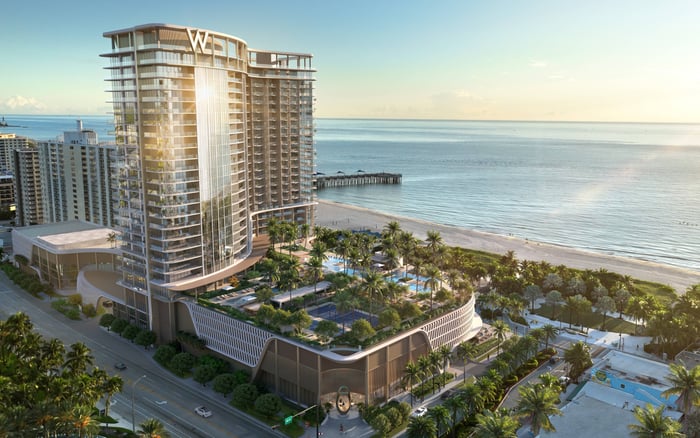
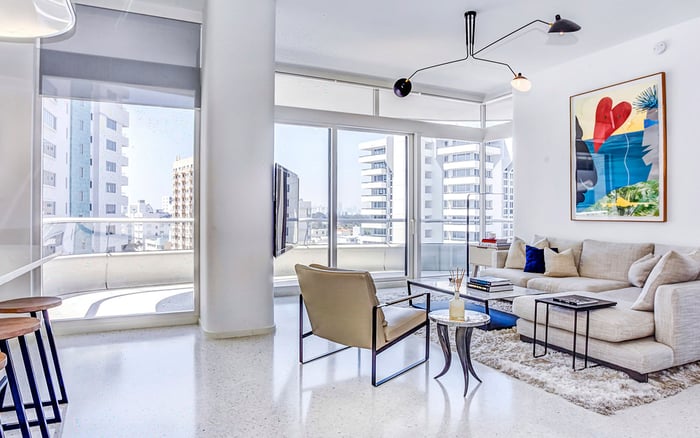
Renderings can communicate mood, proportion, and lifestyle, but they do not define what an owner may alter after closing. This guide frames the renovation questions buyers should resolve before relying on design flexibility at Armani Casa Residences Pompano Beach.

At Armani Casa Residences Pompano Beach, the buyer’s eye is naturally drawn to proportion, finish, light, and the promise of a composed coastal life. A rendering can be persuasive because it compresses the dream into a single frame. What it cannot do is tell a buyer which walls may move, which floors may be replaced, which terraces may be touched, or whether a future renovation will require one signature or several.
That distinction matters in the upper tier of South Florida real estate. Buyers often arrive with a designer, an art consultant, a kitchen concept, or a plan to personalize a residence after closing. The risk is not that customization is impossible. The risk is assuming it is available before reading the documents that control it.
For a serious buyer, Armani Casa Residences Pompano Beach should not be evaluated only through shorthand such as Pompano Beach, new construction, oceanfront, balcony, or terrace. It should be evaluated as a governed condominium environment where design intent, brand identity, association control, and building systems may all shape what an owner can actually change.
The first renovation question is not aesthetic. It is documentary. Before contract or closing, buyers should request the condominium declaration, bylaws, rules and regulations, architectural-review procedures, purchase agreement, and any developer design guidelines. These are the materials most likely to explain who controls alterations and what the approval path looks like.
The central issue is authority. A buyer should confirm whether unit alterations require approval from the association, the developer, an architectural-review committee, the property manager, or some combination of them. In a branded setting, the answer can be especially important because design consistency may have value beyond an individual unit. What feels like a private interior decision may still affect common elements, exterior appearance, acoustic performance, building systems, or the visual identity of the property.
This same discipline applies when comparing other branded or design-forward coastal residences, from Armani Casa Sunny Isles Beach to newer Pompano Beach offerings. The names may differ, but the buyer’s document checklist should remain precise.
A branded residence is not a blank canvas in the ordinary sense. The brand is part of the value proposition, and buyers should verify whether that identity carries restrictions after closing. The practical questions are direct: Can visible finishes be changed? Are entry doors controlled? Are window treatments subject to a standard? Are balcony areas, exterior-facing elements, railings, terrace surfaces, or exterior doors protected from owner modification?
The essential requirement is written confirmation. A verbal assurance in a sales setting is not the same as contract language, an approved alteration application, or a written interpretation from the controlling party. If a buyer is told that a feature can be customized, that understanding should be converted into written language before purchase or before any renovation budget is finalized.
This is not a narrow Armani Casa issue. Buyers looking across the Pompano Beach luxury corridor, including The Ritz-Carlton Residences® Pompano Beach, should treat branded or hospitality-influenced design standards as a diligence topic rather than a decorative footnote.
Kitchens, bathrooms, laundry rooms, plumbing stacks, drains, and waterproofing assemblies deserve special scrutiny. A rendering may suggest an elegant kitchen island or spa-like bath, but it will not reveal whether a buyer may relocate plumbing, expand a wet area, move a drain, alter waterproofing, or change the relationship between private space and shared systems.
These questions should be asked before a buyer commissions design work. If a planned renovation depends on moving a kitchen, enlarging a bathroom, relocating laundry, or altering waterproofing assemblies, the buyer needs to know whether the documents allow the work, who must approve it, and what technical submissions will be required.
The same caution applies to decorator-ready residences, furnished residences, penthouses, standard units, or units sold with branded interior packages. Renovation rights may not be identical across all product types. A buyer should ask whether restrictions differ by residence category and whether any included finish package limits later substitution.
Flooring is one of the most common places where luxury expectations meet condominium discipline. Buyers should verify whether hard-surface flooring is regulated, whether acoustic underlayment is mandatory, whether sound-transmission performance must be tested, and whether installation hours are limited.
A preferred stone, wood, or large-format surface may be beautiful in concept and complicated in execution. If an association requires specific acoustic materials, installation methods, contractor documentation, or inspections, the renovation budget can change. So can the schedule. The proper diligence question is not simply, “Can I replace the floors?” It is, “What exact assembly, approval, testing, and working-hour rules apply?”
This is why buyers comparing coastal residences such as W Pompano Beach Hotel & Residences should look beyond finish boards. The elegance of a completed residence depends partly on the invisible layers beneath the surface.
Some areas should be treated as high-risk until proven otherwise. Structural components, mechanical systems, electrical systems, plumbing systems, fire-safety systems, sprinklers, HVAC, and life-safety infrastructure may be restricted or entirely off-limits to owner modification. Buyers should not infer permission from access, visibility, or convenience.
Exterior-facing elements require even more caution. Balconies, terraces, facades, windows, railings, and exterior doors can affect the building as a whole. A buyer who wants to add shade, change flooring on a terrace, alter exterior lighting, modify doors, or install anything visible from outside should obtain written confirmation before relying on the idea.
That approach is equally useful when evaluating other Pompano Beach projects, including Waldorf Astoria Residences Pompano Beach. The more visible the proposed change, the more important the written approval path becomes.
Buyers should separate three ideas that are often blended in conversation: pre-closing customization, post-closing renovation, and association-approved alterations after turnover. They are not interchangeable. A developer may offer certain choices before delivery, while later changes may be subject to a different process. Alternatively, some alterations may not be considered until the association or other governing body is in control.
The purchase agreement and design guidelines should be reviewed for the timing and form of any customization rights. If a buyer expects to personalize finishes, rework millwork, revise lighting, or alter space planning, the right question is when that request can be made, who decides, and what happens if approval is denied.
The operational side also deserves attention. Buyers should confirm insurance requirements, contractor licensing rules, indemnity obligations, deposits, elevator reservations, debris-removal procedures, and work-hour limits. These items may sound administrative, but they can shape the cost and feasibility of even a refined renovation.
Before relying on any renovation assumption at Armani Casa Residences Pompano Beach, a buyer should reduce the plan to a written scope and ask for written answers. Which elements are purely interior? Which affect common elements? Which are visible from outside? Which touch wet areas, floors, structure, systems, life safety, or brand standards? Which approvals are required before work begins?
The goal is not to discourage customization. It is to protect the buyer’s expectations. In luxury real estate, the most expensive surprise is often not the price of the material. It is discovering that the desired alteration cannot be approved, cannot be scheduled as expected, or requires a level of documentation that was never included in the original budget.
Do renderings show what I can renovate after closing? No. Renderings show design intent and lifestyle, while renovation rights are controlled by governing documents and written approvals.
Which documents should I request before assuming changes are allowed? Request the condominium declaration, bylaws, rules and regulations, architectural-review procedures, purchase agreement, and any developer design guidelines.
Who may need to approve alterations? Approval may involve the association, developer, architectural-review committee, property manager, or more than one of them.
Are branded finishes always changeable? Not necessarily. Buyers should verify whether branded-design standards restrict visible finishes, entry doors, window treatments, balcony areas, or exterior-facing elements.
Why are wet areas a major diligence item? Kitchens, bathrooms, laundry areas, drains, plumbing stacks, and waterproofing can affect shared systems and may require strict approval.
Can flooring be replaced freely in a luxury condominium? It should not be assumed. Hard-surface flooring, acoustic underlayment, sound performance, and installation hours may all be regulated.
Are balconies and terraces private enough to modify? They may feel private, but balcony, terrace, facade, railing, window, and exterior-door changes should be confirmed in writing.
Is pre-closing customization the same as post-closing renovation? No. Pre-closing options, post-closing work, and association-approved alterations after turnover may follow different rules.
Should verbal customization promises be trusted? They should be documented. Any important promise should appear in contract language or written approval before purchase.
What costs can renovation rules add? Insurance, contractor licensing, deposits, elevator reservations, debris removal, indemnity, and work-hour limits can all affect the budget.
For a confidential assessment and a building-by-building shortlist, connect with MILLION.
If branded residences are on your mind — as a home or as an allocation — we would be glad to share what we are seeing, privately.
Begin a quiet conversation