A buyer-focused comparison of Miami Tropic Residences and Casa Bella by B&B Italia Downtown Miami, with attention to Design District access, architectural positioning, view exposure, amenities, and who each address best suits.
For design-conscious buyers in Miami, the appeal of living near the Miami Design District is not simply about shopping. It is about daily access to one of the city’s most refined concentrations of fashion, interiors, dining, and cultural programming. In that context, both Miami Tropic Residences and Casa Bella by B&B Italia Downtown Miami present a compelling proposition, but they do so from distinct urban vantage points.
Neither address sits within the official Design District boundaries. Instead, each offers convenient access, best understood as a short drive or ride rather than a practical everyday walk. Casa Bella, in Downtown, sits slightly closer to the district core, while Miami Tropic Residences, in Brickell at 500 Brickell Avenue, trades a bit of northbound distance for a more southerly position that can favor broader bay and skyline drama.
For a buyer deciding between Miami Tropic Residences and Casa Bella by B&B Italia Downtown Miami, the essential comparison is less about whether either can reach the Design District and more about what kind of life unfolds after the car ride ends.
The Miami Design District spans roughly from NE 29th Street to NE 36th Street, making both projects close enough to support frequent use. From either residence, buyers should think in terms of a 5 to 15 minute drive or ride-share, depending on traffic, time of day, and the precise destination within the district.
Casa Bella’s Downtown location gives it a slightly more direct relationship to the Design District. For buyers who expect to move regularly between home, Midtown, and the district’s retail and hospitality core, that subtle advantage matters. It places the project within a distinctly urban triangle of activity and aligns well with purchasers who value being in the center of Downtown and Edgewater momentum. In that broader conversation, neighboring luxury inventory such as Waldorf Astoria Residences Downtown Miami and Faena Residences Miami Downtown Miami helps define the caliber of the area’s luxury evolution.
Miami Tropic Residences is modestly farther south in Brickell, generally about 1.5 to 2 miles from the Design District. That said, buyers who already prefer Brickell’s financial, dining, and residential ecosystem may view the tradeoff as entirely rational. Brickell offers a more established live-work rhythm, and for some owners, occasional Design District visits are enough. Comparable luxury positioning in the neighborhood, including 888 Brickell by Dolce & Gabbana, reinforces how strongly Brickell continues to attract branded and design-led residential demand.
This is where the personalities separate clearly.
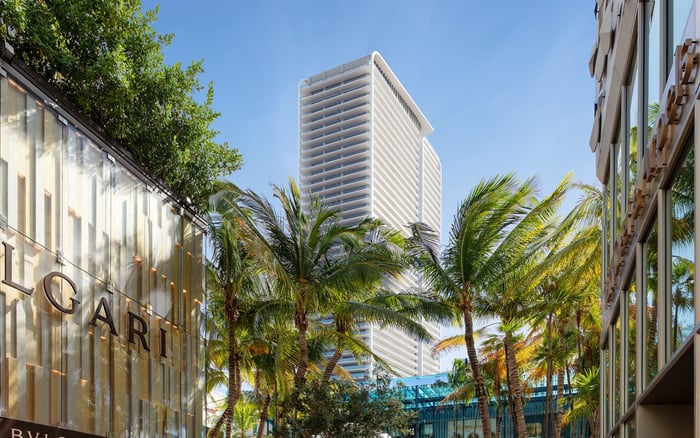
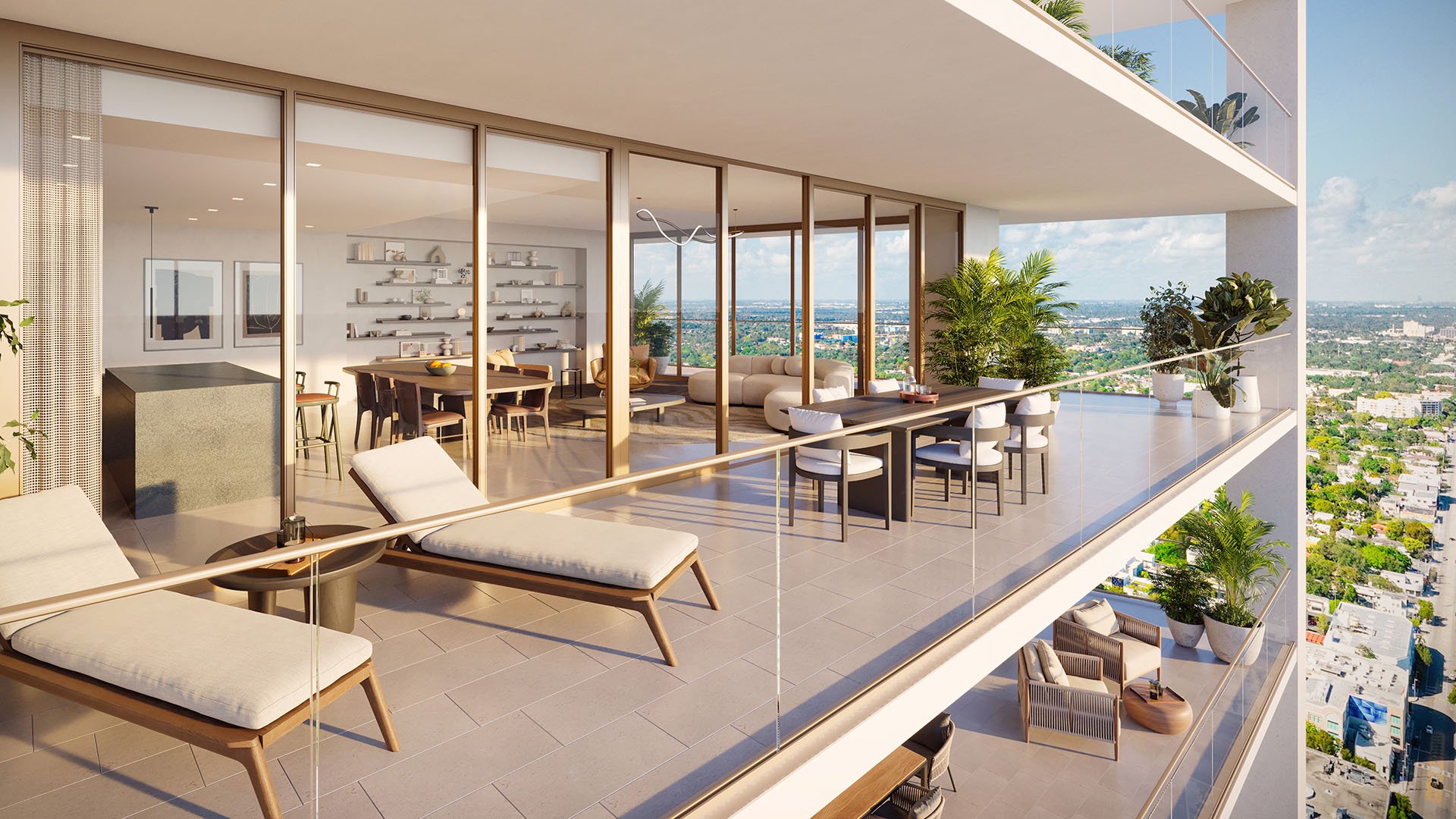
Miami Tropic Residences is described as a 60-story modernist tower by Herzog & de Meuron, with 278 residences ranging from studios to three-bedroom homes. That profile gives it architectural authorship, substantial vertical presence, and a format that can appeal to buyers who appreciate a recognizable design pedigree without requiring a fashion-house overlay. Its residences are described with floor-to-ceiling windows and private terraces oriented to maximize light and views, suggesting a living experience shaped as much by exposure as by finishes.
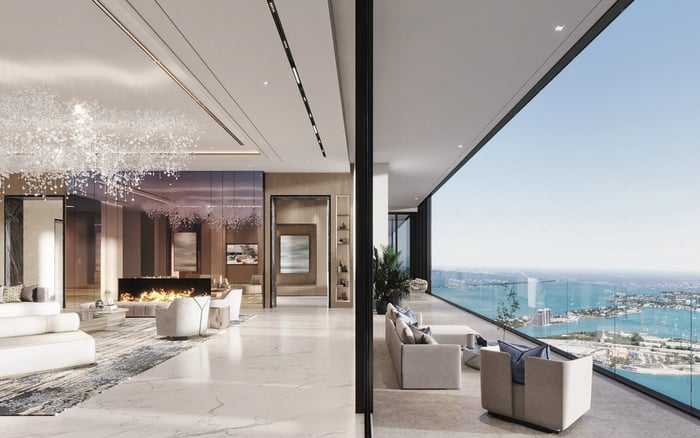
Casa Bella takes a different route. Its strongest distinction is the B&B Italia connection and the branded residential identity that comes with it. The interiors are framed around contemporary Italian design language, minimalist lines, and curated finishes. For some buyers, that matters more than tower authorship. A branded design partnership can create a more cohesive emotional experience from lobby to private residence, especially for owners who want the home to feel edited, furnished in spirit, and stylistically controlled.
In luxury terms, Miami Tropic reads as architecture-first. Casa Bella reads as interior-lifestyle-first. Neither is inherently superior. The better choice depends on whether a buyer wants a statement tower or a branded domestic atmosphere.
Views are often discussed too broadly in Miami. At both buildings, sightlines are unit-specific and floor-dependent, so no serious buyer should treat a general skyline claim as universal.
Still, there are meaningful distinctions. Miami Tropic Residences is positioned for Biscayne Bay, Port of Miami, and Downtown Miami skyline views, particularly from higher floors and favorable orientations. For buyers who prioritize visual breadth, this can be a notable advantage. A Brickell setting, paired with a 60-story profile and private terraces, suggests greater potential for layered outlooks that combine water, city lights, and maritime movement. The high-floor conversation is especially relevant here.
Casa Bella’s public positioning emphasizes Downtown skyline and nearby waterfront sightlines, supported by floor-to-ceiling glazing and outdoor terrace space. The outlook may feel more urban and immediate than expansive, depending on stack and elevation. For many buyers, that is not a compromise. It is a preference. Some owners want a composed metropolitan frame rather than a sweeping panoramic one.
If a purchaser’s first question is, “Where will the most dramatic evening view likely be found?” Miami Tropic may have the stronger argument. If the question is, “Which residence feels more connected to the Downtown skyline as a lived backdrop?” Casa Bella makes a persuasive case.
Miami Tropic Residences presents a more fully articulated amenity profile in publicly available material. The offering includes a residents’ club, spa, fitness center, yoga studio, and an outdoor pool deck overlooking Biscayne Bay. That lineup suggests a comprehensive lifestyle within the building, suitable for both primary owners and second-home buyers who want substantive wellness and leisure infrastructure on site.
Casa Bella’s public emphasis is more hospitality-driven: a design-forward lobby, concierge, branded service culture, and polished lifestyle positioning. It feels tailored to buyers who place a premium on arrival experience, aesthetic consistency, and service ambiance. That distinction matters in Downtown, where the luxury buyer often weighs the emotional polish of the building as heavily as raw amenity count.
Both projects also benefit from Downtown-area transit connectivity, including access to the Metromover. While few ultra-luxury buyers will choose either property solely for transit, the infrastructure supports staff movement, flexible commuting, and overall urban convenience.
Miami Tropic Residences is reported at roughly $800,000 to above $4 million, depending on size, floor, and exposure. That range gives buyers a visible framework and creates a broader entry spectrum, from more compact residences to higher-value homes with stronger orientation and elevation.
Casa Bella is firmly positioned in Downtown Miami’s luxury residential segment, but public pricing disclosure appears more limited. For some buyers, that is immaterial. They may already be selecting based on brand alignment, design intent, or preferred neighborhood identity rather than advertised pricing visibility.
The sharper question is who belongs where. Buyers who prioritize Brickell, architecture, amenity depth, and the possibility of more expansive water-view conditions may gravitate toward Miami Tropic Residences. Buyers drawn to Downtown, branded interiors, curated minimalism, and the convenience of slightly closer Design District access may find Casa Bella more resonant.
For proximity alone, Casa Bella has the cleaner relationship to the Miami Design District. For broader skyline and bay-view potential, Miami Tropic Residences appears to hold the advantage, especially for buyers targeting upper floors and favorable exposures.
That leaves the real decision where it should be in the luxury market: identity. Casa Bella speaks to the buyer who wants a branded design narrative in Downtown. Miami Tropic speaks to the buyer who wants an authored tower in Brickell with stronger emphasis on spatial outlook and a more fully detailed amenity program.
In practice, the better residence is the one that matches the cadence of your week. If the Design District is an extension of your living room, Casa Bella deserves close attention. If the terrace view is the ritual that defines ownership, Miami Tropic may be the more compelling address.
Is either project actually inside the Miami Design District? No. Both are outside the district’s official boundaries and are better understood as nearby luxury residences with convenient access.
Which project is closer to the Design District? Casa Bella is generally positioned a bit closer, at roughly 1 to 1.5 miles from the district core, while Miami Tropic is about 1.5 to 2 miles away.
Can residents realistically walk to the Design District from either building? Most buyers will treat the trip as a short drive or ride-share rather than an everyday walk.
Which building may offer better skyline views? Miami Tropic appears to have stronger potential for expansive bay and skyline views, particularly from higher floors and favorable orientations.
Does Casa Bella focus more on interior design than tower architecture? Yes. Its identity is closely tied to B&B Italia’s contemporary Italian design language and branded residential experience.
What is a major architectural distinction at Miami Tropic? It is described as a 60-story modernist tower by Herzog & de Meuron, giving it a strong architecture-led profile.
Are terraces important at both developments? Yes. Both are presented with floor-to-ceiling glazing and outdoor terrace space intended to enhance light and view corridors.
Which project has more publicly detailed amenities? Miami Tropic has the more explicitly outlined amenity program, including spa, fitness, yoga, club, and pool deck components.
Is pricing easier to understand at Miami Tropic? Generally yes, because Miami Tropic has a publicly reported range, while Casa Bella’s pricing is less openly detailed.
Who is the ideal buyer for each residence? Miami Tropic suits buyers seeking Brickell, high-floor potential, and broader outlooks, while Casa Bella appeals to those prioritizing Downtown, branded design, and proximity to the Design District.
For a confidential assessment and a building-by-building shortlist, connect with MILLION Luxury.
If branded residences are on your mind — as a home or as an allocation — we would be glad to share what we are seeing, privately.
Begin a quiet conversation