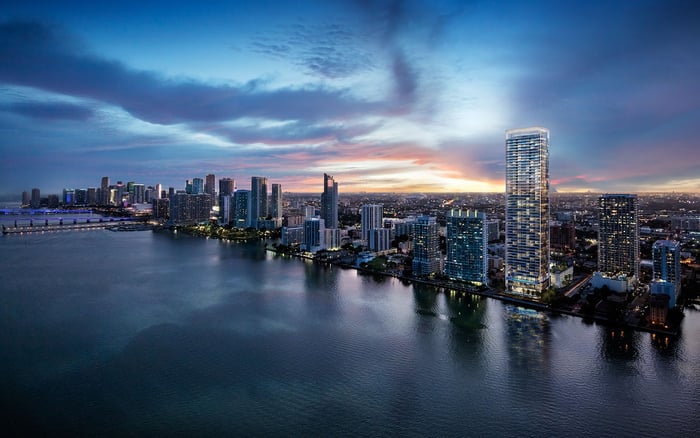
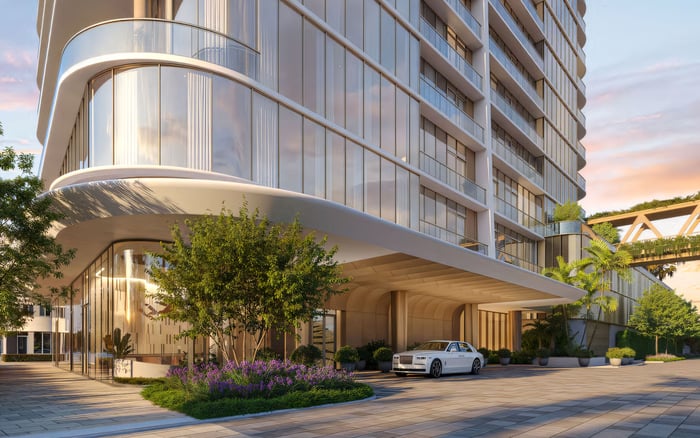
A discreet buyer’s guide to evaluating Miami Design Residences Midtown Miami through the lens of evening livability, art-district energy, privacy, access, and long-term fit.

For buyers considering Miami Design Residences Midtown Miami, the most revealing showing may not happen at noon. It may happen at 8:30 p.m., when restaurants are active, cars are circling for dinner reservations, residents are returning from work, and the neighborhood settles into its true rhythm.
Art-district living is not simply proximity to galleries, design showrooms, dining, and cultural energy. It is the question of how gracefully a residence filters that energy. The right building allows owners to participate when they choose, then withdraw into privacy when they do not. That balance is the essential test for Midtown Miami buyers.
A polished sales gallery can explain finishes, views, amenities, and layouts. It cannot fully answer how the building feels after dark. For that, buyers should approach the decision like a private residential audit, studying access, acoustic comfort, lighting, guest flow, security, and the difference between a vibrant address and an intrusive one.
In an active district, arrival is architecture. Buyers should ask how residents enter during peak evening hours, how valet or parking access is separated from visitor traffic, and whether the lobby still feels residential when the surrounding blocks are at their busiest.
A calm arrival sequence matters because luxury is often measured by the friction it removes. If a buyer dines nearby, attends a gallery opening, or returns from Brickell after a late meeting, the transition home should feel intuitive. Questions should include: where do rideshare vehicles stop, how are guests announced, what is the path from car to elevator, and how visible is resident movement from the street?
This is where boutique scale can be an advantage if executed well, but scale alone is not enough. A smaller building without disciplined circulation can feel more exposed than a larger tower with thoughtful separation. Buyers should evaluate the choreography, not merely the marketing language.
After-dark comfort is shaped by what a residence keeps out. Buyers should ask about glazing, bedroom placement, balcony orientation, and whether the most-used rooms face the most animated parts of the district. Without relying on assumptions, it is reasonable to request evening access, stand quietly inside the residence or a comparable model, and listen.
Sound is not limited to music or traffic. It can include service vehicles, motorcycles, weekend congestion, or intermittent event activity. Light deserves the same scrutiny. A glowing district can be beautiful from a living room, but exterior signage, headlights, and adjacent building illumination may affect bedrooms differently than social areas.
The best due diligence is sensory. Visit more than once, ideally on different evenings. Ask whether window treatments are included or anticipated. Study whether terraces feel serene or observational. In Miami, a terrace can function as an outdoor salon, but only if the micro-environment supports how the owner actually lives.
Midtown appeals to buyers who want the city close at hand. That does not mean every buyer uses the city in the same way. Some want dinner downstairs and a short walk home. Others value cultural adjacency but prefer to entertain privately. A third group may view the neighborhood through an investment lens, studying future tenant appeal, resale narratives, and the depth of demand for design-forward urban living.
Before comparing finishes, buyers should define their social pattern. Are late dinners routine or occasional? Do guests arrive frequently? Will the residence be used seasonally, full time, or as a pied-a-terre? Is the owner energized by street life, or do they want a controlled sanctuary above it?
The answers will clarify whether Midtown is the right emotional fit. Nearby alternatives can sharpen that understanding. A buyer comparing an art-district address with Frida Kahlo Wynwood Residences may be weighing a different creative atmosphere, while Kempinski Residences Miami Design District can help frame expectations around design-district polish and residential privacy.
Bars and restaurants can be powerful lifestyle amenities, but buyers should distinguish convenient access from direct exposure. The question is not whether nightlife exists nearby. The question is how it intersects with the residence.
Ask where the nearest evening gathering points are relative to the unit line. Ask whether pedestrian activity concentrates on certain corners. Ask how building staff manage non-resident inquiries, deliveries, and guest arrivals during busy periods. A building can sit in a lively district and still feel composed if its thresholds are carefully managed.
Dining proximity also affects how owners use the home. If the kitchen is secondary to the neighborhood, a buyer may prioritize primary-suite quiet, terrace feel, and valet efficiency. If the owner entertains at home, service access, elevator timing, and guest parking become more important. The art-district buyer should not shop by square footage alone. The better question is whether the residence supports the owner’s preferred evening ritual.
Midtown is not trying to be every Miami neighborhood. Its strength is urban immediacy, creative proximity, and a sense of being close to the cultural conversation. Still, comparison is useful. Edgewater buyers often study bay-facing calm and skyline access, which makes EDITION Edgewater a relevant benchmark for those deciding between water-oriented serenity and district energy.
Brickell offers another reference point. It is more closely associated with finance, dining, and vertical city living, and a project such as 2200 Brickell helps buyers consider the trade-off between polished urban convenience and the more creative tempo of Midtown.
The beach comparison is more emotional. Miami Beach buyers may prioritize resort atmosphere, ocean access, and a different kind of evening glamour. Midtown buyers are usually choosing city texture rather than a purely coastal experience. Neither is superior. The task is to identify which environment will still feel desirable on an ordinary Tuesday night.
The strongest buyers arrive with precise questions. How does the building handle evening deliveries? What is the guest registration process? Are amenity hours aligned with how residents actually live? Is there a policy for private events in shared spaces? How are short visits, service providers, and recurring guests managed?
Buyers should also ask practical questions about maintenance of common areas after high-traffic evenings. A lobby that photographs beautifully must also perform under use. Elevators, corridors, garage access, package rooms, and amenity spaces are part of the ownership experience.
Finally, ask what the building is designed to feel like when the neighborhood is animated. A luxury residence in an art district should not pretend the city is absent. It should edit the city, framing its energy while protecting the resident’s private world.
Is Miami Design Residences Midtown Miami best evaluated during the day or evening? Both matter, but an evening visit reveals traffic flow, noise, lighting, and neighborhood rhythm in ways a daytime tour cannot.
What should buyers ask first about Midtown Miami after dark? Start with access, privacy, and sound. The key is whether the building feels residential when the surrounding district is active.
Are bars nearby automatically a drawback for luxury buyers? Not necessarily. The issue is whether the residence offers convenient access without exposing owners to unwanted noise or congestion.
How can buyers compare Midtown with Wynwood? Study the creative atmosphere, evening pedestrian patterns, and the level of privacy each building provides within its immediate setting.
Why compare Midtown with Edgewater? Edgewater can help frame the trade-off between urban art-district energy and a more water-oriented residential mood.
Does Brickell offer a useful comparison for Midtown buyers? Yes. Brickell highlights a more corporate urban rhythm, while Midtown may appeal to buyers seeking cultural proximity and design character.
What does boutique living mean in this context? It may suggest a more intimate residential experience, but buyers should verify circulation, staffing, amenity use, and privacy protocols.
Should investment buyers evaluate after-dark conditions differently? Yes. They should consider how evening livability may influence tenant appeal, resale storytelling, and long-term desirability.
What should buyers observe from a terrace at night? Listen for ambient sound, note light exposure, and decide whether the view feels energizing, private, or overly exposed.
Is new construction enough to guarantee quiet interiors? No. Buyers should still ask about glazing, orientation, bedroom placement, and the building’s approach to acoustic comfort.
When you're ready to tour or underwrite the options, connect with MILLION.
If branded residences are on your mind — as a home or as an allocation — we would be glad to share what we are seeing, privately.
Begin a quiet conversation