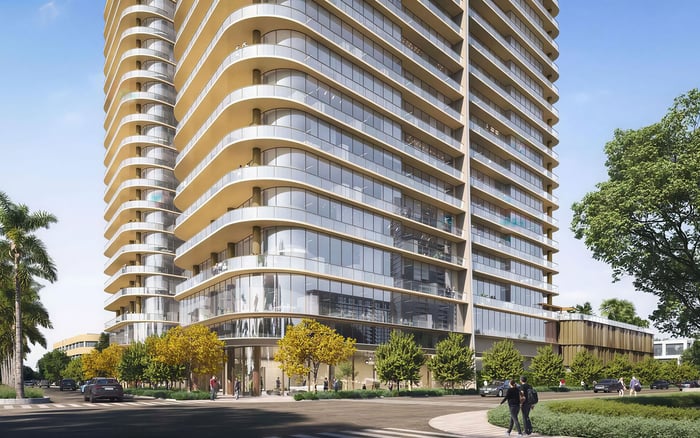
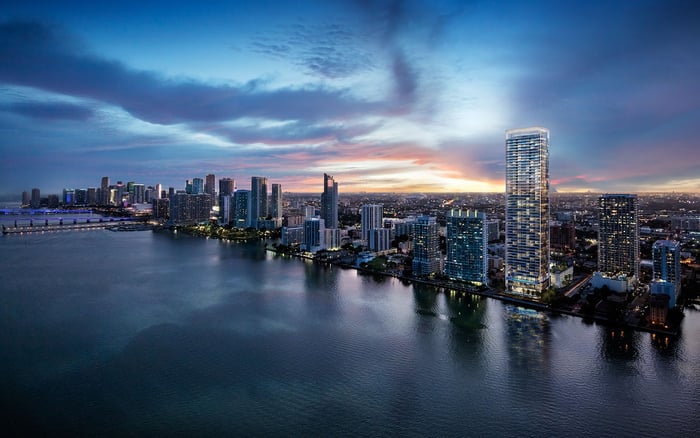
For buyers considering Miami Design Residences Midtown Miami, the essential question is not only design, amenities, or price. It is whether daily access, bridge-opening timing, and ownership style align with a true lock-and-leave life.

Miami Design Residences Midtown Miami asks a deceptively simple question for the luxury buyer: does the residence make absence easy? In South Florida, lock-and-leave ownership is not merely a matter of closing the door, setting the climate control, and trusting professional management. It is a broader lifestyle calculation-arrival, departure, service access, guest flow, and the predictability of moving across the city at the moments that matter.
For a buyer planning to use a Miami residence seasonally, intermittently, or as a second home, Midtown’s appeal is often tied to adjacency. The neighborhood sits in conversation with Edgewater, Wynwood, and Downtown, allowing an owner to look beyond a single postcard version of Miami. The daily rhythm can include design galleries, restaurants, offices, waterfront drives, cultural events, and airport runs. Yet convenience in Miami is never abstract. It is felt through specific routes at specific times of day.
That is where bridge-opening timing enters the discussion. A residence can appear perfectly located on a map and still require a more refined access strategy in practice. For owners who routinely move between mainland neighborhoods, the beach, the bayfront, or marinas, bridge activity may influence how effortless the residence feels. The point is not to overstate the issue. It is to treat it as part of the due diligence serious buyers already apply to views, finishes, parking, storage, and building operations.
A primary resident often adapts to a city through repetition. A lock-and-leave owner has less margin for friction. If the residence is used for long weekends, business trips, family visits, or event-driven stays, each arrival and exit carries more weight. A delayed route before a dinner, flight, school visit, boat outing, or meeting can shape the impression of the entire ownership experience.
This does not mean a Midtown address is compromised by bridge openings. It means the buyer should identify the routes that actually matter. Someone who spends most of their time in Wynwood and Design District restaurants will think differently from someone expecting frequent beach crossings. A buyer with regular boating plans will weigh access differently from one focused on galleries, offices, wellness, and dining. The same residence can be highly efficient for one owner and less intuitive for another.
The most sophisticated approach is to test the lifestyle before committing to it. Visit at the times you expect to arrive. Drive the routes you would use on a Friday evening, a weekday morning, and a weekend afternoon. Consider whether valet, rideshare, private-driver coordination, or self-parking will dominate your use. For new-construction buyers, this is especially important: a sales gallery can explain design intent, but only lived movement can reveal whether the location supports your own pattern.
Midtown’s value proposition is not the same as that of a quiet waterfront enclave or private island setting. It is urban, connected, and layered. Buyers are not simply purchasing interior square footage. They are buying proximity to a shifting set of Miami experiences: design, dining, retail, arts, wellness, and the energy of neighborhoods that have become central to the city’s luxury conversation.
That urban character can be a strength for the lock-and-leave owner. A well-selected residence in an active neighborhood may reduce the need for long drives once the owner is in town. Guests can be hosted without building an entire weekend around a single destination. Errands, dining, and cultural plans can feel more spontaneous. For some buyers, that immediacy is more valuable than a larger terrace in a less connected setting.
At the same time, a buyer should distinguish proximity from predictability. Proximity tells you what is near. Predictability tells you how consistently you can reach it. Bridge openings, event traffic, construction patterns, valet congestion, and peak dining hours can all affect the lived experience. Luxury buyers are accustomed to evaluating finishes with precision. The same discipline should apply to circulation.
Miami Design Residences Midtown Miami may be most compelling for an owner who values design-centered urban living and accepts Miami as a city of moments rather than rigid schedules. The strongest fit is often someone who wants a polished base, not a secluded retreat. This buyer may split time among multiple homes, use the residence around cultural calendars, or want a foothold near Miami’s creative and commercial districts.
For investment-minded owners, access patterns also deserve attention. Rental desirability, resale confidence, and long-term liquidity can be influenced by how easily future occupants understand the neighborhood. A building that feels simple to use may have a broader audience. A building that requires a more nuanced route strategy may still perform well, but buyers and advisors should be candid about the most natural future purchaser.
This is where the lock-and-leave question becomes more sophisticated than a checklist. It is not simply: does the building have services? It is: does the whole ownership experience remain graceful when the owner is away, returns late, hosts guests, misses a flight window, or needs to cross town quickly? A residence succeeds when the answers remain calm.
First, map your real life. Do not evaluate Midtown from a generic Miami itinerary. Note where you will dine, which airport you expect to use, whether you will spend meaningful time on Miami Beach, and whether your weekends include boating, events, or family obligations. Then test the routes at the times that match those plans.
Second, ask operational questions. How are deliveries handled when you are absent? How are guests announced? How does the building manage vendors, housekeeping, luggage, packages, and car retrieval during busy periods? A true lock-and-leave residence should reduce mental load. The buyer should not need to choreograph every arrival.
Third, think about resale language. The future buyer will likely ask the same questions you are asking now. If the residence offers a compelling answer, the asset has a cleaner story. If the answer depends on highly specific habits, the buyer pool may narrow. In South Florida luxury real estate, the best assets often combine beauty with obvious usability.
Finally, do not confuse perfection with fit. Miami is a dynamic city. Movement can be fluid one hour and constrained the next. The objective is not to avoid every inconvenience, but to buy a residence whose rhythm matches yours. When the fit is right, bridge-opening timing becomes a manageable variable rather than a defining concern.
What is the lock-and-leave question for Miami Design Residences Midtown Miami? It is whether the residence remains easy to own, use, and manage when the owner is not living there full time.
Why does bridge-opening timing matter? It can affect certain cross-town, beach, bay, or waterfront routes, especially when timing is tight.
Is bridge timing a reason to avoid Midtown Miami? Not necessarily. It is a practical factor to test against your actual lifestyle and travel patterns.
Who is the most natural buyer for this type of residence? A design-conscious urban buyer who wants a polished Miami base with strong neighborhood adjacency may be a natural fit.
How should a second-home buyer evaluate the location? A second-home buyer should test arrivals, departures, guest access, and preferred routes during realistic use windows.
Does new construction change the due diligence process? New construction can clarify design and building intent, but buyers still need to test the location and daily movement.
How does Edgewater factor into the decision? Edgewater may be part of a buyer’s regular route map, especially for dining, waterfront movement, and nearby residential comparisons.
How does Wynwood factor into the decision? Wynwood can strengthen the lifestyle case for Midtown buyers who value arts, restaurants, and creative neighborhood energy.
How does Downtown factor into the decision? Downtown may matter for business, events, cultural venues, and broader access to Miami’s urban core.
What is the investment takeaway? Investment logic should consider not only finishes and pricing, but also how easily future buyers understand and use the location.
For a tailored shortlist and next-step guidance, connect with MILLION.
If branded residences are on your mind — as a home or as an allocation — we would be glad to share what we are seeing, privately.
Begin a quiet conversation