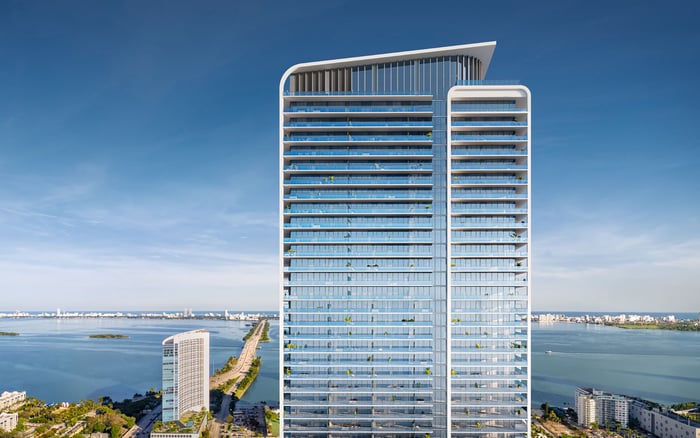
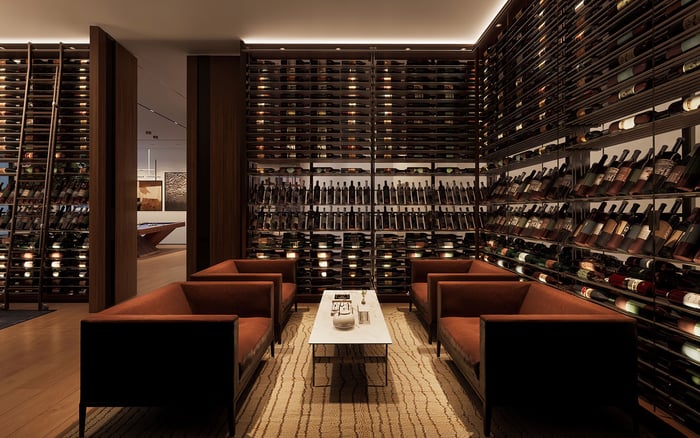
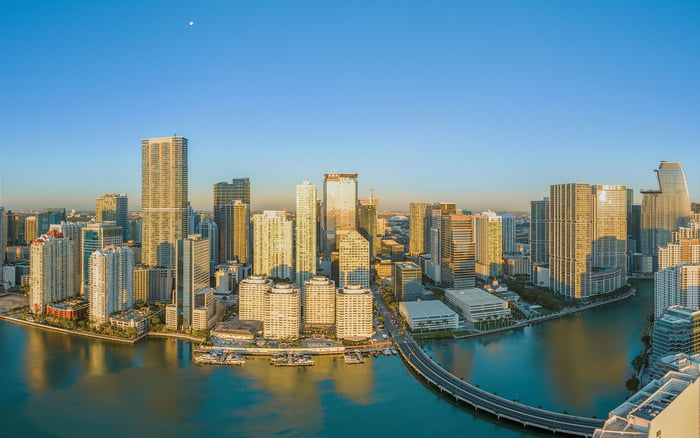
A buyer-oriented MILLION Luxury editorial on the real drivers of value in branded residences across Miami and South Florida, balancing service, design, and long-term risk.
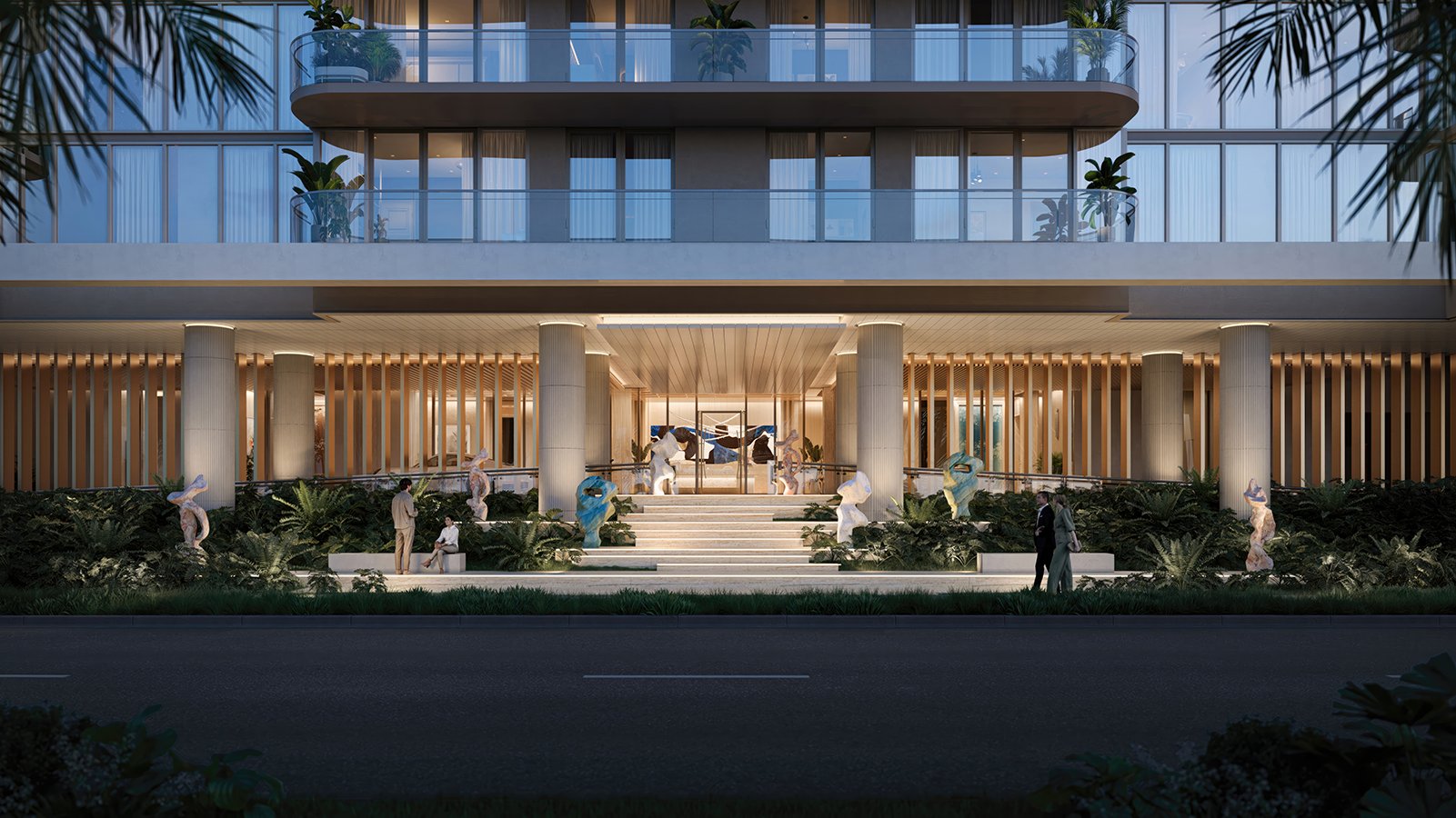
Branded residences have evolved from a novelty into a defined category of ultra-luxury ownership. At their best, they pair private real estate with an operating philosophy: consistent service standards, curated amenities, and a recognizable design language that signals taste and confidence to future buyers. Globally, branded homes have often carried meaningful price premiums versus comparable non-branded properties. Miami is now one of the most brand-dense markets in the world, and that concentration has shifted the debate from whether brands matter to which brand model holds up under resale scrutiny. For buyers in South Florida, the better question is not, "Does the brand add value?" It is, "Which parts of the brand are durable, and which parts are expensive theater?"
Branded residences are often described as trading at a premium, sometimes around 30% globally, with extreme outliers in certain markets when supply is scarce. In Miami, where branded inventory is now widespread and still growing, premiums can compress. That compression is not a failure of the concept. It is competition doing its job. What supports pricing is rarely the logo on the door. It is the full experience: predictable service delivery, consistent maintenance standards, and a governance structure that protects the building’s long-term positioning. A useful mindset is to think in layers:
The site and the view are foundational, and they are not branded.
The building’s bones matter: plan efficiency, ceiling heights, and materials.
The operating model is the differentiator: staffing, service, and resident rules.
The brand can amplify all of the above, or it can become an added cost with limited resale reward.
Most branded residences globally are tied to hospitality brands, which remain the dominant category. That dominance is rational: hotels already know how to run a high-touch service platform, and residents are often paying for exactly that. Concierge, housekeeping, valet, and food and wellness access are practical features that can feel like a private club with keys. By contrast, fashion and automotive-branded buildings can deliver a strong design narrative and identity, sometimes paired with signature elements that are hard to replicate. The risk is that identity can be cyclical, while service platforms can be operationally sticky when they are executed well. In Sunny Isles, for example, Armani Casa Sunny Isles Beach represents the fashion-driven end of the spectrum, where aesthetic cohesion and brand DNA sit at the center of the value proposition. In Brickell, branding has also become a defining feature of new luxury, with projects like 888 Brickell by Dolce & Gabbana leaning into a statement lifestyle. Chef-branded residential offerings exist in Miami as well, typically emphasizing culinary programming and hospitality-adjacent perks more than pure design theater. Miami Tropic Residences is a notable example of that direction, where the promise is as much about how you live as what the lobby looks like.
Brand-backed service is rarely inexpensive. Branded buildings often carry higher monthly charges because residents are funding staffing, amenities, and the operating standards that make the concept work. In some well-known branded projects outside South Florida, monthly dues have been cited in ranges that would surprise even seasoned luxury buyers. In South Florida, the takeaway is straightforward: evaluate the lifestyle benefits you will actually use, and measure them against the all-in recurring cost. If you travel frequently, value turnkey living, or want a consistent "arrive and exhale" experience, paying for staff can make sense. If you intend to live privately with minimal touchpoints, you may be subsidizing amenities you do not need. This is also where resale logic sharpens. A buyer pool that values service can support higher fees. A buyer pool that values privacy and low carrying costs may discount them.
Branded residences can come with constraints that matter to investors and even to second-home owners who want optionality. Managed rental programs, limits on independent leasing, or owner-use requirements can affect yield and liquidity. Those rules are not inherently negative. They often protect the brand experience and building culture. But they should be underwritten like any other material term. Ask yourself:
Do you need the option for short-term occupancy, or are you strictly long-term?
Does the building require a specific management platform?
Are there blackout periods or restrictions that could make your unit harder to place?
In a market as dynamic as Miami, optionality is a form of value. The best fit depends on whether your priority is lifestyle certainty or investment flexibility.
Buyers often assume branding is permanent. In reality, brand relationships can evolve, and operational changes can affect the resident experience and market perception. Recent high-profile hospitality and platform disruptions have reinforced that counterparty risk exists, especially when a "brand" is connected to a third-party operator. The prudent approach is to distinguish between:
A brand that is deeply embedded in operations and governance
A brand that is primarily a marketing layer The first tends to be more resilient. The second can be more vulnerable to sentiment shifts.
Florida ownership comes with its own realities, and branded towers are not immune. Insurance pressures on condominium unit owners have been widely covered as a tangible cost risk. Separately, condo associations have legal mechanisms to levy special assessments, which can materially change the cost of ownership in a single year. A brand does not prevent those shocks. What it can do, when paired with strong governance and transparent reserves, is help a building respond with discipline. For buyers, that means reviewing association strength and the building’s long-term capital posture as carefully as you review finishes.
Miami’s branded story is not one neighborhood. It is a patchwork of micro-markets where branding plays a different role. In Miami Beach, lifestyle and privacy often sit in tension with hospitality energy. Buyers who want a modern, amenity-forward approach to coastal living may gravitate toward new luxury inventory like 57 Ocean Miami Beach, where the narrative is as much about wellness and design as it is about proximity. In Coconut Grove, the tone can be more residential and restrained, which makes hospitality-linked living feel different. Four Seasons Residences Coconut Grove is a useful lens for how a hospitality platform can translate into a quieter, long-term ownership cadence. In Brickell, branding is often part of the skyline competition, with identity-forward projects vying for global buyers who want Miami’s most vertical, walkable lifestyle. Here, the quality of management and the day-to-day service experience becomes the deciding factor once the novelty wears off.
1. Service platform, staffing you will actually use
The enduring value in hospitality-branded living is operational: concierge, housekeeping, valet, and curated amenity access integrated into daily life. Underwrite the service as a product, not a slogan. If the experience feels like a well-run private club, the premium tends to be easier to defend at resale.
2. Total cost of ownership, fees, staffing, and future capital needs
Branded buildings can be more expensive to carry because the experience is staffed. Model the recurring costs against your usage patterns and your holding period. Also consider the broader Florida environment where insurance and building costs can swing, and where special assessments are a practical reality of condo governance.
3. Governance and rules, rental flexibility and lifestyle fit
Brand standards can impose leasing or use constraints that protect the building’s feel but limit investor strategies. The right rules depend on whether you are a full-time resident, a second-home owner, or yield-oriented. Liquidity is not just about demand. It is about whether your buyer pool will accept the building’s operating framework.
4. Brand durability, identity versus operations
Fashion and automotive branding can create a powerful identity, but identity can be cyclical. Hospitality branding can be more durable when it is tied to a real operating platform. Consider what happens if market sentiment shifts. A brand can amplify value, but it can also become a headline risk.
5. Micro-market truth, the site still leads the story
Premium comparisons can be misleading if you do not control for oceanfront positioning, view corridors, unit mix, and finish levels. The best branded assets sit on irreplaceable sites and pair them with a credible operating model. In Miami, where branded supply is deep, the building that wins is often the one that is best as real estate before the brand even enters the conversation.
A sophisticated buyer treats a branded residence like a portfolio decision. The brand can be a shortcut to trust, but the building still has to perform on fundamentals: governance, maintenance discipline, and a lifestyle proposition that feels worth paying for every month. In South Florida’s next chapter, the winners are likely to be the projects that make the service feel effortless, keep the ownership math rational, and stay timeless when the fashion cycle moves on.
Do branded residences always sell for more than non-branded condos? Often they do, but premiums can compress in mature markets with lots of branded supply.
What is the biggest practical benefit of a hospitality-branded residence? Day-to-day service delivery, such as concierge, housekeeping, valet, and amenity access.
Are monthly fees usually higher in branded buildings? Yes, because residents typically fund staffing, amenities, and brand-level operations.
Do branded residences restrict rentals? They can, including managed rental programs or limits on independent leasing.
Is a fashion or automotive brand riskier than a hotel brand? It can be, since identity can be cyclical, while hotel brands often bring operations.
Can a brand lose value over time? Yes, market sentiment can shift and a brand can move from premium to discount.
What should I review beyond finishes and views? Focus on governance, reserves, rules, and how the building manages long-term costs.
Does a brand protect me from Florida insurance increases? No, insurance pressures can still affect owners regardless of branding.
Can special assessments happen in luxury branded towers? Yes, condo associations can levy special assessments under Florida governance.
How do I decide if the premium is worth it for me? Match the service model and rules to your lifestyle, travel, and resale timeline.
For tailored guidance on branded-residence opportunities across South Florida, connect with MILLION Luxury
If branded residences are on your mind — as a home or as an allocation — we would be glad to share what we are seeing, privately.
Begin a quiet conversation