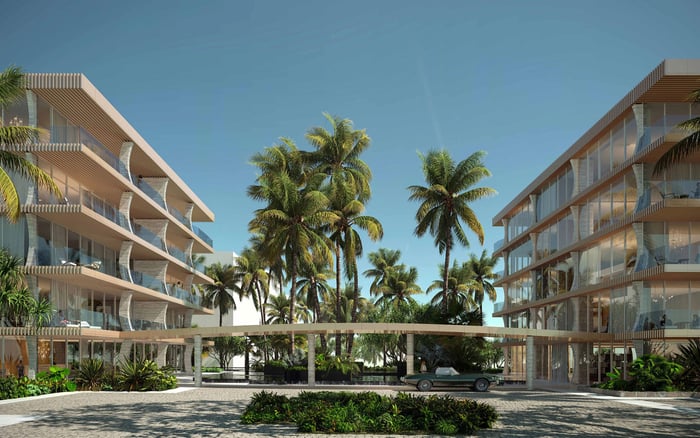
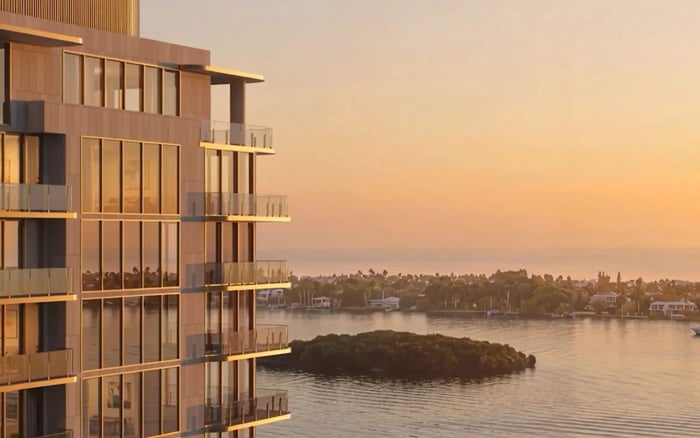
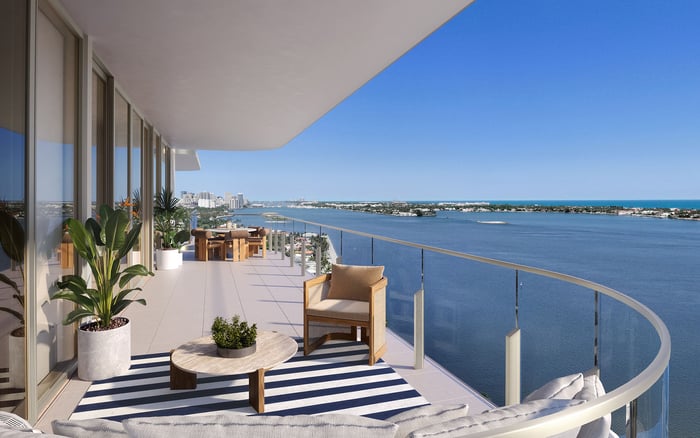
A buyer-focused editorial guide to evaluating Maison D’Or South Flagler through the lens of private-gallery planning, seasonal ownership, art display, privacy, lighting, climate control, and South Florida resilience.
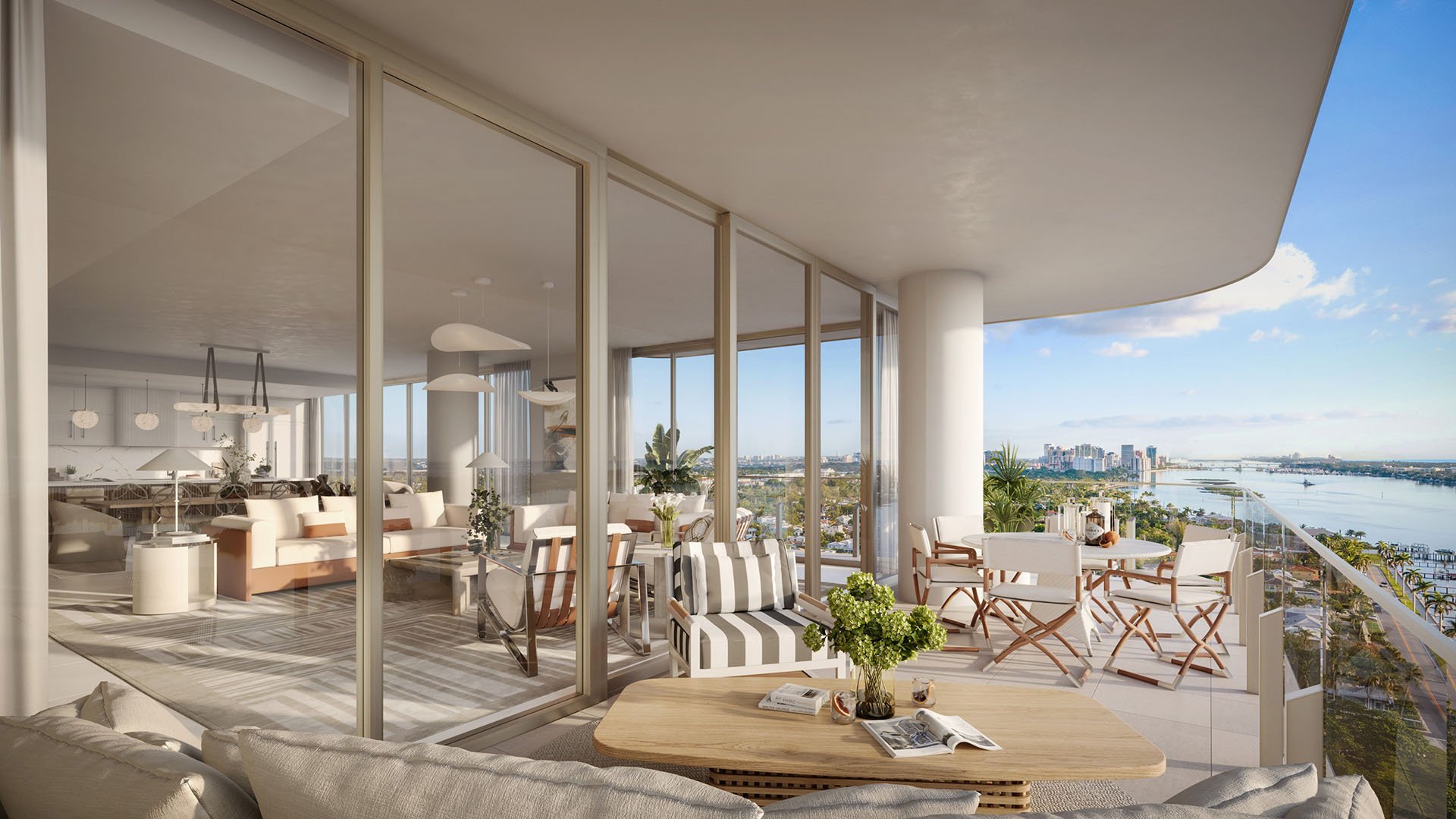
Maison D’Or South Flagler should be evaluated as more than a West Palm Beach luxury residence. For seasonal buyers, the more revealing test is how the home functions as a private gallery: how one arrives, where the eye pauses, how guests circulate, and whether art can be displayed without compromising the private rhythm of daily life.
In South Florida, waterfront and view-oriented residences often appeal through glass, terraces, and luminous rooms. Those qualities can be extraordinary for living, but they are not automatically ideal for collecting. A private-gallery layout requires restraint as much as spectacle. It needs walls capable of holding meaningful work, light that can be controlled, routes that protect privacy, and systems that continue performing when the owner is away.
Buyer context: West Palm Beach demand often overlaps with Palm Beach collecting habits, second-home routines, water-view priorities, terrace use, and new-construction expectations. Maison D’Or South Flagler sits within that sophisticated decision set, where beauty is only one part of the evaluation.
For an art-focused buyer, the entry sequence is the first test. A gallery-style arrival can establish the residence’s mood before a guest reaches the main living areas. It can also determine whether the home feels composed or merely spacious.
The strongest private-gallery plans create a sense of procession. They allow an owner to introduce selected works in a deliberate order, with enough pause between pieces for the eye to adjust. A fragmented corridor, an abrupt turn, or a lobby that immediately spills into highly private spaces can weaken that experience. Seasonal buyers should walk the plan as if hosting a small dinner, a collector preview, and a family weekend. Each scenario will reveal whether the arrival feels gracious, exposed, or constrained.
The essential question is simple: can guests experience art without being pulled through bedrooms, staff areas, or the most personal parts of the home? If the answer is unclear, the plan deserves closer study.
A true private-gallery layout depends on long, uninterrupted wall runs. Large glass exposures, multiple doorways, niche-heavy corridors, and irregularly broken surfaces can all reduce usable hanging zones. This does not mean a residence should feel enclosed. It means the architecture must balance view, daylight, circulation, and display.
Buyers should review where a major canvas, mirror, textile, or sculptural wall piece would actually go. The exercise should be specific. Walk the perimeter of the formal rooms and corridors, then identify which walls are long enough, calm enough, and appropriately lit. If nearly every wall is interrupted by glass, doors, millwork, or mechanical panels, the residence may be harder to curate than it first appears.
Structural backing is equally important. Heavy installations, large-format works, and mirrors may require more than standard wall construction. Before assuming a space is art-ready, buyers should ask whether the walls can support the intended collection or whether additional reinforcement would be needed.
Seasonal ownership often compresses many functions into short periods of use. A residence may need to accommodate family, guests, advisors, staff, caterers, delivery teams, and installers during the same week. For that reason, the separation between formal entertaining spaces, bedrooms, service routes, and staff areas is not a minor detail.
A well-considered private-gallery layout should allow the public rooms to operate elegantly without exposing the entire residence. Guests should be able to arrive, view art, gather for drinks, and move to dining or terrace areas without passing through intimate family zones. Staff and vendors should have a practical route that does not disrupt the primary living experience.
This is especially important when art is being delivered, crated, installed, cleaned, or adjusted. Seasonal buyers should ask how oversized works would enter the residence, where crates could be temporarily staged, and whether maintenance can occur discreetly while the household remains in use.
Lighting is one of the most consequential details in a private-gallery residence. It is also one of the easiest elements to underestimate during a first showing, particularly in bright coastal conditions.
Art-focused buyers should ask about ceiling conditions, recessed or track possibilities, dimming capability, glare control, and the flexibility to adjust illumination as the collection changes. A room that looks beautiful at midday may not support evening viewing. Conversely, a dramatic nighttime atmosphere may not protect sensitive works from heat, reflection, or uneven exposure during the day.
The goal is not theatrical brightness. The goal is precision. Proper gallery lighting should support the work, the architecture, and the owner’s preferred way of living. Seasonal buyers should also consider whether lighting scenes can be managed consistently when they are away, especially if caretakers or staff are responsible for basic oversight.
Water views are part of the emotional appeal of South Flagler living, but they create technical questions for collectors. Direct sun exposure, UV risk, heat gain, and reflection patterns can influence where sensitive works should be displayed. High-glass rooms may be ideal for entertaining yet unsuitable for certain works on paper, textiles, photography, or delicate finishes.
Terrace placement deserves the same measured review. Outdoor living can enrich the residence, but salt air, humidity, and intense light should be considered when planning adjacent interiors. Buyers should not assume that the most dramatic view wall is the best art wall. Often, the finest display locations are the calmer interior surfaces that still participate in the overall sequence of the home.
This is where professional due diligence matters. An art advisor, architect, lighting designer, and mechanical engineer can help determine whether the plan can support the intended collection without forcing compromises after closing.
Seasonal buyers face a distinct ownership issue: art may remain in the residence for long stretches while the owner is elsewhere. That makes HVAC performance, humidity control, system reliability, and monitoring especially important.
The questions should be practical. How is temperature consistency maintained? What humidity range can be supported? What happens during a system interruption? How are service calls handled when the owner is not in residence? Are there protocols for staff, vendors, and emergency access?
Security should be reviewed with the same specificity. Controlled entry, elevator access, cameras, alarms, and staff or vendor procedures all affect how art and valuables are protected. The best private-gallery layout is not only beautiful in plan. It is also disciplined in access.
South Florida ownership also requires storm planning. Buyers should request information on impact glazing, storm resilience, backup systems, and building protocols. These items are not merely technical footnotes. For a seasonal owner with a collection in place, resilience is part of stewardship.
The strongest private-gallery residence is not frozen into one mode of use. It can shift between quiet personal enjoyment, formal entertaining, family visits, guest accommodations, and professional art care. That flexibility matters because seasonal life is rarely static.
At Maison D’Or South Flagler, buyers should evaluate whether rooms can adapt without losing elegance. Can a gallery corridor also serve as a gracious arrival? Can a den become overflow guest space without disturbing display walls? Can staff support a dinner while installers handle a separate task? These are the questions that distinguish a polished plan from a merely expensive one.
Private-gallery living is ultimately about control: control of sightlines, light, privacy, access, climate, and movement. For the right buyer, that control can make a residence feel not only luxurious, but deeply personal.
What is a private-gallery layout? It is a residential plan designed to display art through controlled circulation, usable wall space, lighting, privacy, and environmental stability.
Why does the entry sequence matter so much? The arrival determines how guests first encounter the home, the collection, and the boundary between public and private rooms.
Are glass-heavy rooms bad for art? Not necessarily, but they require careful review of sunlight, UV exposure, heat gain, reflections, and where sensitive works can safely hang.
What should buyers ask about gallery walls? Buyers should ask whether walls have adequate uninterrupted length, appropriate backing, and the capacity to hold large or heavy works.
Why is HVAC important for seasonal owners? Collections may remain in the residence while owners are away, so temperature, humidity, and system reliability become central concerns.
Should service circulation be part of the review? Yes. Art delivery, crating, installation, and maintenance should be possible without disrupting primary living spaces.
How should buyers evaluate lighting? They should review ceiling conditions, dimming, glare control, recessed or track options, and how lighting can adapt as the collection changes.
Does a terrace affect private-gallery planning? Yes. Terrace orientation, salt air, and strong light can influence which adjacent interior areas are suitable for art.
What professionals should be involved before purchase? An art advisor, architect, lighting designer, and mechanical engineer can help test whether the layout is truly collection-ready.
What is the core buyer question at Maison D’Or South Flagler? The core question is whether the residence can support art, privacy, entertaining, and seasonal absence with equal discipline.
When you're ready to tour or underwrite the options, connect with MILLION.
If branded residences are on your mind — as a home or as an allocation — we would be glad to share what we are seeing, privately.
Begin a quiet conversation