Secondary culinary zones are no longer a nostalgic nod to formal service. In South Florida’s most design-forward residences, the new luxury is operational: a discreet buffer that keeps the show kitchen pristine, supports entertaining at scale, and makes open-plan living feel effortless.
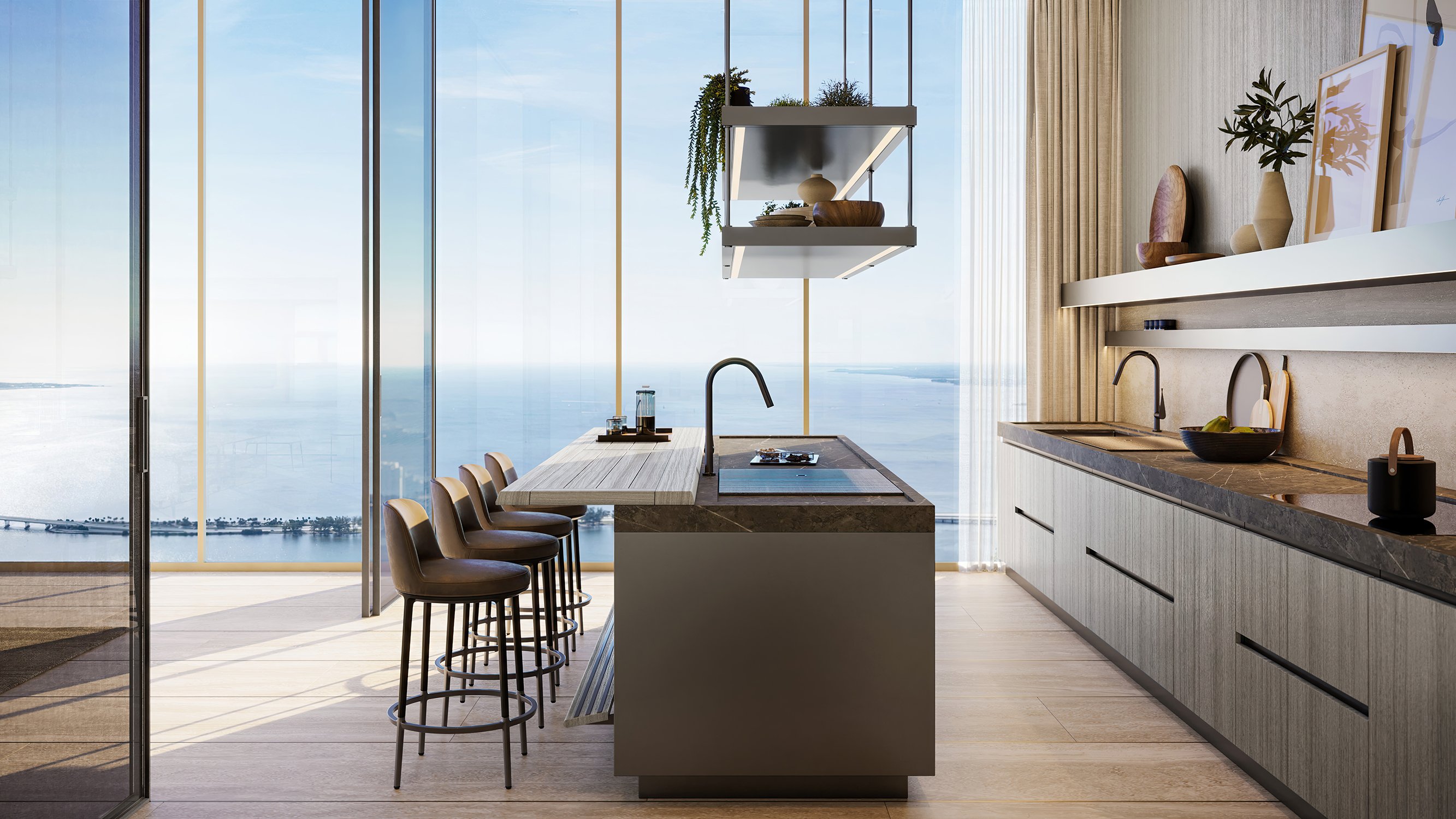
Luxury has always had a backstage.
In the late 19th and early 20th centuries, the butler’s pantry evolved as a practical buffer between kitchen and dining: a place to stage service, store the tools of entertaining, and keep the mechanics of cooking out of view. Period examples were typically built-in and highly specific, with cabinetry (often glass-front), counters, a small sink, and deep drawers for linens and serving pieces. Many also included circulation details such as swinging doors that kept traffic smooth and the dining experience composed.
Today’s South Florida market is not reviving old-world hierarchy. It is responding to a modern reality. Open-concept planning placed the kitchen at the center of the home, then demanded that it read as pristine and intentional at all times. In the most design-forward residences, appearance and operation increasingly separate. The show kitchen becomes the architectural focal point and social anchor, while a secondary zone handles the work.
Design language varies from one home to the next, but the goal stays consistent: protect the main kitchen’s visual calm, reduce noise and odor bleeding into adjacent living areas, and make entertaining feel effortless rather than choreographed. The American Institute of Architects’ Home Design Trends Survey (2025 Q1) reflects this shift. Respondents reported growing demand for separate kitchen facilities, secondary food storage and prep areas, messy kitchens, and sculleries. A meaningful share also reported increases in square footage devoted to these spaces. In other words, this is moving beyond an accessory feature into a real program that buyers recognize and use.
Real-estate marketing often blurs the vocabulary. Buyers do better when they define the function first, then evaluate the plan.
A modern butler’s pantry is still, at its core, a staging and serving zone positioned between the kitchen and the dining area. It is the transition space where glassware, platters, linens, and courses can be assembled and delivered with minimal interruption. Contemporary versions often add beverage and coffee capability, increased cabinetry, and more generous counter space. The best examples feel like a tailored extension of the primary kitchen rather than a leftover alcove.
A scullery, prep kitchen, back kitchen, or “messy kitchen” serves a different purpose. It is a behind-the-scenes work zone used for prep, cooking, and cleanup so the main kitchen stays visually quiet. It is explicitly designed to contain clutter, odors, and noise, which becomes especially valuable in open layouts where living, dining, and kitchen functions blend into a single volume. In practical terms, that often means an additional sink, stronger ventilation, and sometimes a dishwasher or secondary refrigeration.
If you are deciding where to invest, the distinction is straightforward:
At the highest level, the two can coexist. Many of the most successful plans pair a refined staging bar oriented toward dining with a true working zone behind a pocket door. The result is a home that can feel open and social, yet still operate like it has a private service layer.
In South Florida, entertaining rarely stays in one room. It is fluid and outdoor-forward: kitchen to living room to terrace, a private dining table that gives way to a sunset gathering, a casual coffee service that becomes an impromptu cocktail hour. That flow increases the value of a kitchen that stays composed, because the space is constantly in view.
A secondary culinary zone also protects the day-to-day experience of luxury. It can hide delivery clutter, keep small appliances off the counter, and create a dedicated place for coffee service that does not compete with the main island’s sculptural simplicity. When open plans require the kitchen to function as décor, the ability to edit what is visible becomes a quality-of-life upgrade.
In Miami Beach, where many residences lean into glass, ocean views, and wide, open layouts, the second-kitchen concept works like acoustic and visual insulation. When the living room effectively shares air and sightlines with the kitchen, containment becomes a form of comfort.
The same logic applies in Brickell’s skyline homes, where hosting often involves catering, staff, and multiple courses, and where the front-of-house impression is part of the lifestyle promise. A discreet service zone allows the main kitchen to perform as design, not evidence. It supports the kind of “always ready” presentation that open living demands, without forcing homeowners to live as if they are constantly staging a photo.
A second kitchen is only as good as its choreography. Before getting swept up by finishes, evaluate the operational path and the way the spaces connect.
First, look for adjacency that makes functional sense. A true butler’s pantry should sit between the kitchen and dining, not down a hall or around a corner. A genuine working zone should be close enough to support the main kitchen without creating collisions at key pinch points. In a plan that reads well, movement feels intuitive: service flows toward dining, and prep and cleanup flow away from guests.
Second, look for doors and sound control. Pocket doors, swing doors, or a well-planned vestibule turn a secondary zone into a real buffer. The goal is not secrecy. The goal is choice. You can keep the pantry open during a party for easy access, then close it when prep intensifies or cleanup begins.
Third, consider containment capacity. If the stated purpose is keeping the show kitchen pristine, the secondary space must realistically hold what would otherwise land on the counter: small appliances, serving platters, warming gear, packaging, and staging trays. Deep drawers, tall cabinets, and generous landing counters matter more than decorative open shelving. The best spaces are designed around what you actually need to hide.
Fourth, evaluate ventilation and cleanup. If the zone is marketed as a scullery or messy kitchen but cannot handle real cooking and dishes, it becomes a glorified closet. For serious use, buyers should expect a utility-forward setup that can take pressure off the main room. That does not mean it should feel industrial. It means it should be credible when the home is hosting at scale.
The best secondary culinary spaces feel inevitable, not excessive.
One reason these zones are showing up more often is that kitchens have expanded into multi-use rooms. Large, social kitchens benefit from zoning, and double-island planning has become a favored strategy in luxury new-build design because it separates prep from gathering and improves traffic flow. Even when there is only one main kitchen, the planning logic is moving toward layered function.
A secondary zone is the vertical and architectural equivalent of that same idea. It adds depth and sequence. Instead of forcing every task to happen on the same counters, the home gains clear layers:
In residences where views are the headline, this layering matters. It allows the primary kitchen to remain minimal and view-forward, while the heavy lifting happens elsewhere. You still get the openness that buyers want, but you also get the operational reality that open plans often forget.
In the ultra-premium condo and branded-residence market, this is also about hospitality cues. The home behaves more like a suite, with service pathways that do not interrupt the guest experience. When you tour oceanfront product such as Faena House Miami Beach, the broader lifestyle expectation becomes clear: entertaining is part of the brand promise, and the smartest homes anticipate the mechanics behind that promise.
Likewise, in resort-leaning residences like Setai Residences Miami Beach, the underlying appeal is effortless living. A secondary pantry or prep zone supports that feeling by keeping daily life out of the spotlight, so the primary spaces can stay calm and curated.
A scullery should not feel like a downgrade. It should feel like a private atelier: focused, well-finished, and unapologetically functional.
Start with continuity. Using the same stone family or cabinet language as the main kitchen signals intention, even if the secondary zone shifts to more durable finishes. Luxury is not always about matching everything exactly. It is about coherence, and the sense that each space was designed rather than left over.
Then refine the lighting. Main kitchens are often planned for ambiance, especially in open living areas. Secondary zones need task light that makes real work pleasant and precise. Under-cabinet lighting, glare control, and a calm color temperature help the space function without feeling clinical.
Storage is where the value becomes tangible. Deep drawers for linens and serving pieces echo historical butler’s pantry logic, updated for contemporary entertaining. Glass-front display can be beautiful when it is curated, but closed storage is what keeps the system working. The more you can put away in the secondary zone, the more the show kitchen stays true to its purpose.
Finally, plan beverage and coffee with the same rigor you plan cooking. In many modern definitions, the butler’s pantry becomes the home’s beverage center. When done well, it reduces congestion at the main island during gatherings and keeps the primary kitchen’s counterline clean. It also creates a natural station for early mornings and late nights that does not require turning the central space into a utility hub.
In Miami Beach, projects like The Ritz-Carlton Residences® Miami Beach speak to a clientele that values service, discretion, and polish. A thoughtful pantry or scullery is not merely convenient. It aligns with a lifestyle where the home is expected to host with the ease of a well-run property.
At the highest tiers of residential real estate, entertaining infrastructure is a recurring theme. Ultra-luxury listings are often marketed with formal dining connected to a butler’s pantry, reinforcing that service transitions remain a prestige cue rather than a relic.
The appeal is simple. A home that hosts well feels larger than its square footage because it reduces friction. Guests move naturally. Food arrives smoothly. Cleanup disappears. The kitchen stays composed in photos and in real life, which matters in a market where design and presentation are inseparable.
For South Florida buyers, this can also be a climate and lifestyle issue. Outdoor kitchens, terraces, and frequent hosting amplify the need for staging and storage. When the party drifts toward the ocean view or the terrace seating, you want a place where trays, glassware, and backup supplies can live without interrupting the architecture inside.
Oceanfront buyers exploring intimate boutique product such as 57 Ocean Miami Beach are often balancing privacy with performance. A second zone helps deliver both: the home remains serene, even when it is working hard behind the scenes.
Secondary culinary zones tend to influence resale in two primary ways.
First, they support photography and showings, even when they are not the hero shot. A pristine main kitchen reads as luxury, restraint, and good design. A concealed support zone makes that pristine impression achievable, not aspirational.
Second, they broaden the buyer pool. Some buyers cook daily and want serious function. Others rarely cook but host and want a polished front-of-house read. A thoughtfully planned pantry or scullery can satisfy both without forcing compromises in the main kitchen’s aesthetic.
The key is authenticity. If the space is too tight to stage a meal or too underpowered to handle cleanup, it can read like a checkbox. When it works, it signals intelligent planning. In luxury, intelligent planning is not a trend. It is a durable marker of value.
Is a butler’s pantry the same as a scullery? Not exactly. A butler’s pantry is primarily for staging, serving, and overflow storage between kitchen and dining. A scullery or messy kitchen is a working zone for prep and cleanup that protects the main kitchen.
Do I need a second kitchen in a luxury condo? If the home is open-plan and you host often, a pantry or prep zone can meaningfully improve daily living by reducing visual clutter and keeping odors and noise contained.
What features make a pantry feel truly “luxury”? Generous landing counters, deep storage for serving pieces and linens, purposeful lighting, and a well-planned beverage or coffee setup that keeps the main kitchen calm.
Will a second kitchen make my main kitchen smaller? It can, depending on the plan. The best designs treat the secondary zone as support so the main kitchen can be more architectural, not simply reduced.
For tailored guidance on high-design residences where these details matter, explore MILLION Luxury.
If branded residences are on your mind — as a home or as an allocation — we would be glad to share what we are seeing, privately.
Begin a quiet conversation