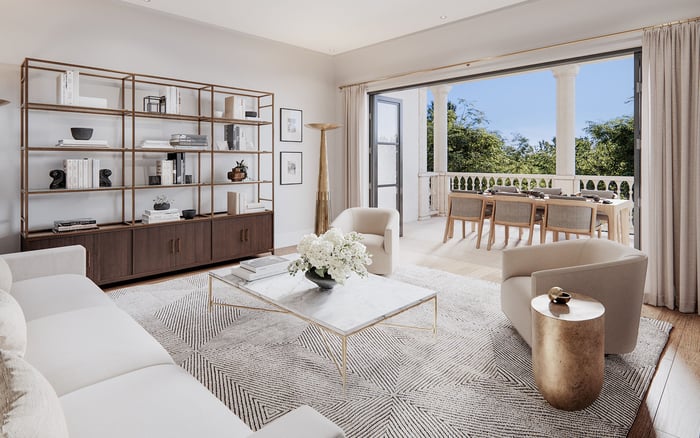
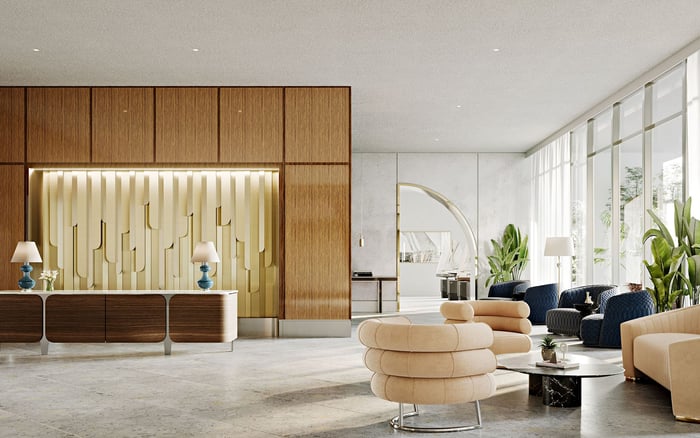
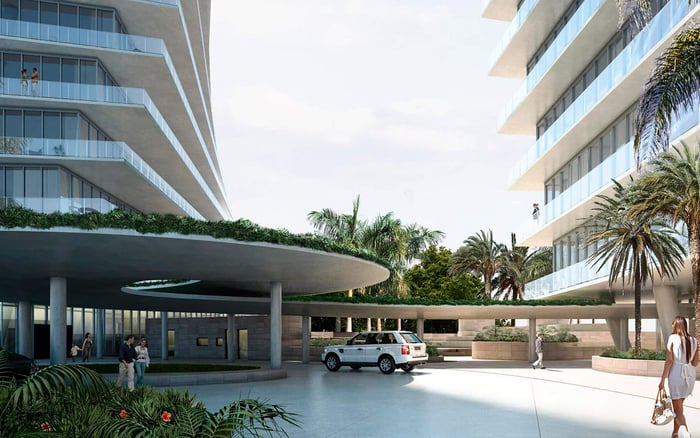
A discreet buyer’s guide to choosing a South Florida residence with lasting privacy, from Coral Gables homes to tower-adjacent condominium sightlines.
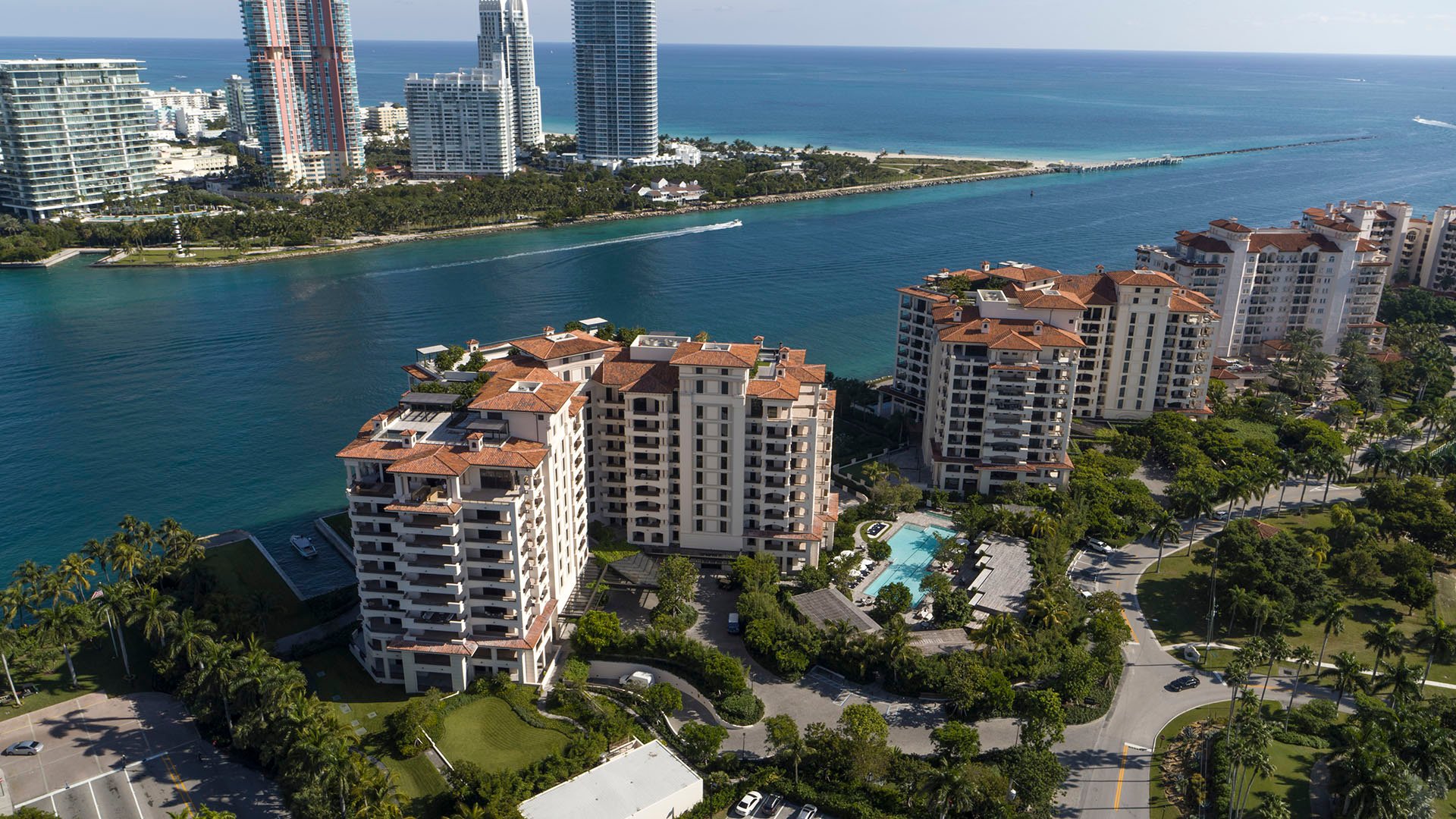
For a Los Angeles buyer moving to Coral Gables, privacy may feel familiar at first. The vocabulary is the same: hedges, gates, setbacks, security, discreet arrival, and the pleasure of living without feeling observed. Yet South Florida adds a different variable. Privacy is not only horizontal, measured from lot line to lot line. It is vertical, shaped by neighboring balconies, future redevelopment, glass elevations, rooftop amenities, and the way late-afternoon light can expose or soften a room.
That distinction matters. A house that feels secluded from the street may still be visible from a nearby residence. A condominium with sweeping views may look directly into another tower. A terrace may feel cinematic at dusk and exposed by breakfast. Choosing well requires thinking less like a visitor admiring the skyline and more like an architect reading a site.
Los Angeles privacy often begins with topography, long drives, mature landscaping, and the ability to separate public arrival from private life. In Coral Gables, the same desire for discretion can be achieved, but the tools are different. The strongest homes tend to combine thoughtful site orientation, layered planting, deep window treatments, and outdoor rooms positioned away from the property’s most visible edges.
For buyers weighing Estates & Single-Family opportunities, the first question is not simply whether the home is gated. It is where the primary suite faces, how the pool deck is framed, whether entertaining areas are shielded, and what can be seen from adjacent upper floors. A private entry sequence may impress at the curb, but the daily test is whether the kitchen, bedroom, study, and terrace feel calm when the house is fully lived in.
The same discipline applies to condominium purchases. A buyer considering Cora Merrick Park should evaluate not only the residence itself, but also the approach, the exposure, the opposing views, and the way nearby buildings relate to the living areas. In a refined market, privacy is not a single feature. It is a composition.
The most common mistake is to start with interior finishes. Beautiful stone, millwork, and appliances are seductive, but they cannot solve a compromised sightline. Begin outside the windows. Stand where the sofa will sit. Stand where the bed will face. Stand on the terrace at different angles. Then ask what another resident, guest, or passerby could reasonably see.
In Brickell, this exercise is especially important because tower living rewards views, elevation, and light while also creating potential adjacency. A residence at The Residences at 1428 Brickell may attract a buyer seeking an urban address, but the privacy review should be as exacting as the lifestyle review. Consider whether the best views are also the most exposed, and whether the rooms used most often are protected by orientation rather than by shades alone.
Do not assume higher always means more private. Height can improve separation, but it can also place a residence in direct alignment with another tower’s amenity level, penthouse terrace, or glass corner. Low floors can sometimes be more protected when framed by landscaping or when neighboring buildings sit at a respectful angle. The goal is not simply elevation. The goal is controlled visibility.
Coral Gables appeals to buyers who want elegance without spectacle. Its appeal, for many luxury buyers, is the feeling of composure: shaded streets, established residential patterns, and a more restrained rhythm than the densest waterfront corridors. Still, privacy should never be assumed. A careful buyer studies the immediate block, nearby parcels, and the orientation of any larger structures within view.
For those seeking newer residential options, Ponce Park Coral Gables belongs in the conversation not as a shortcut to certainty, but as an example of why project-specific review matters. Ask where the most private exposures are located, which residences face quieter edges, and how terraces are positioned relative to neighboring buildings.
Single-family homes require the same eye. Mature landscaping can be a strength, but buyers should distinguish between decorative planting and true screening. A row of palms may be visually beautiful while offering little concealment at eye level. Layered planting, deeper setbacks, courtyard planning, and covered outdoor rooms usually do more to create the feeling of retreat.
Coconut Grove often enters the search when a buyer wants proximity to the city with a more intimate residential texture. Its appeal is not identical to Coral Gables, but the privacy conversation overlaps. Buyers should look for shade, orientation, and outdoor rooms that feel inwardly focused rather than staged for display.
At Four Seasons Residences Coconut Grove, a privacy-minded buyer should still study exposure, arrival sequence, and the relationship between private terraces and surrounding buildings. At The Well Coconut Grove, the same question applies: how does the residence feel when one imagines ordinary daily life rather than a perfect showing appointment?
This is where Boutique projects can be compelling. Smaller-scale living can feel more personal, but scale alone is not a guarantee. The best privacy comes from design decisions that reduce unnecessary visibility, separate amenity movement from residential calm, and allow the home to feel composed throughout the day.
Waterfront living creates its own privacy paradox. The openness that delivers light, air, and views can also reduce concealment. A Waterfront residence may feel serene from within, yet visible from the water, a neighboring terrace, or a building across the inlet. Before paying for a view, understand what the view gives back.
Look closely at terrace depth, glass transparency, outdoor kitchen placement, and the path from elevator to residence. If entertaining is a priority, ask whether guests can circulate without crossing the most private zones. If wellness is a priority, consider whether the gym, bath, and bedroom are shielded from opposing elevations. The most successful homes allow openness where it is beautiful and enclosure where it is necessary.
A privacy-first purchase should include a deliberate tour at more than one time of day. Morning light, afternoon glare, and evening illumination can change the way a residence feels. Open every shade. Stand in the primary bath with lights on. Walk the terrace slowly. Look diagonally, not only straight ahead.
Ask about future surroundings with a practical mindset. What parcels are nearby? What could change the view corridor? Which rooms depend on a current gap between buildings? Which exposures feel protected even if the neighborhood evolves? A home with durable privacy does not rely on a single lucky opening in the skyline.
Finally, separate security from privacy. Security controls access. Privacy controls observation. A staffed lobby, gate, or controlled garage may be essential, but it does not address whether another tower looks into the breakfast room. The most discerning buyers insist on both.
Is Coral Gables more private than denser South Florida neighborhoods? It can feel more residential, but privacy still depends on lot orientation, nearby buildings, landscaping, and room placement.
Should a Los Angeles buyer choose a house instead of a condo for privacy? Not automatically. A well-oriented condominium can feel more private than a poorly exposed house.
Are higher floors always better for privacy? No. Higher floors can improve separation, but they may also align with other towers or amenity terraces.
What is the first thing to inspect during a showing? Start with sightlines from the primary bedroom, living room, terrace, kitchen, and bath before focusing on finishes.
How important are window treatments? They help, but they should not be the only privacy strategy. Orientation and layout matter more.
Can landscaping solve visibility from neighboring towers? Landscaping can help at lower levels, but it rarely solves direct views from taller surrounding buildings.
Is Boutique living usually more discreet? It can be, especially when circulation is quiet and residences are well separated, but each building must be reviewed individually.
What should buyers ask about future privacy? Ask what nearby parcels could change, which views are most vulnerable, and which exposures are inherently protected.
Does Waterfront living reduce privacy? It can, because openness also creates visibility. Terrace depth and orientation become especially important.
What is the best privacy test before making an offer? Visit at different times of day and study the home from the places where daily life will actually happen.
For a tailored shortlist and next-step guidance, connect with MILLION.
If branded residences are on your mind — as a home or as an allocation — we would be glad to share what we are seeing, privately.
Begin a quiet conversation