A discreet buyer’s guide for London families evaluating Fort Lauderdale and South Florida homes through the lens of storm-day comfort, resilience, access, services, and ownership rhythm.
For a London buyer, South Florida often begins as an image: winter light, warm evenings, water on three sides, and a residence that feels effortless after an overnight flight. Yet the most sophisticated purchase brief should include a less glamorous question: how does the home live when the weather is difficult, the family is in residence, and every small operational detail suddenly matters?
Storm-day livability is not a fear-based lens. It is a luxury lens. In Fort Lauderdale, the best home is not simply the one with the most dramatic outlook or the most polished lobby. It is the one that allows an owner to remain comfortable, informed, and calmly supported when movement is limited and the household needs to function without friction.
For London families, this matters because the residence may be used seasonally, by guests, by adult children, or by staff arriving ahead of the principal owner. A South Florida second home must be intuitive. It should not require local improvisation at the exact moment when decisions should already be settled.
A Fort Lauderdale search should begin with a written operating standard. This is not a legal document or a dramatic emergency plan. It is a practical checklist for how the residence should perform when the weather is heavy, services are constrained, and the household expects continuity.
Begin with the building or community’s communication rhythm. Who contacts residents, how are updates delivered, and what happens if the owner is abroad? Then move to the fundamentals: power continuity for essential systems, elevator expectations, garage and vehicle access, entry protocols, package and food delivery rules, staff access, pet needs, and the ability to secure outdoor areas quickly.
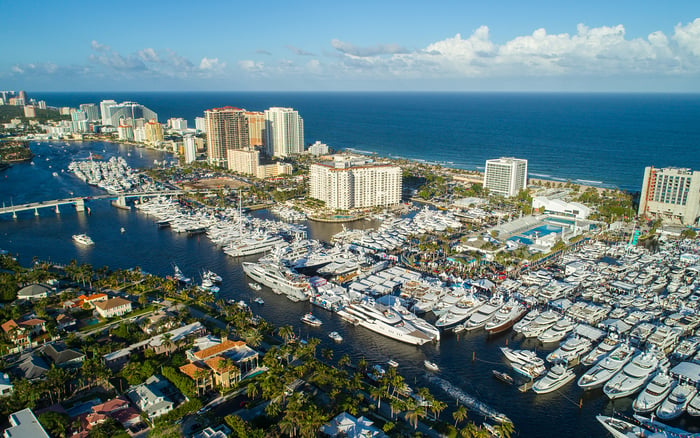
In Broward, buyers often compare a more urban Fort Lauderdale lifestyle with nearby coastal and marina-oriented settings. The right answer depends less on prestige than on how the owner actually lives. A frequent traveler may prefer a serviced condominium with clear staff procedures. A boating household may prioritize dock access, protected storage, and a simple path from residence to vessel. A family hosting guests may want generous interior rooms that remain composed even when terraces are temporarily unusable.
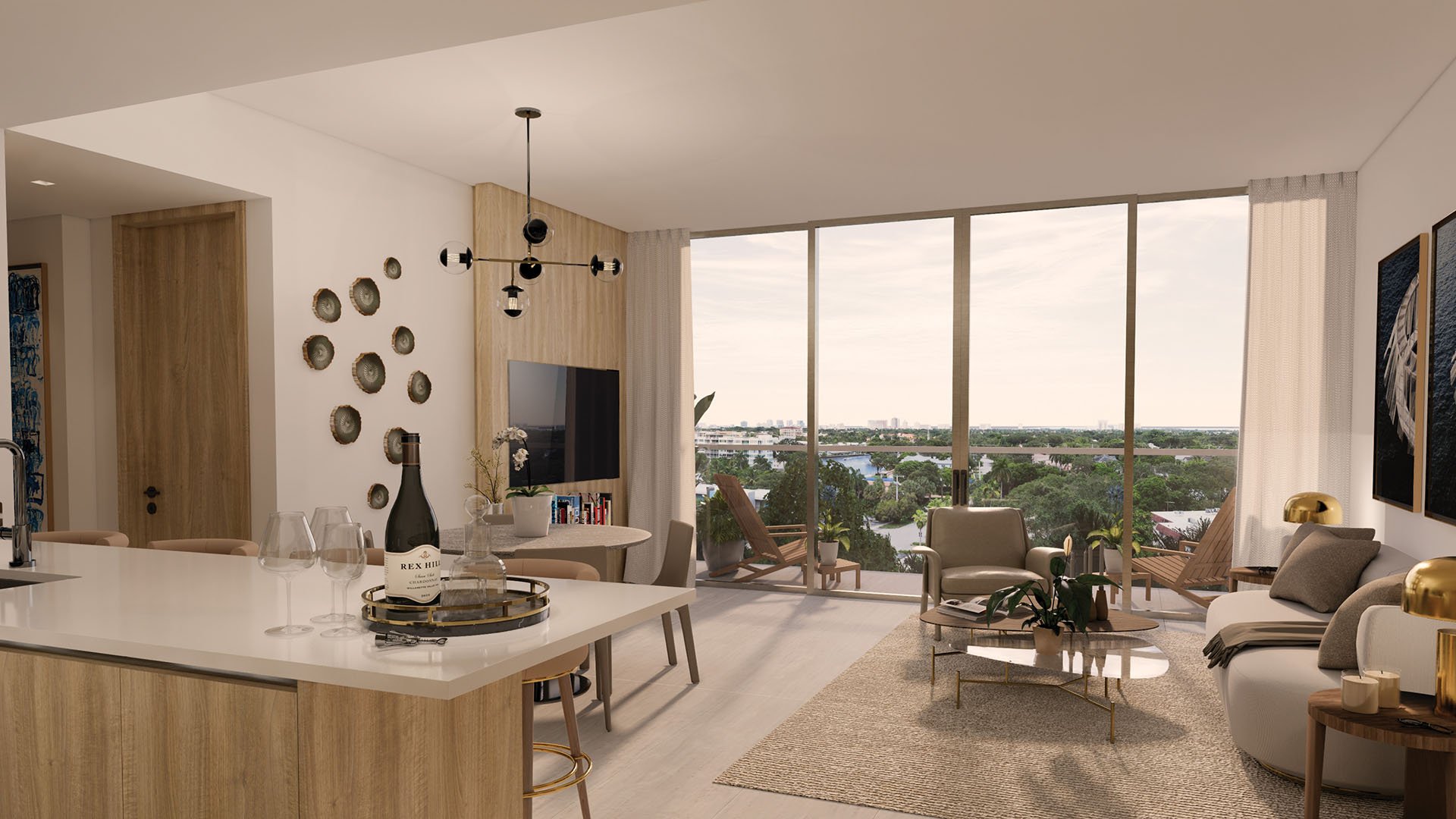
On ordinary days, buyers tend to study ceiling heights, views, and the drama of the primary suite. On storm days, the floor plan reveals another personality. The question becomes: can the home absorb a full household indoors without feeling confined?
Look for a kitchen that can genuinely support longer stays, not merely entertain beautifully for one evening. Consider whether there is a quiet room for remote work across time zones, especially if London calls continue while South Florida weather is unsettled. Review storage for water, pantry goods, luggage, outdoor cushions, and seasonal items. Study whether bedrooms are sufficiently separated for privacy when several generations are present.
The balcony is also part of this analysis, but in a disciplined way. A generous terrace is one of South Florida’s great pleasures, yet buyers should ask how quickly exterior furniture, planters, and decorative objects can be secured. The more elaborate the outdoor arrangement, the more important the storage and staff protocol become.
This is where touring with a storm-day mindset changes the conversation. A residence that photographs beautifully may feel less convincing once the owner asks where everything goes, who moves it, and how the interior lives when the exterior is temporarily closed.
Luxury condominium living can be exceptionally convenient for international owners, but due diligence should extend beyond the private front door. The most relevant questions often sit behind the scenes: mechanical rooms, loading areas, parking circulation, staff coverage, security desks, and resident communication systems.
When comparing Fort Lauderdale options, a buyer might review addresses such as Four Seasons Hotel & Private Residences Fort Lauderdale for the broader lifestyle proposition, then ask very practical questions about resident procedures during difficult weather. The same approach applies to St. Regis® Residences Bahia Mar Fort Lauderdale, where the name and setting may draw attention, but the final decision should still turn on how the home and building operate when convenience is under pressure.
For new-construction buyers, the conversation should be precise and unemotional. Ask what systems are planned, what resident services are contemplated, how access will be managed, and what responsibilities remain with the owner. A polished sales gallery can show the dream; the better question is how the daily machine will work after closing.
Oceanfront living is one of South Florida’s defining privileges, but it asks for a more rigorous ownership style. Salt air, wind exposure, terrace management, window and door maintenance, and insurance review all belong in the acquisition conversation. The aim is not to diminish the romance of the water. It is to protect it.
A London buyer considering the coast north of Fort Lauderdale may naturally look at options such as The Ritz-Carlton Residences® Pompano Beach or Waldorf Astoria Residences Pompano Beach. The refined move is to pair the aesthetic review with operational questions: how is the property staffed, how are residents informed, what is expected before an owner leaves for Europe, and how quickly can the residence be prepared if weather changes?
The most resilient coastal purchase is rarely the one chosen in haste. It is the one where the buyer understands the rhythm of ownership before the first season begins.
Access is often discussed through restaurants, airport convenience, beaches, schools, clubs, and marinas. For storm-day livability, access has another meaning: how simply can the owner, guests, household staff, and service providers reach the property before and after unsettled weather?
Study approach roads, parking design, guest arrival, valet procedures, private elevator access where relevant, and the ease of moving supplies from car to residence. In a single-family home, review the driveway, garage, service entry, landscape exposure, and generator planning with qualified professionals. In a condominium, understand the difference between what the association manages and what the owner must handle personally.
London buyers are accustomed to evaluating prime property through neighborhood, architecture, and discretion. In South Florida, discretion also includes operational ease. A residence that is simple to secure, simple to enter, and simple to manage from abroad has a value that may not be visible in photography.
A family living in the residence for months at a time needs a different storm-day profile than an owner arriving for long weekends. A frequent host needs guest instructions that are elegant and simple. A yachtsman needs clarity around marine plans. A collector may need climate stability and service coordination. A pet owner needs interior comfort and access routines that still work when outdoor time is limited.
For some buyers, a riverfront or near-downtown Fort Lauderdale condominium such as Riva Residenze Fort Lauderdale may fit the desire for a composed lock-and-leave base. For others, the calculus may move toward larger residences, private garages, or lower-density settings. The correct choice is the one that makes the owner’s real life feel less complicated.
This is why the storm-day question belongs early in the search, not at the end. It refines the shortlist, filters out fragile choices, and helps a buyer distinguish between surface luxury and lived luxury.
Before making an offer, ask for clarity in five areas. First, what are the residence and building procedures before, during, and after severe weather? Second, how are owners contacted if they are overseas? Third, which systems continue during power interruptions, and for how long? Fourth, what must the owner arrange privately? Fifth, how does the home feel if everyone remains indoors for a full day?
The answers should be calm, specific, and consistent. If they are vague, keep asking. A serious luxury purchase can withstand serious questions.
For London buyers, Fort Lauderdale offers a compelling blend of warmth, water, and relative ease. The stronger brief simply adds one more standard: choose the home that performs beautifully when the day is imperfect.
Why should a London buyer think about storm-day livability before buying in South Florida? Because a second home should be easy to manage from abroad and comfortable when weather limits normal routines.
Is storm-day livability only relevant for oceanfront homes? No. It matters for condominiums, single-family homes, marina residences, and inland properties alike.
What is the first question to ask in a luxury condominium? Ask how residents are contacted and what the building’s procedures are before, during, and after severe weather.
Does a higher floor automatically mean better livability? Not necessarily. Views matter, but elevator planning, access, storage, and indoor comfort are equally important.
How should buyers evaluate a balcony or terrace? Ask how outdoor furnishings are secured, where items are stored, and who handles preparation if the owner is away.
Is new construction always the best choice for storm-day comfort? Not automatically. Buyers should review planned systems, staffing, access, and owner responsibilities with care.
What should international owners consider if they travel often? They should prioritize clear communication, property management support, simple access, and lock-and-leave routines.
Can a storm-day lens make a home feel less romantic? It usually does the opposite. It protects the romance by ensuring the residence is calm, practical, and reliable.
Should single-family buyers ask different questions? Yes. They should focus on landscape exposure, garage function, service access, generator planning, and private maintenance.
When should these questions enter the search process? Early. They should shape the shortlist before emotional attachment forms around views, finishes, or brand names.
For a tailored shortlist and next-step guidance, connect with MILLION.
If branded residences are on your mind — as a home or as an allocation — we would be glad to share what we are seeing, privately.
Begin a quiet conversation