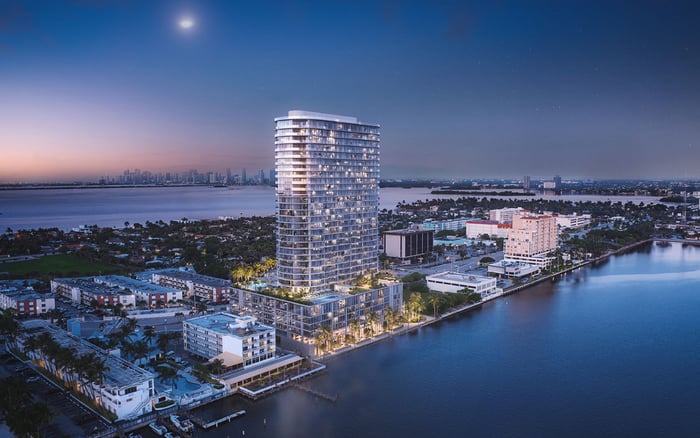
A buyer-focused framework for clarifying guest access, elevator protocols, parking, deliveries, service expectations, pets, and accountability at Tula Residences.

At an ultra-premium residence, guest management should feel gracious to visitors and nearly invisible to the owner. Achieving that standard, however, depends on details clarified before purchase-not assumed from renderings, amenity narratives, or broad references to concierge service.
For buyers evaluating Tula Residences North Bay Village, the practical inquiry begins with four subjects: who may enter, how they move through the property, where their vehicles go, and which team member is accountable when plans change. This is best approached as an operating review, not a hospitality wish list.
The goal is not simply to identify restrictions. It is to determine whether the residence's written policies, staffing model, physical circulation, and day-to-day discretion support the owner's preferred lifestyle.
Ask management or the sales team to distinguish among daytime visitors, overnight guests, family members, domestic staff, private chefs, tutors, medical aides, contractors, delivery personnel, and event vendors. A policy suited to two dinner guests may not govern a catered gathering or a multiday family visit.
Request the registration procedure for each category. Clarify how far in advance names must be submitted, whether identification is required, who may authorize access, and what happens when a guest arrives before the resident. Buyers should also ask whether recurring visitors can be placed on a standing list and whether that permission expires.
For a second-home owner, remote authorization is especially important. Confirm whether approvals can be issued through an app, telephone call, email, or written form, and establish the protocol when the owner is traveling across time zones. The decisive question is whether front-desk discretion complements a clear policy or substitutes for one.
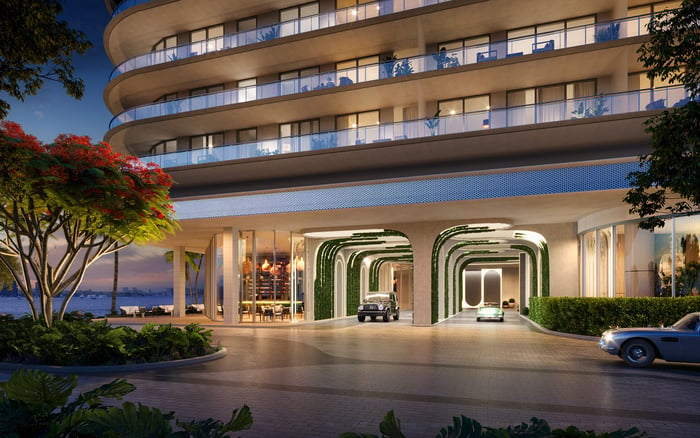
A luxury arrival is a sequence, not a single greeting. Walk through a realistic scenario, from vehicle approach and lobby reception to access verification, elevator call, and residential-floor arrival. Determine where a guest waits, who announces the visitor, and whether the resident must respond before access is granted.
Buyers comparing North Bay Village options, including Continuum Club & Residences North Bay Village and Shoma Bay North Bay Village, should use the same scenario at every property. Consistent questions make differences in privacy, convenience, and staff responsibility easier to recognize, without presuming that one operating model suits every household.
Also consider arrivals involving recreation, wet clothing, equipment, or larger family groups. Ask which entrance and circulation path apply, and whether staff assistance must be arranged in advance.
Elevator questions should cover ordinary visitors, move-ins, deliveries, contractors, and private events. Ask whether guests may select a residential floor independently, require staff activation, or must be escorted. Confirm whether access credentials are temporary, floor-specific, or tied to a defined period.
Service-elevator rules deserve equal attention. Establish reservation windows, permissible hours, protective-padding requirements, cancellation terms, deposits, and responsibility for damage. Ask what happens when two residents request overlapping service periods or a vendor runs late.
The written answer should identify who controls exceptions. A concierge may coordinate a request while another party holds the authority to approve it. Buyers should understand that distinction before planning furnishing installations, art deliveries, or catered occasions.
Guest parking is often where an elegant invitation meets operational reality. Request a written explanation of whether visitors may self-park, use valet, occupy a resident's assigned space, or access a designated guest area. Clarify any limits on duration, overnight parking, vehicle size, event volume, or advance notice.
Ask how parking charges, gratuities, validation, lost tickets, keys, and retrieval requests are handled. If the resident lends a vehicle to a guest or household employee, determine what authorization is required. Confirm the procedures for ride-share arrivals, chauffeurs waiting on-site, and vendors requiring brief loading access.
When assessing nearby alternatives such as Onda Bay Harbor, apply the same test: imagine a holiday dinner, an airport pickup, and a service appointment occurring within one hour. The meaningful standard is not abstract capacity, but a documented process for competing demands.
The term concierge can encompass very different levels of responsibility. Ask which guest-related tasks staff will perform, which they will merely coordinate, and which remain entirely with the resident. Relevant examples include receiving visitors, holding keys, accepting packages, contacting valet, arranging elevator access, directing vendors, and assisting with luggage.
Request service hours and the escalation path outside them. Identify whom the resident should contact about an urgent access problem, a delayed vehicle, a damaged delivery, or a guest incorrectly denied entry. Ask whether incidents are logged and residents receive written follow-up.
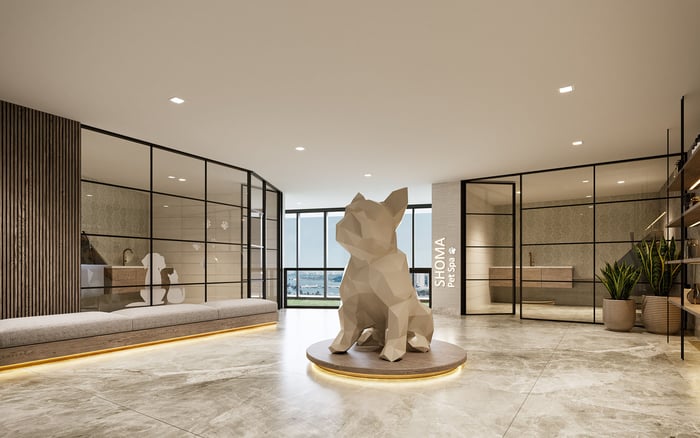
For households with pets, clarify the rules that apply when a guest brings an animal, a walker collects a resident's pet, or a sitter requires recurring access. The principle remains consistent: permissions should be specific enough to protect privacy without making normal household life unnecessarily cumbersome.
Verbal descriptions are useful for orientation, but purchase decisions should rest on the documents that govern occupancy and operations. Request the current guest-access rules, parking and valet policies, elevator procedures, delivery requirements, pet provisions, fee schedules, and any applicable forms. Have qualified counsel review how these materials relate to the purchase documents and future association authority.
Ask which policies can change, who may amend them, what notice residents receive, and whether fines, deposits, or service charges may apply. If a desired arrangement is important-such as recurring caregiver access or frequent private dining-seek written clarification rather than relying on an informal assurance.
A polished service culture is most persuasive when its boundaries are equally refined. The best outcome is a framework that protects discretion, gives staff clear authority, and allows owners to host with confidence.
Should buyers assume all personal guests use the same entry process? No. Ask for written distinctions among daytime, overnight, recurring, and event-related visitors.
Can an owner authorize a guest while away from the residence? Confirm the accepted remote method, response time, and fallback procedure in writing.
Should elevator access be reviewed separately from lobby access? Yes. Entry approval does not necessarily explain floor permissions, escort requirements, or credential duration.
What should be clarified for service-elevator reservations? Ask about hours, lead time, deposits, protective measures, cancellations, and late vendors.
May a guest use an owner's parking space? Do not assume so. Request the applicable authorization, access, liability, and key-handling rules.
What parking questions matter for private events? Clarify advance notice, vehicle limits, valet arrangements, charges, and overflow procedures.
How should domestic staff or caregivers be registered? Ask whether recurring access is available and how permissions are renewed, limited, or revoked.
Are guest pets governed differently from resident pets? They may be, so request the provisions covering visiting animals, sitters, walkers, and common areas.
Which service promises should be confirmed in writing? Confirm staffing hours, included tasks, charges, escalation contacts, and responsibility for exceptions.
Can guest-management rules change after purchase? Ask who can amend each policy, what notice is required, and which remedies or charges may apply.
For a discreet conversation and a curated building-by-building shortlist, connect with MILLION.
If branded residences are on your mind — as a home or as an allocation — we would be glad to share what we are seeing, privately.
Begin a quiet conversation