For trophy pied-à-terre buyers in South Florida, the choice between a large amenity deck and lower-density living is less about size than rhythm. The stronger answer depends on privacy, service expectations, length of stay, guest patterns, views and the emotional role of the residence.
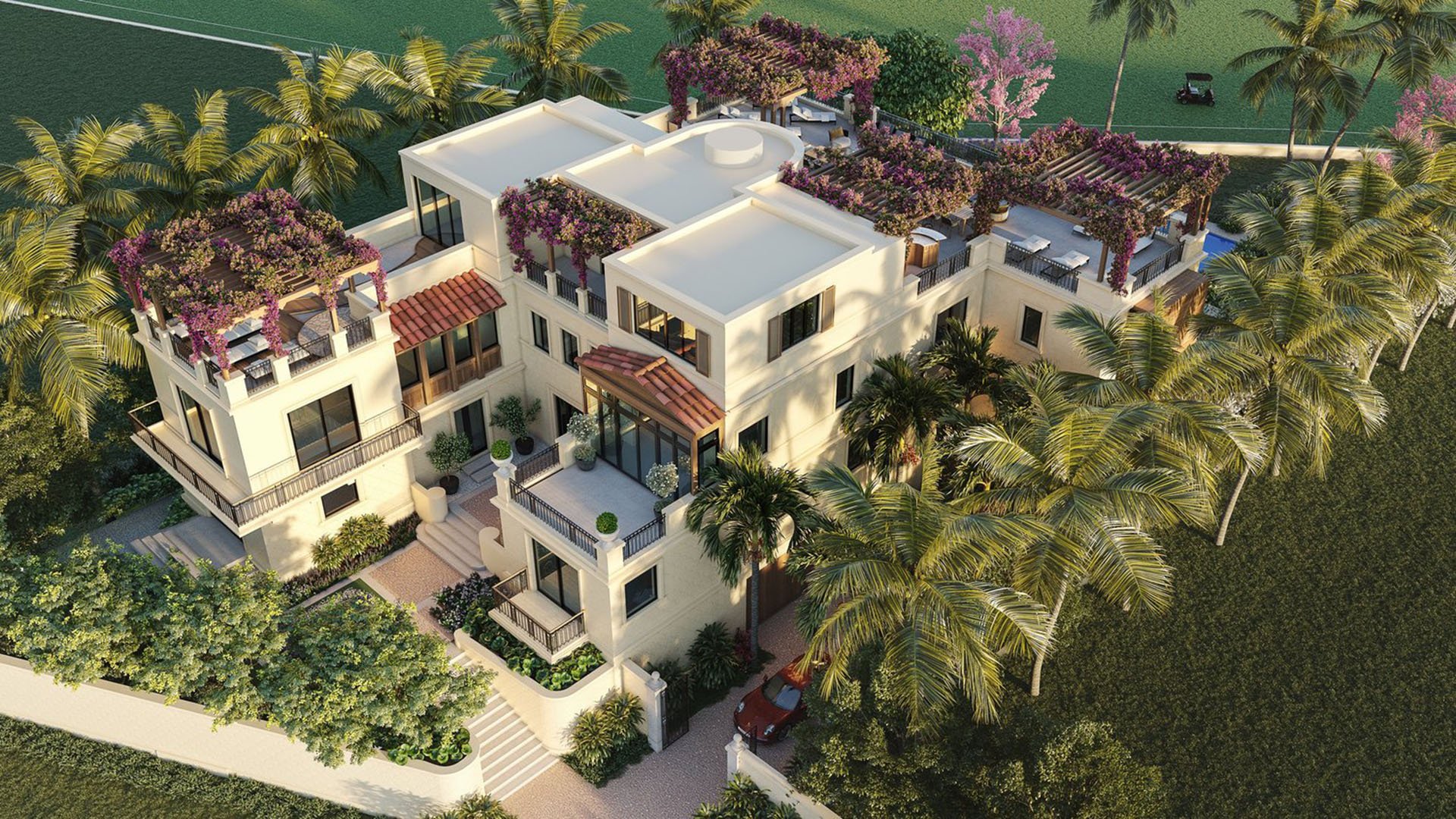
For the trophy pied-à-terre buyer in South Florida, the choice between a large amenity deck and lower-density living is rarely resolved by a floor plan alone. It comes down to cadence: how often the owner arrives, how long they stay, who travels with them, how much privacy they expect and whether the residence should feel like a private club, a resort suite or a quiet extension of a primary estate.
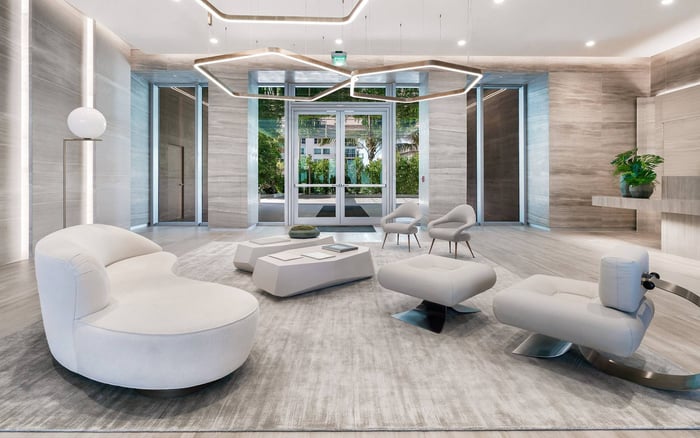
A large amenity deck can be seductive. It signals ease, sociability and the pleasure of having wellness, lounging, dining, children’s space, pool culture and service within steps of the elevator. For the buyer who wants the building to choreograph the weekend, that has real value. Yet lower-density living offers a different register of luxury: fewer shared thresholds, calmer arrivals, greater discretion and the sense that the building is not performing for everyone at once.
In the trophy segment, the winner is usually not the longer amenity menu. It is the setting that removes friction from the owner’s exact life.
Amenity-forward buildings are most compelling when the pied-à-terre functions as an active base. Think of the buyer who lands on a Friday, hosts friends by Saturday afternoon, wants a pool scene without coordinating a club reservation and expects fitness, spa, lounge and food-and-beverage convenience to be immediate. In this profile, shared amenities are not secondary. They are part of the reason to buy vertically rather than maintain a standalone home.
This is especially relevant in urban districts where buyers are trading land for access. In Brickell, for example, the appeal often lies in vertical convenience: arrival, valet, views, dining, meetings and nightlife without the obligations of a larger residence. A project such as 888 Brickell by Dolce & Gabbana speaks to that desire for a highly serviced urban address where the building experience matters as much as the private residence.
The amenity deck also matters for owners who entertain in bursts. A pied-à-terre may sit quiet for weeks, then suddenly host family, friends or business guests. In that moment, the ability to extend the home into shared space becomes practical. The sharper question is whether those spaces feel elegant at peak use or merely abundant on paper.
Lower-density living tends to win with buyers who value control. A trophy pied-à-terre is often used for short, intentional stays. If every arrival feels public, every elevator ride feels shared and every pool day requires negotiation, the home can lose its private charge. Lower density reduces that noise.
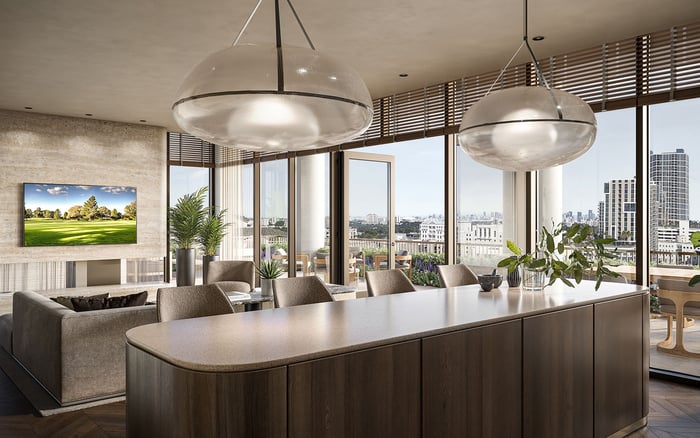
The advantage is psychological as much as physical. A smaller residential population can make the property feel more like a private house in the sky, particularly when paired with generous terraces, direct views and a strong arrival sequence. For many buyers, the most valuable amenity is not visible in a brochure. It is the absence of crowding.
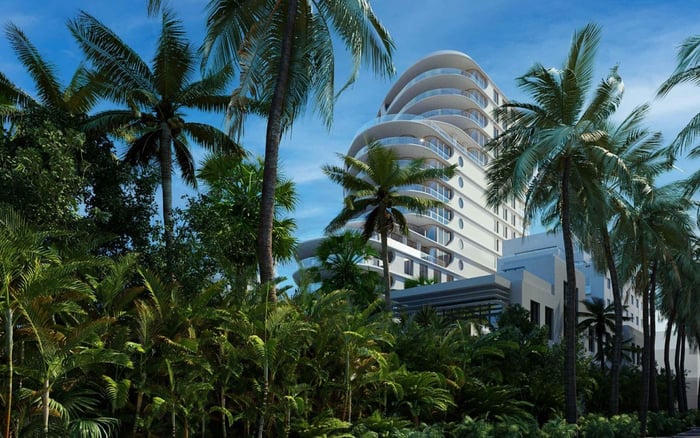
That is why boutique scale has become increasingly attractive in certain South Florida markets. Bay Harbor Islands, Surfside, Fisher Island and select beach enclaves often appeal to owners who want proximity to Miami without feeling embedded in a constant social current. A residence such as Onda Bay Harbor fits naturally into a conversation about quieter waterfront living, where the daily experience is shaped by calm rather than spectacle.
The amenity-versus-density equation changes by neighborhood. In Brickell, a larger amenity platform can offset a more urban environment by giving residents a private layer above the city. In a Miami Beach search, however, the buyer may already be choosing the ocean, sand and neighborhood atmosphere as the primary amenity. In that case, lower density and better private outdoor space may matter more than another shared lounge.
Oceanfront buyers are particularly sensitive to this distinction. If the view, terrace and beach access are the emotional core of the purchase, the shared amenity deck should support that experience rather than compete with it. The Perigon Miami Beach belongs naturally in this discussion because the Miami Beach buyer is often seeking a refined balance between resort-like ease and residential composure.
On Fisher Island, the calculus shifts again. The premise is already privacy, separation and a distinct residential world. For buyers considering The Residences at Six Fisher Island, density is not merely a feature. It is part of the island proposition, a way of preserving the sense of remove that defines the address.
A large amenity deck should never distract from the quality of the home itself. For a trophy pied-à-terre, the residence must work when the owner wants to see no one. That means the terrace, kitchen, primary suite, storage, service access, acoustics and view corridor all deserve more attention than a rendering of a crowded pool.
The strongest pied-à-terre layouts offer a feeling of completion. A buyer should be able to arrive with little planning and feel immediately settled. If the plan depends too heavily on shared amenities to feel livable, it may function more like a hotel suite than a trophy residence. That distinction matters for long-term satisfaction.
Lower-density buildings often have an advantage here because more of the luxury is concentrated inside the residence and in the arrival sequence. Amenity-rich buildings can still achieve this, but only when the private home feels equally considered. The best projects do both: they offer a building that is useful and a residence that feels self-sufficient.
The cleanest test is to imagine the least glamorous moment of ownership. You arrive late, with luggage, perhaps after a delayed flight. You want a quiet elevator, a flawless handoff, a stocked kitchen, privacy from the lobby to the door and a terrace that instantly explains why you bought in South Florida. If the building excels in that moment, it is doing the right work.
Then imagine the most social moment. Family is visiting, friends are in town, dinner plans are fluid and everyone wants to use the property differently. If the amenity deck absorbs that energy with grace, it adds genuine value. If it feels crowded or theatrical, it becomes a liability.
For many trophy buyers, the answer is therefore conditional. Choose the large amenity deck when the pied-à-terre is meant to be a social platform. Choose lower density when the pied-à-terre is meant to restore privacy, protect time and create a sense of ownership that feels rare every time the door opens.
Is a large amenity deck always better for resale? Not always. Resale strength depends on whether the amenities match the buyer profile, the location and the quality of the private residence.
Does lower density mean fewer services? Not necessarily. A lower-density building can still offer refined service, but the experience is usually quieter and more personal.
What matters most for a second-home buyer? Ease of arrival, privacy, storage, maintenance simplicity and the ability to feel settled quickly often matter most.
Is Brickell better for amenity-driven buyers? Brickell often appeals to buyers who value urban convenience, service depth and immediate access to dining and business districts.
Is Miami Beach better for lower-density living? Many Miami Beach buyers prioritize privacy, terraces, water views and beach proximity, which can make lower density especially appealing.
Should I prioritize a pool or a private terrace? If you entertain frequently, the pool may matter more. If you value quiet daily use, the private terrace may carry more lasting value.
Can boutique buildings feel as luxurious as large towers? Yes. Boutique luxury is often expressed through discretion, intimacy, arrival quality and a stronger sense of privacy.
Does oceanfront living reduce the need for amenities? Sometimes. When the ocean and beach are the central lifestyle amenity, buyers may place more value on privacy and views.
How should frequent travelers evaluate service? Focus on arrival, valet, package handling, housekeeping coordination, security and how easily the residence can be readied before you land.
What is the safest overall choice for a trophy pied-à-terre? The safest choice is the building that aligns with your real use pattern, not the one with the longest amenity list.
If you'd like a private walkthrough and a curated shortlist, connect with MILLION.
If branded residences are on your mind — as a home or as an allocation — we would be glad to share what we are seeing, privately.
Begin a quiet conversation