A discreet comparison of two South Florida luxury residential cultures: a fashion-branded Brickell tower and a beachfront private-collection residence in Miami Beach. The article examines how identity, setting, access, and service shape perceived scale, lobby privacy, and resident familiarity.

In South Florida’s highest tier of residential real estate, the most revealing question is not always how large a residence is, how high it sits, or how dramatic the view may be. For many buyers, the quieter question is how a building behaves. That behavior is its culture: the combined effect of brand identity, setting, service model, architecture, access control, and social atmosphere.
That is why 888 Brickell by Dolce & Gabbana and Shore Club Private Collections Miami Beach make such a useful comparison. They are not simply two luxury projects in different neighborhoods. They represent two distinct ideas of residential life: the fashion-branded urban tower and the beachfront private-collection resort residence.
In Brickell, verticality, density, and branded design define much of the experience. In Miami Beach, beachfront setting, resort character, and privacy culture carry more of the emotional weight. Both can be exclusive, but they produce exclusivity in different ways.
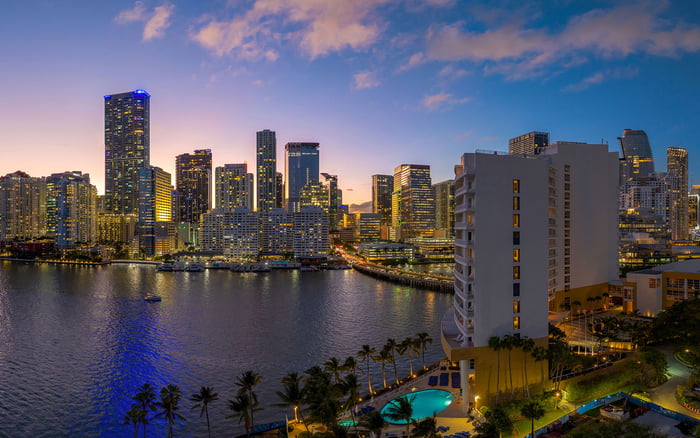
888 Brickell by Dolce & Gabbana belongs to an urban luxury context where the building must engage the energy of the city while preserving a sense of separation from it. Brickell is dense, polished, and highly visible. It rewards buildings that can stage arrival, movement, and identity with precision.
The Dolce & Gabbana association gives 888 Brickell a particular cultural language. Rather than treating brand as a surface detail, buyers should understand it as a lens through which design, presentation, and service are likely to be interpreted. A fashion house brings expectations of drama, finish, and global recognition. The challenge is translating that presence into a private residential environment rather than a public spectacle.
For a vertical building, scale is never only physical. It is psychological. A tower can feel large from the outside yet composed from within if circulation, access, and resident-facing services are handled with discipline. At 888 Brickell, the relevant buyer question is how an urban, high-profile, branded environment maintains exclusivity while operating in a city format.
That question matters for residents who want Brickell convenience without lobby anonymity. In a tall urban setting, familiarity does not happen automatically. It must be created through controlled entry, attentive staffing, repeated daily rituals, and a social atmosphere that recognizes residents without overexposing them.
Shore Club Private Collections Miami Beach operates from a different cultural premise. Its power is not primarily vertical intensity, but beachfront retreat. The setting suggests another rhythm: arrivals that feel less metropolitan, transitions that move from street to sanctuary, and a hospitality-inflected sense of ease.
The Shore Club name carries a Miami Beach social memory. That context matters because resort familiarity differs from urban recognition. It is less about making a grand entrance and more about feeling expected, remembered, and protected inside a world that understands leisure as a form of privacy.
For Shore Club Private Collections Miami Beach, scale is best considered through intimacy and discretion. A beachside residential environment can feel expansive in landscape yet personally contained if its spatial culture supports retreat. Oceanfront living is not only about exposure to water and sky. It is also about how gracefully a building separates residents from the performance of the beach.
A Miami Beach buyer may therefore read privacy differently than a Brickell buyer. In this setting, privacy is tied to hospitality, softened access, and the sensation of being within a private resort environment. The strongest version of that culture makes residents and staff feel mutually recognizable without making the building feel socially demanding.
Lobby privacy is often where building culture first becomes visible. In Brickell, arrival has to negotiate urban pressure. Vehicles, visitors, service teams, and residents all meet the same city energy before the building begins to edit it. At 888 Brickell by Dolce & Gabbana, discretion, controlled access, and brand presentation become essential parts of the arrival sequence.
The lobby in this kind of building is not merely a room. It is a filter. It must protect the resident from the city while expressing the confidence of the brand. Too much theatricality can make a home feel public. Too little can make a branded residence feel under-realized. The balance is subtle: a resident should feel the presence of design without feeling that every arrival is a performance.
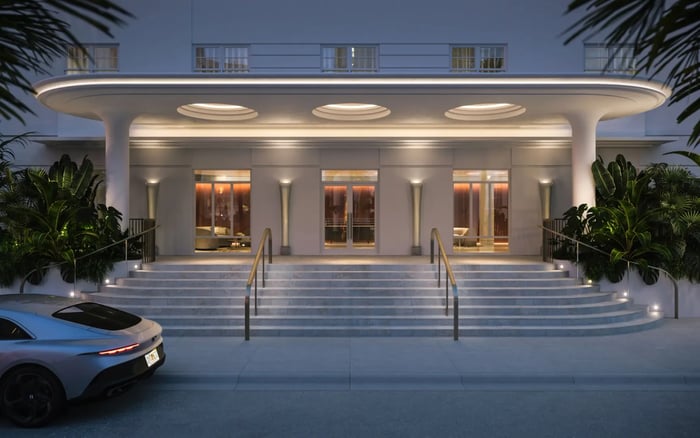
At Shore Club Private Collections Miami Beach, the arrival sequence follows a resort-like logic. Privacy is less about escaping density and more about entering retreat. The street-to-lobby transition should feel controlled, but not severe. Hospitality, landscape, and a quieter pace can do the work that urban security performs more overtly in Brickell.
This is where boutique residential culture can be especially powerful, even when the word is used more as a feeling than a statistic. Buyers are often seeking a building where staff know faces, circulation feels intuitive, and common spaces do not erase personal discretion.
Resident familiarity is one of the least discussed luxuries in South Florida, yet it shapes daily life more than many headline amenities. Familiarity does not mean forced sociability. It means the building develops a rhythm in which residents are recognized, preferences are remembered, and privacy is respected as a norm rather than a request.
At 888 Brickell by Dolce & Gabbana, the challenge is to create that recognition inside a branded vertical environment. The building’s culture has to overcome the potential anonymity of height and density. In the best urban residential buildings, staff become the connective tissue. They understand who belongs, who is expected, and how to keep movement elegant.
At Shore Club Private Collections Miami Beach, familiarity can emerge from a smaller-feeling beach-club culture. Resort-influenced residential life often depends on repetition: the same arrival path, the same service tone, the same discreet acknowledgment near the pool, lobby, or beach access. The result can feel more personal, provided the hospitality culture does not become too visible.
For buyers comparing the two, the question is not which is more luxurious. It is which type of recognition feels more natural. Brickell recognition is urban, precise, and curated. Shore Club recognition is resort-based, relaxed, and retreat-oriented.
A buyer drawn to 888 Brickell by Dolce & Gabbana may value proximity to city energy, architectural verticality, and the confidence of a global luxury identity. This is a building culture for someone who wants the city close, but carefully mediated. The pleasure lies in contrast: public intensity outside, controlled polish inside.
A buyer drawn to Shore Club Private Collections Miami Beach may prioritize privacy through atmosphere. The appeal is not withdrawal from luxury, but a softer form of it. Beachfront living, resort character, and controlled access combine to create a home that feels less like a stage and more like a private circuit of arrival, retreat, and recognition.
Neither model is inherently more discreet. Discretion depends on execution. A tower can be private if its access and service culture are rigorous. A beachfront residence can feel exposed if its hospitality spaces are not carefully calibrated. In the ultra-premium market, buyers should look beyond finishes and ask how the building will know them, protect them, and absorb them into its daily rhythm.
What is the main difference between 888 Brickell by Dolce & Gabbana and Shore Club Private Collections Miami Beach? The core difference is cultural: 888 Brickell is an urban, fashion-branded tower, while Shore Club is a beachfront, resort-influenced private residence.
Why does building culture matter for luxury buyers? Building culture shapes how scale, service, privacy, and recognition feel in daily life. It often determines whether a residence feels merely impressive or genuinely livable.
How should buyers think about scale at 888 Brickell by Dolce & Gabbana? Buyers should consider how verticality, density, and brand presentation are managed. The key question is whether a prominent urban tower can still feel composed and exclusive.
How should buyers think about scale at Shore Club Private Collections Miami Beach? The relevant issue is how a beachfront residential setting preserves intimacy. Resort-like spatial culture can make a larger environment feel more personal and discreet.
Is lobby privacy different in Brickell than in Miami Beach? Yes. Brickell privacy often begins with controlled urban arrival, while Miami Beach privacy is more closely tied to hospitality, retreat, and resort-style access.
Does fashion branding change the residential experience at 888 Brickell? It can shape expectations around design, service, and presentation. The buyer should look for brand identity that enhances privacy rather than turning daily arrival into spectacle.
Does resort character matter at Shore Club Private Collections Miami Beach? Yes. Resort character can influence how residents experience familiarity, service, and retreat. It gives the building a social language distinct from a conventional condominium.
Which building culture is better for resident familiarity? Neither is automatically better. 888 Brickell must create recognition within a vertical city format, while Shore Club may benefit from a beach-club atmosphere that feels more naturally familiar.
Should buyers choose based on amenities first? Amenities matter, but they should not be the first filter. The more revealing question is how the building controls access, manages arrival, and recognizes residents.
What type of buyer is best suited to each setting? 888 Brickell suits buyers who want urban energy with controlled polish. Shore Club suits buyers who want beachfront privacy shaped by hospitality and retreat.
If you'd like a private walkthrough and a curated shortlist, connect with MILLION.
If branded residences are on your mind — as a home or as an allocation — we would be glad to share what we are seeing, privately.
Begin a quiet conversation