For buyers making South Florida a durable home base, the choice between a large amenity deck and lower-density living is less about which is superior and more about daily rhythm, privacy, service expectations, and long-term livability.
For a buyer building a long-term South Florida base, the choice between a large amenity deck and lower-density living is not a contest between spectacle and restraint. It is a question of temperament, household rhythm, and how much daily life should be absorbed by the building itself.
A large amenity deck can make a residence feel effortless. Pools, lounges, fitness spaces, dining rooms, gardens, work areas, and wellness programming can compress a private-club lifestyle into the elevator ride downstairs. For owners who split time between cities, entertain often, or want resort-level convenience without the logistics of maintaining a single-family estate, scale can be practical rather than decorative.
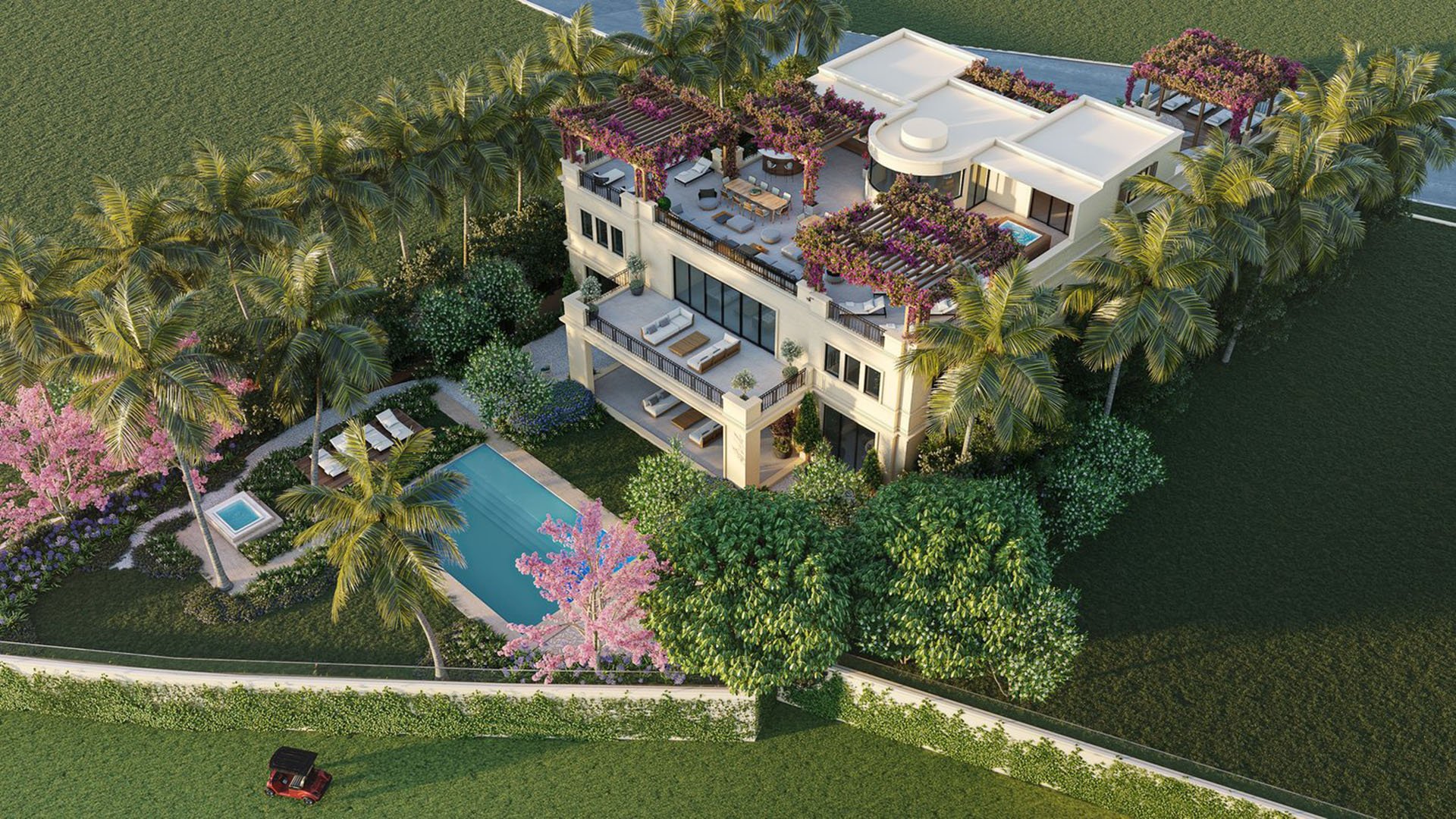
Lower-density living appeals to a different instinct. It places a premium on quiet arrival, fewer shared thresholds, more predictable elevator use, and the sense that the building remains residential even during peak season. For buyers who intend to stay for longer stretches, privacy often becomes a daily luxury rather than an abstract preference.
The most sophisticated buyers are not asking which option photographs better. They are asking which one will still feel right after the novelty has passed.
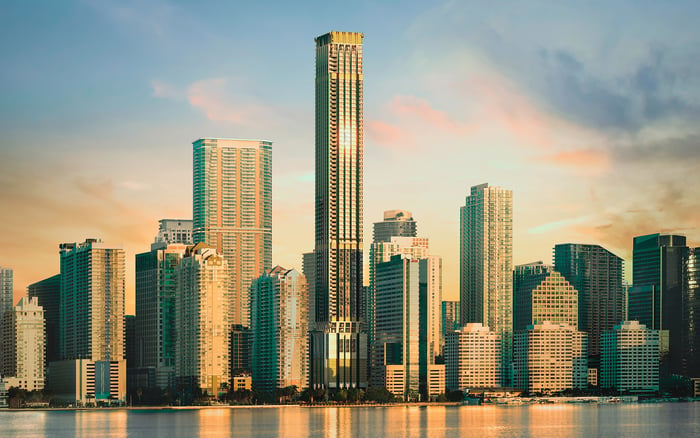
A substantial amenity program is most compelling when it reduces complexity. In dense urban settings, it allows residents to move through wellness, meetings, family time, and hosting without leaving the property. That matters in Brickell, where the appeal is access, energy, and a highly serviced vertical lifestyle. A buyer considering 2200 Brickell is not simply weighing a residence. They are considering whether daily convenience, walkability, and a building ecosystem can support a more fluid life.
Large amenity decks also work well for households with varied schedules. One person may want a morning fitness routine, another may need a quiet place to work, and guests may expect a poolside afternoon that does not require a club membership or a drive across town. In this context, amenity scale is not excess. It is infrastructure.
The caution is that a large deck must be judged by design discipline, not by the number of features. The best amenity environments feel layered, intuitive, and calm. Weaker ones feel like a checklist. Buyers should study circulation, acoustics, sightlines, shade, seating distribution, and whether the spaces can be used gracefully at different times of day. A beautiful pool deck that feels exposed at noon or crowded on weekends may not deliver the ease it promised in renderings.
Lower-density living tends to reveal its value slowly. At first, it may seem less dramatic than a tower with an expansive amenity platform. Over time, however, the benefits become tangible: quieter corridors, a more intimate service culture, less competition for common areas, and a stronger sense of recognition between staff and residents.
This is particularly relevant in boutique buildings, where the identity of the property depends less on spectacle and more on discretion. In Miami Beach, for example, a buyer looking at The Perigon Miami Beach may be drawn to the idea that residential atmosphere is shaped as much by restraint as by amenity. Beach proximity, privacy, and architectural composure can matter more than an oversized social deck.
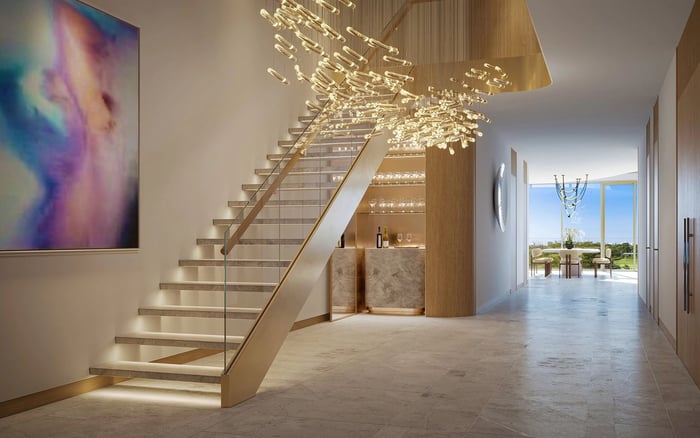
Lower density can also suit buyers moving from estates, townhouses, or private compounds who do not want to feel they have traded autonomy for convenience. They may want services, security, and lock-and-leave confidence, but not the sensation of living inside a hotel. For this buyer, the ideal building is not under-amenitized. It is selectively amenitized, with spaces that feel personal rather than performative.
The best way to evaluate the choice is to imagine ordinary weeks, not holiday weeks. Where will you have coffee before the day begins? Will you use the gym if it is busy? Do you host formally, casually, or rarely? Do guests stay with you often? Will children, grandchildren, or pets influence how you move through the property? Does the building still feel serene when every residence is occupied?
Second-home buyers often begin with the fantasy of arrival. Long-term owners eventually focus on repetition: the repeated elevator ride, the repeated walk to the pool, the repeated interaction with valet, concierge, and neighbors. If those daily patterns feel elegant, the purchase has staying power.
A large amenity deck can win this test if it is beautifully managed and proportioned. Lower density can win it if the residence itself carries enough private comfort, with terraces, views, light, and interior volume doing more of the work. Waterfront buyers in particular should ask whether the building’s shared amenities enhance the water experience or distract from the privacy of it.
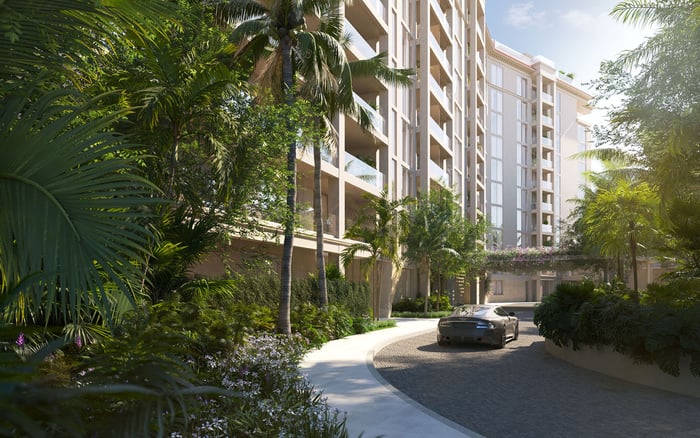
In Coconut Grove, the calculus often shifts toward landscape, neighborhood calm, and a softer residential rhythm. A project such as The Well Coconut Grove speaks to buyers who want wellness and design, but within a setting where the neighborhood itself contributes to the lifestyle. In that case, the building does not need to provide every answer. The surrounding environment is part of the amenity package.
For ultra-premium buyers, privacy is rarely only about being unseen. It is about control: control over arrival, guest flow, sound, staff interaction, and the degree to which one’s home feels separate from the public life of the building. A large amenity deck can still support privacy if it is zoned intelligently and staffed with discretion. A smaller building can still feel exposed if common spaces are poorly arranged.
Service is the bridge between the two models. In a larger building, service must be organized enough to preserve calm despite scale. In a lower-density property, service should feel personal without becoming intrusive. Buyers should observe how the lobby handles simultaneous arrivals, how outdoor spaces are supervised, and whether amenity areas feel maintained throughout the day.
Bay Harbor Islands illustrates the appeal of a more measured residential atmosphere. A buyer drawn to La Maré Bay Harbor Islands may value proximity to Miami’s broader lifestyle while still wanting a calmer island setting. The question is not whether the building has enough amenities. It is whether the scale of the building supports the way the owner wants to return home.
Resale is never determined by one variable. Still, long-term appeal usually comes from coherence. A large amenity deck should match the building’s price point, buyer profile, and location. Lower density should be supported by strong architecture, desirable views, thoughtful residences, and service that feels proportionate to the ownership cost.
Amenity-heavy buildings may appeal to buyers who want a comprehensive lifestyle in one address. Lower-density buildings may appeal to buyers who see scarcity, privacy, and calm as enduring luxuries. Neither is automatically more resilient. The stronger asset is the one where the promise is clear and the lived experience confirms it.
In Boca Raton, for instance, buyers often consider lifestyle through a broader lens that may include club culture, dining, schools, family proximity, and seasonal use. Alina Residences Boca Raton fits into a market where the building is only one part of the long-term base decision. The surrounding pattern of life can be as important as the amenity plan.
If you expect the building to function like a private resort, prioritize the amenity deck, but inspect how it will actually perform. Look for shade, separation, operational logic, and spaces that support both solitude and sociability.
If you expect the residence to function as a true home, prioritize lower density, private outdoor space, natural light, storage, elevator experience, and the feeling of arrival. Amenities still matter, but they should support the home rather than compete with it.
For many buyers, the ideal answer sits between the two: a building with meaningful amenities, but not an overextended social program; a residence with privacy, but not isolation; a neighborhood with energy nearby, but not at the front door. South Florida’s strongest long-term addresses tend to understand this balance.
Is a large amenity deck better for part-time owners? Often, yes. It can make short stays easier by concentrating wellness, leisure, and hosting spaces within the property.
Is lower-density living better for full-time residents? It can be, especially for buyers who value quiet, privacy, and a more residential routine over constant activity.
Do larger amenity programs increase monthly costs? They can require more staffing, maintenance, and operational oversight. Buyers should evaluate whether they will actually use the spaces provided.
Can a boutique building still have strong amenities? Yes. The best boutique properties focus on quality, privacy, and proportion rather than trying to offer every possible feature.
What should families prioritize? Families should consider storage, elevator flow, pool usability, guest accommodations, parking, and how children or relatives will use shared spaces.
What matters most for a waterfront residence? Views, terrace usability, privacy, and the connection between indoor living and the water often matter more than amenity count.
Is Brickell better suited to larger amenity decks? Brickell buyers often value convenience, services, and urban access, so a strong amenity program can be especially useful.
Is Miami Beach more about privacy or amenities? It depends on the building and location. Many Miami Beach buyers want both beach access and a calm residential experience.
How should second-home buyers think about this choice? Second-home buyers should focus on ease of arrival, lock-and-leave confidence, and whether the building supports relaxed short stays.
What is the simplest decision rule? Choose the building that best supports your ordinary week, not the one that only impresses during a tour.
For a discreet conversation and a curated building-by-building shortlist, connect with MILLION.
If branded residences are on your mind — as a home or as an allocation — we would be glad to share what we are seeing, privately.
Begin a quiet conversation