A practical luxury buyer’s guide to assessing whether La Maré Bay Harbor Islands can move beyond seasonal use and support a full-time South Florida life.
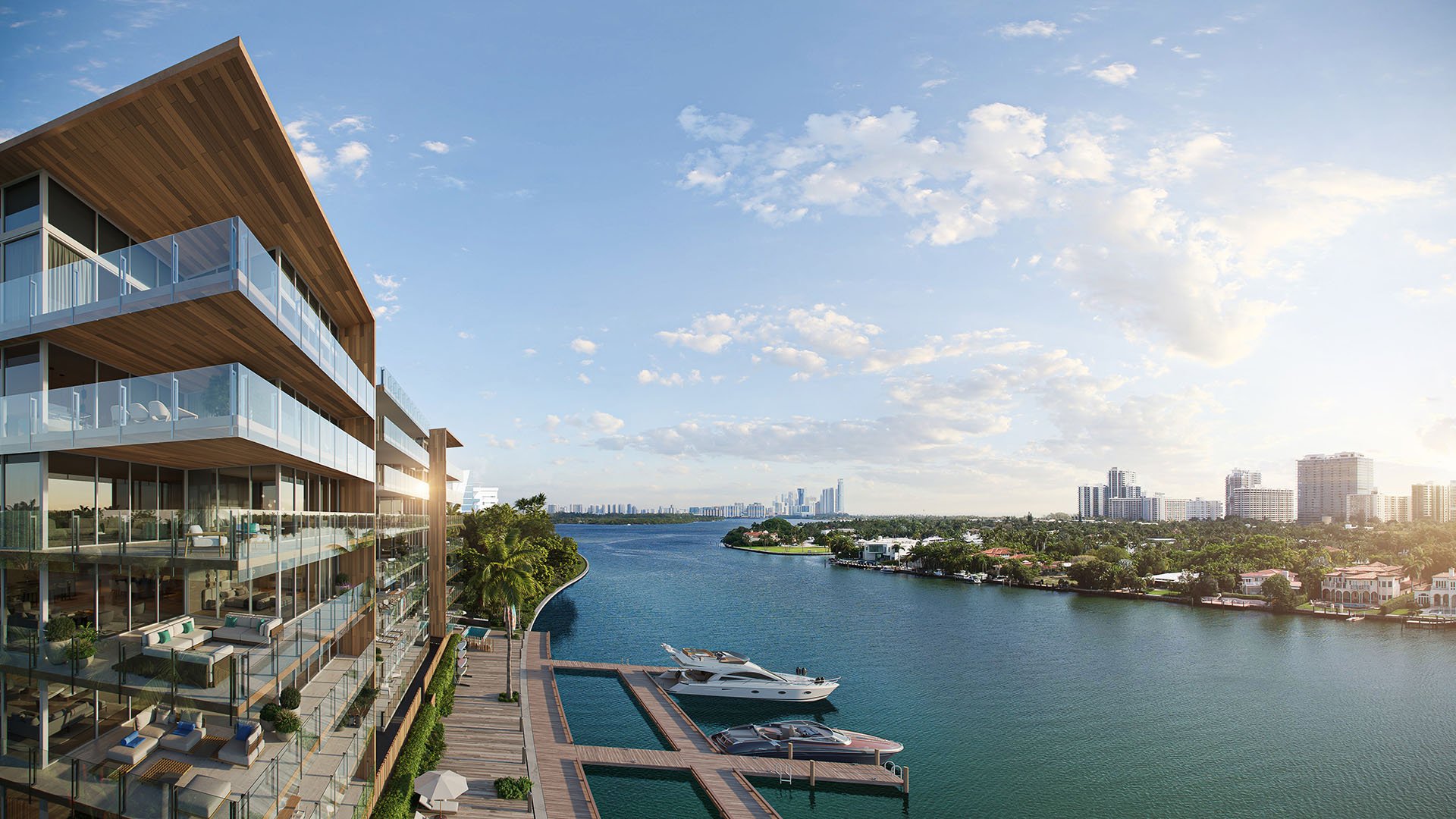
For seasonal buyers, La Maré Bay Harbor Islands begins with a compelling premise: boutique waterfront living in one of South Florida’s more discreet residential pockets. The sharper question is whether it functions only as a polished pied-à-terre, or whether it can sustain the daily rhythm of a primary residence.
That distinction matters. A winter apartment can be judged by arrival impact, water views, finishes, and proximity to restaurants. A full-time home must pass a different test: weekday errands, remote work, building operations, storm planning, parking, medical access, family routines, and the quiet repetition of ordinary life. In search language, Bay-harbor, Boutique, Second-home, and Waterview are not merely labels here; they are the filters a buyer must translate into lived experience.
La Maré’s Bay Harbor Islands setting gives it a residential character distinct from the intensity of Brickell or downtown Miami. It may appeal to buyers who want access to Bal Harbour, Surfside, Miami Beach, and mainland Miami without making a tourist-heavy district their home base. That quieter positioning is part of the appeal, but it also requires buyers to examine what they expect from daily convenience.
Bay Harbor Islands has long attracted buyers who value proximity without constant exposure. For La Maré, that means a location near the Miami luxury corridor while still feeling more residential than many high-rise urban neighborhoods. For a seasonal owner, this can translate into ease: arrive, settle in, enjoy nearby destinations, and leave before the practical frictions become apparent.
For a full-time resident, the analysis changes. How quickly can one reach markets, dining, banking, medical offices, professional services, schools, parks, and preferred leisure routines? Are those needs walkable, easily drivable, or dependent on crossing into neighboring districts? The right answer depends less on a marketing description than on the buyer’s own pattern of life.
The most disciplined approach is to conduct a daily-life test. Spend time in the area at different hours. Consider weekday mornings, late afternoons, weekends, and storm-season conditions. A residence that feels serene during a showing must also feel functional on an ordinary Tuesday.
La Maré’s boutique character is central to its identity. Boutique buildings often appeal to buyers seeking privacy, intimacy, and a less anonymous residential environment. Yet boutique scale also raises a practical question: does the building’s staffing, service depth, and day-to-day support match the expectations of a full-time household?
Seasonal buyers may need less operational intensity because their use is episodic. Full-time residents may rely more heavily on concierge responsiveness, maintenance coordination, package handling, elevator dependability, parking practicality, vendor access, and communication during weather events. These factors are not glamorous, but they can define the quality of ownership.
The correct due diligence is not to assume that larger buildings are better or that smaller buildings are easier. It is to ask precise questions. How is the property staffed? How are maintenance needs handled? What procedures are in place for extended absences? How does the association communicate with owners? What happens when a resident is in town year-round and needs consistent support rather than occasional service?
The best full-time livability review begins with the buyer profile. A remote professional should evaluate in-unit work functionality, quietness, connectivity, parking, and access to spaces suitable for meetings. A beautiful residence becomes less useful if calls are disrupted, deliveries are difficult, or the workday requires constant improvisation.
Families should look closely at schools, neighborhood safety, parks, walkability, and the practicality of daily routines from Bay Harbor Islands. The question is not only whether the area feels calm, but whether the household’s ordinary schedule can be managed without strain.
Retirees may have a different checklist. Elevator reliability, concierge support, healthcare access, storm preparedness, parking convenience, and ease of year-round maintenance all become more important when the residence is not merely a seasonal escape. A waterfront home can be deeply restorative, but full-time comfort depends on systems that work quietly in the background.
La Maré’s waterfront positioning is part of its attraction, especially for buyers who prize light, openness, and a sense of separation from the city’s busier districts. For full-time residents, that same waterfront setting makes resilience and insurance questions more important.
Coastal buyers should ask about flood zones, hurricane readiness, building elevation, reserve planning, insurance costs, and association financial health. These are not reasons to avoid waterfront ownership. They are reasons to approach it with precision. The more a buyer expects to live in the residence year-round, the more important it becomes to understand how the building is prepared, funded, insured, and operated through the full calendar.
Primary-residence buyers relocating to Florida should also review tax residency, homestead, estate-planning, and documentation matters with qualified advisors. Those decisions are highly personal and should not be reduced to general assumptions. A seasonal-to-full-time transition is both a lifestyle decision and a legal and financial planning exercise.
The strongest La Maré buyer is not necessarily the one most captivated by the view. It is the buyer who understands the difference between luxury as an impression and livability as a system.
Before committing to year-round occupancy, buyers should ask themselves whether they want a quieter residential alternative to denser Miami neighborhoods, whether they are comfortable relying on nearby districts for certain services, and whether boutique scale aligns with their expectations for privacy and support. They should also test commuting patterns, healthcare access, professional services, dining habits, and the real convenience of errands.
For some, La Maré Bay Harbor Islands may remain the ideal seasonal base: refined, residential, and close to the destinations that define the northern Miami Beach luxury corridor. For others, it may become something more durable: a primary home that offers water, discretion, and proximity without the constant movement of a more urban address.
The answer is not universal. It is revealed by how the residence performs when the vacation frame falls away.
Is La Maré Bay Harbor Islands better suited to seasonal or full-time living? It can be evaluated for both, but full-time buyers should look beyond design and views to daily convenience, operations, resilience, and lifestyle fit.
What makes Bay Harbor Islands appealing for La Maré buyers? The area offers a quieter residential setting near the Miami luxury corridor, with access to Bal Harbour, Surfside, Miami Beach, and mainland Miami.
Why does boutique scale matter for year-round residents? Boutique scale can enhance privacy, but buyers should confirm whether staffing, service depth, maintenance support, and building communication meet full-time expectations.
What should remote professionals consider before buying? They should assess in-unit work functionality, quietness, connectivity, parking, and whether the building environment supports a consistent workday.
What should families review before choosing La Maré full-time? Families should consider schools, safety, walkability, parks, and whether daily routines from Bay Harbor Islands are practical throughout the year.
What should retirees prioritize in the due-diligence process? Retirees should focus on elevator reliability, concierge support, healthcare access, storm preparedness, parking convenience, and maintenance ease.
Are waterfront residences subject to special due-diligence questions? Yes. Buyers should ask about flood zones, hurricane readiness, elevation, reserves, insurance costs, and association financial health.
Should relocating buyers review Florida residency planning? Yes. Tax residency, homestead, estate planning, and documentation should be reviewed with qualified advisors before making a primary-residence move.
How should buyers test daily livability at La Maré? They should spend time in the area at different hours and evaluate errands, dining, services, parking, access, and storm-season preparedness.
What is the best way to shortlist comparable options for touring? Start with location fit, delivery status, and daily lifestyle priorities, then compare stacks and elevations to validate views and privacy.
If you'd like a private walkthrough and a curated shortlist, connect with MILLION.
If branded residences are on your mind — as a home or as an allocation — we would be glad to share what we are seeing, privately.
Begin a quiet conversation