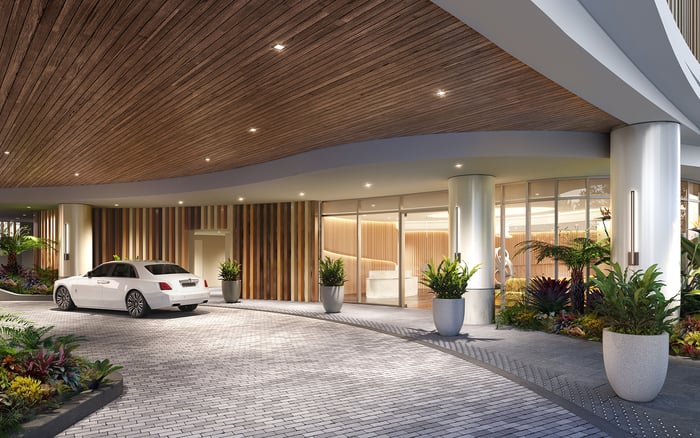
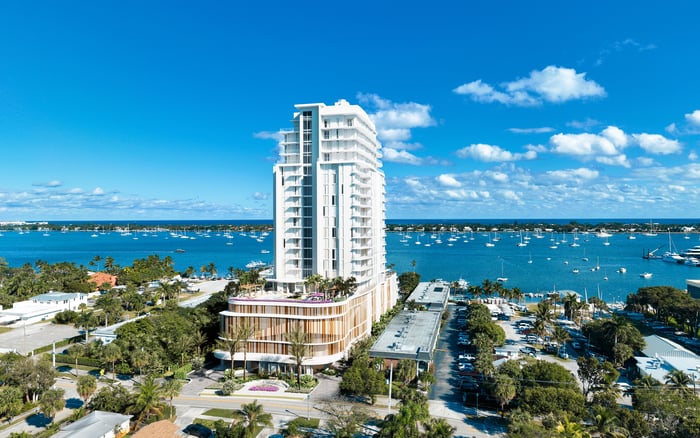
A buyer-focused comparison of Alba West Palm Beach and The Ritz-Carlton Residences® Pompano Beach through the lens of floor-plan flexibility, secondary bedrooms, staff usefulness, privacy, and service culture.
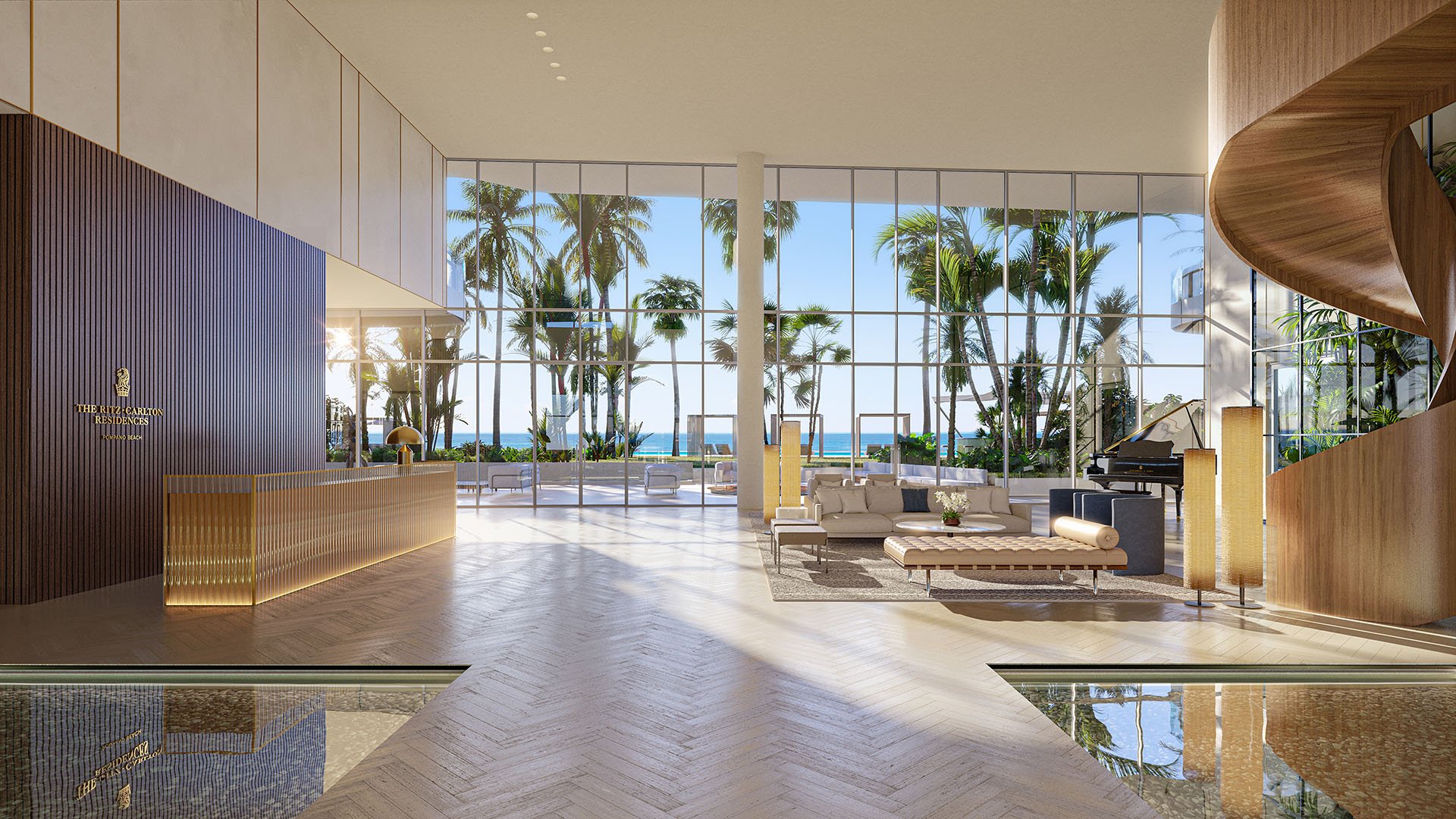
For sophisticated South Florida buyers, the most revealing question is not simply which residence offers the stronger amenity narrative. It is how the home performs on an ordinary Tuesday, during a long family weekend, or when guests arrive with children, assistants, caregivers, and luggage in tow. In that sense, the comparison between Alba West Palm Beach and The Ritz-Carlton Residences® Pompano Beach is not a contest of prestige. It is a study in how two luxury ownership models organize private life.
Alba West Palm Beach is positioned as the more boutique-scale option, with appeal centered on livability, privacy, and the ability to function comfortably for extended seasonal or primary use. The Ritz-Carlton Residences® Pompano Beach Pompano Beach reads differently: more formal, more service-oriented, and more closely aligned with the expectations of a branded hospitality ecosystem.
As a market decision, this is a West Palm Beach and Pompano Beach comparison. As a lived decision, it is about whether the household wants a refined condominium that feels manageable or a residence that can support a more operational lifestyle. Boutique, in this context, is not merely a description of scale. It is a different philosophy of ownership.
Alba West Palm Beach is best understood as a luxury condominium that can live like a primary home without requiring a heavily staffed household structure. That distinction matters for buyers who want privacy, comfort, and daily ease without turning every arrival, meal, or guest stay into a managed production.
Its appeal is especially clear for owners who split time between residences but expect their South Florida home to do real work. A second home used only sporadically can tolerate inefficiencies. A residence used for long winter stays, remote work, visiting family, and quiet entertaining cannot. It needs secondary bedrooms that are not afterthoughts, flexible rooms that can change purpose, and circulation that feels intuitive rather than ceremonial.
For family buyers, Alba’s central question is practical: can the plan absorb children, guests, and work-from-home needs without becoming overcomplicated? That is where the project’s livability emphasis becomes meaningful. A bedroom that works equally well for a grandchild, a visiting couple, or a private office can be more valuable than a formal room that photographs beautifully but sits unused.
The Alba buyer is often not trying to recreate the infrastructure of a large staffed estate in vertical form. They may still value service, elegance, and discretion, but the everyday priority is manageability. The residence should feel composed, private, and adaptable, rather than like a small hospitality operation requiring constant orchestration.
The Ritz-Carlton Residences® Pompano Beach speaks to a different owner psychology. Here, the appeal is tied to brand confidence, service infrastructure, and the comfort of a resort-residential operating model. For buyers who entertain frequently, maintain staff, or expect hotel-grade support around the home, that framework can materially shape the ownership experience.
The key planning question is separation. Can primary, guest, service, and entertaining zones remain distinct enough for the home to feel gracious under pressure? In a more formal residence, secondary bedrooms are not just overflow sleeping spaces. They may need to support multigenerational visits, adult children, long-stay guests, caregivers, or staff-adjacent use without eroding the privacy of the primary suite or the calm of the main living areas.
This is where back-of-house logic becomes more valuable. A household that regularly hosts dinners, welcomes family for extended stays, or depends on service support will often prefer a plan that anticipates movement behind the scenes. Staff circulation, delivery management, guest privacy, and service access may not be visible in the glamour image, but they shape whether the residence functions elegantly once occupied.
The Ritz-Carlton Residences® Pompano Beach is therefore especially relevant for buyers who want a more formal lifestyle platform. It is less about reducing household complexity and more about supporting it with polish. For the right owner, that is not excess. It is order.
In both residences, the secondary-bedroom question deserves more attention than buyers often give it. The primary suite may drive the emotional first impression, but the secondary rooms determine whether the home can evolve. A room used as a child’s bedroom in one season may become a guest suite, office, wellness room, or caregiver space in another.
At Alba West Palm Beach, the ideal secondary bedroom contributes to a flexible, residential rhythm. It should help the home remain simple, private, and comfortable even when the household expands temporarily. This is particularly important for buyers who want to avoid a rigid plan that solves one use case while frustrating several others.
At The Ritz-Carlton Residences® Pompano Beach, secondary bedrooms may carry a more formal responsibility. They need to reinforce hierarchy and separation. The guest who stays for ten days, the adult child working remotely, and the household support person each need enough privacy and proximity for the residence to function without friction.
This is why staff-room usefulness should not be reduced to whether a plan carries a particular label. The better question is how adaptable the service-adjacent space is. Can it support occasional help, a caregiver, storage, household management, or overflow without compromising the elegance of the main rooms? In ultra-premium ownership, utility is most successful when it remains discreet.
The right choice depends on the cadence of the household. Alba West Palm Beach favors the buyer who wants a polished, private, highly livable residence that can serve as a primary or extended seasonal home without feeling operationally heavy. It is a compelling fit for those who prize intimacy, flexible use, and a quieter residential experience.
The Ritz-Carlton Residences® Pompano Beach favors the buyer who wants a residence capable of supporting a more formal way of living. If entertaining, staff coordination, guest separation, and branded service confidence are central to ownership, its structure may feel more natural.
Neither approach is inherently superior. Alba’s strength is in making luxury feel manageable and residential. The Ritz-Carlton model’s strength is in making service, formality, and household complexity feel controlled. The most successful purchase will come from studying the plan as a living instrument, not merely as a collection of rooms.
Before choosing, buyers should imagine three real scenarios: a quiet month in residence, a full family holiday, and a week with guests plus household support. The plan that handles all three with the least compromise is usually the one that will feel luxurious longest.
Which residence is better for buyers who want a manageable primary-style home? Alba West Palm Beach is the stronger fit for buyers prioritizing privacy, flexibility, and residential ease without heavy household operations.
Which residence is better for owners who entertain often? The Ritz-Carlton Residences® Pompano Beach is better aligned with buyers who value formal service support and separation between guest, service, and private zones.
Why do secondary bedrooms matter so much in this comparison? They determine whether the home can support guests, children, remote work, caregivers, or overflow use without disrupting daily life.
Is Alba West Palm Beach more boutique in character? Yes. Alba West Palm Beach is framed around boutique livability, privacy, and a refined condominium experience that feels residential.
Is The Ritz-Carlton Residences® Pompano Beach more service-oriented? Yes. Its ownership appeal is tied to branded confidence, hospitality-style support, and a more formal operating model.
Should staff-room usefulness be judged only by room labels? No. Buyers should focus on how service-adjacent spaces function for circulation, privacy, caregiving, storage, or occasional household help.
Which option is better for multigenerational use? Either may work, but the decision depends on whether the family prefers Alba’s simpler flexibility or Ritz-Carlton’s more formal separation.
Does this comparison have a clear winner? Not in a universal sense. The better choice depends on how the owner lives, entertains, works, hosts, and manages household support.
What should buyers test when reviewing a floor plan? They should test daily living, a full guest weekend, remote-work privacy, caregiver needs, and the flow between public and private rooms.
What is the simplest way to frame the decision? Choose Alba for boutique residential ease, and choose The Ritz-Carlton Residences® Pompano Beach for branded service structure and formality.
When you're ready to tour or underwrite the options, connect with MILLION.
If branded residences are on your mind — as a home or as an allocation — we would be glad to share what we are seeing, privately.
Begin a quiet conversation