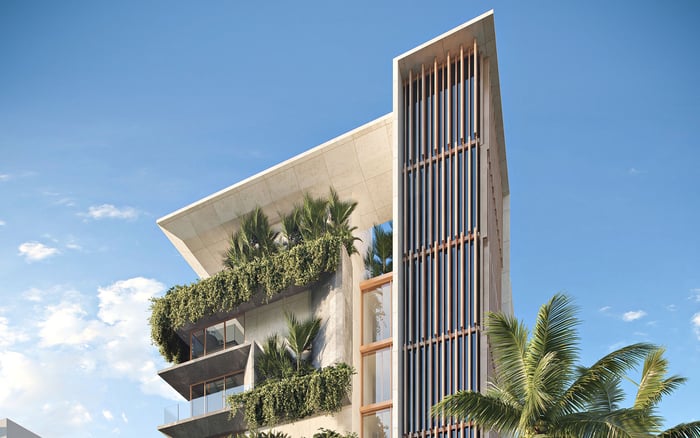
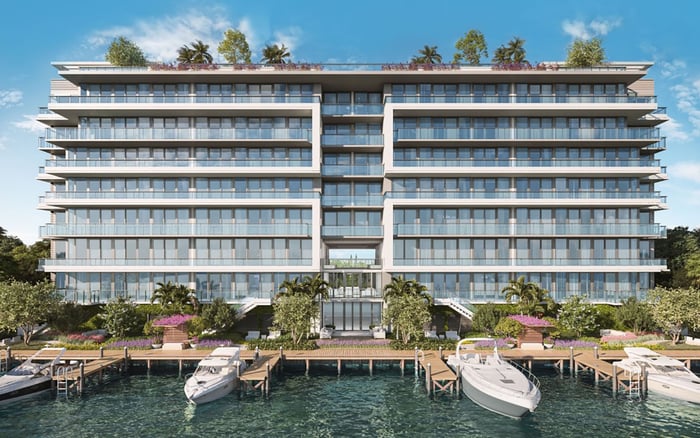
A practical collector-focused due diligence framework for evaluating whether La Maré Bay Harbor Islands can support serious art delivery, handling, installation, privacy, and risk controls in 2026.

La Maré Bay Harbor Islands should be evaluated through a more exacting lens than the standard luxury checklist. For the ultra-high-net-worth buyer with significant art, the question is not simply whether the residence is beautiful. The sharper question is whether the building can receive, protect, and install important works without drama, exposure, or unnecessary risk.
That is the essence of the 2026 art-delivery access test. At La Maré Bay Harbor Islands, the collector or advisor should treat art movement as an operational due-diligence issue, not a decorative afterthought. The art may arrive only a few times a year, but when it does, the building must perform with precision. A valuable painting, sculpture, or fragile mixed-media work cannot be handled like a standard furniture delivery.
For a Bay Harbor Islands buyer, this matters because the promise of quiet residential living depends on controlled access and low-friction service choreography. Boutique ownership is most convincing when the resident’s private world remains protected from the mechanics of receiving large, valuable objects.
Art-delivery access begins at the threshold where a truck, crate, handler, certificate of insurance, and building policy meet. The buyer’s test is practical: can a large work enter discreetly, move safely through the property, reach the residence, and be installed without exposing the collection or interrupting other residents?
The answer depends on details that are often absent from lifestyle marketing. Loading access, service-entry dimensions, freight-elevator capacity, corridor widths, turning radii, temporary staging areas, unit-entry clearances, protective coverings, and after-hours delivery policies all become material. None should be assumed.
A collector’s representative should walk the actual route, or the proposed route when the residence is still in planning or delivery stages. The route should be studied as an installation pathway, not merely as a convenience path. A crate that clears the lobby but fails at a corridor turn has failed the test. A work that must pause in an unsecured area has introduced risk. A delivery requiring excessive coordination with residents has compromised discretion.
The strongest boutique buildings appeal to buyers who value privacy, pace, and predictability. In that context, art handling is a revealing marker of operational maturity. A residence may feel serene once the work is on the wall, but the experience before installation is what tests the building’s true service culture.
At La Maré Bay Harbor Islands, the buyer should compare the art-delivery pathway against the expectations of private ownership. The ideal process is quiet, scheduled, insured, and controlled. Art handlers should know where to arrive, whom to contact, where to stage, what surfaces require protection, and how long access is permitted. Security personnel and building management should understand the difference between routine move-in traffic and a chain-of-custody delivery.
This is also where new-construction diligence becomes particularly important. Buyers should not rely solely on renderings, amenity language, or verbal assurances. The relevant questions belong in the purchase process early, while documentation and building protocols can still be reviewed with seriousness.
A collector-buyer should ask for written confirmation of the rules governing art deliveries. Which entrances may be used by art handlers? Are there approved delivery hours, and can after-hours access be arranged for privacy? What insurance certificates are required? Who approves crating, padding, floor protection, wall protection, elevator protection, and temporary staging?
The buyer should also ask how damage responsibility is allocated. If a handler damages common areas, the building must know how responsibility is handled. If a building condition delays installation, the owner’s advisor should understand the remedy. If a fragile work needs climate-stable movement, management should be prepared to discuss timing, exposure, and access control.
Investment discipline is not limited to price, views, or resale potential. For a serious collector, it includes whether the residence can function as a safe operating environment for valuable personal property. A home that cannot support installation, storage transitions, or discreet movement may be less suitable for the owner’s real life, regardless of its finish level.
The quietest luxury is often procedural. Art-delivery access should be evaluated alongside insurance coordination, security procedures, climate exposure, and chain-of-custody protocols. Before a major work arrives, the owner’s art advisor, installer, insurer, building management, and white-glove logistics firm should be aligned.
That coordination should occur before closing when possible, and certainly before the first important delivery. It should define who is present, who signs, where the work pauses, how the crate is opened, how the unit is protected, and whether photographs or condition reports are needed. In a refined building, these steps should feel deliberate rather than improvised.
La Maré Bay Harbor Islands passes or fails this buyer test not through a single amenity claim, but through the consistency of its operational answers. For the right collector, art-delivery access is not a minor convenience. It is a practical expression of privacy, stewardship, and daily livability.
Why does art-delivery access matter at La Maré Bay Harbor Islands? It matters because valuable works require discreet, protected movement from arrival to installation. The process should avoid unnecessary exposure, disruption, and risk.
What should a collector inspect during a site visit? The buyer should review service entries, elevator access, corridors, turning areas, staging points, and unit-entry pathways. The goal is to confirm the full route, not just the final room.
Should art logistics be discussed before contract? Yes. Written confirmation of building rules can prevent misunderstandings about handlers, crating, protective coverings, insurance, and damage responsibility.
Is art-delivery access the same as a luxury amenity? No. It is an operational due-diligence issue that determines whether a residence can support serious ownership of valuable works.
Why are after-hours delivery policies important? After-hours access may improve privacy and reduce disruption when major works arrive. The buyer should confirm whether such access is allowed and how it is approved.
Who should coordinate a major artwork delivery? The owner’s art advisor, installer, insurer, building management, and logistics provider should coordinate before the work arrives. Clear roles reduce risk.
What role does insurance play in the test? Insurance requirements affect handlers, certificates, damage responsibility, and chain-of-custody procedures. These should be understood before any important movement.
Can a beautiful residence still fail the collector test? Yes. A residence may be visually compelling but operationally difficult if access routes, policies, or installation procedures are not suitable for major works.
How should climate exposure be considered? Buyers should ask how long works may remain outside conditioned areas during transfer. Sensitive pieces may require especially careful timing and handling.
What is the best way to shortlist comparable options for touring? Start with location fit, delivery status, and daily lifestyle priorities, then compare stacks and elevations to validate views and privacy.
For a discreet conversation and a curated building-by-building shortlist, connect with MILLION.
If branded residences are on your mind — as a home or as an allocation — we would be glad to share what we are seeing, privately.
Begin a quiet conversation