A buyer-focused guide for Chicago residents considering Bal Harbour, Surfside, Bay Harbor Islands, and nearby coastal enclaves where privacy, arrival sequence, and daily rhythm matter as much as the view.
For a Chicago buyer, the move to South Florida is often framed as a climate decision. The more consequential choice is quieter: what kind of oceanfront life do you want to repeat every day? A successful Bal Harbour search is not simply about securing a dramatic water view. It is about choosing a home where the first coffee, the elevator ride, the beach walk, the car arrival, and the return from dinner all feel composed.
Hotel traffic can alter that rhythm. It may bring more transient energy in arrival courts, more movement through amenity levels, more layered valet patterns, and a different sense of ownership in shared spaces. Some buyers enjoy that pulse. Others are leaving Chicago precisely to find a softer edge, where the water is present but the building does not feel like a lobby in constant rotation.
The right South Florida home should therefore be evaluated like a private club, not a postcard. Ask how the building receives residents, how guests are separated from owners, how close the pool feels to public energy, and whether the beach experience is intimate or exposed. In the ultra-premium market, calm is not accidental. It is designed, staffed, and protected.
Oceanfront living can be exhilarating, but not every oceanfront address is equally serene. The key is to distinguish between the view you see and the life you hear, cross, and share. A residence may face the Atlantic yet still feel busy if its access points, amenity decks, or neighboring uses bring constant movement. Conversely, a home that is slightly set back, bay-facing, or positioned in a quieter residential pocket may deliver a more graceful daily experience.
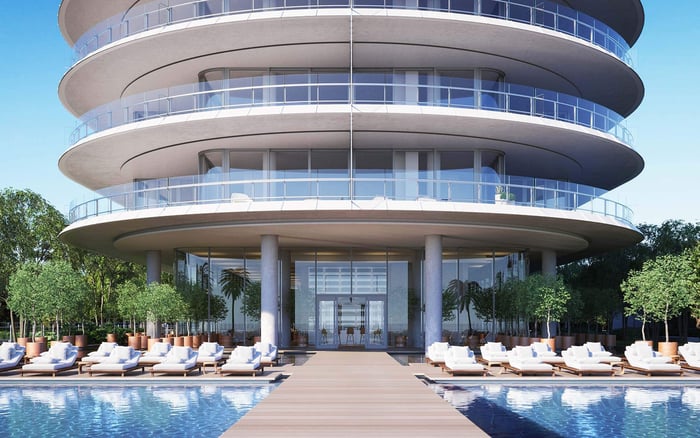
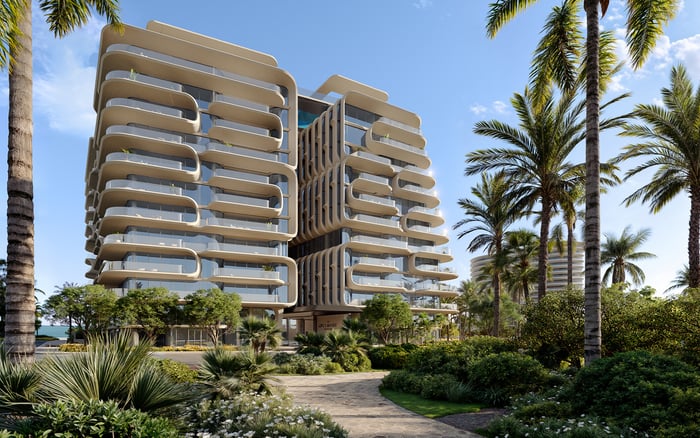
For buyers focused on Bal Harbour, the strongest comparison is often between prestige and pressure. Buildings such as Rivage Bal Harbour belong in conversations about the village because they help buyers study how new residential offerings are positioned around privacy, scale, and coastal identity. Nearby, Oceana Bal Harbour offers another reference point for comparing established oceanfront living with newer product.
The question is not which name sounds grander. It is which one lets your household move with the least friction. If you travel often, valet choreography matters. If you entertain privately, elevator flow matters. If you plan to spend long winter stretches in residence, the building’s weekday quiet may matter more than its weekend glamour.
Bal Harbour carries a particular association with discretion, polished retail adjacency, and a controlled residential mood. It is a natural starting point for Chicago buyers who want ocean air without the overt resort spectacle of larger tourist corridors. Still, it should be tested against neighboring enclaves.
Surfside can feel intimate in a different way. It has a residential scale that appeals to buyers who want the beach close, the pace measured, and the address recognizable without being performative. In that context, The Delmore Surfside is worth reviewing as part of a broader Surfside comparison, especially for households drawn to new-generation coastal residences in a quieter village setting. Ocean House Surfside also fits naturally into the same evaluation, particularly when the priority is residential character over hotel-style intensity.
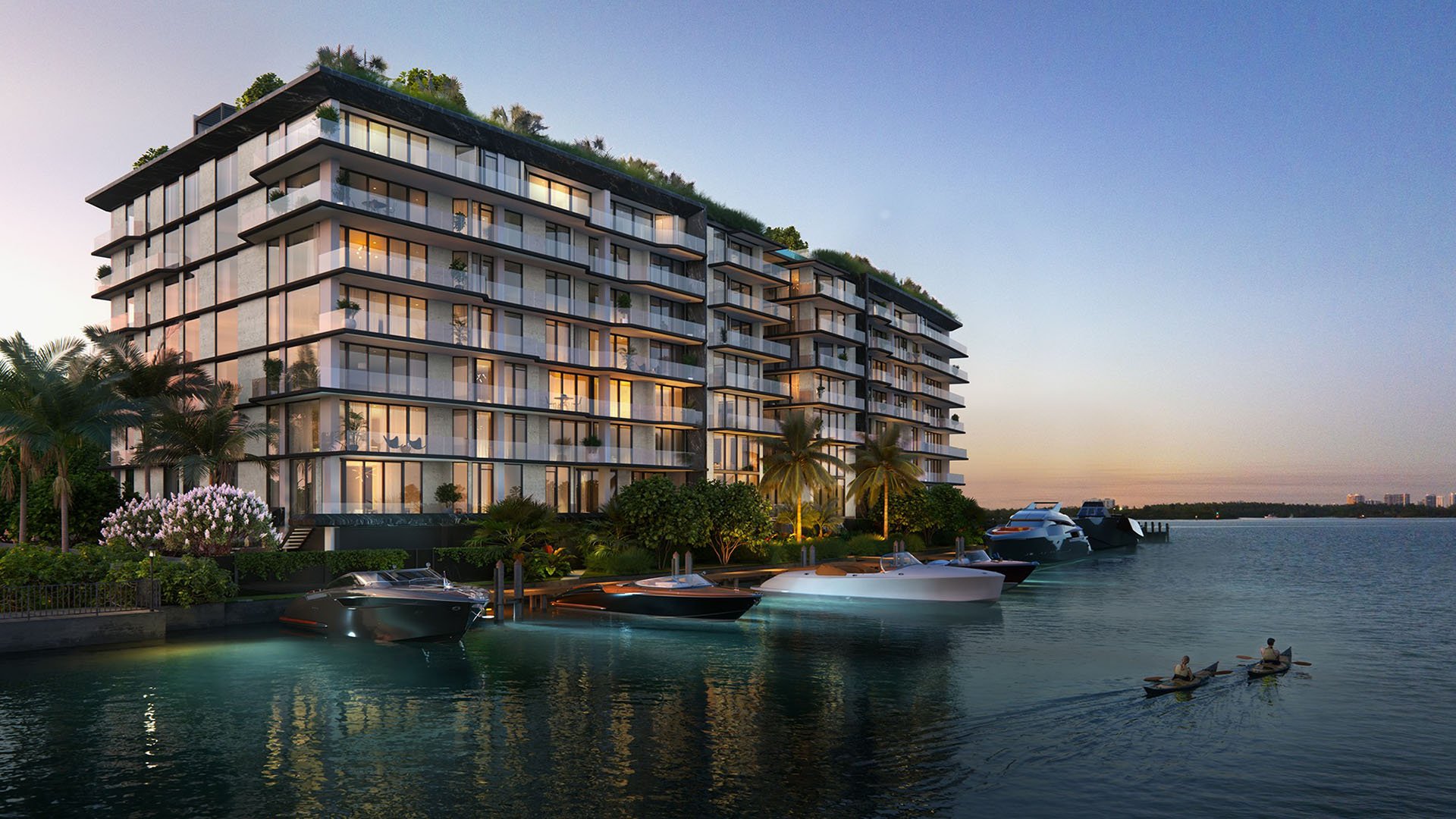
Bay Harbor Islands, while not directly on the open Atlantic in the same way, can appeal to buyers who value waterfront calm, a marina-like atmosphere, and proximity to Bal Harbour without full exposure to beach activity. A Bay Harbor search should be framed around tradeoffs: less direct surf drama, often more protected daily movement, and a more neighborhood-oriented cadence.
Chicago buyers are often precise about views, light, and interior detailing. In South Florida, the arrival sequence deserves equal scrutiny. The first impression begins before the lobby: curb approach, valet lane, porte cochere depth, resident parking, service access, package handling, and how visitors are managed.
A calm building reduces cross-traffic. Residents should not feel as though they are competing with event guests, restaurant patrons, beach club visitors, or constant short-stay turnover. Even when a property is beautifully finished, repeated contact with hotel energy can erode the sense of home.
During a private tour, arrive at different times if possible. A midday visit may feel composed, while an early evening return can reveal the real character of valet operations and lobby circulation. Walk from the car to the elevator slowly. Notice whether staff recognize residents or merely process movement. The difference is subtle, but it shapes daily life.
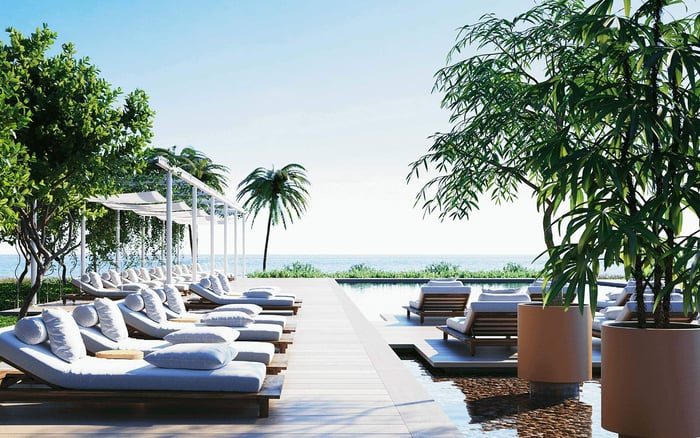
Beach access is not only a convenience. It is a measure of how the building mediates between private residence and public shoreline. The most desirable experience is usually quiet and intuitive: leave the elevator, pass through a controlled amenity or garden sequence, collect towels or chairs without ceremony, and step onto the sand without feeling displayed.
Buyers should ask where beach equipment is stored, how service is requested, whether residents and outside guests share paths, and how children, pets, and staff move through the same spaces. None of these questions are glamorous, but all of them matter. Oceanfront ownership is most satisfying when it removes effort rather than adding choreography.
For a second-home owner from Chicago, this can be the difference between using the beach daily and treating it as a view from behind glass. Calm is practical. It is the ease of walking out after a morning call, returning without a crowd, and not needing to manage the building around your own routine.
Boutique scale can support a more residential mood, though it is not a guarantee. A smaller building with poorly planned amenities can still feel cramped, while a larger building with disciplined circulation may feel surprisingly serene. The right question is not only how many residences there are, but how the building absorbs daily life.
Look for proportion. Does the pool deck match the number of owners who will use it during peak season? Are wellness areas separated from social spaces? Are service elevators discreet? Can deliveries and staff movement occur without dominating the resident experience? These operational details are the architecture of privacy.
Buyers should also consider their own social pattern. If you expect visiting family, long holiday stays, and frequent entertaining, a building that is too minimal may create pressure. If you want retreat, reading, beach walks, and highly controlled hospitality, an over-programmed environment may feel like the very thing you came south to avoid.
A Chicago-to-Bal Harbour move is often about replacing severity with ease. The ideal residence should feel restorative after a flight, simple to occupy for several weeks, and secure enough to leave without concern. That means the best building is not necessarily the one with the most visible amenities. It is the one whose systems disappear.
Think about wardrobe storage, owner closets, parking reliability, private elevator preferences, pet routines, guest suite needs, and proximity to dining or retail without surrendering quiet. If the home will be used seasonally, management quality and building culture become as important as finishes.
Bal Harbour, Surfside, and Bay Harbor Islands each offer a different answer. Bal Harbour is the polished coastal address. Surfside is the intimate beach village. Bay Harbor Islands can be the discreet alternative for buyers who want protected water and neighborhood calm. The right choice depends on whether your version of luxury is proximity, privacy, or the rare balance of both.
Before committing, separate emotion from repetition. Visit the building on a weekday and a weekend. Watch the lobby for ten minutes. Stand near the valet without announcing urgency. Walk the beach path. Ask how many access points exist between public areas and private residential zones. Study whether amenities invite residence or performance.
Then return to the residence itself. The floor plan should support the way you live when no one is visiting. The terrace should be usable, not merely photogenic. Bedrooms should feel protected from social areas. Views should calm the room rather than overwhelm it. In South Florida, luxury is strongest when it lets the ocean become part of the background rhythm.
For the buyer leaving Chicago, the final decision should feel less like choosing a trophy and more like choosing a setting. If the building lets you arrive quietly, wake naturally, reach the water easily, and host selectively, it is doing the work a true coastal home should do.
Is Bal Harbour the best choice for oceanfront calm? It is one of the most compelling starting points for buyers who value privacy, polish, and a quieter coastal rhythm.
How can I avoid hotel traffic when buying in South Florida? Prioritize fully residential settings, controlled arrival sequences, and amenity areas that are clearly separated from outside guest activity.
Should I consider Surfside if my search began in Bal Harbour? Yes. Surfside can offer a more intimate beach-village feel while keeping buyers close to the same northern Miami Beach lifestyle corridor.
What does beach access reveal about a building? It shows how well the property manages the transition from private residence to public shoreline, which directly affects daily comfort.
Are boutique buildings always quieter? Not always. Boutique scale helps only when circulation, staffing, amenities, and service areas are carefully planned.
Is a direct ocean view more important than privacy? Not for every buyer. Many owners ultimately value quiet arrival, protected terraces, and low-friction living as much as the view itself.
What should Chicago buyers test during a tour? Test the arrival, valet flow, elevator privacy, beach path, amenity spacing, and the building’s mood at more than one time of day.
Can Bay Harbor Islands be a calm alternative? Yes. It can suit buyers who prefer protected water, neighborhood texture, and proximity to Bal Harbour without direct oceanfront exposure.
What is the biggest mistake in this type of search? Choosing a residence for its marketing image rather than studying how the building feels during ordinary daily use.
How should I compare two similar oceanfront residences? Compare the rituals: arrival, morning light, beach access, guest management, service movement, and how quietly the building supports your routine.
To compare the best-fit options with clarity, connect with MILLION.
If branded residences are on your mind — as a home or as an allocation — we would be glad to share what we are seeing, privately.
Begin a quiet conversation