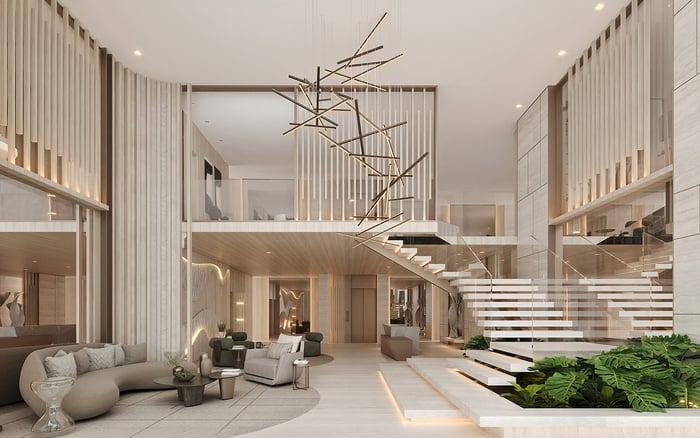
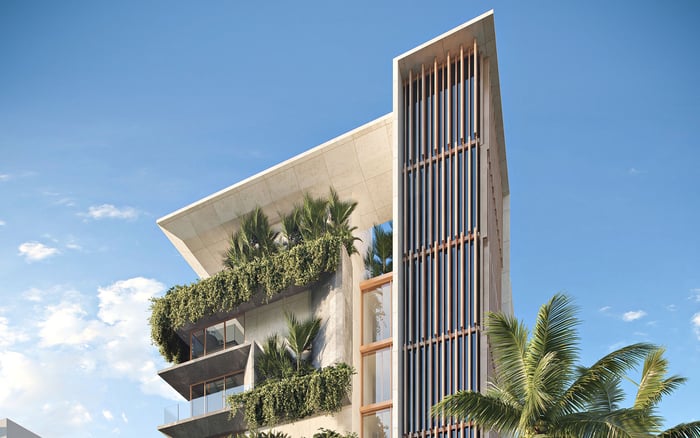
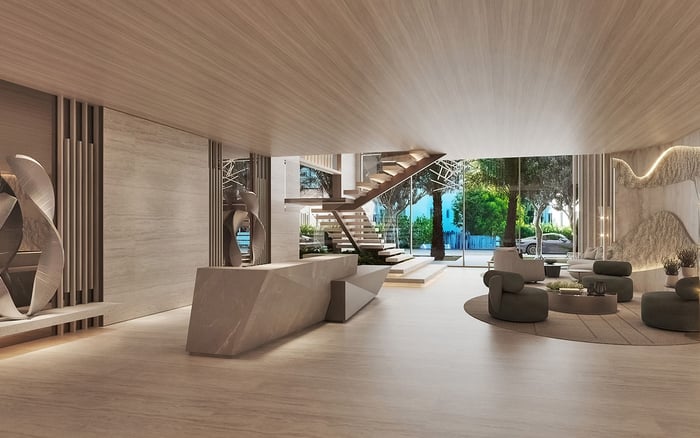
A practical, privacy-minded guide for families evaluating La Maré Bay Harbor Islands and The Cove Residences Edgewater through the lens of daily movement. The article focuses on school-day convenience, staff circulation, household discretion, and the building culture that makes luxury living feel effortless.
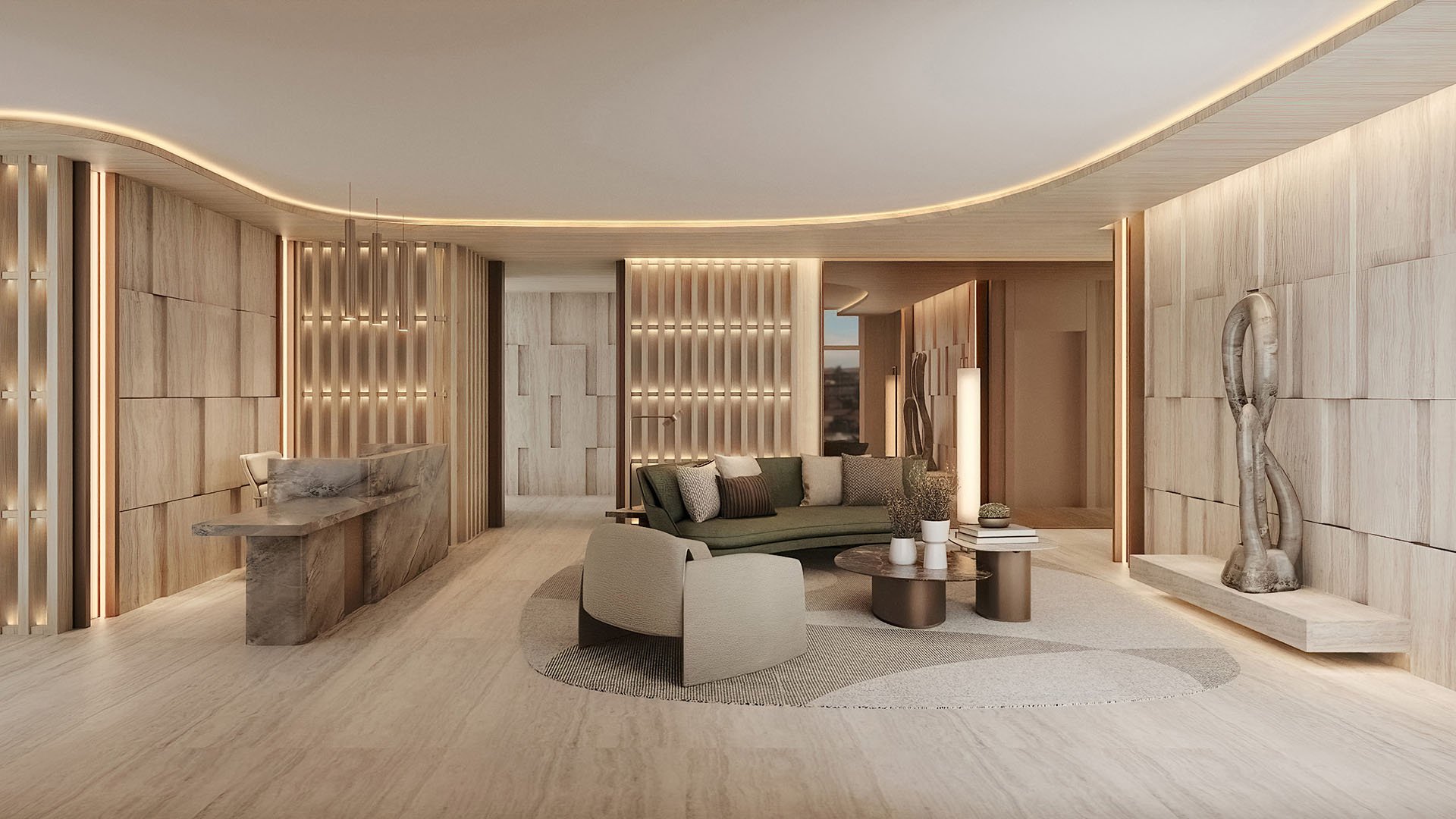
For a certain South Florida buyer, a residence is not judged only by views, finishes, or a name on the façade. It is judged at 7:15 in the morning, when children need to be downstairs, a driver is waiting, a house manager is coordinating the day, and privacy still has to hold as the building comes fully awake. That is where the conversation around La Maré Bay Harbor Islands and The Cove Residences Edgewater becomes more nuanced.
The most sophisticated family buyers are not simply comparing addresses. They are comparing building cultures. A building culture is the unwritten operating system of a residence: how people arrive, how staff move, how children are seen or shielded, how service providers are treated, and whether the lobby feels like a public stage or a private threshold. In a family context, those details shape the lived experience more powerfully than a brochure can.
La Maré Bay Harbor Islands naturally enters the conversation for buyers seeking a more residential cadence, while The Cove Residences Edgewater invites a different urban lens. The point is not that one lifestyle is universally superior. It is that each setting asks a family to examine convenience, circulation, and privacy with unusual precision.
School-day convenience is not simply proximity. It is sequence. The morning routine begins inside the residence, continues through private or semi-private corridors, reaches the elevator, passes through the lobby or arrival court, and only then becomes a commute. If any part of that chain feels exposed or poorly choreographed, the day begins with friction.
Family buyers should study how a building performs during peak movement. Is the elevator experience calm in the morning? Does the arrival area allow a child, parent, caregiver, or driver to coordinate without creating a scene? Can a family move from residence to vehicle with minimal interruption? These are operational questions, but when repeated five days a week, they become emotional ones.
In a quieter island environment, buyers may prioritize predictability and a less performative arrival rhythm. In an urban Edgewater setting, the priority may be different: the ability to move quickly from private residence to city circulation without sacrificing composure. Both can work beautifully, but only when the building treats family logistics as part of luxury.
At the upper end of the market, staff circulation is not an afterthought. It is central to how a household functions. Nannies, tutors, personal assistants, housekeepers, chefs, drivers, trainers, and maintenance teams may all touch the daily life of a residence. The best buildings allow this ecosystem to operate gracefully, without making the family feel overexposed.
The key question is not whether staff can enter. It is how they enter, where they wait, how they communicate, and whether their movement competes with the family’s own path. A well-considered building minimizes awkward overlap. It allows a house manager to coordinate details without turning the lobby into an operations desk. It lets service happen without making service visible at every turn.
This is where boutique and new-construction expectations often intersect. Boutique scale can support recognition, familiarity, and a softer residential tone. New construction can support contemporary layouts, access systems, and planning assumptions that better reflect how modern households are actually staffed. Neither word guarantees excellence, but both signal questions worth asking carefully.
Privacy is frequently discussed as if it were a matter of square footage, window treatment, or elevator configuration. Those elements matter, but privacy is also behavioral. A discreet building has a culture of restraint. Residents do not treat common areas as social theaters unless the building is intentionally designed that way. Staff members understand boundaries. Management understands the difference between hospitality and intrusion.
For families, this can be especially important. Children should be able to come and go without feeling observed. Caregivers should be able to do their work without becoming part of the building’s social narrative. Parents should not have to explain the household’s rhythm simply because the property is highly serviced.
Privacy also includes acoustic and visual discretion. How does the residence buffer family life from corridors and neighboring homes? How exposed is the entry moment when the door opens? Does the floor plan allow children, guests, and staff to occupy different zones without constant overlap? These are subtle questions, but in daily use, they become defining ones.
Bay Harbor Islands and Edgewater can represent two distinct forms of convenience. The first may appeal to buyers who want a more composed residential atmosphere, where the building feels like an extension of a private neighborhood. The second may appeal to buyers who want urban access and vertical living with a more metropolitan tempo. The decision is less about prestige than alignment.
A Bay Harbor family may prize the feeling of returning to a calmer enclave after the school run, dinner, or weekend plans. An Edgewater family may value the immediacy of a central Miami routine, where daily life moves through a denser urban fabric. Both profiles can be highly sophisticated. The essential question is whether the building’s internal culture softens or amplifies the surrounding environment.
This is why private-school considerations should be evaluated beyond a simple drive-time estimate. Families should consider the reliability of the morning departure, the ease of afternoon pickup coordination, and the way extracurricular schedules interact with staff support. A residence that saves three minutes on a map but creates ten minutes of lobby congestion may not be the more convenient choice.
A serious buyer should walk through an ordinary day, not just a sales presentation. Imagine the Monday morning routine, a rainy afternoon pickup, a tutor arriving while guests are downstairs, a housekeeper entering while a child is napping, and a driver waiting during peak building activity. The strongest residence is the one that makes these moments feel natural.
Ask how the building handles guest registration, service appointments, package flow, parking coordination, elevator demand, after-school arrivals, and weekend staff movement. Ask whether management is trained for discretion. Ask whether residents tend to use the building as a social club, a private retreat, or something in between.
For buyers comparing La Maré Bay Harbor Islands with The Cove Residences Edgewater, the right answer may depend less on the residence itself and more on the family’s operating style. A highly private household with layered staff support may need one type of building rhythm. A socially active family with older children and frequent city movement may need another. The luxury is not choosing the most visible building. It is choosing the one that makes life feel least exposed.
The most elegant family residence is often the one that disappears into the day. Doors open at the right time. Staff know where to go. Children move easily. Parents feel protected from unnecessary attention. The building supports the household without announcing it.
That is the deeper relevance of comparing La Maré Bay Harbor Islands and The Cove Residences Edgewater. The choice is not merely between two names or two locations. It is between two possible daily cultures. For the family buyer, convenience, staff circulation, and privacy are not secondary details. They are the architecture of calm.
Why does building culture matter for family buyers? It determines how smoothly a household moves through daily routines. The right culture protects convenience, privacy, and staff coordination.
Is school-day convenience only about location? No. Elevator flow, arrival areas, parking coordination, and lobby rhythm can be just as important as drive time.
How should buyers compare La Maré Bay Harbor Islands and The Cove Residences Edgewater? Buyers should compare the daily operating rhythm each setting supports. The best choice depends on household structure, privacy needs, and movement patterns.
What is staff circulation in a luxury building? It refers to how caregivers, assistants, housekeepers, drivers, and other support staff enter, move, wait, and coordinate within the property.
Why is privacy more than a floor-plan issue? Privacy also depends on resident behavior, management style, arrival choreography, and the level of discretion in shared spaces.
What should families observe during a property visit? They should watch lobby flow, elevator timing, valet or parking movement, staff interactions, and how visible residents feel during arrival and departure.
Can a boutique building be better for family privacy? It can be, if scale supports familiarity and discretion. Buyers should still examine operations rather than relying on the word boutique alone.
Can an urban Edgewater residence work for a private family? Yes, if the building manages arrivals, staff access, and common areas with restraint. Urban convenience and privacy can coexist with the right culture.
What questions should be asked about school-day routines? Ask how peak morning departures, afternoon returns, drivers, caregivers, and guest arrivals are handled during ordinary weekdays.
What is the best way to shortlist comparable options for touring? Start with location fit, delivery status, and daily lifestyle priorities, then compare stacks and elevations to validate views and privacy.
To compare the best-fit options with clarity, connect with MILLION.
If branded residences are on your mind — as a home or as an allocation — we would be glad to share what we are seeing, privately.
Begin a quiet conversation