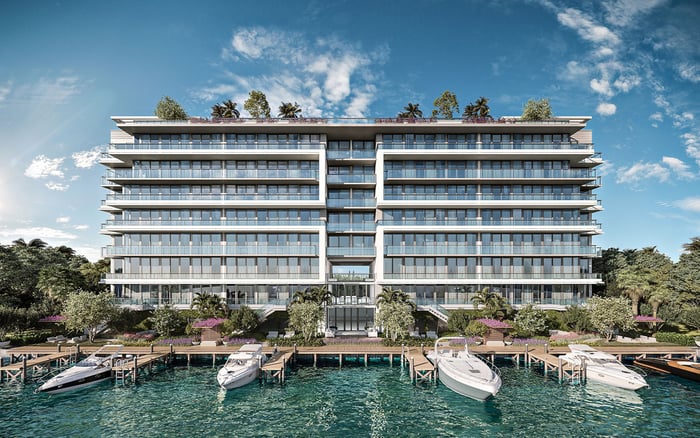
A discreet buyer’s guide to comparing La Baia North in Bay Harbor Islands with Avenia Aventura before relying on sales-gallery language. The key distinction is not simply island calm versus Aventura convenience, but how each condominium’s governing documents will shape leasing, guests, pets, alterations, assessments, reserves, insurance exposure, and daily residential control over time.

A sales gallery can make two very different addresses feel equally effortless. Renderings, finishes, water views, amenity language, and hospitality cues are all built to create momentum. For a serious South Florida buyer, however, the more durable comparison between La Baia North Bay Harbor Islands and Avenia Aventura begins with a less theatrical question: what will ownership actually allow after closing?
La Baia North is the Bay Harbor Islands alternative in this discussion, with an island-residential setting that shapes how a buyer should think about privacy, access, daily rhythm, and association culture. Avenia Aventura is the Aventura alternative, where the urban setting places more weight on convenience, movement, services, and the practical expectations of a busier residential environment.
Neither should be judged on verbal rental flexibility, informal guest comments, or broad lifestyle claims. The declaration, bylaws, rules and regulations, proposed budget, reserve disclosures, insurance details, and any rental-policy exhibits should lead the conversation. A luxury condominium is not only a residence. It is a private government with budgets, approval rights, rules, and long-term capital obligations.
The location contrast is meaningful. Bay Harbor Islands tends to attract buyers who are sensitive to scale, neighborhood feel, and a quieter residential cadence. In that context, La Baia North should be evaluated as part of an island-condominium ownership environment where association rules may matter as much as floor plan or finish. A buyer considering La Baia North may also compare the tone of nearby Bay Harbor offerings such as Alana Bay Harbor Islands and Onda Bay Harbor, not to substitute one for another, but to understand how boutique condominium living is governed in practice.
Aventura follows a different ownership logic. It is more urban, more convenience-driven, and more connected to everyday services, shopping, dining, and regional movement. That can support livability for owners who want access and activity, but it can also make association administration more central to the experience. At Avenia Aventura, a buyer should look closely at access protocols, guest registration, parking administration if addressed in the documents, and any board approval rights affecting leasing or occupancy.
The choice is not simply serene versus central. It is whether the rules behind each setting align with how the owner intends to live.
Ownership flexibility often sounds simple in conversation. Can the residence be leased? Can family use it while the owner is away? Are guests easy to register? Are pets permitted? Can interior alterations be made without a difficult approval process? The answers should not be assumed.
For La Baia North, the central ownership questions are rental minimums, lease-approval procedures, guest-use rules, pet rules, and board approval rights. For Avenia Aventura, the same questions apply. The important point is that neither project should be described as flexible or restrictive until the condominium documents confirm the details.
Long-term rentals deserve particular attention because rental minimums, approval windows, tenant-screening procedures, and repeat-lease limits can materially affect carrying strategy. An owner who may live seasonally, relocate later, or hold the residence as part of a broader family portfolio should treat lease language as a value issue, not an administrative footnote.
Pets also require precision. A building may appear pet-friendly in tone while the rules still address size, number, registration, elevator use, common-area behavior, or board enforcement. Guest-use provisions can be equally consequential for families who expect children, parents, friends, or domestic staff to use the residence when the owner is absent.
A condominium association can affect day-to-day control in ways buyers often underestimate. At La Baia North, the Bay Harbor Islands association framework may influence alterations, building access, leasing, assessments, reserves, and maintenance expectations. At Avenia Aventura, the Aventura association framework may do the same, but through the lens of a more urban residential setting.
Interior alterations are a prime example. A buyer may focus on the beauty of the delivered residence, then later want lighting changes, closet upgrades, flooring revisions, smart-home modifications, or terrace-related approvals if applicable. The governing documents and association rules can determine what requires review, how long approvals may take, whether licensed contractors must meet specific insurance standards, and how work is coordinated through service elevators or building management.
Access is another quiet luxury variable. Guest registration, delivery procedures, service-provider entry, valet or parking controls, move-in rules, and elevator reservations can either preserve order or create friction. The more a buyer expects staff, family, seasonal guests, designers, art handlers, or property managers to interact with the building, the more important these rules become.
The most glamorous residence can become frustrating if the association’s financial structure is unclear. Long-term livability at La Baia North should be evaluated beyond finishes, with attention to reserves, insurance exposure, maintenance planning, flood resilience, and future assessment risk. The same standard should be applied to Avenia Aventura, beyond amenities or lifestyle positioning.
Reserves matter because every building must maintain itself. Insurance matters because coastal and near-coastal ownership requires serious attention to coverage, deductibles, exclusions, and how premiums are budgeted. Flood resilience matters because South Florida buyers are not only purchasing interiors. They are buying into a building’s capacity to manage water, weather, access, and repair planning over time.
Assessment risk is not always a negative, but it should be understood. A prudent association may reserve carefully, while another may rely more heavily on future owner contributions. The proposed budget and reserve disclosures should be read alongside the building’s physical responsibilities. For pre-construction or new-construction ownership, the question is not only what the first budget looks like, but how realistic that budget may feel once the building is operating.
Buyers comparing Bay Harbor Islands with Aventura should therefore ask a practical question: which association structure feels more aligned with my tolerance for governance, maintenance cost, and future decision-making?
Before allowing the sales gallery to decide the outcome, request the full declaration, bylaws, rules and regulations, proposed budget, reserve disclosures, insurance information, and rental-policy exhibits for both properties. Read them with counsel, but also read them as an owner. The language will reveal whether the building suits your actual life.
For La Baia North, pay close attention to provisions that affect quiet residential control: lease minimums, guest access, pet enforcement, alteration rights, board approvals, assessment authority, reserve planning, and insurance responsibilities. For Avenia Aventura, review the same categories while considering how a more urban Aventura lifestyle may create different patterns of access, movement, visitors, and services.
This is where polished condominium choices become personal. Some buyers want a more controlled environment and will accept stricter rules if they preserve privacy and order. Others want broad use rights and should verify that the governing documents support them. A buyer who entertains often, travels frequently, keeps multiple residences, or expects family members to use the home independently should not rely on informal assurances.
La Baia North may appeal to the buyer who prioritizes island-scale living, a residential cadence, and a quieter framework for long-term ownership. The right buyer will still confirm how the association addresses leasing, guests, pets, alterations, reserves, insurance, and assessments before deciding that the environment is truly low-friction.
Avenia Aventura may appeal to the buyer who wants an Aventura base with a more connected daily pattern. That buyer should be especially attentive to association operations, access systems, guest rules, board approvals, and maintenance planning, because convenience only feels luxurious when the rules support the way the owner actually lives.
The final comparison is not which project photographs better. It is which set of obligations, permissions, and association norms fits your household over years, not weekends.
Is La Baia North the Bay Harbor Islands option in this comparison? Yes. La Baia North is the Bay Harbor Islands alternative and should be evaluated through that island-residential ownership lens.
Is Avenia Aventura the Aventura option in this comparison? Yes. Avenia Aventura is the Aventura alternative, making its urban setting important to livability and association review.
Can either project be described as rental-flexible without reviewing documents? No. Rental minimums, approval procedures, and related restrictions should be confirmed in the condominium documents.
Which documents should buyers request before deciding? Request the declaration, bylaws, rules and regulations, proposed budget, reserve disclosures, insurance details, and rental-policy exhibits.
Why do guest-use rules matter for luxury buyers? They can affect whether family, friends, staff, or seasonal visitors may access and use the residence as expected.
Should pet policies be reviewed even if the building feels pet-friendly? Yes. Pet rules may address registration, number, size, common-area conduct, and enforcement rights.
How can board approval rights affect ownership? They may influence leasing, transfers, alterations, access procedures, and other daily-use decisions.
Why are reserves important in a new or newer condominium? Reserves help frame long-term maintenance planning and may affect future assessment risk.
What long-term risks should buyers compare beyond amenities? Review insurance exposure, maintenance planning, flood resilience, reserve funding, and assessment authority.
Which project is better for a second-home buyer? The better fit depends on the confirmed rules for leasing, guests, access, pets, and owner absence.
For a tailored shortlist and next-step guidance, connect with MILLION.
If branded residences are on your mind — as a home or as an allocation — we would be glad to share what we are seeing, privately.
Begin a quiet conversation