A discreet guide for South Florida luxury buyers evaluating whether jewelry safe placement is a thoughtful security feature or a staged sales moment.
Jewelry safe placement has become one of the more revealing details in South Florida luxury real estate. Not because every residence needs a dramatic vault, but because the way a safe is positioned and described often exposes the difference between genuine planning and marketing theater.
A serious safe location is not merely a hidden compartment, a glossy door, or a memorable reveal during a showing. It is a decision that should align with the residence’s architecture, privacy pattern, service flow, and daily routine. The best version feels almost uneventful: reachable when needed, discreet when guests are present, and supported by a clear explanation of why that location was selected.
For buyers evaluating a waterfront condominium, a branded tower, or a private estate, the question is not simply, “Is there a safe?” The better question is, “Has this placement been thoughtfully resolved, or is it being performed for effect?”
Marketing theater often begins with overexposure. A safe becomes a talking point before it becomes a solution. It may be placed where it photographs well, where it creates drama in a closet tour, or where it implies a level of protection that has not been verified in writing.
A staged approach tends to rely on mood rather than substance. The language may be theatrical: secret, hidden, collector-grade, museum-like, estate-level. Yet when asked who selected the location, how it interacts with the surrounding cabinetry, whether access is practical, or what documentation supports the installation, the answers become vague.
The most convincing residences do not need to oversell the feature. In a market where buyers compare the privacy expectations of The Residences at 1428 Brickell with the more resort-oriented cadence of Miami Beach, a jewelry safe should be presented as part of a larger security and ownership plan, not as a standalone flourish.
The first useful question is simple: who decided this was the right location? If the answer is only a decorator, a sales team, or a prior owner’s preference, proceed carefully. That does not make the placement wrong, but it does mean the buyer should ask for more clarity.
A stronger answer usually involves coordination. The placement should reflect the residence layout, the privacy of the primary suite, the route from entry to dressing area, and the degree to which staff, guests, or contractors may pass nearby. In a full-service building, it should also account for how deliveries, maintenance access, and housekeeping patterns affect discretion.
The second question is whether the safe placement matches real use. A jewelry safe that is too conspicuous may discourage use. One that is too inconvenient may fail in practice. True luxury is not the presence of an object, but the ease with which that object serves the owner’s life.
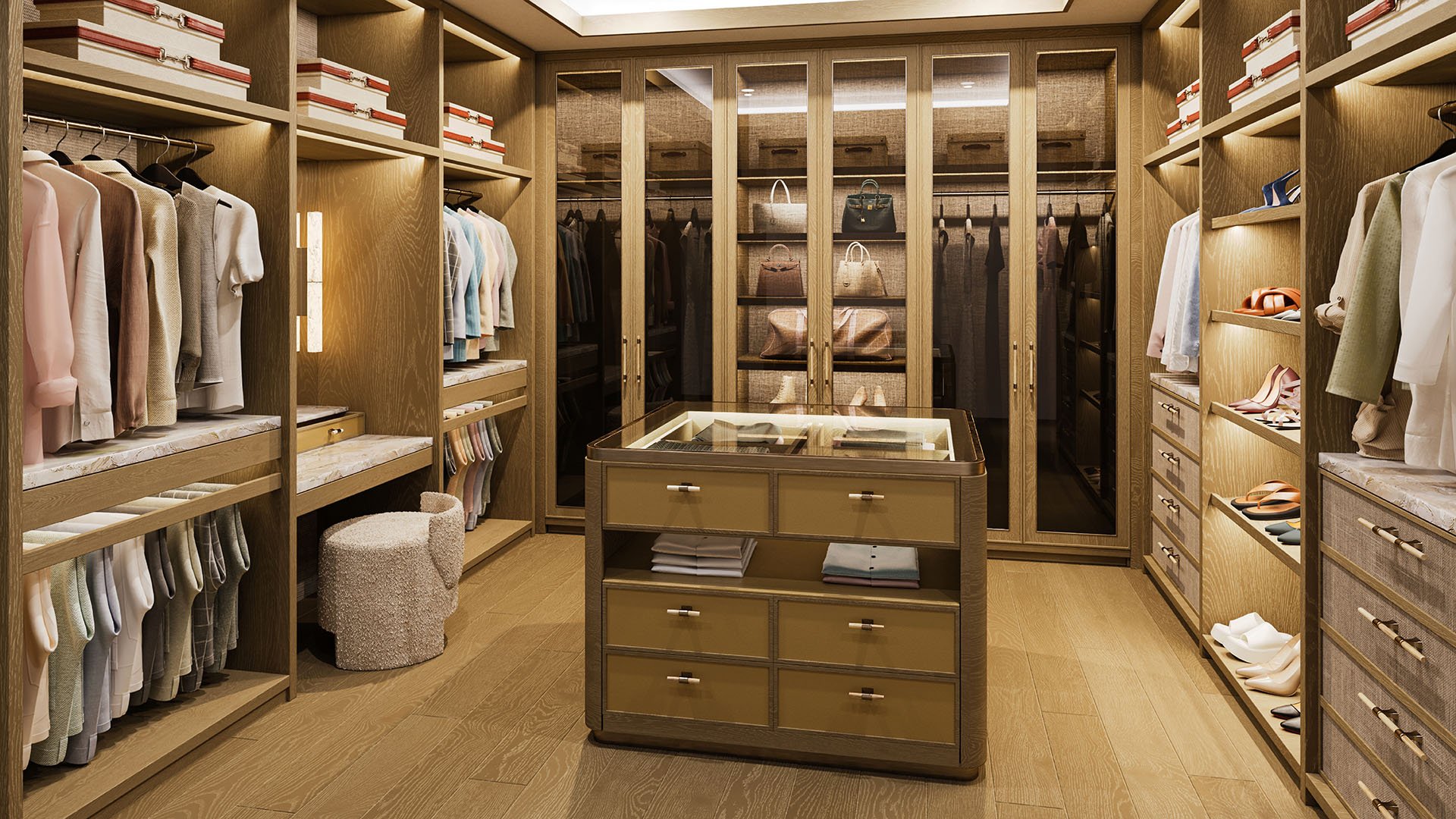
A jewelry safe in a primary closet may feel intuitive, but it should not be accepted automatically. The closet might be the right location when it is private, controlled, and naturally tied to dressing routines. It may be less compelling if it sits in a highly trafficked area, depends on a decorative reveal, or forces the owner into awkward daily movement.
Some owners prefer proximity to the bedroom. Others may prioritize separation from predictable areas. Some residences call for an integrated approach within millwork, while others are better served by a more restrained location that is not part of the visual tour. The point is not to prescribe one universal answer. The point is to determine whether the placement is the result of thought or merely styling.
In design-forward residences such as The Perigon Miami Beach, buyers often expect beauty and discretion to coexist. That same standard should apply to security features. If the safe is treated like a prop, it may be visually satisfying and still operationally weak.
Safe placement cannot be evaluated apart from the building or estate context. A Brickell tower, a Surfside boutique residence, a Fisher Island home, and a Boca Raton condominium may each suggest different privacy patterns. Elevator approach, lobby control, garage access, staff circulation, guest arrival, and owner routines all influence whether a safe location feels intelligent.
At The Delmore Surfside, the buyer lens may focus on coastal privacy and a more residential sense of arrival. At The Residences at Six Fisher Island, the broader conversation may lean into seclusion and household management. At Alina Residences Boca Raton, buyers may think differently about daily living, seasonal use, and access by trusted service providers.
None of these contexts automatically determines the best safe placement. They simply change the questions a careful buyer should ask. A placement that makes sense in one residence may feel performative in another.
A buyer should not assign meaningful value to a jewelry safe placement without written clarity. Ask what is included in the sale, what is excluded, and whether the safe is built-in, removable, or separately negotiated. If the safe is shown as a feature, the representation should be specific enough to avoid misunderstanding.
Request any available information on the safe itself, the installation, the surrounding construction, and any special access arrangements. If the seller cannot provide detail, the buyer can still proceed, but should avoid treating the feature as proven security. It may be a convenience, a design enhancement, or simply an owner improvement.
This is especially important in residences where presentation is highly curated. A beautiful dressing room can make every built-in detail feel intentional. The disciplined buyer separates design language from operational certainty.
Be cautious when a safe is highlighted early but explained poorly. Be cautious when the placement requires a dramatic reveal to feel impressive. Be cautious when the seller’s representative uses broad language but avoids practical questions. Be cautious when the feature appears in imagery, yet the transaction documents do not clearly state what conveys.
Another red flag is a location that seems designed for discovery. A safe that becomes part of the tour may conflict with the discretion it is meant to support. Luxury buyers should also pause when the safe interrupts the architecture, compromises the room’s elegance, or feels disconnected from how the owner would actually live.
The best safe placement has a certain calmness. It does not compete with the room. It does not ask to be admired. It is simply there: resolved, quiet, and supported by enough detail for a buyer to make an informed judgment.
The standard is not paranoia. It is precision. In South Florida’s upper tier, where residences often combine hospitality-level amenities with deeply personal ownership patterns, jewelry safe placement deserves the same scrutiny as terrace usability, private elevator access, service areas, and storage planning.
A serious buyer does not need a spectacle. A serious buyer needs an explanation. If the placement is sound, the explanation should be calm and practical. If it is theater, the conversation will usually reveal that quickly.
Should a jewelry safe be considered a major value driver? Only if its inclusion, condition, placement, and supporting details are clear. Otherwise, treat it as a convenience rather than a core valuation point.
Is a hidden safe always better than a visible one? Not always. The better question is whether the placement is discreet, practical, and consistent with the owner’s daily routine.
What is the first question to ask during a showing? Ask who selected the location and why. A thoughtful answer should connect placement to privacy, access, and use.
Should the safe be mentioned in purchase documents? If the buyer expects it to convey, it should be addressed clearly. Ambiguity can turn an attractive feature into a closing issue.
Is a primary closet the best location? It can be, but not automatically. The closet should offer privacy, ease of use, and a logical relationship to how jewelry is worn and stored.
Can beautiful millwork hide weak planning? Yes. Fine cabinetry can make a feature look resolved even when the placement has not been carefully justified.
Should buyers ask for a specialist opinion? For meaningful collections, yes. A qualified security or installation professional can help assess whether the location is appropriate.
What if the seller cannot provide documentation? The buyer can still appreciate the feature, but should avoid relying on it as verified security. Written clarity is what reduces assumption.
Is safe placement different in condominiums and estates? Often, because circulation, service access, and privacy patterns differ. Each residence should be evaluated within its own context.
What is the clearest sign of marketing theater? A dramatic presentation paired with vague answers. Real planning usually sounds practical, restrained, and specific.
For a confidential assessment and a building-by-building shortlist, connect with MILLION.
If branded residences are on your mind — as a home or as an allocation — we would be glad to share what we are seeing, privately.
Begin a quiet conversation