A buyer-oriented comparison of Jupiter Island and Indian Creek Village, from physical scale and access control to pricing signals and the adjacent condo alternatives that preserve discretion without the single-family footprint.
In South Florida’s top tier, “exclusive” is not an aesthetic. It is a collection of constraints you can measure: limited acreage, limited parcels, limited access points, and a municipal mindset that treats privacy as a form of public works. Jupiter Island and Indian Creek Village surface again and again because they apply those constraints with unusual consistency.
Jupiter Island is an incorporated town in Martin County on a Florida barrier island. Indian Creek Village is an incorporated village in Miami-Dade County on a small island in Biscayne Bay. Both are islands. Both have a long-standing reputation for discretion. The difference is how that discretion is produced day to day. One relies on distance and low density; the other relies on containment and control.
For buyers weighing a primary residence, a second home, or a multi-decade generational hold, the decision is rarely “Which is better?” The more useful question is “Which kind of privacy matches how you live?” Some owners want privacy because they dislike exposure. Others want it because they dislike interruption. Those are related, but they are not the same requirement.
This comparison keeps the conversation buyer-oriented. It focuses on scale, access, and the market mechanics that show up when inventory is scarce and the buyer profile is highly selective.
Jupiter Island reads like a textbook case in low-density coastal preservation. The town was incorporated in 1953. Its land area is about 3.6 square miles. The 2020 Census population is 804, and the town’s community profile cites approximately 705 taxable parcels. Those figures are not trivia. In an ultra-low inventory market, they function as the framework for everything else: fewer streets with meaningful traffic, fewer rooftops per mile, and fewer opportunities for the area to feel “busy” even during peak season.
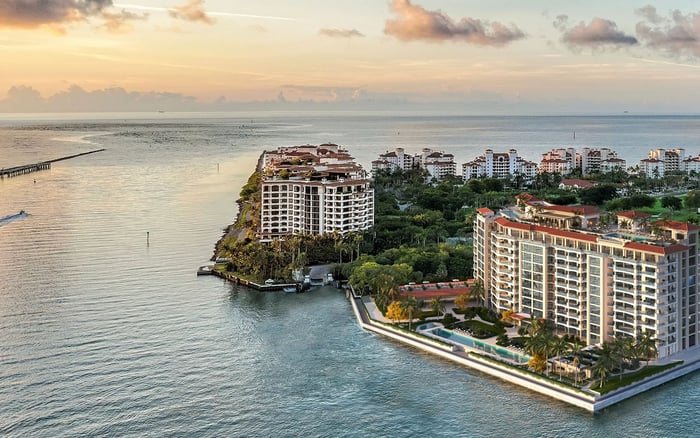
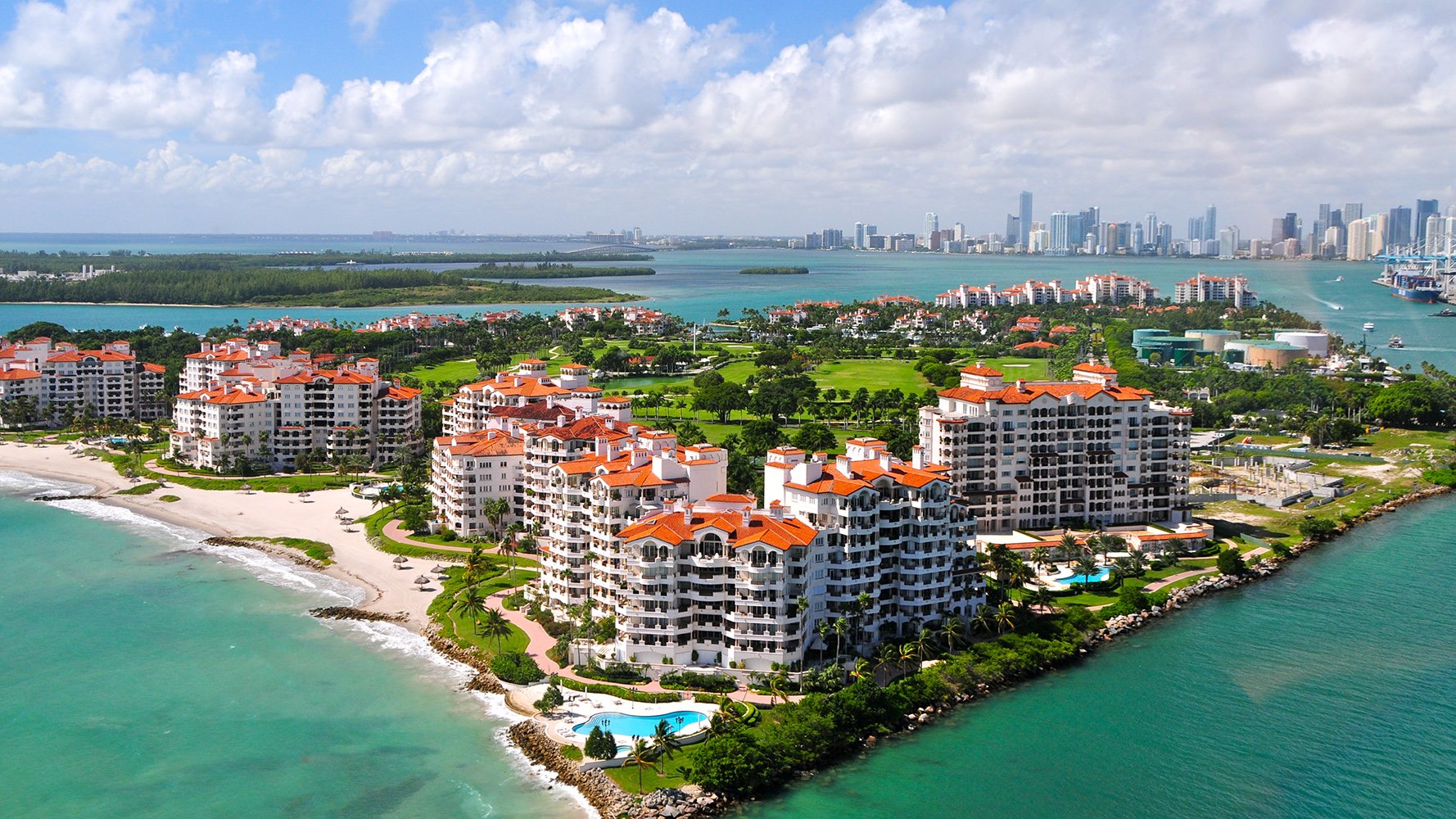
Indian Creek Village is a different kind of rarity: physically tiny and socially even tighter. It was incorporated May 17, 1939. It has a land area of roughly 0.41 square miles and a 2020 population of 84. National coverage frequently refers to it as the “Billionaire Bunker,” a label that is less branding than shorthand for a very concentrated wealth profile paired with an equally concentrated emphasis on controlled access.
The headline takeaway is simple. Jupiter Island is a long, low-density barrier island community. Indian Creek is a deliberately contained island enclave engineered for minimal throughput. Both outcomes can feel like “privacy,” but they behave differently in real life.
If privacy is your primary amenity, the mechanism matters as much as the marketing.
Indian Creek’s access is constrained by a single bridge connection. In practice, that turns geography into a gate. The physical bottleneck supports a culture of controlled entry and exit that is difficult to replicate elsewhere, including in many mainland gated communities where multiple entrances, shared roads, and higher resident density dilute the feeling of separation.
Security in Indian Creek is also formalized at the municipal level. National reporting notes the village employs a 19-officer police force, an unusually high officer-to-resident ratio by any standard. The same reporting describes the village investing about $1.6 million in a perimeter “radar fence” system that includes thermal cameras and radar sensors to detect approaching objects. For a buyer, the takeaway is not the gadgetry. It is the operating philosophy. Privacy is treated as a budget line item with infrastructure behind it, not as a preference handled privately by each household.
Jupiter Island expresses privacy differently. Rather than relying on a single choke point, it leans on spacing, parcel size, and a long-established pattern of low density. It is not primarily a “checkpoint” story. It is more often a “distance between front gates” story. Its barrier island setting naturally limits through traffic, and its parcel count and population underscore how little daily friction you should expect from crowds.
In practical terms, Indian Creek’s privacy often feels immediate and procedural, reinforced by the singular access point and the village’s security posture. Jupiter Island’s privacy tends to feel ambient and geographic, reinforced by separation, low density, and the natural limits of a barrier island.
In both enclaves, conventional comparables can be thin. When the number of meaningful offerings is limited, price discovery becomes less about statistical “typical” outcomes and more about narrative leverage, timing, and the uniqueness of the asset.
On Jupiter Island, widely referenced public indicators show how elevated the baseline has become. Zillow’s Home Value Index for Jupiter Island shows an average home value around $9,174,865 as of September 2025. Realtor.com’s local market page for Jupiter Island reports a median listing price of about $12.5 million. These figures can coexist without contradiction because they describe different lenses: an estimated value index versus the asking prices of active listings.
For buyers, the deeper point is what those numbers imply about scarcity. When an address has a limited parcel count and a long runway of wealth concentration, pricing can reflect the broader covenant buyers are purchasing: discretion, stability, and a neighborhood that is structurally unlikely to experience rapid densification.
Indian Creek’s recent headlines have been even more declarative. A Ferris Rafauli-designed estate has been marketed at $200 million and described in coverage as Miami’s priciest new listing, with trade press also framing it among Miami-Dade’s most expensive offerings. Separate coverage has highlighted an approximately $110 million Indian Creek transaction involving a property next door to Jeff Bezos.
Those figures do more than signal affluence. They signal a marketplace where a small number of properties can carry outsized influence over perception. In settings like this, the “comp set” can be dominated by one or two high-visibility listings or sales, even if the buyer’s true value equation is tied to access control, privacy outcomes, and long-term hold quality rather than headline pricing.
The practical way to read these markets is to separate the conversation into two tracks. Track one is the numeric track: what is being asked, what is being recorded, and what the public indicators show. Track two is the structural track: how limited the inventory is, how controlled the access is, and how durable the privacy premise remains. In both Jupiter Island and Indian Creek, track two often explains track one.
“Quiet” is one of the most frequently requested luxury requirements, but it can mean very different things depending on how you spend time between arrivals and departures.
Jupiter Island’s appeal often reads as coastal restraint. It is a barrier island atmosphere where the beach can feel like a private backyard and where the wider area’s conservation ethos is part of the identity. Nearby protected coastline such as Blowing Rocks Preserve is frequently referenced as a signature natural asset in the Jupiter and Hobe Sound orbit. The point is not that every owner becomes a daily nature walker. The point is that the landscape tends to remain landscape, and that continuity preserves value in a way that does not rely on trends.
Day-to-day, that can translate into a pace that feels intentionally unhurried. For many buyers, the luxury is not programming. It is the ability to keep a calendar light without feeling like you are “missing” something, because the address itself provides the retreat.
Indian Creek’s lifestyle reads more club-centric and civic-centric. The village’s history is closely tied to the Indian Creek Country Club, and its modern reputation is built around privacy, security posture, and the high-stakes convenience of being minutes from Miami Beach, Bal Harbour, and the broader Miami network of design, dining, and aviation. The value proposition is proximity without exposure: close to the region’s cultural and commercial gravity, yet insulated by controlled access.
If you host frequently, Indian Creek’s positioning and operational privacy can feel frictionless. You are close enough to move quickly, and the entry dynamic supports a sense of separation even when the city is active. If you decompress by retreating into distance, Jupiter Island’s barrier island rhythm can function more like a true off switch.
Neither approach is inherently “more private.” They are simply different definitions of private life. One emphasizes spatial separation and low density. The other emphasizes controlled passage and civic reinforcement.
Not every buyer who values an enclave wants the operating model that comes with an estate. In South Florida, a sophisticated alternative is a limited-inventory, service-forward condominium where discretion is achieved through staffing, controlled arrivals, and low-density design.
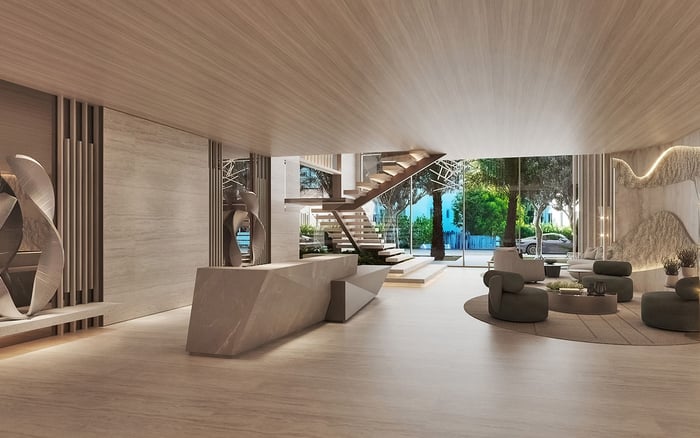
The benefit is structural. A well-run, high-touch building can act as a buffer between public Miami and private life. The residence can remain turnkey, the arrival process can be managed, and the day-to-day burden of maintaining a standalone property can be reduced without abandoning the privacy objective.
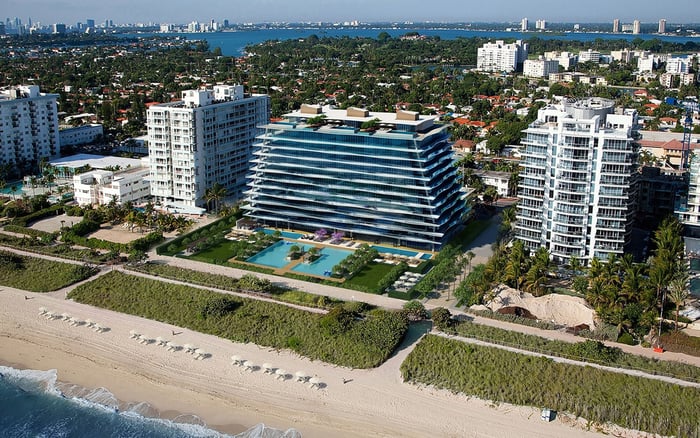
In Miami Beach, residences inside The Ritz-Carlton Residences® Miami Beach can appeal to buyers who want a hospitality-grade operational backbone without surrendering discretion. The lived experience tends to be straightforward: arrivals are managed, services are centralized, and the building’s staffing becomes part of the privacy infrastructure.
For those drawn to a classic Miami Beach address with a more boutique, design-led orientation, Shore Club Private Collections Miami Beach offers another route to a similar outcome: high-touch living with fewer neighbors than a conventional high-rise.
If your calendar is global and you value a branded environment that can function as a true turn-key residence, Setai Residences Miami Beach is often considered for its service culture and the ease of arriving to a home that is already “on.”
And if you want to stay close to the Indian Creek and Bay Harbor orbit while maintaining a waterfront lifestyle in a more contemporary residential format, Indian Creek Residences and Yacht Club can be a compelling adjacency play, particularly for buyers who want water presence without the singular exposure that can come with a standalone estate.
Finally, for buyers who specifically prioritize oceanfront living as the anchor amenity, 57 Ocean Miami Beach speaks to a different version of privacy: fewer residences, direct coastline, and a daily routine organized around the Atlantic rather than around a bridge and gate.
The practical insight is that the “enclave effect” can be purchased in more than one form. It can be municipal, as in Indian Creek. It can be coastal and low density, as in Jupiter Island. Or it can be vertical and operational, where the privacy outcome is delivered through controlled access, staffing, and design.
Before you choose a zip code based on reputation, pressure test what living there actually requires.
First, define your privacy baseline. Do you want privacy because you dislike exposure, or because you dislike interruption? Indian Creek is designed to minimize interruption through controlled access and a strong civic security posture. Jupiter Island minimizes exposure through spread, spacing, and an environment where low density is the default.
Second, model your travel cadence. If you are in and out multiple times per week, proximity to Miami’s social, cultural, and aviation network can outweigh the romance of a quieter coastline. If you arrive for longer stays and prioritize decompression, a barrier island can deliver a truer sense of separation.
Third, decide what you are willing to operationalize. Estate life can be exceptional, but it is an operating model with staffing, maintenance cycles, and a constant need for oversight. If you prefer a lock-and-leave lifestyle, a service-forward building in the same social geography can deliver discretion with less complexity.
Fourth, separate price from value. Zillow’s index and Realtor.com’s median listing price on Jupiter Island illustrate how different public lenses can describe the same market. In Indian Creek, headline offerings like a $200 million listing can shape perception, but your personal value equation should be anchored to access control, liquidity, and your time horizon.
Finally, consider identity fit. Indian Creek is a micro-municipality with outsized security posture and global recognition. Jupiter Island is a long-standing coastal refuge where scarcity is quieter, and where the most important amenities are often the ones you do not see.
If your definition of luxury is “no friction,” Indian Creek’s containment can be compelling. If your definition is “no noise,” Jupiter Island’s scale and spacing can feel more natural. The right answer is the one that matches your weekly reality, not the one that reads best in a headline.
Is Indian Creek actually “gated”? It is widely covered as having a single bridge access point that enables controlled entry and exit, and it maintains its own police force.
How small is Indian Creek Village compared with Jupiter Island? Indian Creek is roughly 0.41 square miles with a 2020 population of 84. Jupiter Island is about 3.6 square miles with a 2020 population of 804.
What do public indicators suggest about Jupiter Island pricing? Public-facing metrics show elevated levels, including an average home value around $9.17 million on Zillow (September 2025) and a median listing price around $12.5 million on Realtor.com.
Why do Indian Creek prices make national headlines? Coverage has highlighted exceptionally high asking prices, including a $200 million listing, and reported nine-figure transactions.
For confidential guidance on South Florida’s most discreet addresses, connect with MILLION Luxury.
If branded residences are on your mind — as a home or as an allocation — we would be glad to share what we are seeing, privately.
Begin a quiet conversation