Palm Beach’s barrier-island scarcity and Wellington’s equestrian acreage create two distinct luxury lanes in Palm Beach County. Here’s how today’s data and buyer behavior shape strategy in 2026.
Palm Beach County luxury is not a single market moving on one curve. It is two markets, sometimes three, running in parallel and rewarding very different strategies.
On the barrier island of Palm Beach, the ultra-luxury narrative is shaped by finite shoreline, generational land holds, and a buyer profile that treats frontage as both lifestyle and long-term positioning. In Wellington, the value proposition is built on acreage, barn-ready infrastructure, training access, and proximity to elite equestrian competition. The drivers are not interchangeable, which is why pricing, inventory, and negotiation behavior can feel like separate worlds.
Between those lanes sits West Palm Beach, increasingly relevant for buyers who want immediate access to the island and the county’s cultural gravity, but prefer service, security, and a true lock-and-leave cadence. It is less about replicating Palm Beach and more about delivering a streamlined luxury base that works with a global calendar.
For MILLION Luxury readers, the objective is rarely choosing “the best” zip code in the abstract. The smarter move is selecting the right playbook for how you live, how you travel, and how much operational complexity you are willing to carry day to day.
At the highest tier, Palm Beach’s trajectory continues to read as resilient. Palm Beach County was projected to end 2025 with roughly 426 home sales at $10M+, close to the 2021 record of 444. That matters because it suggests the ceiling is not simply stable, it is actively trading when the property profile is right.
Broader county momentum also strengthened into late 2025. In November 2025, total home sales rose 19.7% year over year to 1,706, with single-family sales up 19% to 1,001. Median pricing for single-family homes was comparatively steady at about $605,000, up 0.8% year over year. That mix, higher velocity without sharp median inflation, is consistent with a market where demand remains deep but buyers are more exacting about condition, location, and lifestyle fit.
Two additional data points are especially relevant for luxury strategy.
First, cash still defines the tempo. In November 2025, about 56.5% of condo purchases and 41.4% of single-family purchases in Palm Beach County were all-cash. In practical terms, many transactions close without financing contingencies, and both pricing and negotiation posture reflect that reality. Buyers who are prepared tend to move faster; sellers often expect fewer friction points.
Second, supply conditions diverge by product type. Active listings were about 12,922 (down 2.2% year over year), with months’ supply around 4.9 for single-family and 9.1 for condos. The takeaway is nuanced but important: single-family inventory remains relatively tighter, while the condo segment can offer more choice and, in some cases, more leverage. For buyers focused on services, newer building standards, and governance quality, that difference can materially change the search.
Palm Beach’s prestige is not only aesthetic. It is structural. When a small barrier island carries global visibility, the underlying land behaves differently than typical residential inventory.
Wealth concentration reinforces the scarcity equation. Palm Beach has been widely covered as a destination for extreme net worth, with Fortune reporting 58 billionaires in Palm Beach and a combined net worth of about $494.7B. When that density of capital meets finite shoreline and strict physical constraints, real estate can function less like “housing” and more like a collectible with a lifestyle component.
That dynamic is most visible in oceanfront parcels, where competition can resemble a form of land chess. Media reporting has highlighted aggressive oceanfront land competition among ultra-wealthy buyers, underscoring that the battleground is often the site itself, not simply the home currently on it. The underlying parcel, the orientation, and the possibility set can matter as much as architecture.
Publicly marketed listings illustrate the level of the conversation, with the appropriate caution that listing data can change. A Palm Beach compound at 1540 S Ocean Blvd has been marketed around $84.95M, with materials describing roughly 14,969 square feet and private beach access via tunnel. Another widely discussed offering on “Billionaires Row,” 880 S Ocean Blvd, has been publicly marketed at $97.5M.
Closed sales also help define the top of the market. A major 2025 Palm Beach-area waterfront sale at 1460 N Lake Way closed for $72M, a reported closing that reinforces what many sophisticated buyers already assume: on the island, singular assets can remain liquid even when the broader market is more measured.
For Palm Beach buyers, the practical question is rarely whether the premium is “worth it.” The more useful question is which kind of premium you are buying, and whether it matches how you actually live.
Operational reality matters as much as the purchase price. A large estate can be extraordinary, but it also runs like a business. Staffing, maintenance, storm planning, and project oversight do not disappear simply because the home is beautiful. If your calendar is global, if your household is multi-residence, or if you prefer to arrive and immediately be “in residence,” the island can still be your anchor, but it may not be your only solution.
West Palm Beach has evolved from “near Palm Beach” to a destination with its own gravitational pull, especially for buyers who want a refined base that runs efficiently. The appeal is not just closeness. It is a version of luxury defined by predictability, building systems that are easier to manage, and day-to-day convenience.
The numbers support that positioning. With condo months’ supply higher than single-family, buyers can often be more demanding about building quality, views, HOA governance, insurance posture, reserves, and long-term livability. In a cash-heavy market, those preferences are not theoretical. They show up in inspection terms, repair requests, closing timelines, and pricing.
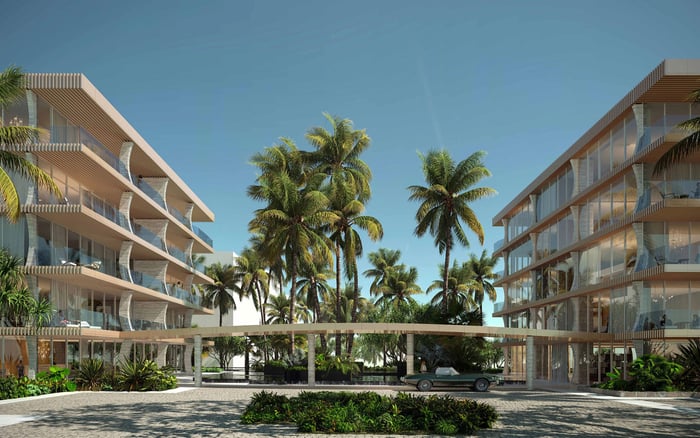
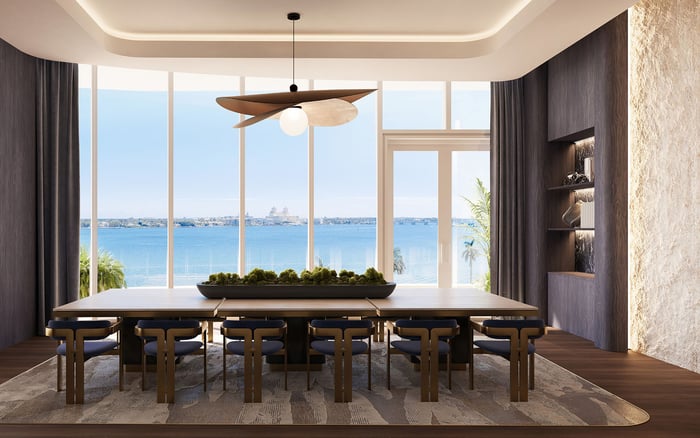
This is where branded and service-forward new construction becomes a strategic lifestyle choice, not merely a design preference. For buyers who want the stability of new systems, contemporary hurricane standards, and amenity predictability, West Palm’s best addresses can function as a polished alternative to the complexity of maintaining a large estate.
Consider the positioning of Mr. C Residences West Palm Beach for buyers who value hospitality DNA and an “arrive and live” rhythm. For those who prefer the cadence of a legacy luxury flag, The Ritz-Carlton Residences® West Palm Beach naturally speaks to a service model that emphasizes discretion and consistency.
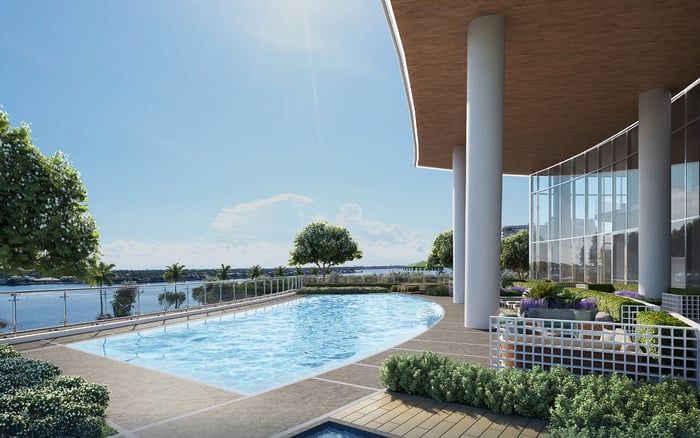
And for buyers who want a more residential-forward approach to waterfront living, Alba West Palm Beach sits in the conversation as a modern alternative aligned with how many second-home households actually use a South Florida base.
The broader strategy is straightforward: if Palm Beach is the rare collectible, West Palm can be the high-performance daily wear. For a second-home buyer, that distinction can be the difference between a residence that feels effortless and one that behaves like another responsibility.
Wellington’s luxury proposition is fundamentally different from the island. It is not about shoreline. It is about land utility, sport, and an ecosystem built around equestrian life.
The Village of Wellington describes itself as an equestrian community, a civic identity that shapes planning and the buyer’s lived experience. Importantly, polo is not a seasonal curiosity here. The United States Polo Association (USPA) operates the USPA National Polo Center (NPC) in Wellington, positioning the area as a premier venue with multiple grass fields and a stadium setting for major events.
That institutional presence matters because it supports a stable, repeatable demand cycle. A serious equestrian buyer is rarely casual about logistics. They are optimizing for travel time to training, vet and farrier access, trailer-friendly routes, and the ability to host staff and seasonal guests without friction.
Land pricing in equestrian corridors has reflected that demand. Land Report cited about $692,000 per acre in 2022 versus roughly $383,000 per acre in 2019 to 2020, an increase of about 81%. While individual parcels vary dramatically based on improvements, location, and allowable use, the directional signal is clear: acreage that supports equestrian life can behave like a specialized commodity.
Wellington also offers a different kind of choice set. Unlike Palm Beach’s limited inventory by nature, Wellington presents a broader pipeline of luxury listings that buyers can compare across neighborhoods and price bands. Planned high-end supply illustrates the point: Farrell Estates in Wellington has been marketed as 27 custom homes of roughly 5,501 to 10,495 square feet with pricing guidance around $5M to $10M.
For the right household, this is rarity of a different type. It is not “there are only a few oceanfront lots.” It is “there are only a few places in the country where elite equestrian life is this turnkey.”
Luxury decisions become clearer when you translate lifestyle into non-negotiable real estate requirements. Below is the buyer-oriented framework we see most often, and why it tends to hold up under scrutiny.
Palm Beach is the best fit when the address and land profile are central to your identity, your long-term strategy, or both. If you are optimizing for legacy, privacy, and global recognition, you typically accept the tradeoffs: limited selection, more competition for exceptional sites, and higher complexity when renovating or rebuilding.
In practice, this means your search is less about finding a good home and more about securing the right site. It also means patience can be an advantage, because timing and access often matter as much as listing availability.
If you want a refined base that performs like a boutique hotel but lives like a home, West Palm Beach becomes compelling. For many buyers, this is where lock-and-leave stops being a trend and becomes a personal operating system.
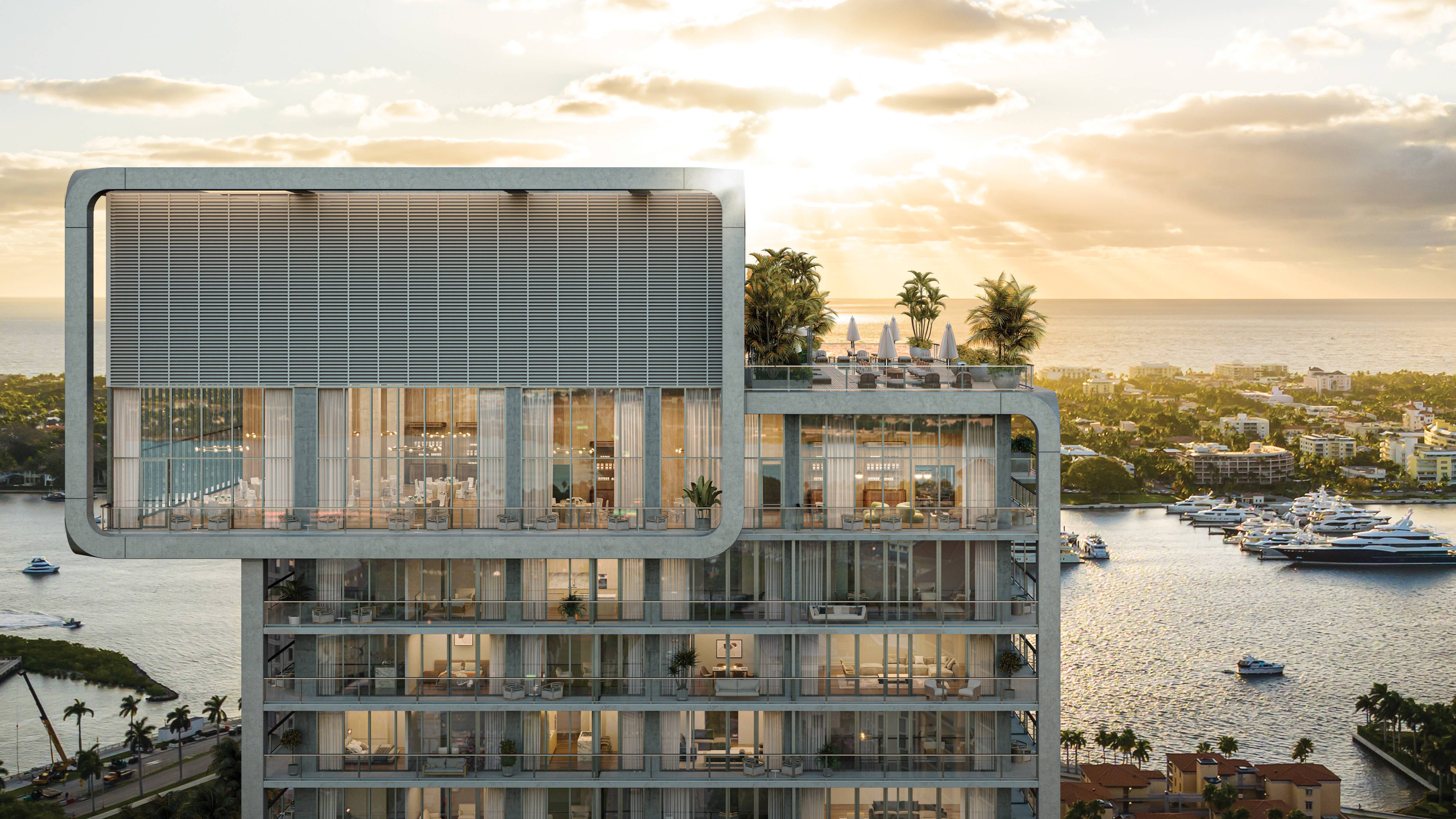
Within that lens, a building such as Forté on Flagler West Palm Beach fits a very specific buyer: someone who wants waterfront presence and proximity to the island, but values managed living, predictable services, and contemporary building standards.
Wellington is the correct answer when your lifestyle has infrastructure. Horses, training schedules, polo calendars, seasonal teams, and acreage-based privacy all change the definition of a dream home. Here, the “best” property is the one that makes a complex life feel frictionless.
This is also where buyers benefit from being precise about functionality. Barn layout, staff flow, access, and proximity to the competition ecosystem can be as decisive as finishes and square footage.
Several signals are worth monitoring as you plan your next move, particularly if you expect to transact in a market that remains selective.
In short, Palm Beach County’s luxury market is less about a single price curve and more about matching your personal definition of value to the correct micro-market, then executing with the right level of readiness.
Is Palm Beach County’s ultra-luxury market still active above $10M? Yes. The county was projected to finish 2025 with roughly 426 sales at $10M+, near the 2021 record of 444, indicating ongoing liquidity at the top.
Why do Palm Beach oceanfront properties trade at such a premium? Oceanfront supply on the barrier island is structurally limited, and competition for prime shoreline parcels is widely covered. In that context, frontage behaves like a finite asset class.
Does West Palm Beach offer more negotiating room than Palm Beach? Often, yes, particularly in condos. Late-2025 data showed higher months’ supply for condos than single-family, which can translate into more choice and leverage for buyers.
What makes Wellington luxury different from coastal luxury? Wellington is anchored by an equestrian ecosystem, including the USPA National Polo Center, and buyers often value acreage utility, training access, and sport-driven logistics more than beach proximity.
Explore Palm Beach County’s most compelling luxury addresses with MILLION Luxury.
If branded residences are on your mind — as a home or as an allocation — we would be glad to share what we are seeing, privately.
Begin a quiet conversation