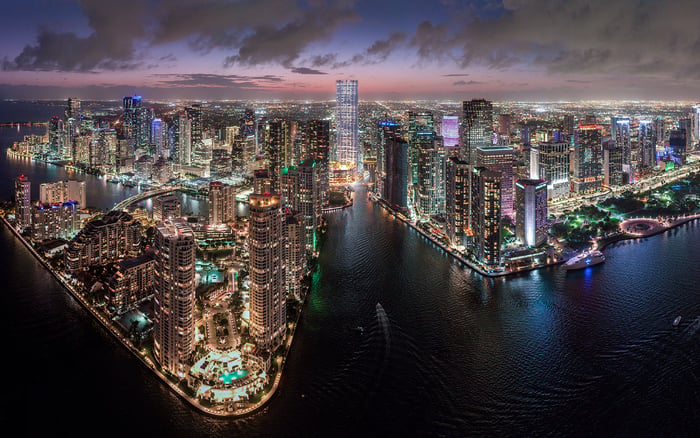
At 888 Brickell by Dolce & Gabbana, the collector’s question is not only what the residence looks like, but who controls the back-of-house path that allows valuable art to arrive privately, securely, and on schedule.
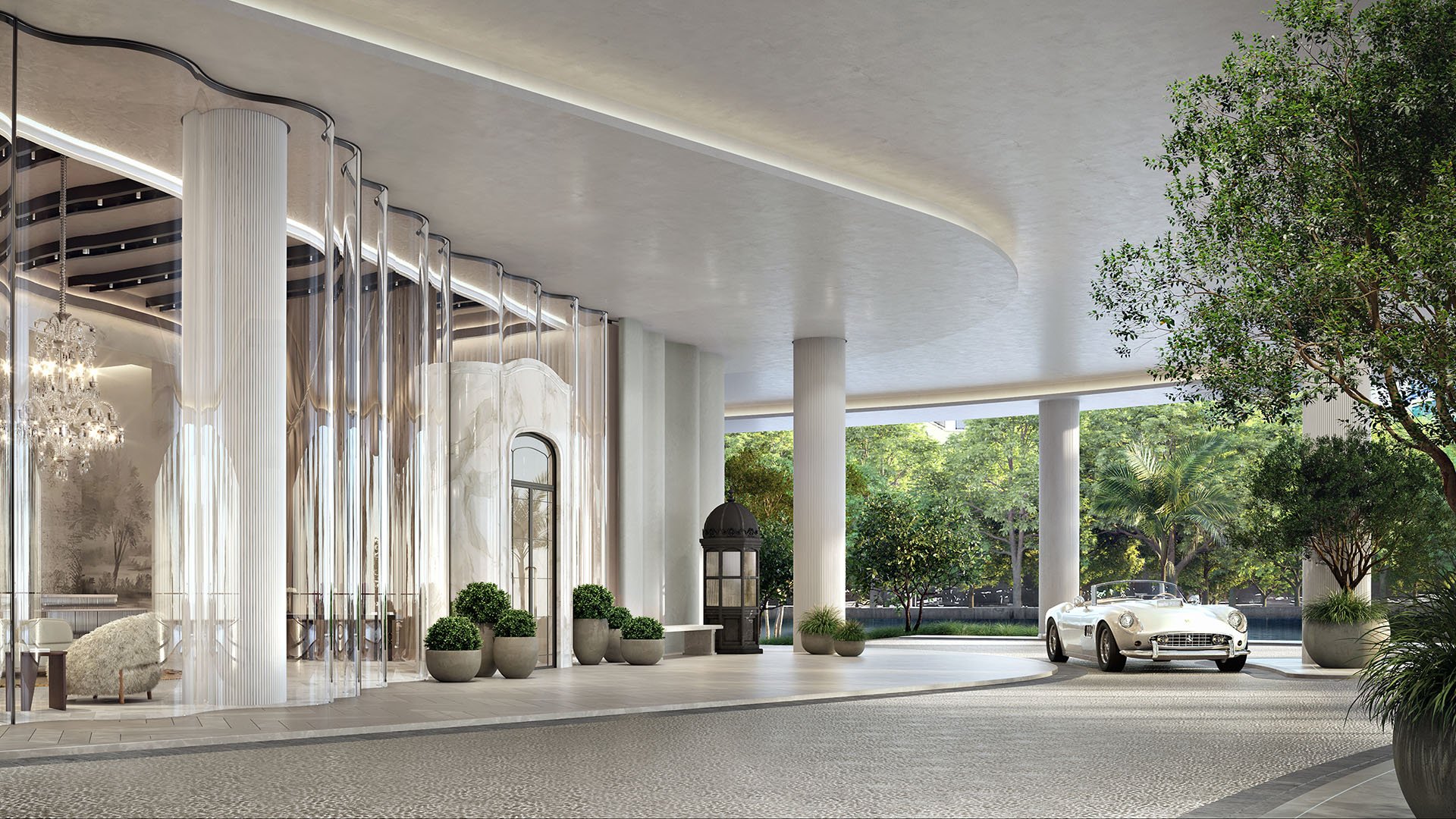
For buyers considering 888 Brickell by Dolce & Gabbana, the conversation naturally begins with fashion, architecture, and the prestige of a branded address in Miami’s Brickell market. Yet for a certain buyer, especially one who treats a residence as a private gallery for art, collectible design, and high-value portable assets, the most consequential question may sit out of sight: who owns, controls, schedules, and secures the back-of-house route that allows a museum-grade work to move from truck to residence without unnecessary exposure?
That question may sound technical. It is not. It touches privacy, security, insurance risk, installation logistics, climate exposure, and the daily livability of a super-prime home. At this tier, a freight elevator can matter as much as a view corridor.
The distinction begins with language. Ownership of a physical space, such as a loading bay, service corridor, staging room, or freight elevator, is not always the same as practical control over its use. A condominium association may own or maintain certain common elements. A hotel or hospitality operator may hold operating rights. A developer or commercial component may retain rights through declarations, easements, shared-facility agreements, or building rules.
For collectors, the practical issue is not only whose name appears on a legal description. It is who can say yes, who can say no, who sets the schedule, and who has priority when multiple building functions compete for the same infrastructure.
This is especially relevant in a branded-residence environment where condominium governance, hospitality-style services, and commercial operations may overlap. Brand licensing and design identity do not necessarily mean the fashion house owns or controls the building’s service infrastructure. A buyer should treat the brand as part of the residential experience, while separately examining the documents that govern operations.
For a collector, art delivery is not a moving-day errand. Large works may require private unloading, secure staging, specialized handlers, elevator reservations, and a route that limits heat, humidity, and public visibility. In South Florida, where climate is part of the ownership equation, minimizing exposure from truck to residence is not ornamental. It is prudent stewardship.
The risk is a shared system designed for broad building needs, but not specifically for collector-grade logistics. A loading dock or freight elevator may also serve catering, laundry, hotel operations, vendors, maintenance teams, retail tenants, or other commercial activity. If residential art delivery is not clearly protected by rules or priority rights, the buyer may discover that the promised private-gallery life depends on a schedule managed around other traffic.
That does not make shared infrastructure inherently problematic. It means the buyer must understand the hierarchy. Who can reserve the freight elevator? How far in advance? Is after-hours access permitted? Is there a secure staging area? Are handlers escorted through service corridors? Are cameras, guards, and access logs part of the protocol? These are not lifestyle questions. They are asset-protection questions.
Brickell has become a laboratory for vertical luxury, where architecture, hospitality, finance, design, and branded residential living converge. Buyers comparing 888 Brickell with The Residences at 1428 Brickell, St. Regis® Residences Brickell, Baccarat Residences Brickell, or Cipriani Residences Brickell are often evaluating more than floor plans. They are evaluating how a building will actually perform when privacy, staff coordination, deliveries, and discretion are tested.
In this sense, the next luxury standard in Brickell is operational rather than purely visual. A residence can be exquisite, but a collector will ask whether a crated canvas, a sculptural commission, or a collectible design piece can arrive without crossing a public lobby, waiting beside unrelated vendors, or being delayed because another component of the building controls the freight schedule.
The best buildings make these systems feel invisible. The most sophisticated buyers know that invisibility requires governance.
Buyer counsel should review the condominium declaration, shared-facility agreements, hotel or operator agreements, easements, and building rules governing freight access before closing. These documents can define whether the association, an operator, a developer-controlled entity, or another commercial component has authority over service routes.
The key provisions are practical. Look for control of loading areas, access to freight elevators, reservation procedures, after-hours permissions, insurance requirements for vendors, staging-area rights, security protocols, and consequences if access is interrupted. If a buyer expects to install important works, rotate pieces seasonally, or receive international shipments, these details should be addressed before the residence is treated as acquisition-ready.
It is also important to separate sales presentation from binding obligation. A polished service narrative may describe an elevated lifestyle, but the operative documents determine enforceable rights. The collector’s counsel should ask whether art logistics are merely accommodated by management or protected by documented access rights.
The phrase “private gallery in the sky” has become part of the luxury imagination. At 888 Brickell by Dolce & Gabbana, that idea aligns naturally with a fashion-branded tower and high-profile luxury positioning. But the phrase only holds if the building’s most utilitarian spaces support the promise.
A collector does not simply purchase wall space. The buyer purchases the ability to live with important objects privately and safely. That requires a chain of custody from vehicle to residence, supported by loading bays, freight elevators, service corridors, staging zones, security procedures, and scheduling rights. If any link in that chain is uncertain, the lifestyle becomes dependent on permissions rather than ownership comfort.
This is why the ownership question matters. In super-prime real estate, the most meaningful due diligence often happens behind the scenes. The grand salon is what guests remember. The freight path is what allows the collection to arrive.
What is the core art-delivery issue at 888 Brickell by Dolce & Gabbana? The key issue is who owns or controls the loading areas, service corridors, staging zones, and freight elevators needed for secure art movement.
Does Dolce & Gabbana necessarily control the building infrastructure? No. Brand association and design identity do not necessarily mean the fashion house owns or controls service infrastructure.
Why does freight-elevator access matter to collectors? Valuable works may require scheduled, private, and climate-conscious movement from truck to residence with minimal public exposure.
What is the difference between ownership and control? Ownership refers to the physical or legal interest in space, while control may come through rules, agreements, easements, or operating rights.
Could shared building operations affect art deliveries? Yes. Hotel, catering, laundry, vendor, or commercial traffic could compete for the same loading dock or freight elevator if priorities are not clear.
What should buyer counsel review before closing? Counsel should review the condominium declaration, shared-facility agreements, operator agreements, easements, and freight-access rules.
Is this only a legal concern? No. It can affect privacy, security, insurance risk, installation timing, and long-term enjoyment of the residence.
Why is this especially relevant in Brickell? Brickell’s luxury towers often combine residential prestige with complex service and hospitality expectations, making operations central to ownership.
Can a residence function as a private gallery without dedicated infrastructure? It can, but the buyer should confirm that access, staging, security, and scheduling procedures are strong enough for the collection.
What is the best buyer mindset for 888 Brickell by Dolce & Gabbana? Appreciate the brand and design narrative, then verify the back-of-house rights that make collector-grade living practical.
For a discreet conversation and a curated building-by-building shortlist, connect with MILLION.
If branded residences are on your mind — as a home or as an allocation — we would be glad to share what we are seeing, privately.
Begin a quiet conversation