A discreet buyer’s framework for evaluating concierge efficiency at Porsche Design Tower and The Ritz-Carlton Residences Sunny Isles, with emphasis on speed, resolution, staffing, personalization and ownership value.

In the upper tier of South Florida condominium ownership, concierge service is no longer a decorative promise. It is part of a building’s value architecture. For buyers comparing Porsche Design Tower with The Ritz-Carlton Residences® Sunny Isles, the useful question is not which address sounds more luxurious. It is which service model can translate daily requests into fast, accurate, discreet outcomes while preserving the individuality that ultra-premium owners expect.
That distinction matters in Sunny Isles Beach because the carrying costs of ownership are measured against more than square footage, views and amenities. Service quality helps explain why one building feels effortless while another feels merely staffed. A concierge desk that manages only access control, package handling and basic building logistics performs an important function, but not the full role expected in the ultra-luxury category. At this level, concierge teams may be asked to coordinate lifestyle needs, manage preferences, anticipate recurring routines and resolve issues without requiring the owner to repeat context.
For a Sunny Isles buyer, efficiency should therefore be understood as a balance: rapid delivery on one side, deeply personal service on the other. If the system is fast but impersonal, it can feel transactional. If it is personal but slow, it can interrupt the rhythm of ownership. The best buildings seek the middle ground, where the resident feels known, protected and unburdened.
The phrase “white-glove service” is common in luxury real estate, but it is too broad to guide a purchase decision. A more serious evaluation begins with response time. How quickly is a resident acknowledged after making a request? This is the first signal of operational discipline, especially during peak hours, weekends and seasonal occupancy surges.
Fulfillment time is the next layer. A fast reply matters only if the request is completed efficiently. For a dinner reservation, transport coordination, maintenance item or private lifestyle arrangement, buyers should distinguish acknowledgment from completion. The most refined service cultures do not merely say yes quickly. They close the loop.
Resolution rate is equally important. A concierge team that must revisit the same request several times may feel polished in conversation but inefficient in practice. In an ultra-luxury residence, service should reduce cognitive load for the owner. The fewer times a resident has to follow up, reframe a request or correct details, the more efficient the building feels.
Resident satisfaction then becomes the softer but essential measure. Satisfaction is not only about friendliness. It includes trust, discretion, consistency and the sense that staff understand the owner’s priorities. In this segment, personalization is not a flourish. It is a core operating requirement.
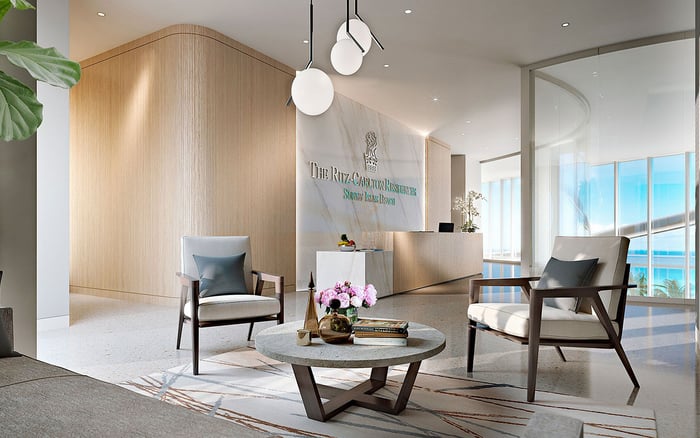
The Ritz-Carlton Residences® Sunny Isles is the natural hospitality-brand benchmark in this comparison because its identity implies a residential service model shaped by hotel-grade expectations. In that framework, the concierge function is expected to feel trained, layered and relationship-based. The promise is not just availability, but a service culture residents can recognize in the way requests are received, routed and resolved.
Porsche Design Tower invites a different but equally demanding lens. Its ownership audience is likely to care intensely about precision, privacy and the seamless coordination of daily life. In that context, concierge efficiency is not measured by theatrical attentiveness. It is measured by whether the building can move quickly without becoming intrusive, preserve confidentiality while remaining proactive and support a high-performance lifestyle without turning every request into a production.
Because precise building-level operating data are not publicly disclosed, this should not be read as a definitive performance ranking. Rather, the comparison is a buyer’s framework. The Ritz-Carlton Residences® Sunny Isles can be evaluated through the expectations of a hospitality-led residential model. Porsche Design Tower can be evaluated through the lens of precision ownership, where privacy, pace and accuracy carry particular weight.
Efficiency in luxury service is sometimes misunderstood as cost control. That is too narrow for the ultra-premium market. A building can reduce staffing and appear efficient on a spreadsheet, yet feel underpowered to residents. Conversely, a building can be generously staffed but poorly coordinated, creating delay, duplication and inconsistency.
The better question is whether staffing resources match the promises being sold. Are there enough trained people to handle simultaneous resident needs without service degradation? Is there a clear escalation path when a request becomes complex? Are team members trained to preserve discretion, remember preferences and distinguish urgent needs from routine ones?
Cost per unit matters because owners ultimately fund the service model through building economics. But in the luxury category, the lowest cost is not always the most efficient outcome. The more relevant calculation is value per interaction. If a concierge team prevents friction, protects time and enhances daily ease, its cost can be understood as part of the property’s ownership value rather than a simple operating expense.
This is where investment thinking becomes more nuanced. Buyers often focus on views, finishes and market comparables, yet service quality can influence how a residence lives over time. For resale, a building with a reputation for dependable service may retain an experiential advantage that is difficult to capture in a floor plan. For second-home owners, the stakes are even higher because the residence must often operate flawlessly before arrival, during short stays and after departure.
Personalization is the metric most likely to separate true luxury from expensive convenience. It is also the most difficult to quantify. A concierge team may know a resident’s preferred arrival routine, favored restaurant style, pet protocol, guest preferences or maintenance sensitivities. None of that appears in a public performance table, yet it can define the lived experience of ownership.
The challenge is that personalization cannot be rushed into a script. It requires memory, continuity and trust. A building that turns over staff frequently may struggle to maintain the resident knowledge base required for seamless service. A building that trains well, documents preferences carefully and communicates internally can make service feel effortless even when the request itself is complex.
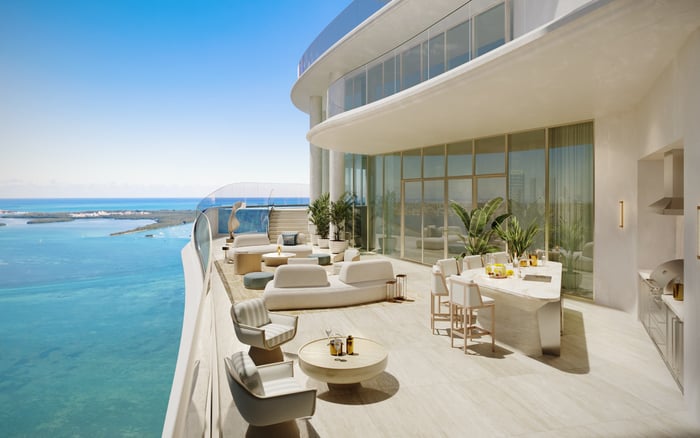
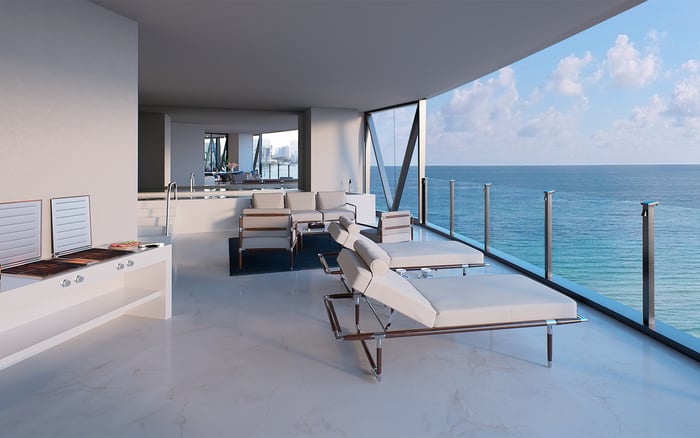
Oceanfront condominium ownership adds another layer. Owners are often moving between residences, travel schedules and private commitments. They may value the ability to arrive with everything already in order. In that setting, the concierge becomes less of a front-desk presence and more of a lifestyle coordinator, protecting the owner’s time and privacy.
A serious buyer should ask practical questions in a discreet way. How are requests logged and tracked? Who follows up if the first team member is unavailable? What is the difference between concierge, valet, security and property management responsibilities? Are complex lifestyle requests handled in-house, referred to outside vendors or coordinated through established relationships?
The answers reveal whether a building has a true service ecosystem or simply a polished point of contact. Buyers should also observe the rhythm of the lobby and common areas. Are staff members attentive without hovering? Do they communicate calmly? Does the experience feel consistent from arrival through departure?
In buildings such as Porsche Design Tower and The Ritz-Carlton Residences® Sunny Isles, the strongest service models are likely to be those that make complexity invisible. The owner should not need to understand every internal handoff. The experience should simply feel resolved.
What is concierge efficiency in a luxury condominium? It is the ability to deliver fast, reliable service while maintaining the personalization, discretion and follow-through expected by ultra-luxury owners.
Why compare Porsche Design Tower and The Ritz-Carlton Residences® Sunny Isles? Both sit within the Sunny Isles luxury conversation, but they invite different service expectations: precision ownership on one side and a hospitality-brand benchmark on the other.
Is this a ranking of actual concierge performance? No. Building-level operating data are not publicly disclosed, so the comparison is best read as a buyer-oriented evaluation framework.
Which metric should buyers consider first? Response time is the first signal, but fulfillment time and resolution rate are more revealing because they show whether requests are truly completed.
Does lower staffing cost mean better efficiency? Not necessarily. In ultra-luxury ownership, efficiency should not undermine the bespoke service and relationship continuity that residents are paying for.
How does personalization affect value? Personalization reduces friction by allowing staff to anticipate preferences and handle repeat needs without requiring the owner to restart every conversation.
Why is The Ritz-Carlton Residences® Sunny Isles a service benchmark? Its branded residential positioning implies a hospitality-led service model, making it a useful reference point for evaluating concierge expectations.
What should second-home buyers prioritize? They should focus on pre-arrival readiness, post-departure coordination, vendor communication and the building’s ability to manage details while they are away.
Can concierge quality influence resale appeal? Yes. While not always visible in listing data, dependable service can strengthen the lived reputation of a building and support buyer confidence.
What is the ideal concierge outcome for an oceanfront owner? The ideal outcome is a residence that feels prepared, private and effortless, with complex requests handled quietly in the background.
For a discreet conversation and a curated building-by-building shortlist, connect with MILLION.
If branded residences are on your mind — as a home or as an allocation — we would be glad to share what we are seeing, privately.
Begin a quiet conversation