Instagram has become a front-row seat to South Florida’s luxury lifestyle, and that visibility increasingly influences how high-net-worth buyers discover, compare, and prioritize homes. In Miami’s ultra-premium tier, the first showing often happens on a phone, with design, light, views, and “story” shaping demand before a broker ever opens a door. This article breaks down what actually travels well on social, how hype can distort value, and how to buy and sell with discretion, verification, and leverage.
In Miami’s luxury real estate market, first impressions are increasingly formed before a buyer ever reaches a lobby, crosses a threshold, or steps onto a terrace. They are formed in a scroll. Instagram has compressed discovery, aspiration, and comparison into a single habit: saving, sharing, and messaging in real time. For an ultra-premium audience, that shift is not cosmetic. It changes how demand builds, how quickly a shortlist hardens, and how much leverage can form around a single visual “moment.”
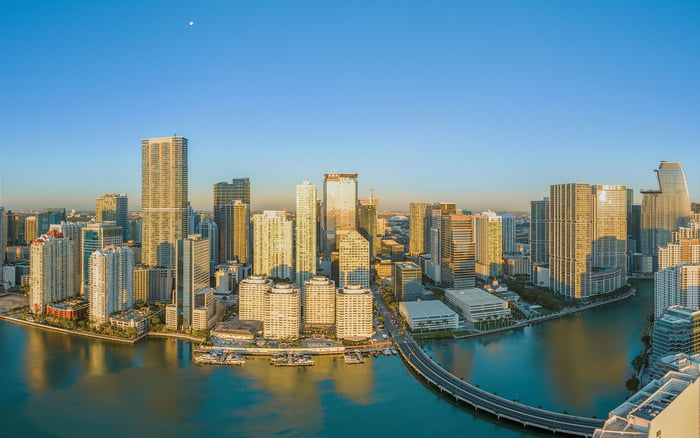
This social media effect is not limited to influencers or viral clips. It is about how modern buyers construct confidence. A feed delivers cues that read as evidence: daylight quality, ceiling height, material palette, the framing of the skyline, a quiet pool scene, a polished arrival sequence. Those cues are powerful even when they are partial. In South Florida, especially across Brickell and Miami Beach, global buyers already move with speed and certainty. Instagram simply accelerates the speed at which they think they have enough information to act.
The opportunity is clear. The right imagery can bring qualified attention to a residence within hours, and it can help buyers articulate taste quickly. The risk is just as clear. Aesthetic momentum can outpace due diligence, and “looks perfect” is not the same as “lives perfectly.”
The right posture is neither dismissive nor reactive. For buyers and sellers, the advantage comes from understanding what Instagram does to the decision timeline, then using that acceleration with control.
Miami’s luxury market has always been international, narrative-driven, and lifestyle-led. Instagram does not invent those traits. It amplifies them and compresses the path from interest to action. Where traditional marketing typically followed a sequence, brochure, inquiry, appointment, then tour, social can collapse the journey into a few taps and a direct message.
Three forces intensify this locally.
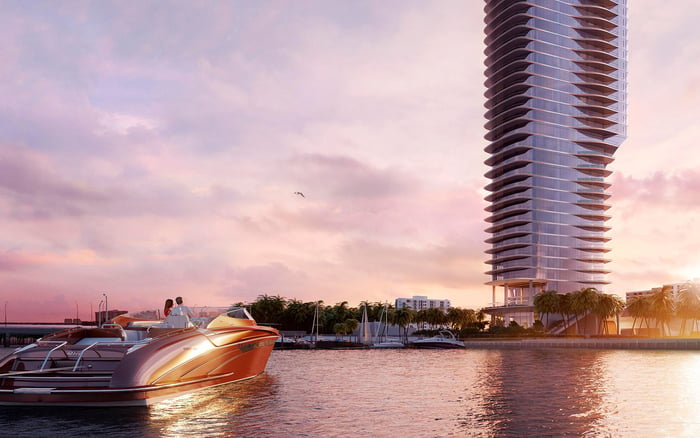
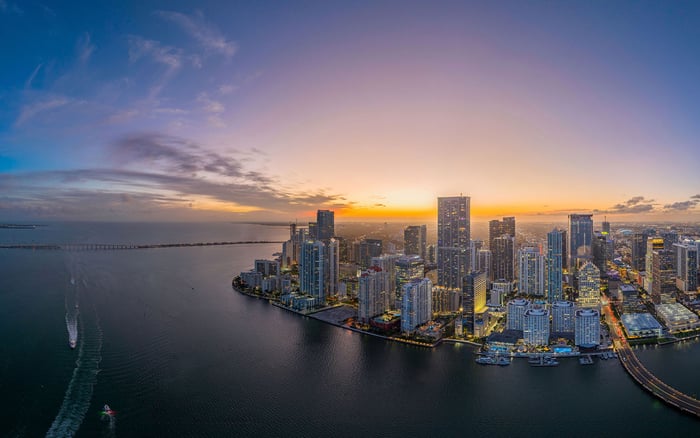
First, Miami is an image city. Strong natural light, waterfront settings, bold architecture, and high design translate exceptionally well to short-form video. Even when viewers understand content is curated, the emotional response arrives instantly. A three-second clip of glass meeting water can create a stronger impression than a page of specifications.
Second, buyers increasingly expect frictionless access to context. They want to understand the “vibe” before they commit time to a private showing. That is particularly true for second-home buyers, relocations, and those balancing multiple markets. Instagram is a fast filter, and in luxury, filtering is half the work.
Third, social content creates perceived consensus. When the same building, lobby, or view appears across multiple accounts, it can read as validation. That perceived validation can encourage a buyer to move quickly, sometimes before verifying the details that define value at the top of the market.
In practice, Instagram does not replace brokerage. It changes the order of operations. It brings the buyer to the table faster, and it raises expectations even faster.
Luxury buyers rarely say, “I bought it because it was trending.” They say, “I kept seeing it,” “It looked perfect,” or “It felt like the one.” Instagram tends to influence the pre-decision phase, when preferences are still forming and the buyer is building a private thesis about what “right” looks like. Once that thesis locks in, decisive action often follows.
A common pattern looks like this.
Step one is passive exposure. A buyer sees a reel of a sunrise view, a dramatic entry sequence, or a rooftop social scene. There may be no immediate intent, only interest.
Step two is intentional curation. The buyer saves the post, follows an account, and starts comparing similar homes. Design language becomes a filter. At this stage, buyers often rule out options without ever touring them.
Step three is private validation. The buyer forwards the content to a partner, advisor, or family office. Social becomes an efficient way to communicate taste and direction, especially when time is limited.
Step four is fast outreach. The buyer messages a broker, requests inventory, and asks for “anything like this.” The feed has already shaped the brief, sometimes with more precision than a traditional needs-analysis call.
Step five is compression. Because the buyer feels they have “seen it,” they may request fewer showings. That can be efficient, but it can also create overconfidence. A curated clip cannot tell you how a space feels at night, what the sound profile is on a terrace, or how a building operates day to day.
For sellers, this means visibility can produce a quicker funnel. For buyers, it means the most important questions have to be asked earlier, not later.
The content that performs best tends to share a few traits. Understanding those traits helps a buyer separate what they are responding to visually from what they still need to validate.
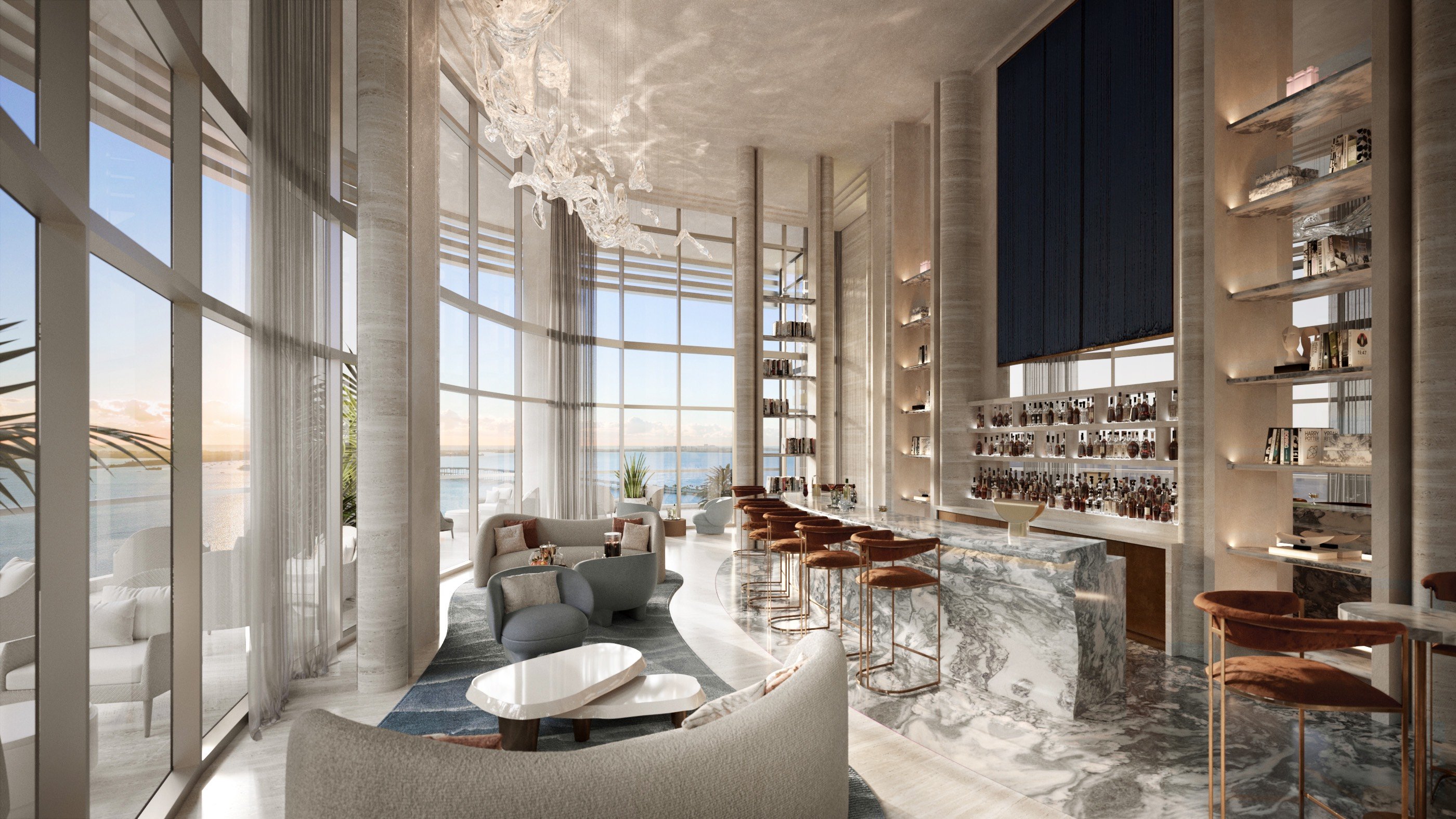
Visual clarity wins. Clean lines, strong contrast, and unobstructed vistas are easy to understand in a three-second clip. Subtle craftsmanship and nuanced detailing are harder to translate at speed. A serene palette, a sculptural staircase, or a living room framed by glass becomes a shorthand for “premium,” even when the full story is more complex.
Light and movement matter. Morning light, reflections off water, and slow camera moves can make a home feel more expansive than it reads in person. That does not automatically make content misleading. It means the home is being presented in the way the medium rewards: cinematic, bright, and simplified.
Lifestyle cues do heavy lifting. A quiet car arrival, a corridor that reads like a boutique hotel, or a perfectly staged breakfast terrace can imply service, privacy, and ease. Those are real drivers of value in South Florida. The limitation is that a clip shows the highlight, not the pattern. A single elegant moment does not confirm the everyday experience.
Scarcity language travels. Phrases like “last of its kind,” “never available,” and “private offering” can trigger urgency. In luxury, urgency is not always irrational. Truly distinctive homes can be rare. The cost is that urgency can discourage careful review if the buyer feels they must decide before they can verify.
The key insight is simple: Instagram excels at showcasing what you can see. It is weak at conveying what you must confirm.
At the ultra-premium level, value is often created by quiet variables that social media cannot capture well, or does not prioritize.
Acoustics and privacy are difficult to photograph. A home can look serene and still feel exposed, or sound lively in a way that does not match a buyer’s expectations. In Miami, where activity can shift block by block and hour by hour, that difference is not academic. It changes daily life.
Operational reality rarely makes good content. Service standards, reserve culture, move-in rules, and the true rhythm of common areas define the ownership experience. Instagram will show the best angle and the best moment. It will not show how consistently a building delivers.
Micro-location matters. Two homes that appear similar in a reel can feel completely different depending on approach, surrounding activity, or what sits in the sightline at a given hour. A view that looks uninterrupted in one direction may carry tradeoffs in another.
The financial frame is not visible. Carrying costs, renovation complexity, and resale liquidity are not feed-friendly topics, yet they often decide whether a purchase is simply exciting or truly sound. For buyers with an investment mindset, these factors are frequently the difference between a smart acquisition and an emotional one.
None of this makes social media irrelevant. It clarifies the boundary: use Instagram for discovery, not for decision.
For sellers, social media can create a pre-market “moment” that feels exclusive, even when the strategy is broad. For developers and new-construction sales teams, it can establish a narrative early, anchoring perceived value before a buyer ever sees a full package of details.
The most effective campaigns tend to do three things well.
They build a consistent visual identity. Repeated angles, a cohesive palette, and a recognizable editing style create familiarity. Familiarity reduces perceived risk. In luxury, trust is often built through repetition and restraint, not volume.
They signal lifestyle alignment. Instead of listing features, content implies an identity. The home becomes a proxy for how the buyer wants to live in Miami: calm mornings, effortless entertaining, indoor-outdoor continuity, and polished service cues. In a market with many versions of luxury, identity can be as persuasive as square footage.
They control access. Teaser content can create the perception that a home is hard to see. That perception can be true, or it can be strategic. Either way, it often produces more direct inquiries and a more serious buyer pool because it invites a relationship, not a casual browse.
The objective is not virality at any cost. The objective is targeted visibility that preserves discretion. In luxury, overexposure can create noise, attract low-intent inquiries, and weaken negotiating posture.
When a property enters your consideration set through Instagram, treat the content as an invitation to verify. A disciplined process lets you keep the speed of modern discovery while preserving the protections expected at the top of the market.
Start with context questions. Identify the true reason you like it: light, layout, view, or brand narrative. Naming the driver matters because it tells you what to test. If the driver is “view,” you must confirm the view at multiple times of day. If the driver is “privacy,” you must validate sightlines and exposure.
Validate the camera story. When possible, request unedited, time-stamped walk-through video taken at different times of day. Look for continuity: how rooms connect, how circulation feels, and whether the clip matches the logical flow of a floor plan. A wide lens can flatter a room, so movement and transitions often reveal more than a single heroic shot.
Confirm the privacy profile. During an in-person tour, stand where the camera stood and look outward. Check sightlines from neighboring structures and from common approaches. In Miami, privacy is rarely binary. It is a spectrum shaped by orientation, elevation, and surrounding activity.
Listen for the home. Pause during tours. Turn off music. Open and close doors. Step onto terraces. In Miami Beach and other high-activity zones, the difference between “electric” and “too loud” is personal, so measure it against your lifestyle and your actual routines.
Stress test the daily flow. Ask how arrivals feel, where deliveries go, and how the route from car to door reads after dark. If staff support is relevant, understand where and how that work happens. Instagram celebrates the best angle. Ownership is lived in every angle.
Review the market frame with calm. Even if a home is trending, negotiate from fundamentals. Demand can be real and still be cyclical. A quiet, well-supported offer is often more persuasive than a rushed one, especially when it signals seriousness and clarity.
Instagram can be an exceptional amplifier for a luxury listing, but it performs best when treated as editorial, not casual.
Lead with architecture and atmosphere, not personal details. Remove family cues, identifiable art placements, and anything that reveals an owner’s routines. High-net-worth buyers notice discretion. The best marketing feels curated and intentional, not invasive.
Aim for cinematic, not maximal. One strong concept shot and a cohesive short video often outperform a flood of posts. Saturation can dilute perceived value. Scarcity, used thoughtfully, supports premium positioning and keeps the listing feeling controlled.
Coordinate brokerage and content strategy. A beautiful reel can generate inquiries that are enthusiastic but unqualified. Align content release with showing availability and screening standards so attention converts into credible demand. If the home is occupied, ensure the cadence respects privacy and minimizes disruption.
Use narrative, but keep it truthful. Avoid absolute claims in the absence of verified facts. Instead, emphasize experience: entertaining flow, indoor-outdoor continuity, calm mornings, and the way light moves through the home. You can communicate emotion without inventing specifics.
Social media can make the entire market feel like a series of highlights. To keep perspective, it helps to anchor your research to a single, recognizable reference point, then expand outward with professional guidance.
For a neutral starting point, explore 888 Brickell by Dolce & Gabbana. Use it to calibrate what you respond to visually, whether that is a branded aesthetic, a certain level of finish, or a particular tone of lifestyle marketing. Then compare any Instagram-led favorites against your real priorities: privacy, daily ease, long-term fit, and the financial structure of ownership.
In the end, Instagram is a powerful signal amplifier. It can surface opportunities you would not have found otherwise, particularly in fast-moving segments like Brickell and new-construction. The winning approach is to let the feed inspire the shortlist, then let verification and negotiation define the outcome.
How do I know whether an Instagram-famous listing is actually a fit for my lifestyle?
Start by identifying what the content made you want: light, view, finishes, or the lifestyle cues around the building. Then test those drivers in person. Confirm privacy, acoustics, and daily flow, and ask how the residence functions beyond the highlight moments. If the home still feels right when the camera is not guiding your attention, it is more likely to be a genuine fit.
What should I request after seeing a property on Instagram before scheduling a tour?
Ask for unedited, time-stamped walk-through video when possible, ideally captured at different times of day. Request context that social clips rarely provide: how spaces connect, where key sightlines land, and what the terrace and interiors feel like without staging or music. The goal is not to slow the process down, but to prevent a curated reel from becoming your only reference point.
How can I buy in Miami Beach while keeping the process discreet?
Use a single point of contact, keep your shortlist tight, and align on screening standards before showings are scheduled. Focus on private tours and need-to-know communication with your advisors. Discretion is not just about privacy online; it is also about controlling who has access to your timeline, your preferences, and your negotiating posture.
Work with a process built for speed and verification: clear criteria, curated options, and disciplined due diligence. The objective is to use social media for discovery while keeping your decisions anchored in real-world checks, market context, and negotiation leverage.
Want a private, low-friction search strategy with MILLION Luxury?
If branded residences are on your mind — as a home or as an allocation — we would be glad to share what we are seeing, privately.
Begin a quiet conversation