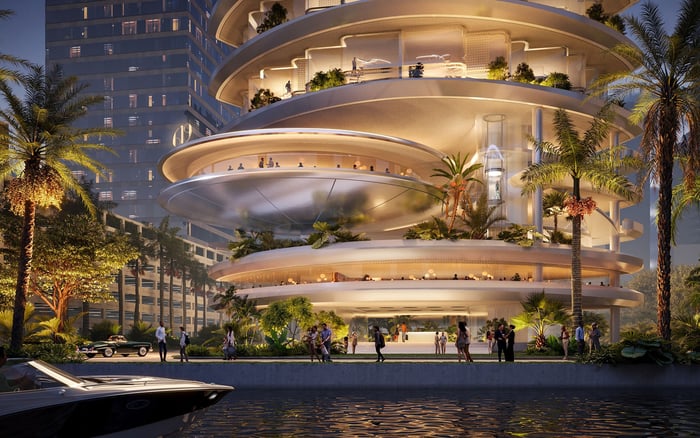
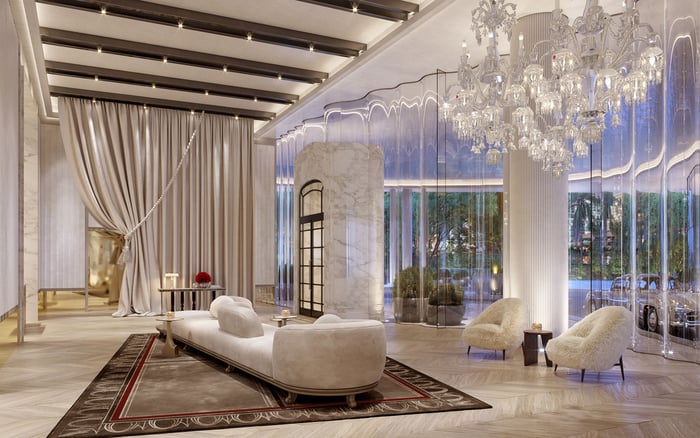
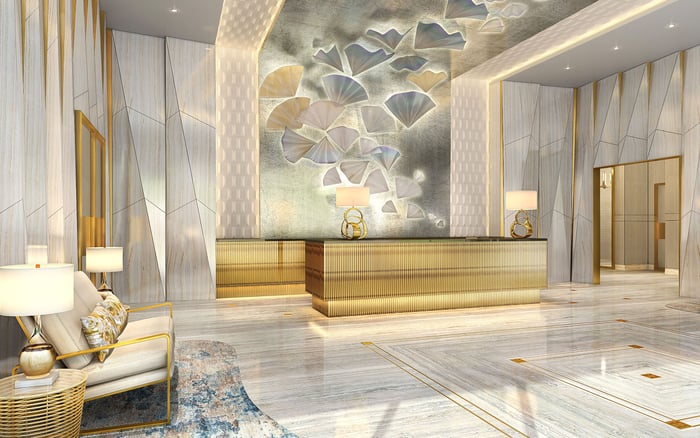
An editorial look at how private arrival at Viceroy Brickell elevates daily life, privacy, service rhythm, and buyer expectations in Miami’s most vertical luxury district.
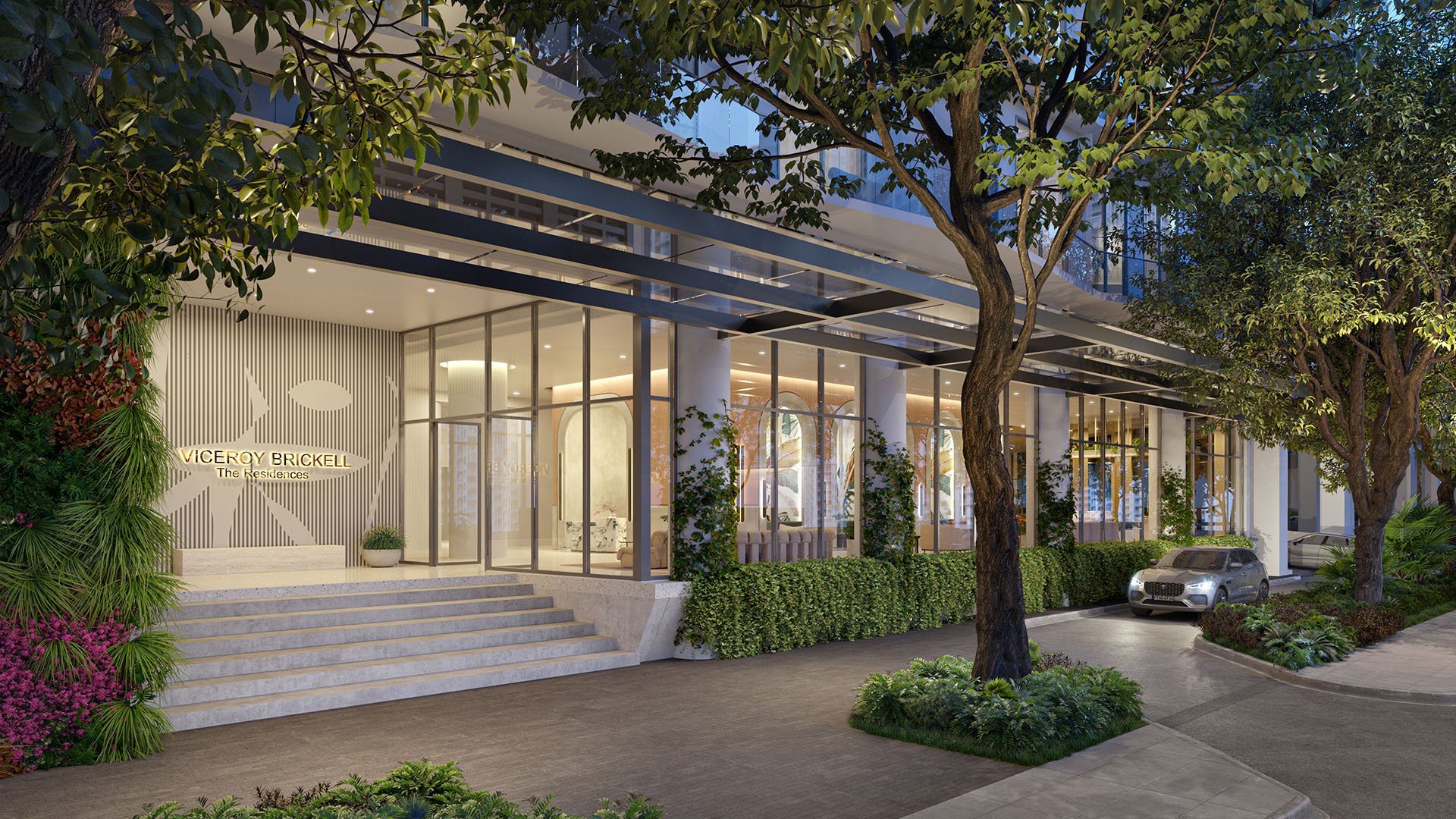
In Brickell, luxury begins at the curb. Before a resident reaches the elevator, before the skyline opens from a Balcony, before the first coffee or the evening return home, there is a sequence of movement that sets the tone for the building. That sequence is where private arrival matters.
At Viceroy Brickell, the question is not simply whether a residence feels polished once inside. The more important measure is whether the building understands transition. The best urban residences do not treat arrival as a lobby photograph. They choreograph the handoff from city energy to residential calm.
That distinction is especially important in Brickell, where density is central to the appeal. The neighborhood places restaurants, offices, bayfront walks, towers, traffic, and social momentum in close proximity. For many buyers, the value proposition is not retreat from the city. It is the ability to participate in it while maintaining a private threshold.
For years, buyers emphasized view, floor height, interior package, and building amenities. Those remain central. But in the upper tier of New-construction living, the first five minutes of the resident experience now receive closer scrutiny. How does the car approach? Where does a guest wait? How visible is the resident while entering? How direct is the path to the private elevator or residential core? How separate does the home feel from the public-facing life of the tower?
These questions are not merely logistical. They shape whether a residence feels effortless over time. A well-considered arrival can compress friction: fewer pauses, fewer unnecessary interactions, less exposure, less ambiguity. In a vertical neighborhood, that is a meaningful form of comfort.
The appeal is not theatrical seclusion. Brickell buyers generally want access, not isolation. They want the freedom to leave for dinner, receive guests, return from travel, or step into a workday with a sense of control. Private arrival is the architectural expression of that preference.
Viceroy Brickell also sits within the larger conversation around Branded Residences in South Florida. The most successful branded projects are not simply those with recognizable names. They are the ones where the brand informs daily operation, spatial rhythm, and service expectations.
That is why private arrival is so consequential. It is one of the few moments every resident experiences repeatedly. A spa may be occasional. A club room may be used selectively. A pool deck may be seasonal in rhythm. Arrival, by contrast, is constant. It is the daily handshake between building and resident.
Brickell has become one of Miami’s most competitive stages for this type of positioning. Nearby, Baccarat Residences Brickell leans into the district’s appetite for polished, hospitality-influenced residential living, while Cipriani Residences Brickell reflects continued demand for service culture translated into condominium life. In that context, Viceroy Brickell’s arrival story speaks to a buyer who understands that a name must be supported by a lived experience.
Private arrival is often misunderstood as a purely defensive feature. In its most elegant form, it is not about hiding. It is about creating a composed threshold between public and private life.
In Brickell, that threshold matters because the neighborhood is both residential and commercial. The same streets serve office tenants, dinner reservations, visitors, rideshare traffic, and residents returning home. A building that carefully separates residential movement from broader urban circulation can feel markedly more residential, even in the center of Miami’s financial district.
This is where Waterfront proximity and city density create a specific buyer psychology. Many purchasers are drawn to views, bay breezes, walkability, and the sensation of living within Miami’s most international urban corridor. Yet they also expect a residence to feel calm, edited, and secure. The arrival sequence is the hinge between those two desires.
A private approach can also support hosting. Guests often judge a building before they step inside the home. When the arrival feels intuitive and composed, the residence feels larger in spirit. It suggests that the owner has not only purchased square footage, but has chosen a building that understands ceremony.
For buyers evaluating Viceroy Brickell or any comparable Brickell residence, the arrival should be experienced in real time. Renderings and amenity language are helpful, but they cannot fully communicate flow. A serious buyer should study whether the entry sequence feels legible, whether staff positions make sense, and whether the transition from vehicle to lobby to elevator is calm rather than congested.
The best tours are not rushed. Walk the arrival as if returning from the airport. Consider it as a resident carrying luggage, hosting family, or coming home late after dinner. Then consider it as a guest. Does the building guide movement naturally? Does it protect privacy without feeling austere? Does it create a sense of welcome without becoming performative?
This is also where comparisons become useful. St. Regis® Residences Brickell appeals to buyers who prioritize service heritage and residential poise, while Una Residences Brickell has helped define the appetite for refined waterfront living in the area. Each project frames arrival differently, but the buyer’s underlying question remains the same: does the building make daily life feel more graceful?
Luxury real estate often speaks in visible metrics. Ceiling height, view orientation, finish quality, amenity count, and terrace depth are tangible. Private arrival is subtler. It is felt in the nervous system before it is measured on a floor plan.
That subtlety is exactly why it matters to sophisticated buyers. A residence may impress on the first showing, but the building’s movement patterns determine long-term satisfaction. Repeated friction can make even a beautiful home feel compromised. Repeated ease, by contrast, becomes invisible in the best way. It quietly supports the resident’s day.
In a market where many towers compete through amenities, arrival is one of the clearest indicators of development discipline. It reveals whether the building was conceived as a complete residential ecosystem or as a collection of attractive spaces. For Brickell buyers, that difference can shape both Lifestyle and long-term attachment.
Private arrival can also influence future market perception. While buyers will always compare price, view, plan, and condition, the feeling of arrival can distinguish one tower from another during a showing. It is difficult to retrofit a truly elegant entry sequence. The bones of arrival are established early in the design process.
That does not mean every buyer values the same kind of privacy. Some prefer a highly social lobby, while others want a near-invisible transition to the residence. The point is alignment. Viceroy Brickell’s relevance lies in the way it invites buyers to consider whether the first impression of home supports the life they intend to live.
In the end, private arrival is not an accessory. In a high-density luxury district, it is part of the residence itself. It shapes how the owner enters, how guests are received, how service is perceived, and how the building separates the speed of Brickell from the privacy of home.
Why is private arrival important at Viceroy Brickell? It shapes the resident’s first and last impression of the building each day. In a dense urban setting, that controlled transition can be as meaningful as an interior finish.
Is private arrival only about privacy? No. It is also about ease, clarity, service rhythm, and reducing friction between the city and the home.
How should buyers evaluate an arrival sequence? Buyers should physically walk the route from vehicle approach to lobby and elevator. The experience should feel intuitive, calm, and residential.
Does private arrival matter more in Brickell than in quieter markets? It can, because Brickell combines residential, commercial, and social activity in a compact district. A composed arrival helps preserve the feeling of home.
Are Branded Residences expected to have stronger arrival experiences? Buyers often expect them to, because branding raises expectations around service and atmosphere. The name should be supported by daily operational quality.
Can arrival design affect resale appeal? Yes, because first impressions influence showings and buyer confidence. A refined arrival can help a building feel more complete and considered.
Should investors care about the arrival experience? Yes, especially in the luxury segment. Buildings that feel easier and more private may stand out to future renters or buyers.
Is a dramatic lobby the same as private arrival? Not necessarily. A dramatic lobby can impress, but private arrival depends on movement, separation, staff choreography, and resident comfort.
What lifestyle does Viceroy Brickell most clearly support? It suits buyers who want access to Brickell while preserving a more controlled residential threshold. The emphasis is urban connection with a private return.
What is the key takeaway for buyers? Do not evaluate only the residence door inward. In Brickell, the path to that door is part of the luxury experience.
To compare the best-fit options with clarity, connect with MILLION.
If branded residences are on your mind — as a home or as an allocation — we would be glad to share what we are seeing, privately.
Begin a quiet conversation