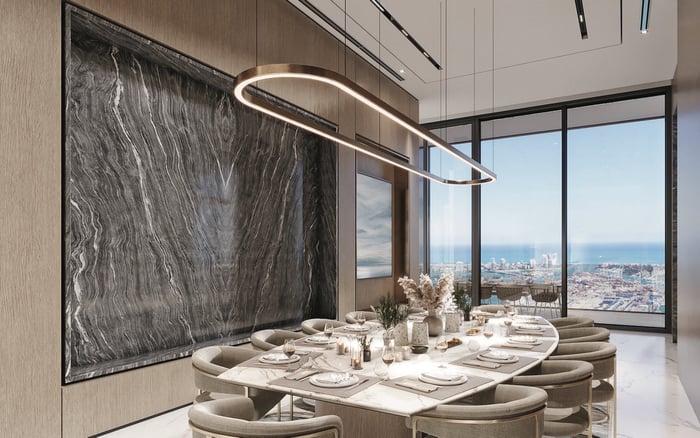
A buyer-oriented look at why two branded Downtown Miami addresses appeal to discreet second-home owners who want design, service, access, and a calmer urban rhythm.
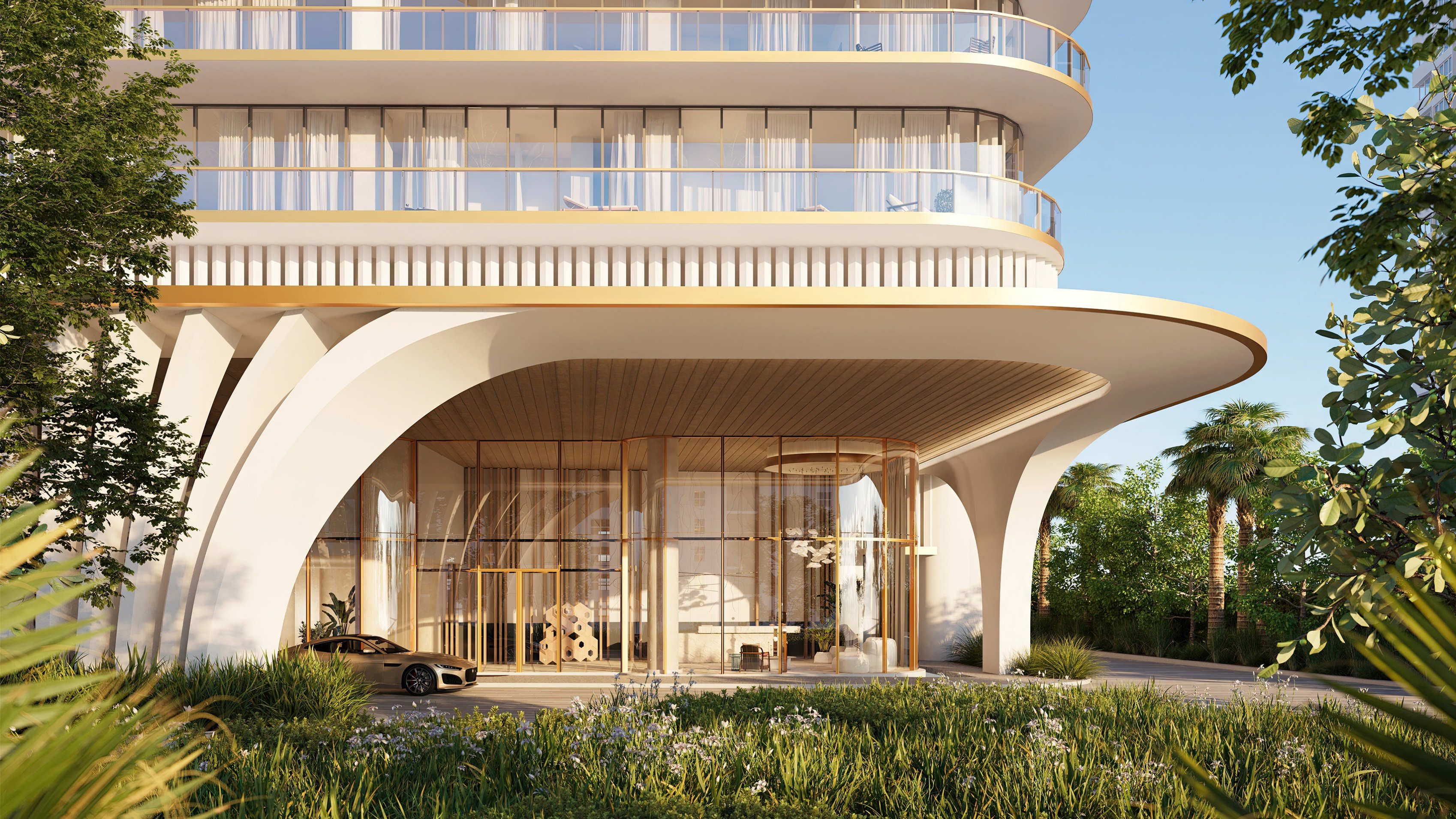
For a certain buyer, Downtown Miami is not about living loudly. It is about arriving easily, retreating quickly, and keeping the city’s cultural, business, dining, and waterfront energy close at hand without surrendering the privacy of home. That is the shared appeal behind Casa Bella by B&B Italia Downtown Miami and Waldorf Astoria Residences Downtown Miami for purchasers seeking a quieter pied-à-terre.
The word “quieter” matters. These buyers are not necessarily seeking seclusion in the suburban sense, nor are they rejecting the advantages of a major urban address. They want a residence that can be used with ease, left with confidence, and returned to with composure. In Downtown, that brief is increasingly refined: a lock-and-leave home with design credibility, hospitality-minded service, and a location that keeps Miami close but not overwhelming.
A pied-à-terre functions differently from a primary residence. It must perform beautifully in short intervals: a long weekend, a seasonal stay, a business trip, a cultural calendar, or an extended visit between other homes. The value is not only square footage. It is the choreography of daily life.
Branded residences can be especially persuasive in this category because they suggest an established point of view. Casa Bella carries a design association that speaks to buyers who care about interiors, materials, and the atmosphere of a home. Waldorf Astoria carries a hospitality identity that appeals to buyers who prize service, arrival, and ease. Neither proposition needs to be reduced to spectacle. For the quieter buyer, the brand is most useful when it creates confidence rather than noise.
This is where new construction becomes part of the emotional equation. Buyers who maintain homes in several cities often want a Miami residence that feels current from the beginning, with contemporary systems, curated shared spaces, and a more managed ownership experience. The goal is not to spend every visit solving small problems. The goal is to arrive, exhale, and begin using the city.
Downtown has a distinct advantage for the pied-à-terre buyer: it places multiple versions of Miami within reach. From this center, the owner can move toward the arts, the waterfront, Brickell, Miami Beach, Coconut Grove, or the airport with relative flexibility. That access is different from living inside a purely resort setting. It is more urban, more connected, and often more practical for owners whose Miami time is purposeful.
This is why Downtown can appeal to buyers who may also study Aston Martin Residences Downtown Miami or One Thousand Museum Downtown Miami when calibrating the neighborhood’s luxury vocabulary. The point is not that every Downtown tower serves the same buyer. It is that the district has developed a serious residential language, one that can accommodate both statement architecture and more discreet patterns of use.
For Casa Bella and Waldorf Astoria, the quieter pied-à-terre appeal is tied to this middle ground. The owner wants to be close to the city’s momentum, but not consumed by it. Downtown provides the setting. The residence must provide the filter.
Pied-à-terre buyers often think less in terms of maximum size and more in terms of mood, proportion, views, and usability. The home must feel complete even if it is not the owner’s largest residence. It needs an elegant living area, a bedroom that feels restorative, storage that supports repeat visits, and terraces or outlooks that make Miami present without making it intrusive.
Casa Bella’s appeal naturally begins with the promise of design identity. A buyer drawn to B&B Italia is likely to be attentive to the feeling of furnishings, finishes, and spatial composition. For this audience, the residence is not simply a place to sleep between reservations. It is part of the Miami experience itself.
Waldorf Astoria Residences Downtown Miami speaks to a different but overlapping instinct. The buyer may be attracted to the continuity of a globally recognized hospitality sensibility. The comfort is not only visual. It is operational. A quieter owner wants the home to be prepared, the arrival to be smooth, and the building to feel capable without feeling performative.
For this segment, privacy is not limited to thick walls or high elevations. It begins with the entire arrival sequence. How does one enter the property? How intuitive is the transition from car to lobby to elevator to residence? Does the building feel calm during peak times? Can guests be handled gracefully? Does the owner feel at home even after months away?
These questions are especially important in Downtown, where the urban setting can be vibrant at street level. A successful pied-à-terre creates a controlled threshold between the city and the private residence. Higher floors may matter to some buyers for light, outlook, and a greater sense of separation, while others may prioritize an efficient arrival or a floor plan that supports frequent, shorter stays.
The best choice is rarely about one headline feature. It is about the full pattern of use. A buyer who hosts often may care more about entertaining flow. A buyer who visits alone or as a couple may place greater emphasis on serenity, service, and the bedroom suite. A family using the residence seasonally may look closely at storage, guest accommodations, and the building’s day-to-day convenience.
The overlap between Casa Bella and Waldorf Astoria is clearest in the second-home buyer who wants Miami without the maintenance profile of a standalone house. This owner may already have a primary residence elsewhere and may not need a sprawling footprint in Florida. What matters is quality of arrival, confidence in the building, and a home that feels polished from the first evening.
That same buyer may compare Downtown with Brickell, particularly if business access is part of the lifestyle. Projects such as 888 Brickell by Dolce & Gabbana illustrate how nearby neighborhoods can offer their own branded and design-led propositions. Yet Downtown’s appeal is subtly different. It can feel slightly less defined by office rhythm and more connected to the broader civic and cultural center of Miami.
Casa Bella and Waldorf Astoria therefore share a useful lane. They are not merely alternatives for someone buying “a condo in Miami.” They are candidates for a buyer seeking a polished urban base, one that can serve as a weekend sanctuary, a seasonal retreat, or a strategically located home between flights, meetings, dinners, and private downtime.
The right decision begins with a candid look at use. How many nights per year will the home be occupied? Will it be used for work, family visits, entertaining, or recovery between travel? Is the buyer more design-driven or service-driven? Does the residence need to feel like an artful private apartment, a hospitality extension, or a little of both?
A quieter pied-à-terre should not feel underused when empty or overcomplicated when occupied. It should support repeat rituals: morning coffee with a view, a simple arrival after a late flight, a dinner reservation nearby, a guest weekend that feels seamless, and the ability to leave without friction. Casa Bella and Waldorf Astoria both speak to that psychology, which is why their shared appeal is less about competing for attention and more about providing composure in the center of Miami.
Why would a buyer choose Downtown Miami for a quieter pied-à-terre? Downtown offers central access while still allowing a residence to function as a private retreat above the city’s activity.
Are Casa Bella and Waldorf Astoria aimed at the same buyer? They can overlap for buyers who want a branded, service-oriented, lock-and-leave Miami residence with a refined urban setting.
What makes Casa Bella distinctive for this audience? Its appeal is closely tied to design identity, making it compelling for buyers who value interiors, atmosphere, and visual coherence.
What makes Waldorf Astoria Residences Downtown Miami distinctive? Its hospitality association is attractive to buyers who prioritize service, ease of arrival, and a managed ownership experience.
Is a pied-à-terre usually smaller than a primary residence? Often, yes, but the key is not size alone. The residence must feel complete, comfortable, and easy to use during shorter stays.
Should buyers prioritize views or floor plan? Both matter, but frequent users should first consider how the residence will live day to day, then weigh outlook and elevation.
Is Downtown different from Brickell for second-home buyers? Downtown can feel more connected to Miami’s civic and cultural core, while Brickell often carries a more business-centered rhythm.
What does lock-and-leave ownership mean? It describes a home that can be occupied, secured, and left with minimal friction, making it suitable for owners who travel often.
Can a quieter residence still be in a high-energy neighborhood? Yes. The building’s arrival sequence, privacy, services, and residence design can create calm within an active urban district.
What should buyers compare before choosing between the two? They should compare design feel, service expectations, arrival experience, views, floor plans, and how each building matches their real usage.
To compare the best-fit options with clarity, connect with MILLION.
If branded residences are on your mind — as a home or as an allocation — we would be glad to share what we are seeing, privately.
Begin a quiet conversation