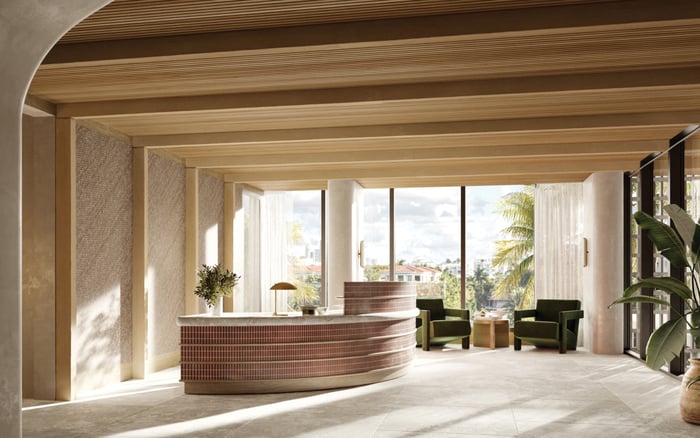
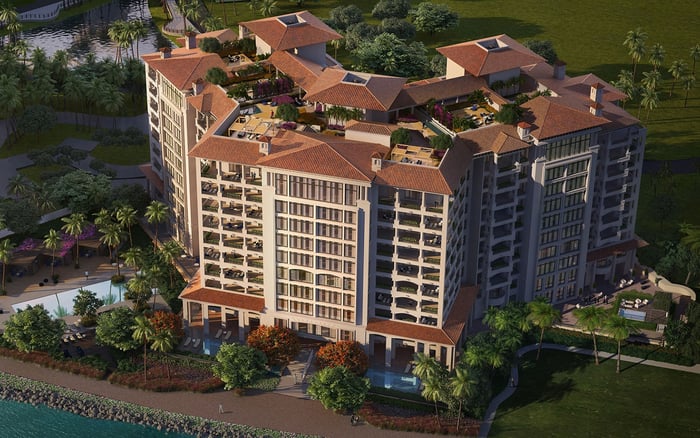
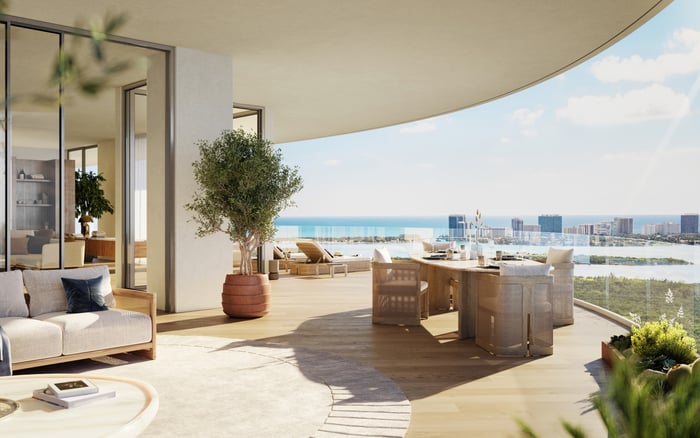
A comparative look at how Avenia Aventura, One Park Tower by Turnberry North Miami, and The Well Bay Harbor Islands answer a rising luxury buyer preference: polished residential service without the public circulation of a hotel-style environment.
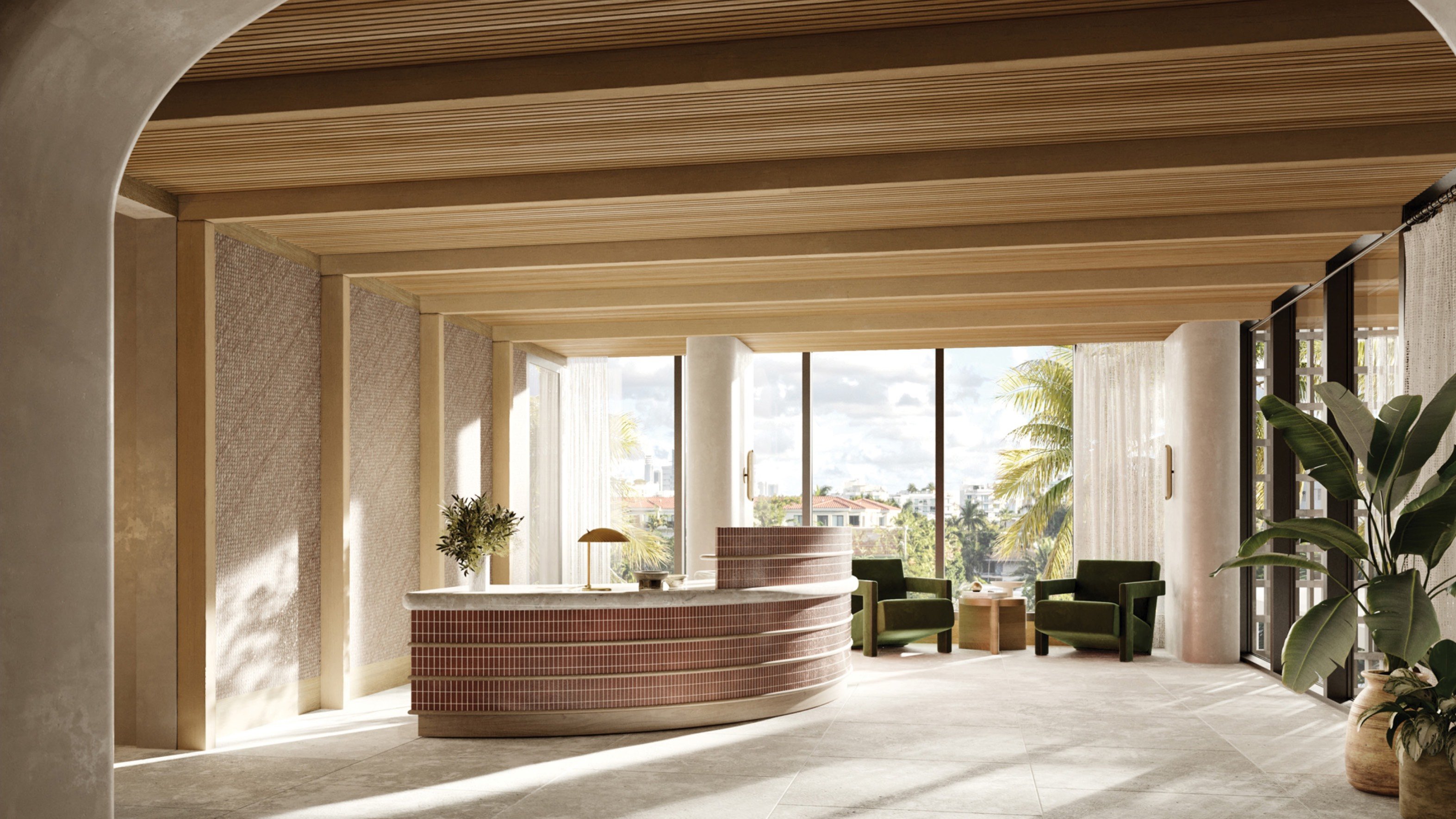
For a certain South Florida buyer, the question is no longer whether a building offers enough amenities. It is whether those amenities feel private enough to use every day. The most discerning owners are not rejecting hospitality; they are refining it. They want thoughtful service, wellness-minded programming, controlled access, and a polished arrival experience, but not necessarily the energy of a hotel lobby, the churn of transient guests, or the constant circulation that can come with a condo-hotel model.
That is the shared appeal connecting Avenia Aventura, One Park Tower by Turnberry North Miami, and The Well Bay Harbor Islands. They are not interchangeable projects, and buyers should not read them that way. Their locations, brand language, and lifestyle emphasis differ. What links them is a quieter thesis: hospitality without heavy public traffic.
In practice, that means residential environments designed primarily around owners rather than walk-in visitors or short-stay guests. It is the difference between a place that performs like a destination and one that supports daily life with the ease of a well-run private club.
South Florida has long traded on destination glamour. Oceanfront hotels, branded restaurants, and resort-style condo towers helped define the market’s global image. Yet many buyers now want that level of polish in a more settled, ownership-oriented setting. They may still value concierge-style attentiveness, wellness spaces, curated common areas, and the feeling of being cared for, but they want those privileges calibrated to residents.
The distinction matters. A public-facing hospitality environment can feel exciting for a weekend and exhausting as a home. Heavy guest turnover changes elevator rhythms, lobby privacy, pool-deck atmosphere, and the sense of familiarity among staff and neighbors. By contrast, resident-first amenity ecosystems aim for continuity. The same spaces can feel more personal because they are not constantly being reintroduced to a new audience.
This is where boutique sensibility enters the luxury conversation, even when the buildings themselves may not be defined strictly by scale. The word captures a mood: selective, controlled, and less anonymous. Privacy is not only a penthouse attribute. It becomes a daily operating system.
Avenia Aventura gives this comparison its Aventura anchor. That matters because the buyer profile is not limited to Miami Beach, Bal Harbour, or the traditional resort-hotel corridor. Aventura offers a different reading of luxury, one tied to convenience, services, and a residential neighborhood context rather than a beachfront hospitality scene.
For buyers considering Avenia Aventura, the appeal is the possibility of lifestyle support close at hand without feeling embedded in a public resort environment. The value proposition is not simply about having amenities inside the building. It is about how those amenities relate to the cadence of everyday ownership. A resident can seek comfort, access, and ease while still preserving the feeling of a private home base.
That is especially relevant for buyers who split time between markets or want a South Florida residence that functions smoothly without becoming theatrical. Aventura can offer a less obvious but highly practical answer: service-rich living in a setting that feels connected to normal life rather than staged for visitors.
One Park Tower by Turnberry North Miami occupies a different position in the trio. Its North Miami setting and association with the Turnberry name allow it to speak to buyers who like resort-style residential living but prefer a private ownership framework over a hotel-like format.
The important nuance is control. Resort-style does not have to mean public-facing. In the strongest residential interpretation, it means an elevated daily environment with amenities and services organized around the people who live there. For buyers who want polish without parade, that can be more compelling than a building where non-resident circulation is part of the identity.
North Miami also gives the project a distinct micro-market story. It is not trying to replicate Aventura, and it is not trying to become Bay Harbor Islands. Its strength in this comparison is the blend of private residential ambition, resort-style atmosphere, and brand familiarity. For buyers who associate luxury with ease but do not want their home to feel like a lobby for everyone else’s weekend, that distinction can be decisive.
The Well Bay Harbor Islands represents the wellness-branded case study in this group. Its appeal sits at the intersection of privacy, wellness programming, and curated services, all within the quieter scale and rhythm associated with Bay Harbor Islands. It addresses a buyer who sees health, restoration, and controlled access not as add-ons but as part of the luxury brief.
Bay Harbor Islands has its own particular psychology. It is close to major luxury corridors, yet it can feel more discreet than the most visible hotel-driven enclaves. For Bay Harbor buyers who want wellness-forward living without constant public traffic, the setting helps reinforce the concept.
The project’s role in this comparison is not to prove that wellness branding is the same as hospitality branding. It is to show how the service-and-seclusion thesis can be expressed through a different lens. Here, the draw is not only whether residents can be served, but whether the entire environment feels attuned to personal balance. That makes The Well Bay Harbor Islands particularly relevant for buyers who want privacy to feel restorative, not merely exclusive.
The common mistake is to evaluate these projects by asking which one has more. The better question is: who are the amenities for? In high-end residential real estate, the most meaningful amenity is often not the most visible one. It is the ability to move through a building without friction, to feel recognized rather than processed, and to use shared spaces without competing with a transient audience.
That is why Avenia Aventura, One Park Tower by Turnberry North Miami, and The Well Bay Harbor Islands belong in the same buyer conversation even though they sit in different micro-markets. Each addresses a modern luxury preference for service plus privacy. Each suggests that South Florida’s next stage of prestige may be less about destination spectacle and more about full-time-residence functionality.
This shift does not erase the appeal of hotels, branded residences, or resort energy. It simply separates vacation glamour from home life. A buyer may enjoy both, but increasingly, the residence is expected to behave differently: calmer, more controlled, more personal, and more useful across ordinary days.
The decision begins with lifestyle geography. A buyer drawn to Aventura may prioritize convenience and a residential neighborhood framework. A buyer focused on North Miami may respond to a private resort-style environment tied to a familiar luxury name. A buyer looking at Bay Harbor Islands may place wellness, discretion, and controlled access at the center of the decision.
The second filter is how much public energy the buyer wants near the front door. Some owners like the animation of a destination setting. Others want the service language of hospitality but prefer the building itself to remain composed. For the latter group, resident-oriented design and controlled access can matter as much as views or finishes.
The third filter is intended use. A primary resident may value daily flow, privacy, and predictable building culture. A second-home owner may focus on ease of arrival, services that reduce friction, and the confidence that the property will feel calm upon return. In both cases, the strongest buildings are those where hospitality is internalized as a residential discipline, not outsourced to public traffic.
What connects Avenia Aventura, One Park Tower by Turnberry North Miami, and The Well Bay Harbor Islands? They share an appeal to buyers who want service-rich residential living without the heavy circulation associated with public-facing hospitality settings.
Are these projects meant to feel like hotels? The appeal is the opposite: they bring hospitality-level polish into ownership-oriented residential environments rather than transient hotel settings.
Why is Avenia Aventura part of this comparison? It represents the Aventura case study for buyers seeking convenience, services, and lifestyle amenities in a residential neighborhood context.
What distinguishes One Park Tower by Turnberry North Miami? It is the North Miami example, appealing to buyers who want a private resort-style residential experience tied to the Turnberry name.
What is the role of The Well Bay Harbor Islands in the trio? It is the wellness-branded example, emphasizing privacy, wellness programming, curated services, and a quieter residential setting.
Why do some buyers avoid heavy public traffic in luxury buildings? High guest turnover can affect privacy, elevator patterns, shared-space atmosphere, and the sense of residential continuity.
Is this trend only about having more amenities? No. The stronger point is whether amenities are designed primarily for residents rather than hotel guests or walk-in visitors.
Which micro-markets are represented here? The comparison spans Aventura, North Miami, and Bay Harbor Islands, each offering a different setting for service plus privacy.
Can these projects be compared directly? They can be compared by buyer preference, but not treated as identical because their locations, branding, and lifestyle emphasis differ.
What is the best way to shortlist comparable options for touring? Start with location fit, delivery status, and daily lifestyle priorities, then compare stacks and elevations to validate views and privacy.
For a tailored shortlist and next-step guidance, connect with MILLION.
If branded residences are on your mind — as a home or as an allocation — we would be glad to share what we are seeing, privately.
Begin a quiet conversation