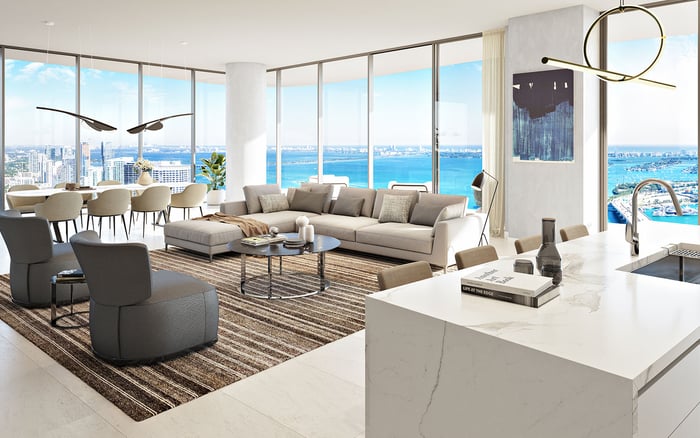
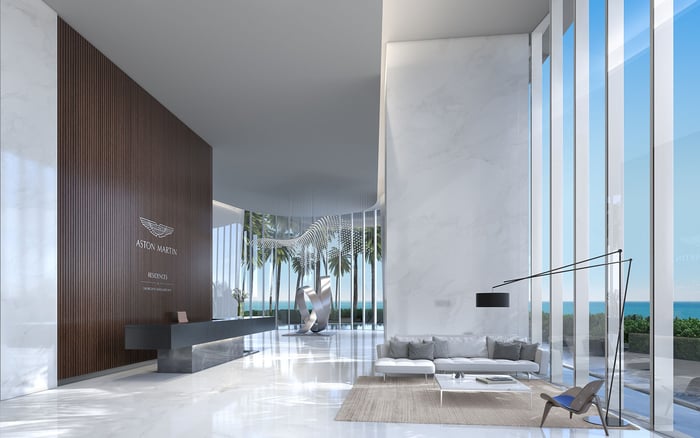
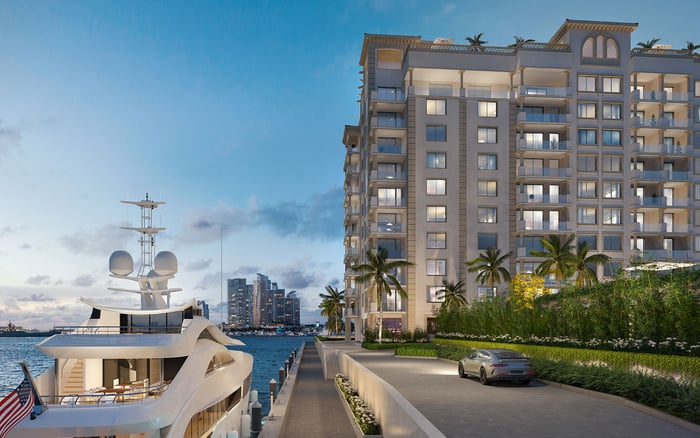
Aston Martin Residences Downtown Miami and Faena Residences Miami speak to a refined buyer preference in South Florida: hospitality-caliber living delivered through a private residential lens, not the bustle of a conventional hotel environment.
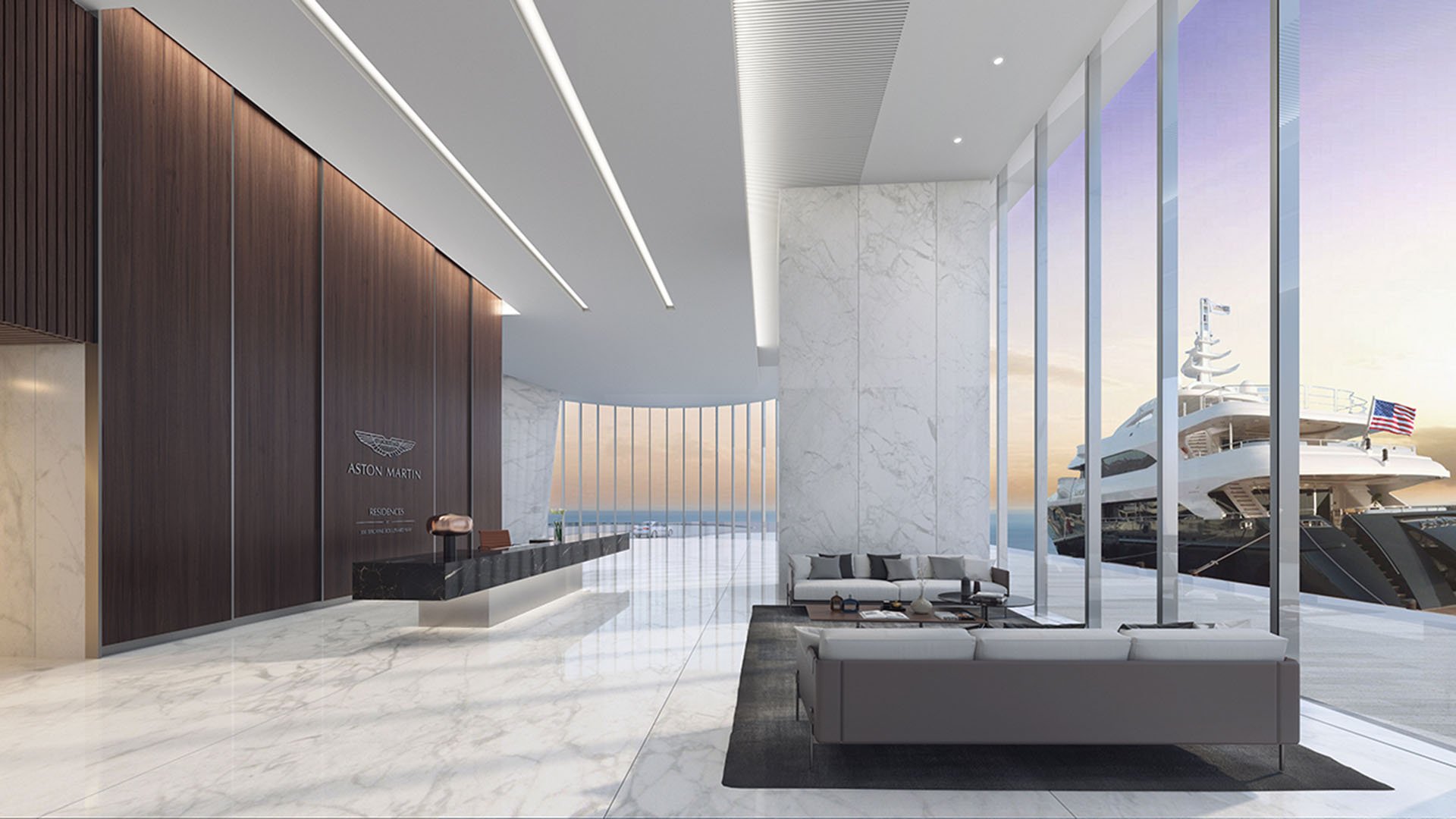
For a certain South Florida buyer, the most valuable amenity is no longer the most visible one. It is not the restaurant downstairs, the velvet-rope arrival, or the lobby designed to impress guests who will never live in the building. It is the ability to move through a residence with ease, discretion, and service that feels present without turning the home into a public stage.
That is the shared appeal behind Aston Martin Residences Downtown Miami and Faena Residences Miami Downtown Miami for buyers who want hospitality without heavy public traffic. The comparison is not only about brand recognition. It reflects a more exacting expectation among ultra-premium residents: hotel-caliber convenience should not require hotel-like circulation.
A decade ago, hotel-adjacent condominium living often involved a compromise. Owners gained access to service, but they could also encounter transient guests in lobbies, valet areas, elevator banks, and amenities. Today’s more discerning buyer is asking a more refined question: can a building deliver the feeling of being looked after while preserving the rhythm of a private home?
Aston Martin Residences Downtown Miami is one of the clearest expressions of this idea. The building is positioned as a Downtown Miami luxury residence with a private residential model rather than a resort or hotel operating structure. Its appeal is rooted in being service-rich but not service-intrusive, a distinction that matters to buyers who want convenience available without every movement feeling shared.
The project’s setting at the mouth of the Miami River gives it a waterfront Downtown Miami identity, with the city’s expanding dining, cultural, and urban lifestyle scene close at hand. Yet its core proposition is not simply location. It is the controlled nature of arrival, access, and daily circulation. Private entry sequences and a residentially focused experience help separate owner life from the public patterns associated with traditional hospitality buildings.
Aston Martin’s design language also gives the residence a distinct emotional register. Its vertical yachting-inspired lifestyle links the brand’s identity to waterfront living. That matters to buyers who see Miami not only as a city address, but as a place where architecture, water, movement, and privacy intersect.
When buyers place Aston Martin Residences and Faena Residences Miami in the same mental set, they are often comparing a philosophy rather than a spreadsheet. They want the assurance of a globally recognized name, the polish of attentive service, and the comfort of a residence that does not depend on public hotel energy to feel alive.
This is where Downtown Miami has become especially compelling. The area offers cultural, dining, and urban lifestyle access while allowing certain towers to operate as private residential addresses. For buyers who split time between Miami, New York, London, São Paulo, or Monaco, the ideal Miami home is not necessarily the loudest property in the most performative setting. It is the one that allows a seamless return from airport, marina, dinner, or office into a controlled environment.
The same thinking explains why buyers also study projects such as Waldorf Astoria Residences Downtown Miami and Baccarat Residences Brickell when evaluating brand-led residential options. The strongest buildings in this category are not merely selling a name. They are selling choreography: how one arrives, how one is greeted, how one reaches the residence, how amenities are used, and how much of that experience remains resident-first.
Branded Residences have matured in Miami. The first impression may still come from a name, but the lasting value comes from operations. Buyers increasingly understand that two branded buildings can feel entirely different depending on circulation, access control, amenity sharing, and the role of public-facing uses.
For this audience, heavy public traffic is not just an inconvenience. It can alter the entire psychology of ownership. A residence should feel secure, calm, and intuitive. Staff recognition should feel personal. Amenities should feel like an extension of the home rather than a stage shared with a rotating cast of visitors. The buyer may appreciate restaurants, culture, design, and social energy nearby, but not necessarily inside the private path home.
That is why the private-branded urban residence has become such a powerful Miami format. It offers the confidence of a luxury name, the polish of hospitality-style service, and a central location, while avoiding the friction that can come with a fully public hotel component. In this context, discretion becomes part of the amenity package.
Waterfront living in Miami has always carried emotional value, but the current buyer reads the waterfront through a more private lens. It is not only about the view. It is about the way water expands the sense of retreat within an urban setting. At Aston Martin Residences, the mouth of the Miami River creates that balance: Downtown Miami connectivity on one side, waterfront atmosphere on the other.
Lifestyle is being redefined in the same way. For the ultra-premium resident, lifestyle does not always mean constant activation. It can mean the ability to host quietly, work privately, use amenities without performance, and step into the city only when desired. The best residential environments make both choices possible: access and withdrawal, energy and calm, service and solitude.
This is especially relevant for buyers who already own homes elsewhere. A Miami residence may function as a second home, seasonal base, tax-oriented relocation, business hub, or family gathering point. In each case, the owner values predictability. The building should be ready when they arrive, attentive while they are there, and unobtrusive when they are not.
Downtown Miami has evolved from a business district into a more layered luxury address. Its waterfront edges, cultural institutions, dining growth, and proximity to Brickell have made it a serious option for buyers who want the city without giving up privacy. In that environment, Aston Martin Residences Downtown Miami offers a model that feels highly urban yet fundamentally residential.
Faena Residences Miami Downtown Miami enters the conversation because buyers are increasingly drawn to names that imply a complete world of design, service, and experience. The key question for these buyers is not simply which brand is more recognizable. It is which residence best matches the desired level of privacy, public exposure, and operational calm.
That decision is highly personal. Some owners want a more visible social ecosystem. Others want the service language of hospitality but not the guest flow. The shared appeal of Aston Martin and Faena, viewed through this buyer lens, is the promise of elevated living that can remain composed, private, and residential in feel.
A serious buyer should study the arrival sequence first. Where does the car stop? Who enters the lobby? Are elevators resident-focused? How are amenities accessed? Does the building feel calm at peak hours? These details shape daily life more than a rendering ever can.
The second issue is service posture. The best service is not merely abundant. It is well judged. It anticipates without hovering, solves without spectacle, and adapts to owners who may use the residence intermittently. In a private-branded building, the staff culture should protect the home environment rather than recreate a hotel lobby.
Finally, buyers should evaluate how the building will age emotionally. A strong private residential model tends to preserve its appeal because it is based on enduring priorities: privacy, access, waterfront presence, design coherence, and ease. Public-facing excitement can fluctuate. A well-run private residence remains valuable because it makes daily life simpler.
Why do buyers want hospitality without heavy public traffic? They want the convenience of service without sharing daily circulation with transient hotel guests or public visitors.
What makes Aston Martin Residences Downtown Miami relevant to this trend? It is positioned as a private branded residence with controlled access, waterfront presence, and hospitality-style service in a residential setting.
Is this the same as living in a hotel condominium? Not necessarily. The appeal here is a more private residential model rather than a building dependent on a public hotel operating structure.
Why does Downtown Miami matter for this buyer profile? Downtown Miami offers proximity to dining, culture, waterfront settings, and urban convenience while supporting a private residential lifestyle.
How should buyers compare Aston Martin and Faena Residences Miami? They should focus on privacy, arrival sequence, service style, amenity access, and how public or residential the building experience feels.
Are Branded Residences mainly about the name? The name matters, but long-term appeal depends on operations, privacy, design quality, and how the building functions day to day.
What does service-rich but not service-intrusive mean? It means residents can access help easily while still feeling that the home environment remains calm, private, and personal.
Why are lobbies and elevators so important? They determine whether residents experience the building as a private home or as a shared hospitality environment with constant guest movement.
Does waterfront living add to the privacy appeal? Yes. Waterfront settings can create a stronger sense of retreat, especially when paired with controlled access and residential circulation.
Who is the ideal buyer for this type of residence? The ideal buyer values design, service, brand confidence, and urban access, but does not want the daily traffic of a traditional hotel.
When you're ready to tour or underwrite the options, connect with MILLION.
If branded residences are on your mind — as a home or as an allocation — we would be glad to share what we are seeing, privately.
Begin a quiet conversation