Turnberry Ocean Club combines individually owned condominium residences with a private-club-style amenity experience. For buyers, acoustic privacy remains a distinct performance question that finishes, concrete construction, low density, and luxury positioning cannot answer on their own.
At Turnberry Ocean Club Sunny Isles, the ownership proposition has two distinct layers. The first is legal and familiar: each residence is individually owned as a condominium, not held through a cooperative, fractional-ownership, or timeshare structure. The second is experiential: Fontainebleau Development conceived the property with an extensive resort and private-club-style amenity program, while historical marketing included membership incentives tied to Turnberry Isle Resort & Country Club.
That distinction matters. Club-like service and amenities may shape daily life, but they do not replace the condominium ownership framework. A purchaser is buying a specific residence within a shared building, making the declaration, association materials, rules, budgets, policies, and physical condition of the selected home central to due diligence.
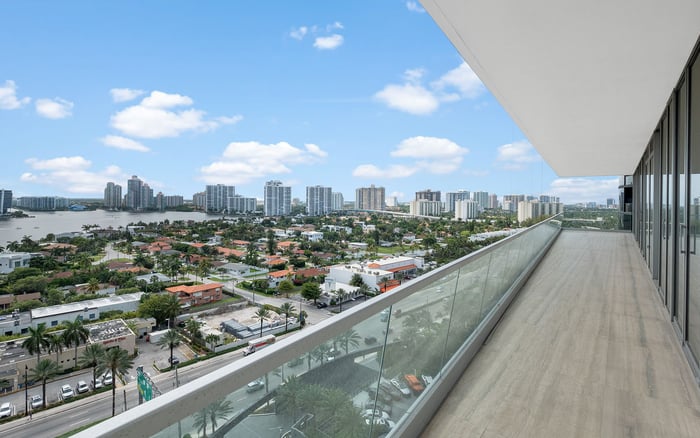
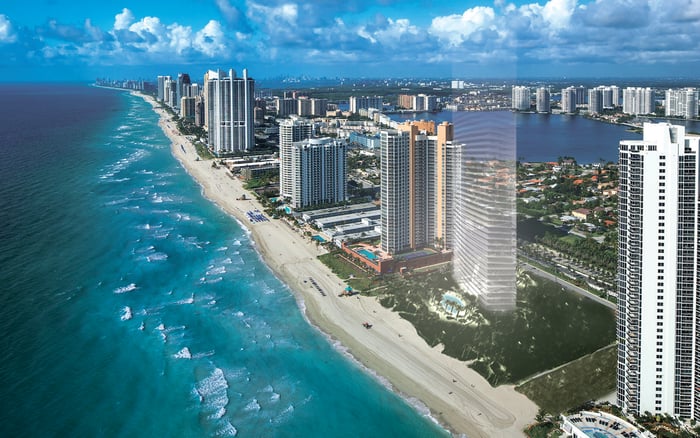
Completed in 2020, the oceanfront tower stands at 18501 Collins Avenue in Sunny Isles Beach. It rises 649 feet across 52 stories and contains 154 residences with three to six bedrooms. With only two to four homes per floor and flow-through plans oriented toward ocean and Intracoastal views, the building offers the spatial qualities many buyers associate with privacy. Yet visual and acoustic privacy are not interchangeable.
Luxury finishes describe what a residence presents; acoustic testing measures how it performs.
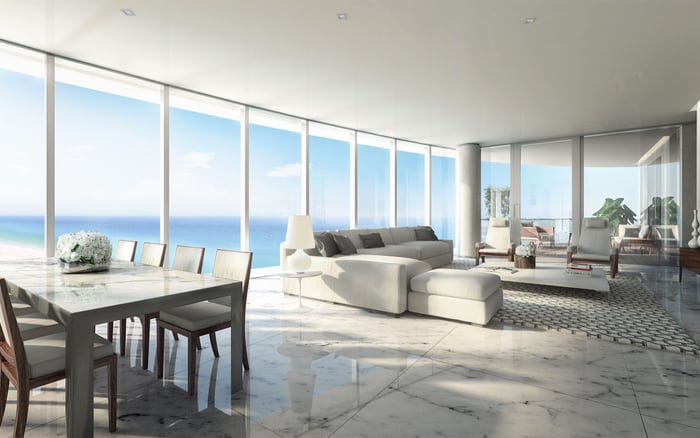
Stone, millwork, ceiling height, glazing, views, and carefully composed interiors establish atmosphere. None provides a measured answer to whether conversation travels through a demising wall, footsteps transfer from above, corridor activity enters through the front door, or programmed amenity sound reaches a residence.
Descriptions of Turnberry Ocean Club emphasize beachfront living, architecture, interiors, hospitality, flow-through layouts, views, and low per-floor density. Formal STC, IIC, or field-tested acoustic ratings for the residences are not publicly available. Sales offerings likewise tend to foreground price, dimensions, plans, and amenities rather than quantified airborne- or impact-sound isolation.
This is not a negative conclusion about performance. It defines the limit of what can responsibly be inferred. A location-based sound score, where available, concerns ambient noise around an address. It does not establish transmission between neighboring homes or from corridors and shared amenity spaces.
The tower’s principal vertical, lateral, and floor-spanning systems are cast-in-place reinforced concrete. That information is relevant, but it cannot substitute for an understanding of the completed acoustic assemblies. Sound isolation depends on the entire path, including walls, floors, ceilings, doors, façade systems, joints, and mechanical or electrical penetrations.
Structural documentation also describes repairs to cracking and fissures in embedded steel plates at key columns using epoxy injection and carbon-fiber-reinforced polymer systems. Those records concern structural remediation. They do not provide measured airborne- or impact-sound results inside residences, and the two subjects should not be conflated.
For a buyer, the practical question is not simply, “Is the building concrete?” It is, “How does this particular completed residence perform under the conditions in which I will use it?” Answering that question requires evidence specific to acoustics, not assumptions based on structural material or finish level.
An acoustical engineer can assess airborne transmission, impact transmission, background noise, façade performance, and reverberation under occupied conditions. The scope should reflect the residence’s position in the tower and its relationship to adjacent homes, elevators, corridors, building systems, pools, fitness areas, and the three-story Sky Club.
Before commissioning testing, buyers can request wall and floor assembly details, slab thicknesses, underlayment specifications, and any STC or IIC design targets that may exist. They should also request amenity hours, event policies, and available noise-complaint records. These materials cannot replace field results, but they can identify where testing warrants particular attention.
The front door and glazed façade merit separate review. Extensive glazing is central to the tower’s architecture and ocean-view proposition, yet façade performance is distinct from sound transfer through party walls or floors. Testing should distinguish exterior noise intrusion from internal transmission so that any concern can be accurately located.
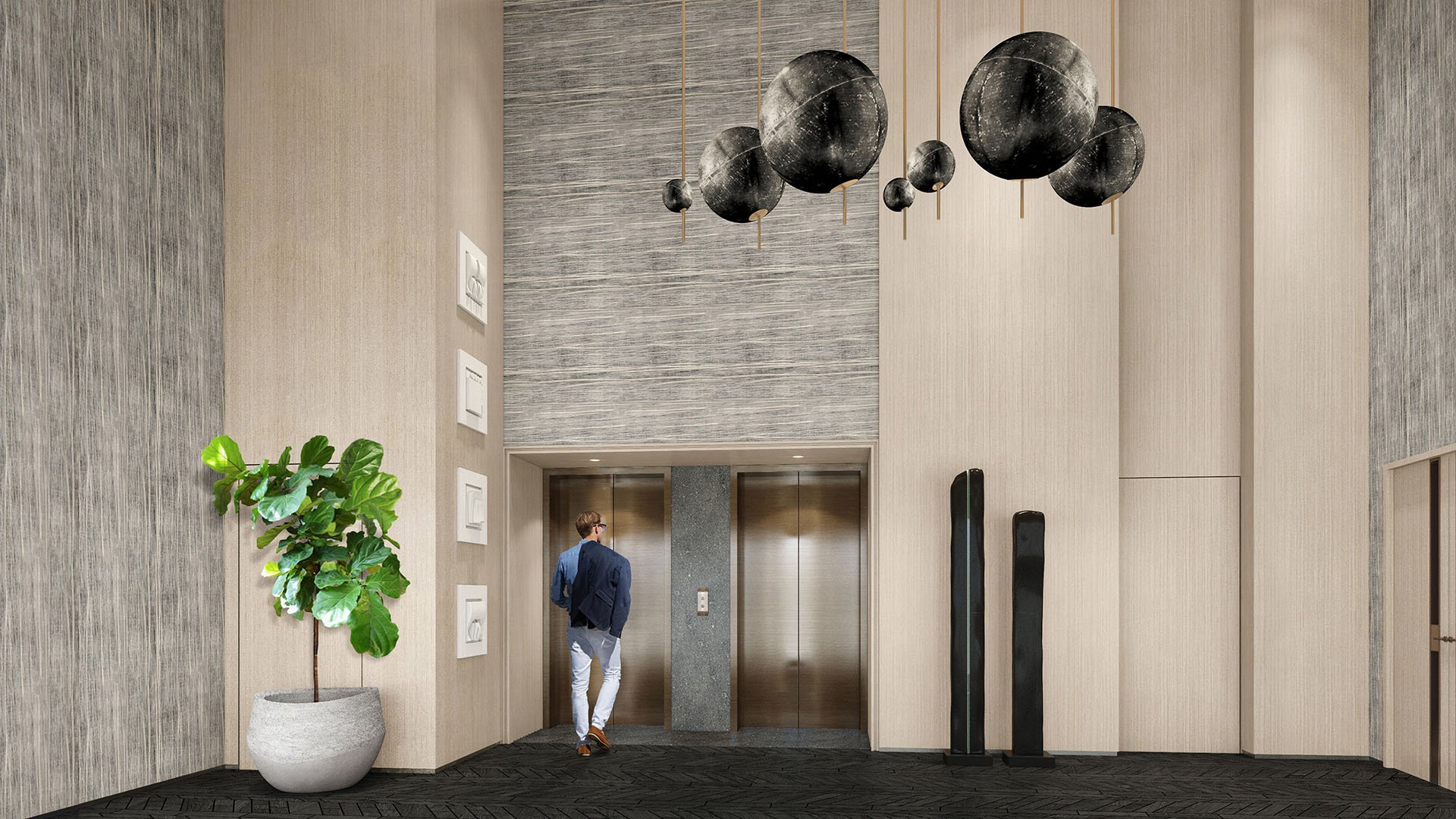
A serene midday showing captures only one operating condition. A more rigorous review includes weekday, evening, and weekend visits. Pause in the corridor, ride the elevators, observe valet activity, and spend time near the pool, fitness areas, and Sky Club while those spaces are in use.
Inside the residence, listen from primary bedrooms and quieter rooms, not only the main entertaining area. Where access and permissions allow, testing with normal activity in neighboring or vertically adjacent spaces can be more informative than a silent walkthrough. The goal is not absolute silence. It is to determine whether the home’s acoustic character aligns with the buyer’s expectations, schedule, sensitivity, and intended use.
Low density can support a sense of discretion, but two to four residences per floor does not eliminate adjacency. Flow-through plans can also place rooms along multiple exposures. The individual home’s exact stack, elevation, room arrangement, door seals, floor finishes, and relationship to common spaces remain relevant.
Acoustic diligence is most useful when applied consistently rather than selectively. Buyers comparing Armani Casa Sunny Isles Beach, Jade Signature Sunny Isles Beach, or The Ritz-Carlton Residences® Sunny Isles should ask the same core questions of every candidate: What is documented, what has been field-tested, and what remains an assumption?
This approach prevents brand, price, age, amenity breadth, or aesthetic refinement from becoming a proxy for acoustic performance. It also gives purchasers a more disciplined basis for comparison when residences differ in layout, exposure, floor finish, adjacency, and proximity to active shared spaces.
In one active-sales snapshot, asking prices ranged from approximately $3.9 million to $35 million. Inventory and pricing change, but that range illustrates why performance-related diligence deserves proportional attention. In a resale negotiation, a buyer may use verified findings to evaluate suitability and determine whether further specialist review is appropriate. From an investment perspective, the central benefit is clearer risk assessment, not a promise of future value.
A concise decision matrix can keep the analysis balanced. Review legal ownership and association materials in one category; residence condition and structural information in another; service and lifestyle operations in a third; and acoustic performance in its own category. Each addresses a different question, and strength in one does not prove strength in the others.
Turnberry Ocean Club’s appeal rests on a rare combination of oceanfront setting, expansive views, low residential density, and club-oriented amenities. The most exacting buyer can appreciate each of those qualities while still requiring independent evidence about quiet. That is not skepticism about luxury. It is the precision luxury ownership warrants.
For discreet guidance on evaluating South Florida’s exceptional residences, connect with MILLION.
If branded residences are on your mind — as a home or as an allocation — we would be glad to share what we are seeing, privately.
Begin a quiet conversationResidences are individually owned condominiums, not cooperative, fractional-ownership, or timeshare interests.
The tower contains 154 residences with three to six bedrooms.
The building was completed in 2020 after construction began in 2016.
No. Completed walls, floors, doors, glazing, joints, and penetrations all affect sound isolation.
The reviewed public property and sales descriptions do not publish formal STC, IIC, or field-tested acoustic ratings.
Testing can address airborne and impact transmission, background noise, façade performance, and reverberation under occupied conditions.
Request assembly details, slab thicknesses, underlayment specifications, any STC or IIC design targets, amenity policies, and available noise-complaint records.
Weekday, evening, and weekend visits can reveal changing conditions around corridors, elevators, amenities, valet operations, and neighboring residences.
No. Two to four residences per floor may support discretion, but adjacency and transmission paths still require residence-specific evaluation.
No. A location score addresses ambient noise around an address, not transmission between residences or from common areas.