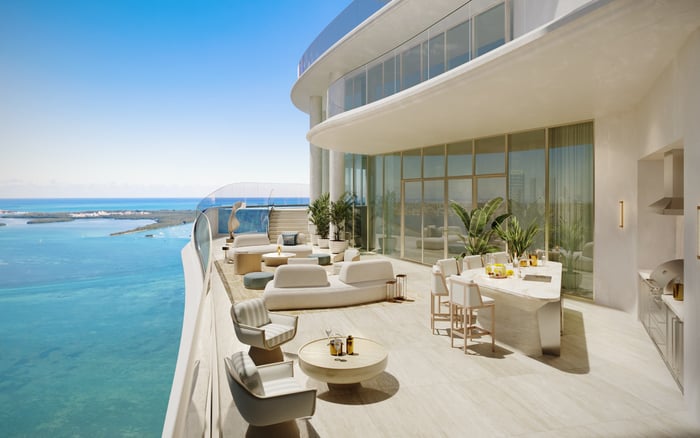
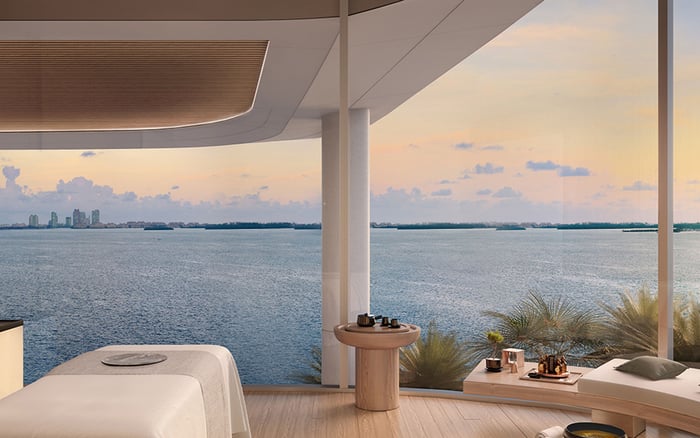
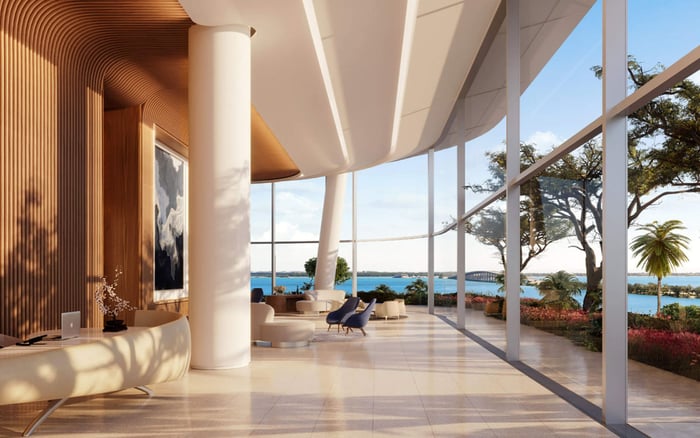
A buyer-oriented look at how Biscayne Bay exposure shapes light, glare, and long-term view confidence at St. Regis® Residences Brickell.
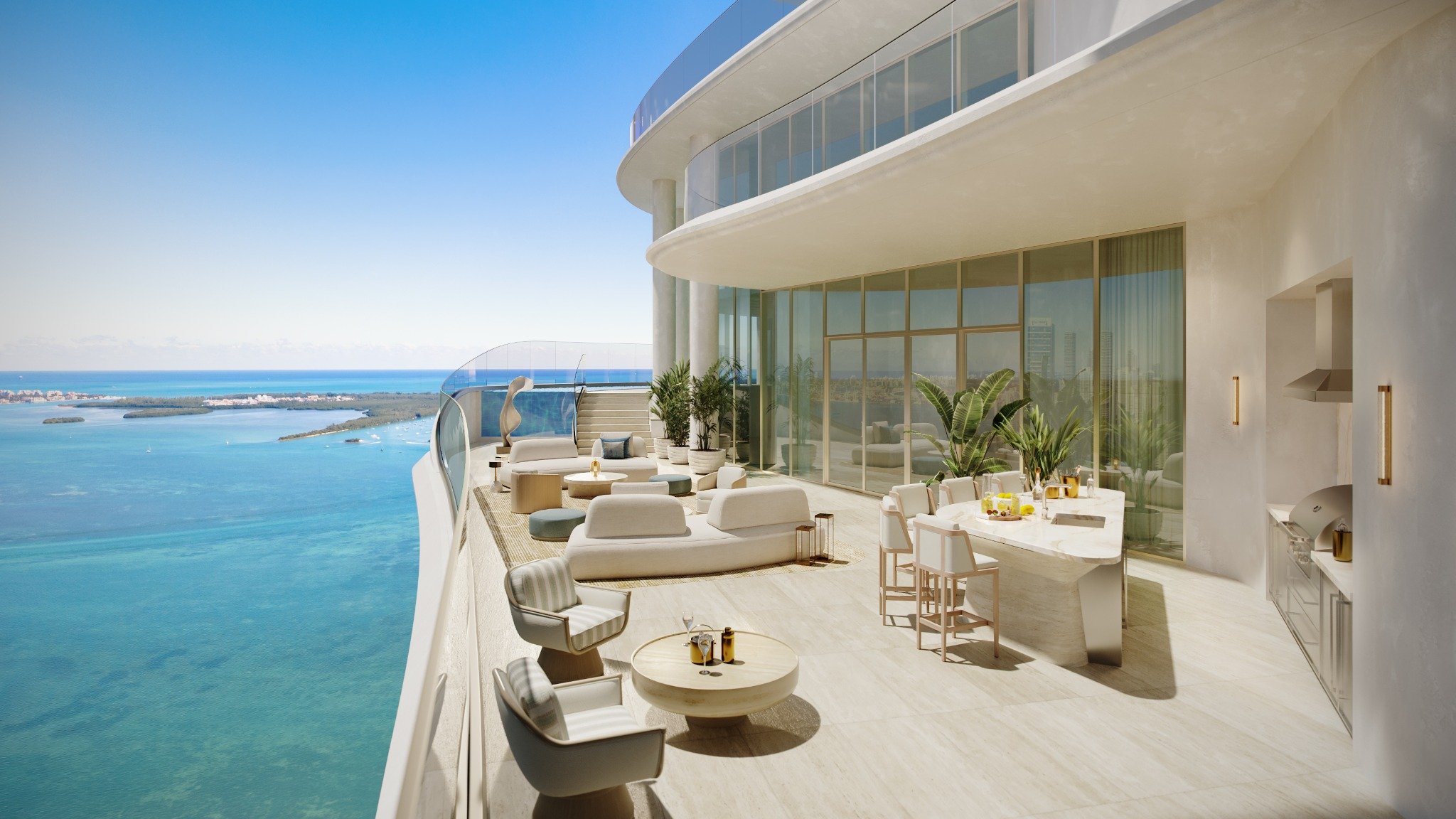
For buyers studying St. Regis® Residences Brickell, the most consequential design conversation is not limited to finishes, service, or brand. It is about light-specifically, how a bayfront position in Brickell shapes morning sun, reflected glare, and the long-term confidence of water views.
This is where waterfront prestige becomes technical. Biscayne Bay exposure can give a residence its defining quality, but it also requires a sharper reading of orientation, floor height, terrace geometry, glazing, and the surrounding high-rise context. In a dense urban waterfront market, not every water view carries the same risk profile. A direct outlook across open water is a different asset from a lateral glimpse through a corridor between towers.
The buyer who understands that distinction will ask better questions before choosing a line. The goal is not to drain the romance from bayfront living. It is to protect it.
At St. Regis® Residences Brickell, east-facing residences should be treated as the primary bay-view inventory because they look toward Biscayne Bay. That does not make every east-facing residence identical, but it gives the exposure a clearer visual thesis: morning light, open water, and the strongest probability of a direct bay relationship.
West-facing residences are a different proposition. Their orientation is more toward the Brickell skyline, where any water visibility depends on elevation, tower spacing, and view corridors. For some buyers, skyline drama may be the point. For others, a western residence described with partial water visibility deserves particular scrutiny because the view may be more conditional than primary.
North and south exposures can be compelling because they may create diagonal sightlines. They can also be more sensitive to neighboring towers and future redevelopment. This is why buyers comparing Brickell inventory, from Una Residences Brickell to Baccarat Residences Brickell, often need to move beyond generic labels such as bay view or city view. The useful question is not simply what a residence sees today. It is what portion of that view is direct, lateral, diagonal, or dependent on space that another parcel might one day affect.
Bayfront living in South Florida is calibrated around glass, terraces, and the pleasure of an expansive horizon. Yet those same elements can intensify brightness. Extensive glazing and terraces are central to the luxury-condo experience, but they make glare control and shading more than a decorative afterthought.
Morning sun is especially important for east-facing bay residences. Low-angle light can enter living areas early in the day, changing how a breakfast room, primary suite, or main salon feels before noon. For some owners, that sunrise quality is the prize. For others, particularly those who work from home, collect light-sensitive art, or prefer a softer interior mood, it calls for a more deliberate shade and glazing strategy.
Reflections from Biscayne Bay can increase perceived glare, and nearby glass façades may add another layer in bright subtropical conditions. This is not unique to one building. It is part of the optical environment of Brickell’s waterfront skyline. The practical variables include balcony depth, overhangs, glazing specification, interior shades, and the relationship between indoor seating areas and the sun path.
The ideal review is unit-specific. A rendering may communicate mood, but it cannot substitute for a clear understanding of how a particular exposure behaves on a bright morning, during seasonal shifts, or when light bounces from water and neighboring glass.
The phrase protected view is often used too casually. In practice, the strongest due-diligence question is whether a view corridor is physically protected, legally constrained, or simply unlikely to change soon. Those are not the same things.
A direct east view across open water is likely to be the most protected view category because the open bay itself does much of the work. Side-angle views require closer parcel-by-parcel analysis. If a view depends on a gap between towers, a low-rise neighboring site, or a diagonal corridor across private land, the buyer should understand what controls that space and what could change around it.
Floor height matters. Higher residences generally gain wider sightlines and reduce the impact of some nearby obstructions. But height is not a legal guarantee. A high floor can improve the geometry of a view while still leaving certain lateral or diagonal angles vulnerable to future building mass. The correct diligence blends both ideas: elevation and entitlement risk.
This is especially relevant in Brickell, where the existing high-rise context is already intense. Buyers looking at The Residences at 1428 Brickell or Cipriani Residences Brickell may be comparing very different design languages, but the core view discipline is similar. Identify the view, classify the corridor, then test how durable it appears.
The most useful buyer file should include more than a floor plan and finish schedule. Ask for unit-specific sun, glare, and view studies when available. The point is to understand the lived experience of a particular line at a particular elevation, not merely the marketing category assigned to the exposure.
Start with orientation. Confirm whether the residence looks directly east across Biscayne Bay, west toward the skyline, or north or south through a diagonal field. Then study height. A residence on a higher floor may gain broader sightlines, but the degree of improvement depends on what sits nearby and what could rise in the future.
Next, review the shade strategy. Balcony depth, overhangs, glazing specification, and interior shades all shape comfort. A deep terrace may soften solar exposure differently than a shallow outdoor edge. Similarly, a large glass wall can be magnificent, but the owner should know how brightness and heat gain will be managed in daily life.
Finally, separate emotional value from technical value. The best bayfront residence should feel effortless, but the decision behind it should be exacting. High-floor preferences, view premiums, and morning-light tolerance are personal, while corridor risk is a physical and sometimes legal question. Treat both with equal seriousness.
St. Regis® Residences Brickell sits in a market where branded residences, waterfront positioning, and skyline density converge. That combination is powerful, but it rewards precision. The most desirable residence is not necessarily the one with the broadest label. It is the one whose light, glare profile, and view durability match how the owner intends to live.
For a primary residence, morning brightness may shape daily comfort. For a second home, the emotional pull of sunrise over Biscayne Bay may outweigh other concerns. For an investment-minded buyer, the distinction between direct and diagonal views can influence long-term confidence.
The essential question is simple: what exactly is being purchased when the view is part of the value? At this level, the answer should be examined as carefully as the architecture itself.
Are east-facing residences the main bay-view inventory at St. Regis® Residences Brickell? Yes. East-facing residences should be treated as the primary bay-view inventory because they look toward Biscayne Bay.
Do west-facing residences have water views? They are more oriented toward the Brickell skyline. Any water visibility depends on elevation, tower spacing, and specific view corridors.
Why are north and south exposures more complex? North and south exposures can offer diagonal views, but they may be more sensitive to neighboring towers and future redevelopment.
What is the difference between a direct bay view and a diagonal view? A direct bay view looks outward across open water. A diagonal view may depend on gaps, spacing, or neighboring parcels.
Are direct east views the most protected? They are likely to be the most protected because they look across open water. Side-angle views require more detailed review.
Does a higher floor always solve view risk? No. Higher floors generally widen sightlines and reduce some obstructions, but they do not automatically create legal protection.
Why is glare an important question in bayfront residences? Morning sun, Biscayne Bay reflections, and nearby glass façades can increase brightness in subtropical conditions.
What design factors help manage glare and heat gain? Balcony depth, overhangs, glazing specification, and interior shades can all affect comfort and brightness.
Should buyers rely on renderings for view decisions? Renderings are useful for mood, but buyers should ask for unit-specific sun, glare, and view studies whenever possible.
What is the most important due-diligence question? Buyers should ask whether each view corridor is physically protected, legally constrained, or simply unlikely to change soon.
For a tailored shortlist and next-step guidance, connect with MILLION.
If branded residences are on your mind — as a home or as an allocation — we would be glad to share what we are seeing, privately.
Begin a quiet conversation