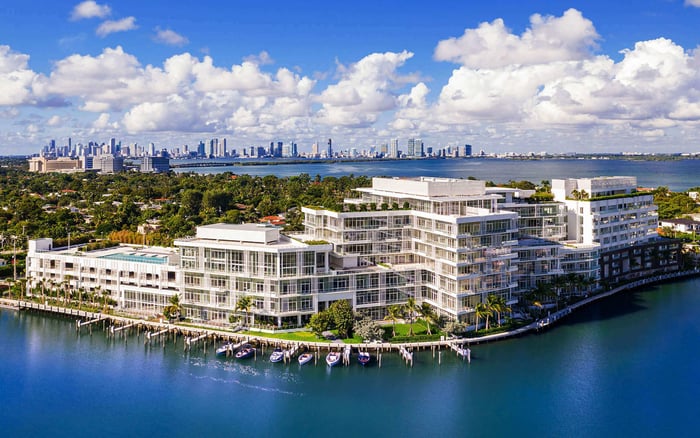
A discreet due-diligence guide for buyers evaluating service charges, budgets, club layers, insurance, reserves, and long-term owner costs at Shore Club Private Collections Miami Beach.

At the top of the Miami Beach market, the most important ownership questions often begin after the view, floor plan, and finishes have already impressed. Shore Club Private Collections Miami Beach sits firmly in that category of ultra-luxury private residences where the operating model deserves the same scrutiny as the architecture. For a buyer, the question is not simply, “What is the monthly fee?” It is, “What does that fee truly operate, and how durable is the budget behind it?”
This is a classic Buyer’s Guides issue at the highest tier of Oceanfront ownership. Service charges can cover staffing, amenity programming, building systems, insurance, utilities, reserves, management, shared areas, and, in some cases, separate club or hospitality structures. A refined building can feel effortless precisely because the underlying budget is complex. The buyer’s task is to understand that complexity before contract decisions become emotional.
The first document to request is the most current proposed operating budget. A marketing estimate of monthly common charges may help with orientation, but it is not a substitute for the budget package that explains what is being funded. Ask for the line items, the allocation assumptions, and the timing behind any projected charges.
One of the most important questions is how the quoted charges are calculated. Are they based on interior square footage, total saleable square footage, unit share, or another formula? In a large residence with deep terraces or distinctive private areas, the difference between allocation methods can materially affect comparisons. A buyer weighing Miami Beach options such as The Perigon Miami Beach or 57 Ocean Miami Beach should resist reducing the analysis to a single monthly number. The stronger comparison is what each dollar is designed to maintain.
Luxury service language can be seductive. Concierge, valet, beach service, housekeeping, spa access, food-and-beverage privileges, and private-club programming may all appear within the lifestyle narrative. The due-diligence question is whether each item is included in standard common charges, billed à la carte, tied to a separate membership, or governed by minimum usage obligations.
Ask for a plain-English schedule of all recurring owner costs. That schedule should include condominium assessments, club dues, parking, storage, utilities, taxes, insurance, and optional services. If a service is optional, understand how it is billed. If a service is standard, understand whether the staffing level is fixed, seasonal, or adjustable by management. This is especially relevant in Branded Residences, where the experience may depend on a mix of building operations, hospitality expectations, and private lifestyle programming.
The most sophisticated buildings can include more than one operating entity. Ask whether Shore Club Private Collections Miami Beach uses a master association, a separate condominium association, a club entity, a hotel operator, or a shared-facilities agreement. Each layer can create a separate charge, a distinct budget, or a contractual obligation that extends beyond the initial sales period.
Buyers should also ask how costs are divided among residences, hotel or hospitality components, commercial venues, beach operations, spa and wellness facilities, and any private-club areas. The delicate question is whether residential owners subsidize any hotel-facing or public-facing amenities, events, food-and-beverage operations, or back-of-house staffing. The goal is not to assume a problem. The goal is to know where the financial responsibility begins and ends.
This same discipline is useful across the Miami Beach luxury set, including established and new addresses such as The Ritz-Carlton Residences® Miami Beach and Setai Residences Miami Beach. A polished service culture is valuable, but only when the owner can see how it is funded.
For coastal luxury ownership, insurance deserves its own conversation. Ask whether the budget includes full insurance projections for windstorm, flood, general liability, property, directors-and-officers coverage, and umbrella policies. The issue is not only the current premium assumption. It is how future changes could affect monthly charges.
Reserves require the same level of attention. Ask how reserves are calculated for façade maintenance, waterproofing, mechanical systems, pool decks, elevators, roofing, seawalls, and beach-facing infrastructure. These are not abstract categories in Miami Beach. They are the components that protect both the living experience and long-term asset quality.
A thoughtful reserve program may make early ownership feel less inexpensive on paper, but more disciplined in practice. Conversely, a budget that appears unusually lean should prompt questions about what has been deferred, subsidized, excluded, or assigned to a later assessment.
In a Pre-Construction purchase, ask whether the developer is initially subsidizing operations. A subsidy can make early service charges appear lower than the stabilized long-term cost. That does not make the structure inappropriate, but it does require transparency. Buyers should know when the subsidy ends, how the budget may normalize, and whether any future increase is already anticipated.
Also ask when control transfers from the developer to the condominium association. Turnover is not merely a governance milestone. It determines what budget rights owners will have, how association decisions are made, and how contracts may be reviewed. Management fees, club fees, brand fees, and shared-service agreements should be examined for caps, escalation formulas, and owner-approval thresholds.
A buyer should be especially attentive to long-duration agreements. If an operator, manager, or club entity has rights that extend well into the ownership period, the contract terms matter as much as the amenity brochure.
The most useful budget conversation includes sensitivity scenarios. Ask how monthly charges could change if insurance premiums, labor costs, utilities, or reserve requirements rise. A credible answer does not need to predict the future perfectly. It should show the buyer how the budget behaves under pressure.
For a residence at this level, the right question is not whether costs can rise. They can. The better question is whether the owner has a clear map of the exposure. When the budget identifies what is fixed, what is variable, what is shared, and what is optional, the buyer can make a more elegant decision.
The strongest buyers in Miami Beach do not treat service charges as a nuisance line item. They treat them as an operating thesis. At Shore Club Private Collections Miami Beach, that means reviewing the proposed budget, allocation formula, included services, club obligations, insurance assumptions, reserve logic, subsidies, turnover rights, and all recurring owner costs before comparing the residence to other luxury opportunities.
This level of inquiry is discreet, not adversarial. It protects the buyer, clarifies the ownership experience, and helps ensure the building’s promise is matched by a sustainable operating structure. In the ultra-premium segment, confidence comes from beauty and numbers working together.
What is the first service-charge document a buyer should request? Ask for the most current proposed operating budget, not only a monthly fee estimate.
Why does the allocation formula matter? It determines whether charges are based on interior area, saleable area, unit share, or another method.
Should club costs be reviewed separately? Yes. Ask about initiation fees, annual dues, minimum spend, and any separate club entity.
Are concierge and valet always included in common charges? Not necessarily. Confirm which services are included and which are billed à la carte.
What insurance categories should be visible in the budget? Review windstorm, flood, liability, property, directors-and-officers, and umbrella coverage.
Why are reserves important in an Oceanfront building? Reserves help fund major coastal-building needs such as waterproofing, elevators, roofing, and seawalls.
Can a developer subsidy affect early service charges? Yes. A subsidy can make initial charges look lower than the stabilized long-term operating cost.
What should buyers ask about turnover? Ask when owners gain association control and what budget rights exist after that point.
How should shared amenities be reviewed? Confirm how costs are divided among residences, hospitality areas, club spaces, and commercial uses.
What is the best way to shortlist comparable options for touring? Start with location fit, delivery status, and daily lifestyle priorities, then compare stacks and elevations to validate views and privacy.
If you'd like a private walkthrough and a curated shortlist, connect with MILLION.
If branded residences are on your mind — as a home or as an allocation — we would be glad to share what we are seeing, privately.
Begin a quiet conversation