A discreet buyer’s guide to evaluating Miami Beach and South of Fifth residences through the lens of private elevators, controlled arrival, lobby discretion, service flow, and long-term livability.
For the most discerning condominium buyer, the phrase “private elevator” is only the beginning. The more important question is how the entire arrival sequence performs from the moment a car pulls in, a guest is announced, a delivery is handled, or a resident returns from dinner. In Miami Beach and South of Fifth, the difference between prestige and true discretion often lives in those small transitions.
A private elevator can feel ceremonial, efficient, or incomplete depending on what surrounds it. Does the resident pass through a public lobby first, or enter through a more controlled residential threshold? Is valet visible to every visitor, or does the building allow a softer handoff? Can staff, guests, pets, and service providers move without collapsing into the same path? These questions matter because arrival is not only about privacy. It is about the daily rhythm of ownership.
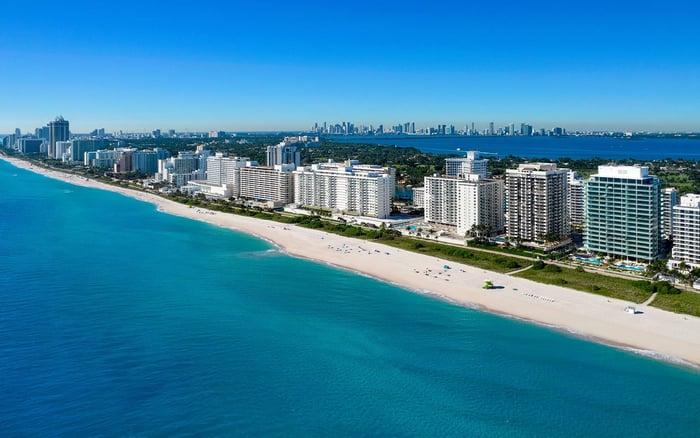
Buyers comparing Miami Beach with South of Fifth should resist reducing the decision to geography alone. The better lens is choreography. South of Fifth and Sofi are often used as shorthand by buyers seeking a more contained, residence-forward experience, while broader Miami Beach can offer a wider range of settings, architectural moods, and lifestyle tempo. The right answer depends on how much control you want between the street and your front door.
A private elevator is most valuable when it protects three things: identity, timing, and composure. Identity means fewer casual intersections with people who do not need to know when you are home. Timing means your arrival does not depend on sharing a lift with guests headed to amenities or staff carrying supplies. Composure means the transition into the residence feels calm, not exposed.
The feature is not automatically equal from one building to another. Some residences open directly into a private foyer. Others provide semi-private elevator access shared by a small number of homes. Some plans make the elevator a moment of drama, while others make it operationally invisible. Neither is universally better. A buyer who entertains formally may prefer an impressive entry. A buyer who travels frequently, values anonymity, or keeps household staff may care more about back-of-house logic.
This is why residences such as Apogee South Beach are often part of the conversation when buyers focus on the relationship between arrival, scale, and privacy. The point is not simply the elevator itself. It is how the building experience makes the owner feel before the residence is even entered.
Controlled arrival is the broader discipline. It includes valet protocol, doorman presence, lobby depth, elevator access, package handling, guest registration, service routes, garage movement, and the feeling of being received without being displayed. At the top of the market, this can matter more than another amenity room.
A controlled arrival should feel intuitive, not theatrical. The best buildings do not make residents announce their importance. They create a sequence where privacy is protected naturally. Guests know where to go. Staff can be directed without confusion. Deliveries do not become lobby events. Pets can move without turning every entrance into a social moment. Owners can return from the airport, the marina, the beach, or dinner without needing to manage the building.
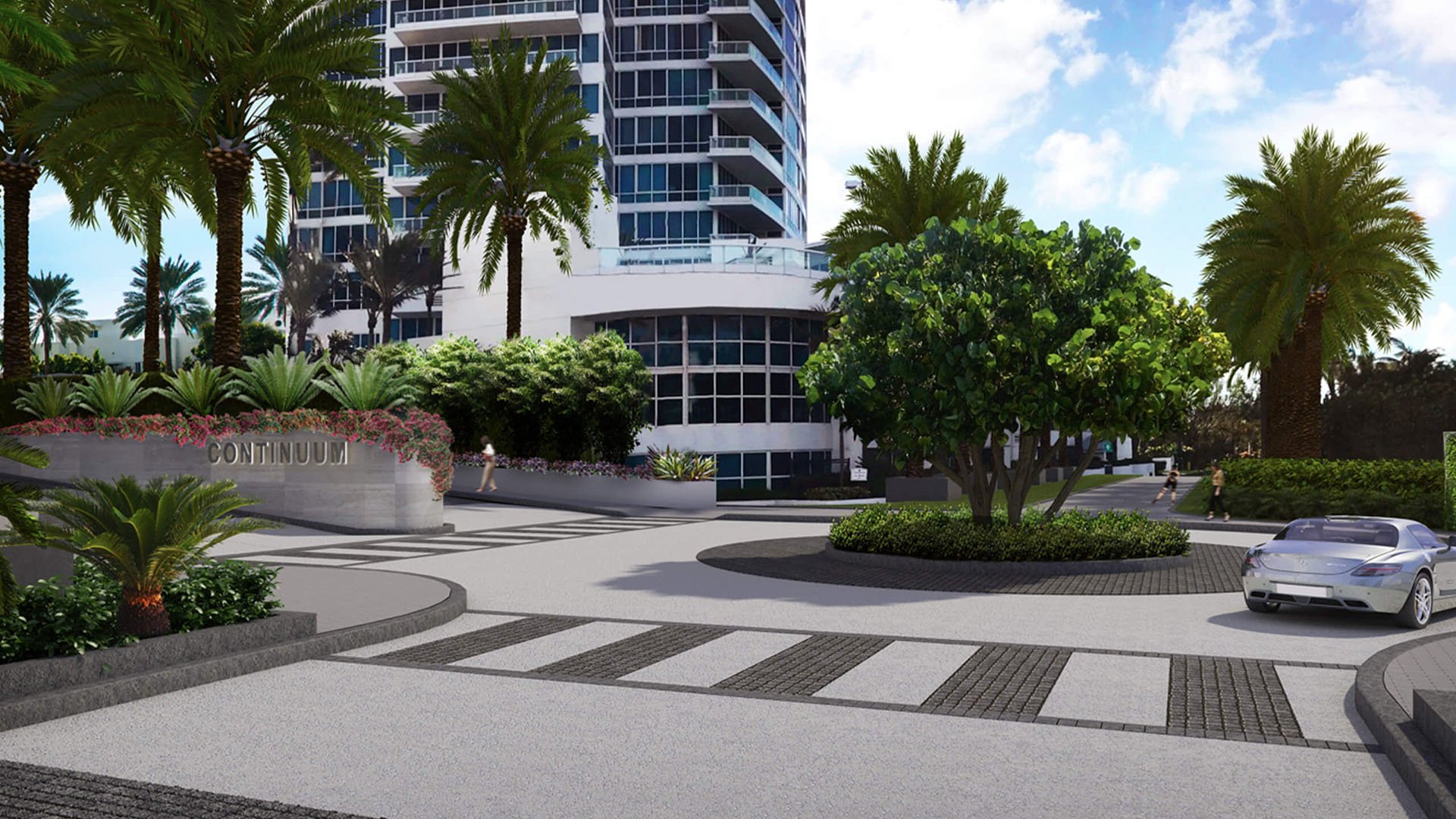
For buyers considering Continuum on South Beach or The Ritz-Carlton Residences® South Beach, the essential exercise is to walk the property as if it were already part of your life. Arrive at different hours. Ask how guests are announced. Understand how service providers reach the residence. Then imagine that sequence repeating hundreds of times a year.
Miami Beach rewards buyers who want choice. The area can support many definitions of luxury, from oceanfront living to quieter residential pockets and architecturally distinctive buildings. For some buyers, that breadth is the advantage. It allows the residence to be matched not only to privacy preferences, but also to beach routine, dining patterns, family needs, design taste, and seasonal use.
In broader Miami Beach, the key is to avoid assuming that a prestigious address automatically delivers the right arrival experience. A building may have strong amenities, compelling views, or a notable design identity, yet still require careful review of how residents, guests, and service providers move. The most elegant residence can feel less private if every transition funnels through the same visible point.
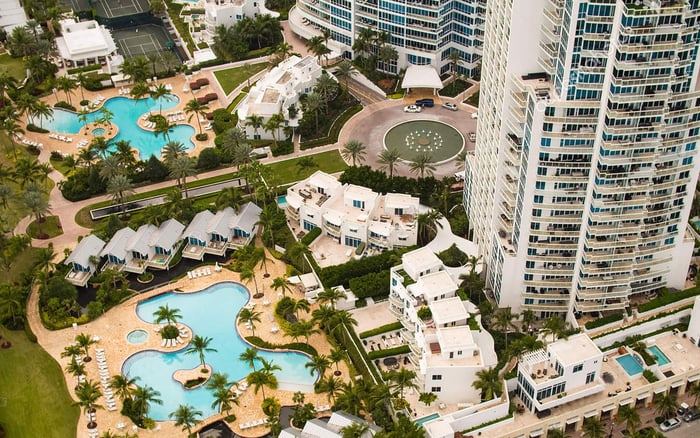
Buyers looking north of South Beach may compare projects such as The Perigon Miami Beach and 57 Ocean Miami Beach through this practical lens. How does the entrance feel on a busy evening? How exposed is the drop-off? Does the elevator landing create a true sense of threshold? Is there enough separation between resort energy and residential quiet? These are the details that shape ownership satisfaction.
South of Fifth is often chosen by buyers who want a more defined residential rhythm within the wider energy of Miami Beach. The neighborhood decision is frequently emotional, but the best purchases remain operational. A buyer should ask whether the building supports privacy not just in peak moments, but on ordinary days.
In a strong South of Fifth residence, the arrival should feel measured. Valet should not feel chaotic. Guest flow should be legible. Elevators should support the way the household actually lives. If the buyer has children, staff, pets, visiting family, or frequent entertaining, those patterns should be tested against the plan. The word private can conceal friction if the route from curb to residence is not equally considered.
Waterfront positioning may add another layer of expectation. Owners drawn to light, views, and outdoor life often want the building to preserve a sense of retreat when they come back inside. That is where controlled arrival becomes a form of architectural etiquette. It keeps the public world at a polite distance.
The most effective private tour is not only a tour of finishes. Begin outside. Where does the car stop? Who sees the arrival? Is there a sense of compression at the porte cochere or entrance? From there, follow the exact route a resident would take on a normal day. Notice whether the lobby feels like a social room, a passage, or a checkpoint.
Next, test the guest experience. A residence with private elevator access still needs gracious hospitality. Guests should be welcomed clearly, announced properly, and delivered to the home without feeling over-managed. There is a balance between discretion and warmth. Ultra-luxury buyers often want both.
Finally, test service movement. Ask how housekeeping, catering, maintenance, pet care, and deliveries are handled. A beautiful private foyer loses some of its power if every practical function interrupts it. In the best plans, service is neither hidden in a way that feels awkward nor exposed in a way that feels careless. It simply works.
Privacy features tend to resonate beyond a single ownership style because they answer a universal luxury need: control. Even buyers with different tastes can understand the value of a calm arrival, secure elevator access, and a residence that separates public, private, and service moments. That does not mean every private elevator commands the same premium. Execution matters.
For resale, the strongest combination is usually coherence. The building, lobby, elevator, floor plan, staff protocol, and residence should all tell the same story. If the elevator feels private but the lobby feels crowded, the story weakens. If the entrance is quiet but service routing is clumsy, the story weakens. If the sequence feels controlled from curb to foyer, the feature becomes part of the residence’s identity.
Choose Miami Beach if you want a broader canvas and are willing to compare buildings carefully for the exact lifestyle you want. Choose South of Fifth if your priority is a more contained daily rhythm and you want the neighborhood itself to reinforce discretion. In both cases, do not buy the phrase “private elevator” without buying the experience around it.
The right residence should make arrival feel effortless, protected, and appropriate to your life. It should allow you to be social when you choose and unseen when you prefer. In South Florida’s ultra-premium market, that is the difference between a luxury feature and a luxury standard.
Is a private elevator always better than a semi-private elevator? Not always. The better choice depends on how the elevator connects to the lobby, foyer, service routes, and overall privacy sequence.
What should I look for during a private tour? Start at the curb and follow the full resident route to the residence. Pay attention to visibility, staff handoffs, guest control, and elevator access.
Is South of Fifth more private than broader Miami Beach? It can feel more contained for many buyers, but privacy depends on the specific building, plan, staff protocol, and arrival design.
Does oceanfront living reduce privacy? Not necessarily. Oceanfront residences can feel highly private when the building separates beach activity, lobby movement, and owner access well.
How important is valet design? Very important. Valet is often the first privacy checkpoint and can shape the entire perception of controlled arrival.
Should service elevators matter to an owner? Yes. Service routing affects daily comfort, entertaining, maintenance, deliveries, and the quiet performance of the residence.
Can a dramatic lobby conflict with discretion? It can if the lobby becomes a place of constant exposure. The best buildings balance presence with controlled circulation.
Is controlled arrival only relevant for full-time residents? No. Seasonal owners may value it even more because arrivals, departures, guests, and luggage movements are more concentrated.
What is the biggest mistake buyers make with private elevators? They focus on the elevator door and overlook the full sequence from car arrival to private foyer.
How should I compare two similar residences? Choose the one with the calmer and more coherent arrival experience, assuming the residence itself also fits your lifestyle.
For a confidential assessment and a building-by-building shortlist, connect with MILLION.
If branded residences are on your mind — as a home or as an allocation — we would be glad to share what we are seeing, privately.
Begin a quiet conversation