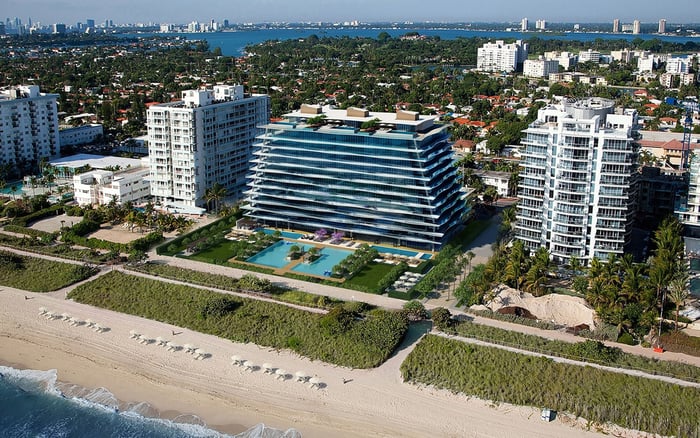
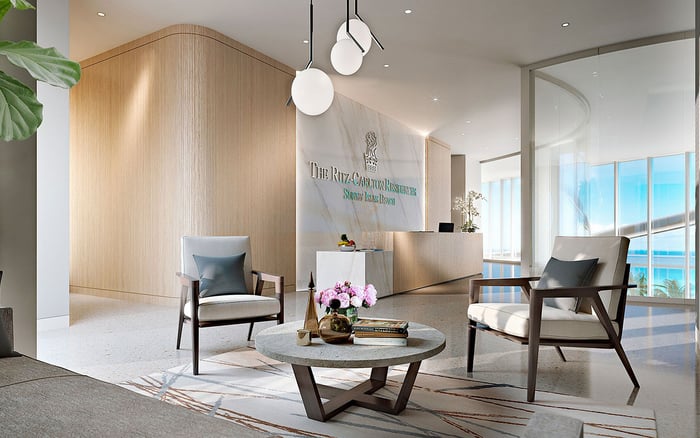
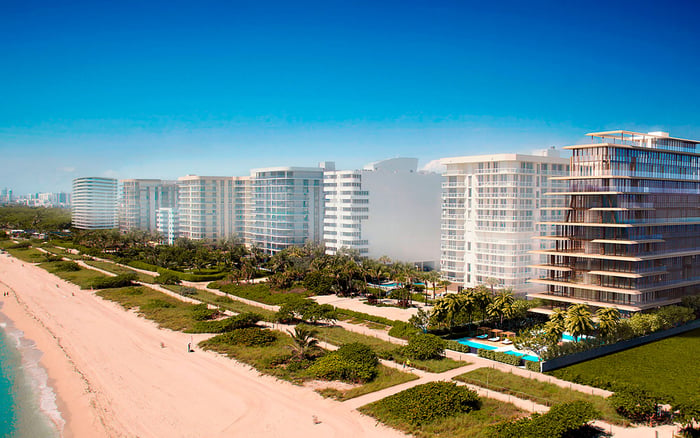
A buyer-oriented look at Rivage Bal Harbour, from its Collins Avenue oceanfront setting and boutique residential concept to privacy, scale, and full-time living considerations.
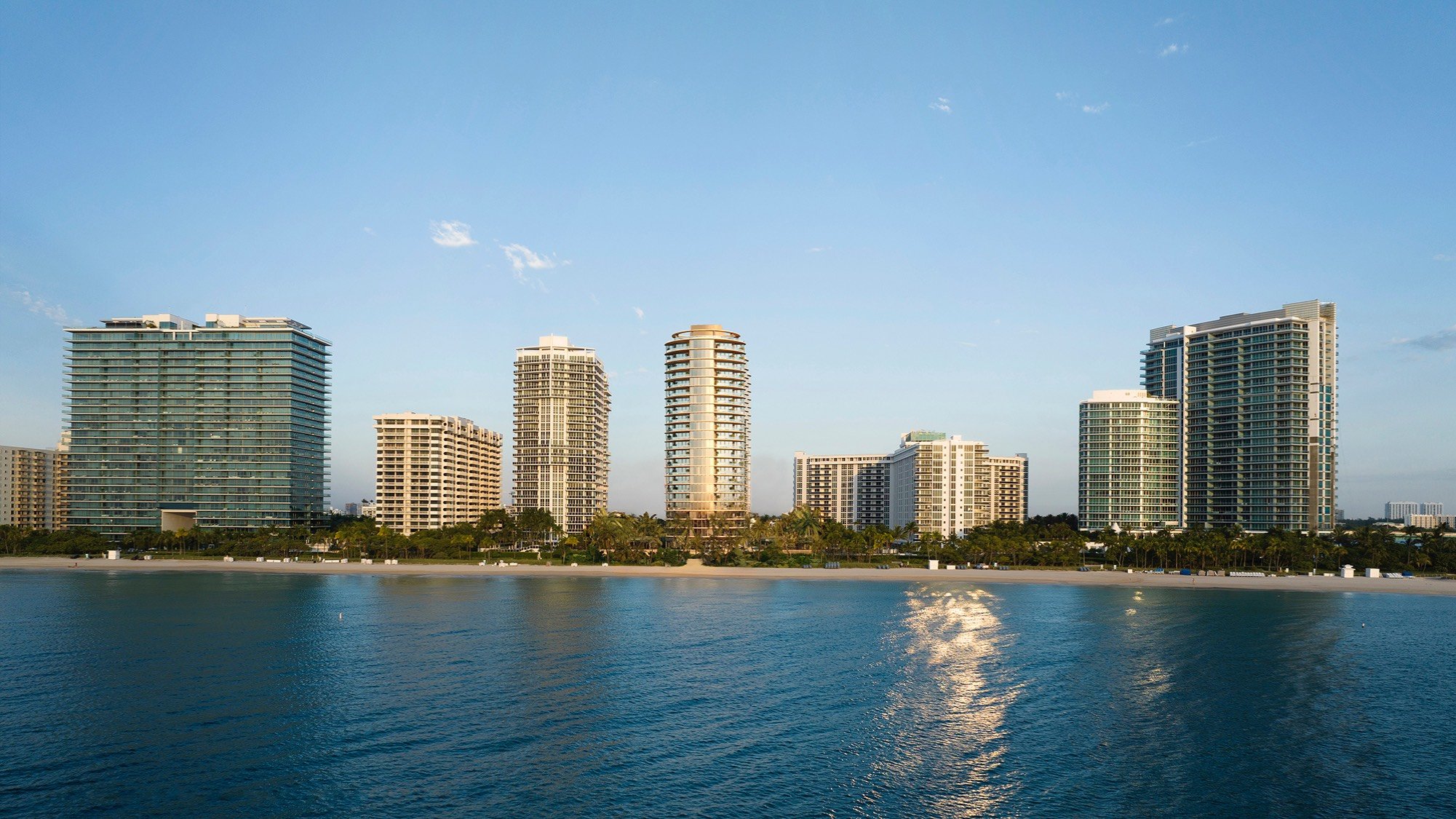
Rivage Bal Harbour enters one of South Florida’s most selective residential conversations: the ultra-luxury oceanfront condominium conceived not merely as a second-home address, but as a credible place for long-term living. Planned for a Collins Avenue oceanfront site in Bal Harbour, the project is positioned around direct beachfront living, contemporary high-rise architecture, and the quieter privileges of a low-neighbor-count environment.
That distinction matters. Many luxury towers sell views, amenities, and brand polish. Rivage Bal Harbour is framed more specifically around residential scale and privacy, with large residences and a boutique condominium format rather than a high-density tower experience. For the buyer who wants the ease of vertical living without surrendering the feeling of a private home, that is the central proposition.
Bal Harbour itself reinforces the thesis. This small coastal municipality is known for luxury residential buildings and high-end retail access, creating a compact daily geography where the beach, refined shopping, and established oceanfront addresses sit in close proximity. In that context, Rivage is less about spectacle than control: fewer neighbors, larger floor plates, and a design direction that aims to make the condominium feel closer to a private villa in the sky.
The strongest design idea behind Rivage is not merely height, but translation. The project’s positioning suggests an effort to bring estate-style privacy into a contemporary high-rise form. In practical terms, buyers should focus less on conventional condo metrics and more on how the residence will live day after day: arrival sequence, separation between public and private rooms, outdoor connection, storage, staff flow, entertaining capacity, and the emotional quiet of the floor plate.
Large residences are central to that appeal. In the ultra-luxury market, size is not only about square footage; it is about the ability to live without constant compromise. A full-time owner may want a dedicated study, space for visiting family, generous wardrobes, a kitchen that functions beyond catered weekends, and terraces that feel connected to daily rituals rather than staged for occasional sunsets. Rivage’s large-floor-plate positioning speaks directly to those priorities.
This is also where boutique scale becomes a luxury language of its own. A smaller residential environment can support a more private rhythm, especially for owners accustomed to single-family estates, private clubs, or residences where anonymity is valued. The best comparison is not a hotel tower. It is a carefully managed vertical enclave.
The Collins Avenue setting gives Rivage its strongest geographic anchor. Oceanfront living in Bal Harbour is not interchangeable with ocean views from farther inland. Direct beachfront positioning changes the daily experience, from morning walks to the practical ease of reaching the sand without crossing multiple layers of urban activity.
For many buyers, oceanfront is both emotional and strategic. It offers scarcity, lifestyle immediacy, and a sense of arrival that is difficult to replicate. Yet the Bal Harbour version is notably restrained. The area does not read like a large entertainment district; it reads like a polished coastal village with luxury residential gravity and nearby high-end retail.
Buyers considering Rivage may naturally compare it with other established or emerging addresses along the northern beach corridor. Oceana Bal Harbour remains part of the local reference set because it is within the same rare municipality. Just south, Surfside brings its own quieter beachfront identity, where projects such as Fendi Château Residences Surfside and The Delmore Surfside help frame the broader appetite for low-density, design-forward coastal living.
A key difference in the Rivage conversation is its suitability for primary or extended seasonal occupancy. The project is not positioned only for owners who want a glamorous base between trips. Its concept points toward a more durable form of residence, where privacy, service programming, and scale need to perform over months, not weekends.
That shifts the due diligence. A vacation buyer may prioritize the view, the pool deck, and the guest-bedroom count. A full-time buyer asks a longer list of questions. How quiet is the building’s residential experience likely to feel? Does the service model support routine life rather than occasional indulgence? Are the residences large enough to absorb work, family, guests, wellness, and storage without friction? Does the plan feel elegant at 8 p.m. after dinner as well as at noon during a showing?
Service programming is especially important in this tier. Without relying on unverified amenity specifics, buyers can still evaluate the concept: an ultra-luxury boutique tower should feel highly managed without feeling crowded. The right balance is discreet assistance, predictable privacy, and a residential culture that does not make owners feel like guests in their own building.
Rivage is positioned for a narrow buyer pool. That is not a weakness; it is the point. The likely audience prioritizes architecture, privacy, beach access, residential scale, and the prestige of Bal Harbour over a more animated urban environment. This buyer may already understand Miami Beach, Surfside, Sunny Isles, Fisher Island, or Palm Beach, but wants a particular combination: direct sand, refined surroundings, and fewer compromises around residence size.
Compared with the social energy of South Beach or the skyline drama of downtown Miami, Bal Harbour offers a different luxury proposition. It is quieter, more residential, and more defined by its oceanfront line. Buyers who also study 57 Ocean Miami Beach may be drawn to beachfront living in a broader Miami Beach context, while Rivage speaks to those who want the Bal Harbour address and the privacy-led residential scale associated with it.
In new-construction evaluation, the most important question is not whether a project looks compelling in renderings. It is whether the concept aligns with how the owner actually lives. Rivage’s thesis is clearest for those seeking a long-term coastal residence with the feeling of a private home, not simply a seasonal suite above the beach.
The first consideration is privacy. Buyers should examine how the boutique concept, residence scale, and low-neighbor-count lifestyle translate into daily use. In ultra-prime buildings, privacy is not only about fewer residences; it is about circulation, elevator experience, staffing, guest management, and the sense of calm when the building is fully occupied.
The second is residence functionality. Large floor plates create possibility, but the plan still needs to support real living. Full-time owners should think carefully about morning routines, entertaining, remote work, art walls, children or grandchildren, pets, live-in help, and seasonal wardrobe storage.
The third is location fit. Bal Harbour is a precise choice. It suits buyers who want beachfront access and high-end retail nearby without the pace of a larger urban core. For some, that compact elegance is ideal. For others, the preference may lean toward a more restaurant-heavy or nightlife-oriented neighborhood.
The fourth is time horizon. Rivage’s strongest case is for buyers who want to own into a lifestyle, not merely occupy an address. If the goal is permanence, extended seasonal use, or a primary residence that feels protected from the usual density of condominium living, its positioning is unusually direct.
What is Rivage Bal Harbour? Rivage Bal Harbour is positioned as an ultra-luxury oceanfront residential development in Bal Harbour, Florida.
Where is Rivage Bal Harbour planned? The project is planned for a Collins Avenue oceanfront site within Bal Harbour.
Is Rivage a large high-density condominium? No. It is described as a boutique condominium tower rather than a large, high-density residential project.
What type of buyer is Rivage designed to attract? Rivage is aimed at buyers who prioritize architecture, privacy, beachfront access, and large-scale residences.
Can Rivage work for full-time living? Yes. Its positioning emphasizes primary or extended seasonal occupancy, not only short resort-style stays.
What does villa in the sky mean here? It refers to the concept of combining high-rise oceanfront living with the privacy and scale associated with an estate.
Why is Bal Harbour significant? Bal Harbour is a small coastal municipality known for luxury residential buildings and high-end retail access.
What should buyers study most carefully? Buyers should focus on privacy, service programming, residence size, and long-term livability.
Are exact prices or floor plans discussed here? No. This article focuses only on the verified positioning, location, and lifestyle considerations for Rivage.
How should Rivage be compared with other coastal projects? It should be compared through the lens of privacy, beachfront access, residential scale, and suitability for extended occupancy.
For a tailored shortlist and next-step guidance, connect with MILLION.
If branded residences are on your mind — as a home or as an allocation — we would be glad to share what we are seeing, privately.
Begin a quiet conversation