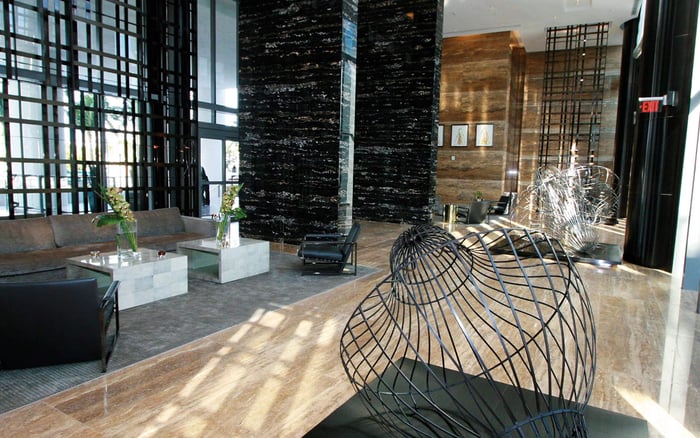
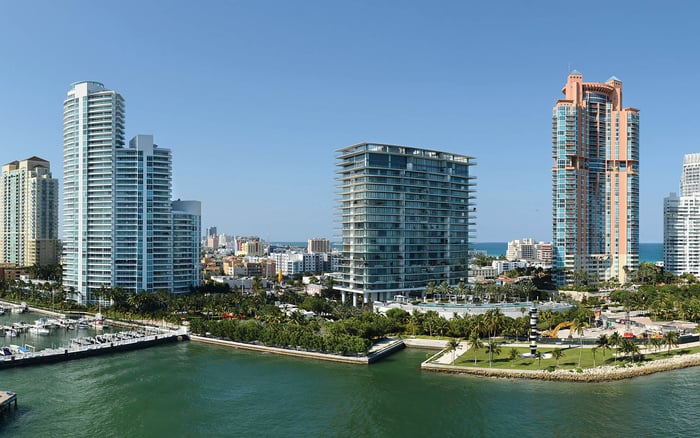
In South Beach, the quality of a condominium arrival is measured less by a feature label than by how the entire sequence performs. Cash buyers should test private elevator protocols, valet circulation, guest handling, service routes, and backup procedures before treating convenience as a given.

A cash purchase can simplify closing, but it does not answer the questions that shape day-to-day ownership in South Beach. A private elevator may create an elegant threshold, and valet service may eliminate the friction of parking, yet both are operating systems-not decorative amenities. Their value depends on access control, staffing, circulation, maintenance, and the building’s response when normal routines are interrupted.
For an ultra-premium buyer, the relevant inquiry begins before the elevator doors open. How does a resident enter the property? Where does the vehicle pause? Who sees the arrival? How are guests verified? Where do deliveries wait? The strongest experience remains coherent from curb to residence, with few unnecessary handoffs and no ambiguous transitions.
This distinction is especially important when comparing properties across Miami Beach. Buildings may use similar language while delivering materially different experiences. Cash buyers should therefore treat the physical tour, document review, and operational interview as complementary parts of one diligence process.
“Private elevator” can describe several arrangements. The critical distinction is not the phrase itself, but the route and degree of exclusivity it provides. Buyers should determine whether the elevator serves one residence per stop, opens into a private vestibule, or relies on a controlled shared landing. They should also ask how credentials are issued, changed, monitored, and disabled.
Tour the sequence as a resident, guest, household employee, and delivery recipient. Note whether visitors must be escorted, whether the vestibule can be secured from within the residence, and whether service personnel follow a separate path. Ask what happens during a move, an elevator service interruption, or an emergency. A graceful primary route matters, but a discreet, practical backup route matters just as much.
At Apogee South Beach, buyers can use the arrival discussion as a prompt to inspect every transition rather than rely on a brochure term. The same discipline applies when considering Continuum on South Beach: evaluate the actual route, permissions, waiting points, and alternatives for the specific residence under consideration.
Valet quality is best evaluated in motion. A porte cochere can appear serene during a private showing yet feel entirely different when residents, guests, service vehicles, and ride-share drivers arrive at once. Visit at more than one time, including a period likely to pressure the entrance. Observe queue formation, pedestrian crossings, turning space, vehicle staging, and key storage.
Ask how residents request cars, where retrieved vehicles are held, and what happens when a resident is delayed. Determine how oversized vehicles, low-clearance cars, bicycles, luggage, and child seats are handled. If the purchase includes assigned or deeded parking rights, clarify whether the owner can self-park, whether valet use is expected, and how access functions outside normal staffing patterns.
For buyers comparing The Ritz-Carlton Residences® South Beach with other South Beach options, the useful question is not which arrival appears most polished in isolation. It is which system best suits the owner’s routines, vehicle collection, privacy preferences, and tolerance for waiting.
The purchase review should connect legal rights with practical procedures. Examine the materials governing parking, elevator use, guests, deliveries, moves, contractors, household staff, pets, and access credentials. Then compare those written rules with the procedures described and the conditions observed on site.
Request clarity on current charges for valet, parking, replacement credentials, moves, or special access. Ask whether the association or management can change procedures and how residents receive operational notices. The goal is not to predict every future decision, but to distinguish which parts of the experience attach to the property from those that depend on policies, staffing, or discretionary service.
A cash buyer should also preserve ordinary closing discipline. Confirm the exact parking and storage interests conveyed, inspect assigned spaces where applicable, and have qualified advisers review the governing documents and contract. Speed is useful only when it does not compress judgment.
Within Miami Beach, context shapes arrival. In South of Fifth, buyers may prioritize controlled entry, separation between residential and service movement, and a calm handoff from street to lobby. Elsewhere, the surrounding street pattern, hospitality activity, and pedestrian volume may place different pressure on the curb.
A visit to Setai Residences Miami Beach should therefore be approached as a location-specific exercise: observe the building’s immediate frontage, neighboring uses, and complete vehicle path. Never assume a familiar service model performs identically on another block or at another hour.
The most revealing tour may be the least theatrical. Arrive without staging, request a vehicle, receive a guest, walk the service route, and pause in the vestibule. Luxury is often found in the absence of confusion.
Before committing, buyers should identify the precise elevator serving the residence, test every authorized route, and understand credential controls. They should map resident, guest, delivery, contractor, and emergency circulation separately. For valet, they should observe peak flow, confirm parking rights, discuss vehicle restrictions, and understand request and retrieval procedures.
Finally, compare the promised experience with the written framework. A beautiful residence can still be mismatched with an owner who values immediate self-parking, highly restricted guest access, or complete separation from service traffic. The best acquisition is not simply the most private on paper. It is the one whose operations support the buyer’s actual habits with consistency and discretion.
Does paying cash make elevator and valet diligence less important? No. Cash may simplify financing, but it does not resolve questions about access, parking rights, operating rules, or service quality.
Does private elevator access always mean a dedicated elevator? Not necessarily. Confirm the elevator route, number of residences served, landing configuration, and credential protocol for the specific unit.
Should a buyer test the elevator personally? Yes. Travel from the vehicle entrance to the residence, then inspect the guest, service, and backup routes.
When should valet flow be observed? Visit during both a quiet period and a busier arrival window to compare queues, staffing, staging, and pedestrian movement.
Can residents self-park? That depends on the property and the parking rights conveyed. Obtain a clear answer for the specific residence and vehicle.
What should buyers ask about guests? Ask how guests are verified, where they wait, whether they require an escort, and which elevator route they use.
How should deliveries be evaluated? Review receiving hours, package handling, food-delivery procedures, freight access, and the route to the residence.
What happens if the private elevator is unavailable? Confirm the alternate route, its security controls and accessibility, and how residents are notified during interruptions.
Do valet practices belong in contract diligence? Parking rights and governing documents warrant review, while operating practices should be confirmed before closing.
What is the clearest sign of a well-run arrival? Residents, guests, vehicles, and service personnel move along distinct, understandable routes without avoidable delay or exposure.
If you'd like a private walkthrough and a curated shortlist, connect with MILLION.
If branded residences are on your mind — as a home or as an allocation — we would be glad to share what we are seeing, privately.
Begin a quiet conversation