A practical due-diligence framework for assessing event-period access, shared hotel circulation, valet operations, waterfront constraints, and daily mobility before purchasing a Fort Lauderdale residence.
A South Florida residence may appear perfectly positioned on a map yet feel markedly different when hotel arrivals, valet queues, ride-hailing pickups, deliveries, and event visitors converge. Before buying in Fort Lauderdale, the more discerning question is not simply how close a property is to the Fort Lauderdale International Boat Show. It is whether the residence remains composed, private, and practical when nearby hospitality traffic intensifies.
This is especially relevant for buyers considering Fort Lauderdale Beach, where a desirable waterfront setting may place several types of traffic within the same immediate area. Access should therefore be treated as a building-operations issue, not merely a matter of distance.
The most useful principle is simple: ask how the property functions at its busiest, then verify the answer from more than one perspective.
Begin with a detailed circulation map. Mark the residential entrance, hotel entrance, valet lanes, self-parking access, service loading area, guest drop-off, ride-hailing zone, pedestrian approach, bicycle storage, and marina access, if applicable. Determine which elements are exclusive and which are shared.
Ask management or the sales team to explain what changes during a major event. Does a temporary traffic plan apply? Can residents use another entrance? Are guests directed away from residential arrivals? Who controls the curb, and who has the authority to adjust operations in real time?
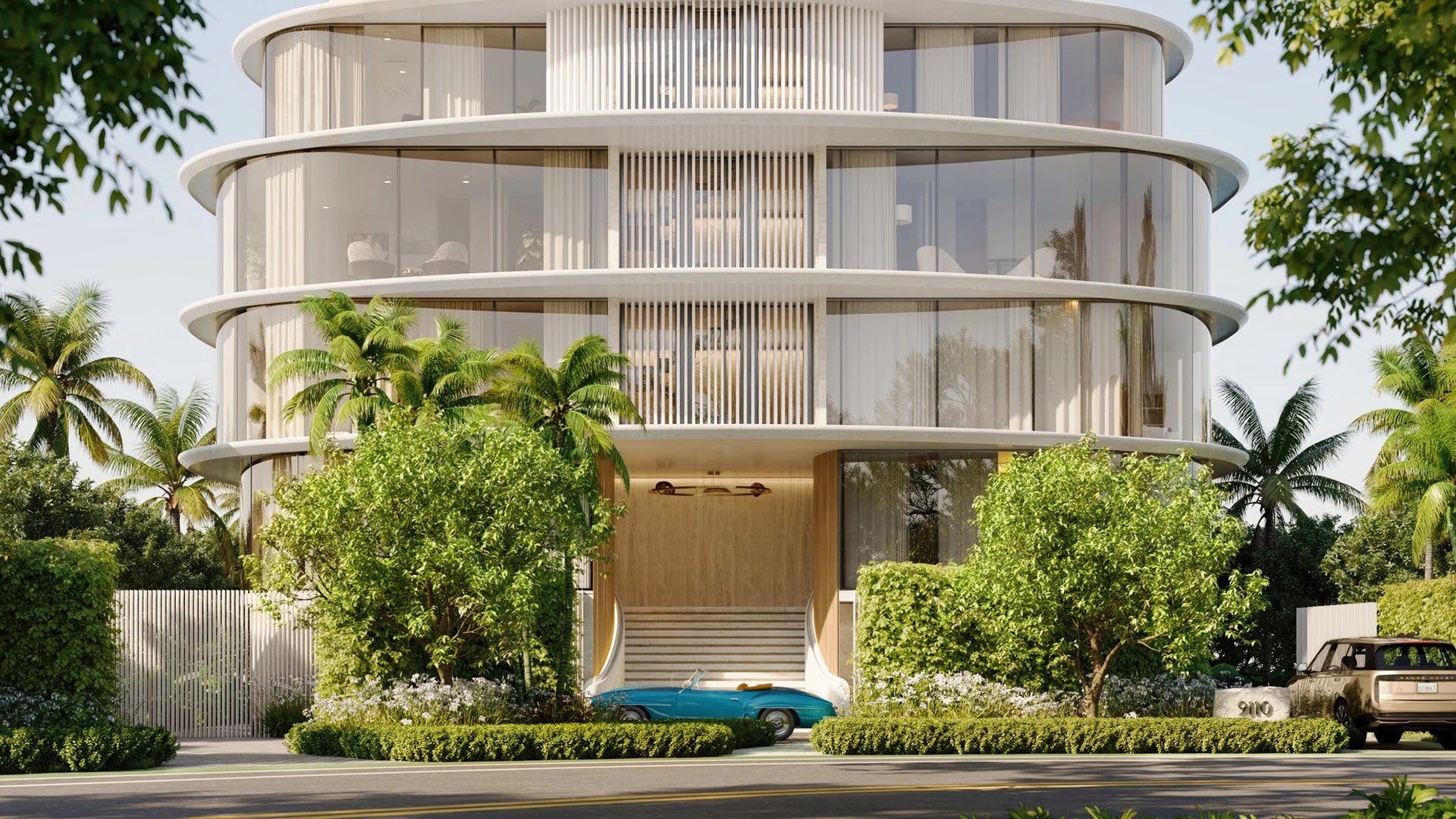
A polished porte cochere is not enough. Buyers should understand how a vehicle reaches it, how long it may remain there, and whether an outbound resident can bypass an inbound queue. Apply the same scrutiny to service vehicles and household staff.
Hotel-associated living can offer an appealing service culture, but buyers should examine the physical and operational boundaries between hospitality and residential use. When considering Four Seasons Hotel & Private Residences Fort Lauderdale or The Ritz-Carlton Residences® Fort Lauderdale, ask precisely which arrival areas, parking procedures, elevators, and back-of-house routes are dedicated to residents.
The essential questions are practical. Can hotel guests enter the residential lobby? Does residential valet operate from a separate queue? Are resident vehicles staged independently? Is there a protocol for private drivers, security teams, large luggage transfers, or multiple vehicles arriving together?
Request written clarification wherever possible. Verbal assurances may describe the intended experience; operating documents reveal how responsibilities are assigned.
A drive-time estimate cannot reveal whether a single blocked turn, full valet lane, or crowded pickup point changes the entire arrival. Visit the property by car from the directions you expect to use most often. Repeat the exercise as a passenger with a driver, then walk the final approach.
Test both entry and departure. A building may be easy to reach but difficult to leave if its only practical exit feeds into concentrated activity. Buyers who travel frequently should also consider whether household members, staff, guests, and transportation providers can reliably find the correct residential entrance without entering hotel circulation.
Compare multiple Fort Lauderdale waterfront addresses through the same route-testing exercise. The objective is not to declare one address universally superior, but to identify which circulation pattern best matches the buyer's routine.
Waterfront ownership often makes arrival by water part of the lifestyle conversation, but it does not eliminate land-side due diligence. Buyers focused on a waterfront residence should ask how marina activity, event visitors, deliveries, and private vehicles interact around the property.
At St. Regis® Residences Bahia Mar Fort Lauderdale, as with any residence considered for its relationship to boating, buyers should request a clear explanation of residential access during high-activity periods. Avoid assumptions based solely on proximity to the water or the apparent width of surrounding roads.
Also ask whether pedestrian flows pass directly beside the residential entrance, whether temporary barriers can alter drop-off procedures, and whether marine-oriented service activity shares any approach with residents.
A serious access review should address policy, staffing, and accountability. Ask for direct answers to the following:
Which entrances are legally or operationally dedicated to residents?
Who manages traffic during major events?
Can valet staffing be increased, and who bears the cost?
Is there an alternate resident route if the primary entrance is obstructed?
How are deliveries, contractors, and household staff scheduled?
Are temporary access credentials required?
How are guest vehicles handled when parking demand rises?
Who communicates operating changes to owners?
Speak with building management when possible, not only the sales representative. Review association materials, parking rights, access easements, valet terms, guest policies, and any provisions governing shared facilities. Counsel can help determine whether a promised convenience is documented or discretionary.
The relevant cost is not limited to minutes spent in a vehicle. Repeated uncertainty may affect dinner reservations, airport departures, staff schedules, guest arrivals, and the ease of using a second home spontaneously. For some owners, proximity to the show is the priority. For others, a quieter route and greater separation from hotel traffic may carry more value.
This is where a broader Broward comparison becomes useful. Evaluate each candidate using the same scorecard: exclusivity of arrival, number of viable routes, clarity of event procedures, valet resilience, pedestrian exposure, and ease of service access. Consistent criteria produce a more meaningful comparison than promotional language or a single test drive.
Before signing, put unresolved access questions in writing. Ask for the governing provision, plan, or policy supporting each answer. If an issue materially affects the decision, discuss appropriate contract language and review periods with qualified counsel.
The best residence is not necessarily the one farthest from activity. It is the one whose operations align with the owner's expectations for privacy, predictability, and service. Event-week mobility should be evaluated alongside views, finishes, amenities, and carrying costs, because arrival is part of the luxury experience.
Should I avoid residences near the Fort Lauderdale International Boat Show? Not automatically. Focus on documented access procedures, route options, and separation between residential and visitor circulation.
Is a separate residential entrance enough? No. Confirm whether the approach, valet queue, parking access, elevators, and service routes are also separated.
When should I test-drive the route? Test it under more than one traffic condition, repeating both arrival and departure from the directions you expect to use.
What should I ask the valet operator? Ask about queue management, resident priority, vehicle staging, staffing changes, private drivers, and alternate procedures.
Do hotel-branded residences always share hotel traffic? Do not assume either way. The degree of separation depends on the property's physical plan and operating rules.
What documents can clarify access rights? Review governing documents, parking provisions, access easements, valet terms, guest rules, and shared-facility agreements with counsel.
How should second-home buyers assess traffic risk? Consider whether guests, staff, delivery personnel, and drivers can navigate the property easily when the owner is away.
Does water access solve land-traffic concerns? No. Even boating-oriented owners may rely on vehicles for guests, provisioning, services, and everyday transportation.
Should event procedures be confirmed in writing? Yes. Written policies and governing provisions are more useful for due diligence than informal descriptions of intended operations.
What is the most important comparison metric? Prioritize predictable access: a clear route, controlled arrival, accountable management, and a credible backup plan.
For a tailored shortlist and next-step guidance, connect with MILLION.
If branded residences are on your mind — as a home or as an allocation — we would be glad to share what we are seeing, privately.
Begin a quiet conversation