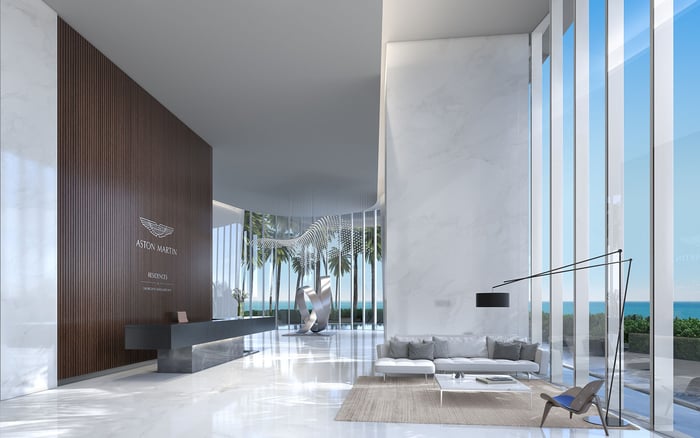
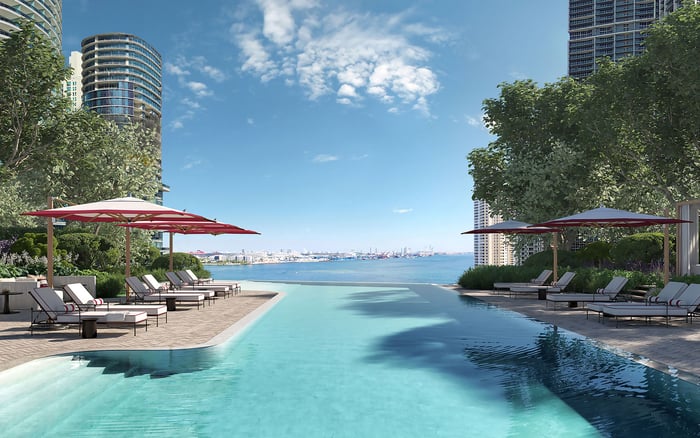
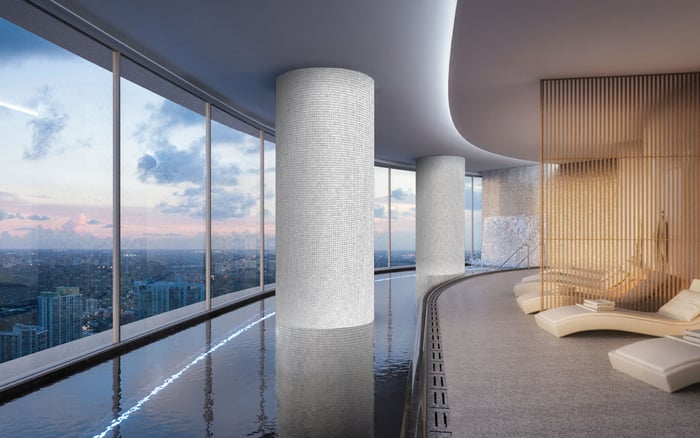
A buyer-oriented look at how Mila Bay Harbor Islands can be evaluated through privacy, island context, boutique scale, and quieter design cues that support a calmer South Florida luxury routine.
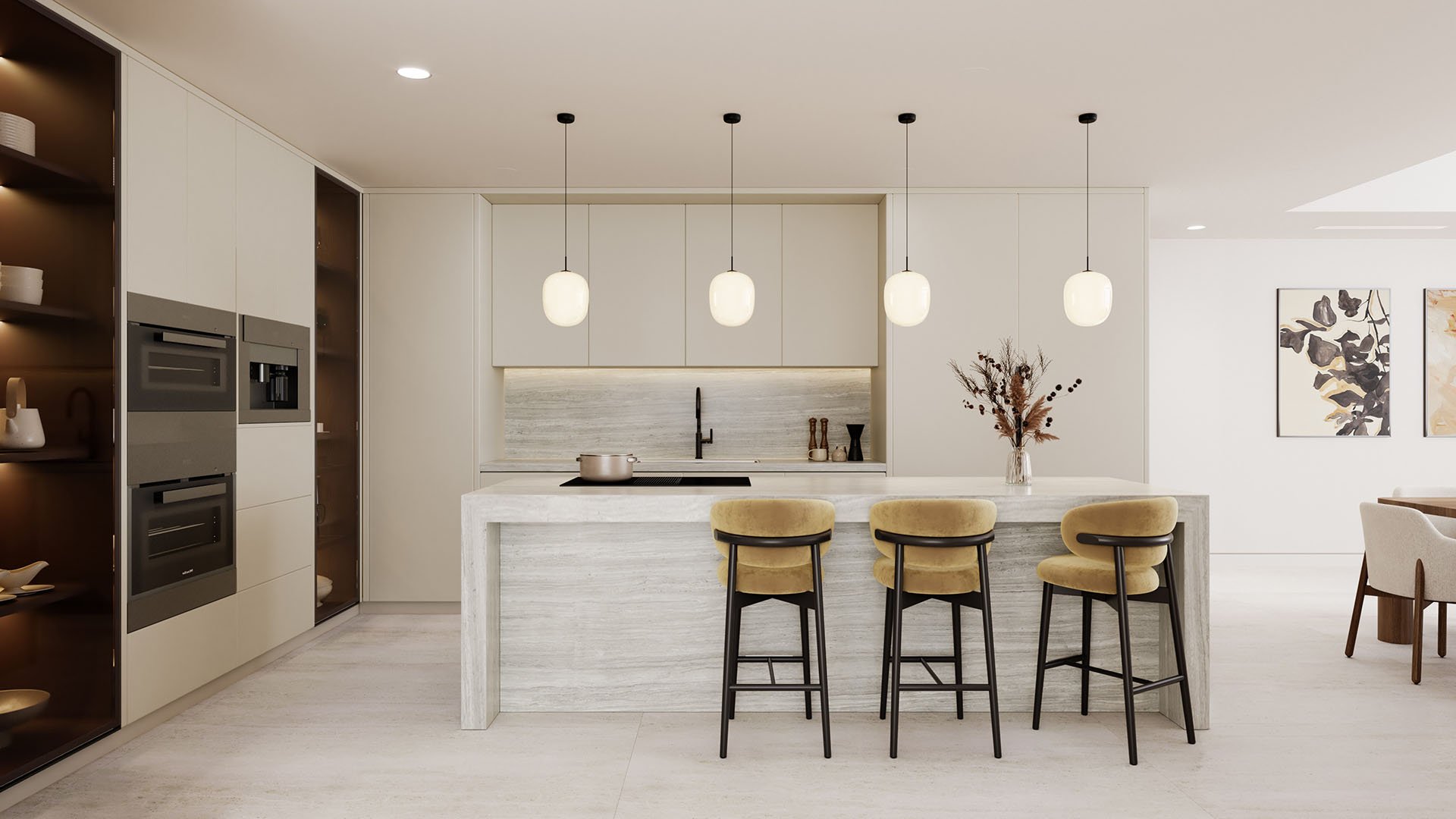
Mila Bay Harbor Islands belongs to a subtler chapter of South Florida residential design. Rather than echoing the high-intensity skyline language of Brickell, Downtown Miami, or Edgewater, the building is best understood through a quieter daily proposition: privacy, calm, and a routine that feels easier to control.
That distinction matters for buyers who already understand Miami’s more theatrical version of luxury. The city can deliver spectacle, nightlife, resort-scale amenities, and kinetic vertical living. Mila’s appeal is different. It is less about being seen and more about preserving time, reducing sensory load, and making the ordinary parts of the day feel composed.
In that sense, Mila Bay Harbor Islands reads as a residential counterpoint to destination-driven condominium living. Its promise is not built on excess activity. It is built on the possibility that a home can make arrivals calmer, transitions smoother, and private time more protected.
The first design decision is not inside the building at all. It is the location. Bay Harbor Islands gives Mila a more residential island context than Miami’s central business districts, with a setting that naturally separates daily life from heavier traffic, nightlife, and constant pedestrian intensity.
For a certain buyer, that buffer is the amenity. The experience of leaving home, returning after dinner, or hosting quietly is shaped by the neighborhood before it is shaped by finishes. Bay Harbor Islands offers proximity to major lifestyle anchors without requiring residents to live inside the pulse of a tourist or nightlife district.
The relationship to Bal Harbour adds to the appeal. Residents can remain near an established luxury corridor while keeping home more discreet and residential. That balance is one reason the area has become a natural setting for boutique projects such as Alana Bay Harbor Islands and other buildings that speak to privacy rather than scale.
Boutique is often used as a marketing adjective, but in a residential building it has practical consequences. Fewer residents can mean less circulation, fewer competing schedules, and a more controlled rhythm in shared spaces. At Mila, boutique positioning supports the idea that luxury is not only what a building offers, but how often residents must negotiate it.
Large resort-style condominium towers can be extraordinary, but they may also create their own daily intensity. Elevators, arrivals, amenities, guests, staff patterns, and service movements all shape the lived experience. A quieter building seeks to reduce friction rather than amplify activity.
This is where Mila’s residential focus becomes most relevant. The project is positioned for buyers who value stability, discretion, and neighborhood continuity over spectacle. It is not an argument against high-energy Miami living. It is an argument for choosing the right tempo.
That same preference appears across Bay Harbor Islands, where projects such as Bay Harbor Towers reinforce the area’s appeal to buyers who want a composed island routine rather than a constant resort atmosphere.
Quiet luxury is often misunderstood as minimalism. At this level, it is more precise than that. It is control over noise, time, visibility, and sensory input. A private arrival can be as meaningful as a view. A well-organized path from residence to amenity can matter as much as the amenity itself.
Mila’s quieter routine is tied to the way internal organization, circulation, and amenity planning can contribute to calmer use. Without relying on exaggerated claims, the concept is clear: the building is best evaluated as residential first. Movement through the property should support privacy and predictability rather than constant exposure.
This is especially important for buyers who split time across several homes, work irregular schedules, or simply prefer not to feel that every return home is an event. A calmer building does not need to be empty or austere. It needs to be intelligently paced.
The visual language of luxury is easy to understand. Stone, glass, lighting, and scale all communicate immediately. The quieter side of luxury is harder to photograph, but often more important to live with. Buyers considering Mila may look closely at how materials, layout, lighting, and acoustic comfort affect the daily experience.
For the end user, this can translate into a residence that feels less interrupted. Sound, glare, circulation, and visual clutter all affect how a home functions over months and years. The more sophisticated buyer is often not asking for more stimulation. They are asking for fewer unnecessary intrusions.
That is why Mila’s concept depends on both macro and micro choices. The macro choice is Bay Harbor Islands itself, a residential island community rather than a dense nightlife district. The micro choices are the internal planning and design decisions that buyers may assess for privacy, quieter movement, and calmer daily use.
The same buyer may also compare Mila’s mood with wellness-oriented island living at The Well Bay Harbor Islands, where lifestyle priorities are similarly tied to routine, restoration, and residential calm.
Mila is best understood through the buyer who does not need a building to perform. This resident may appreciate design, service, and address, but does not want daily life dominated by spectacle. The value is in discretion, not volume.
For families, couples, or individuals seeking predictability, the quieter-luxury proposition can be especially compelling. It supports routines built around wellness, contemplation, privacy, and control. It also aligns with a broader South Florida preference among some affluent buyers for calmer enclaves rather than the most visible trophy addresses.
Bay Harbor Islands makes that choice practical. It is residential, established, and close to key coastal destinations, yet it does not replicate the density of Brickell, Downtown Miami, or Edgewater. In this context, Mila becomes less a single building statement and more a lifestyle filter.
Nearby residential options such as Onda Bay Harbor further illustrate the island’s position in the market: intimate, refined, and oriented toward buyers who want calm without unnecessary noise. Waterfront appeal is important in South Florida, but in Bay Harbor Islands the deeper value is often the controlled pace around it.
Mila Bay Harbor Islands should be evaluated less like a spectacle tower and more like an instrument for daily ease. Its luxury is measured in privacy, quieter circulation, lower-density surroundings, and a residential program that does not require constant performance.
That makes it particularly relevant for buyers who already know Miami and are refining their priorities. The question is not whether a building has enough visual impact. The question is whether it protects the day. Mila’s answer is a quieter one, and for the right buyer, that may be the point.
What makes Mila Bay Harbor Islands different from a high-intensity Miami tower? Mila is positioned around privacy, calm, and daily livability rather than the energy of a dense urban tower setting.
Is Bay Harbor Islands considered lower density than Brickell or Downtown Miami? Bay Harbor Islands offers a more residential setting compared with central Miami neighborhoods such as Brickell and Downtown Miami.
Why does boutique scale matter for residents? Boutique scale can reduce daily friction by limiting circulation, crowding, and the number of competing resident routines.
Is Mila focused more on quiet luxury than visual spectacle? Yes. The project’s quieter-luxury idea emphasizes control over noise, time, privacy, and sensory input.
Does the island location help with privacy? The Bay Harbor Islands setting can help create a more private arrival and departure experience than denser business districts.
Who is the likely buyer for Mila Bay Harbor Islands? Mila is positioned for buyers who value stability, discretion, wellness, and neighborhood continuity over destination-style spectacle.
How does Mila relate to the broader Bay Harbor Islands market? It fits within an island residential market where boutique buildings often appeal to buyers seeking calm and privacy.
Is the building’s internal planning part of the quiet-luxury concept? Yes. Circulation and amenity planning are part of how buyers may evaluate whether the building supports a calmer daily routine.
Are materials and acoustics relevant to Mila’s appeal? Yes. Materials, lighting, layout, and acoustic comfort can influence whether a residence feels calm over time.
Is Mila better understood as a primary residence or retreat? It can appeal to either use, especially for buyers who want a predictable, private routine in a residential island setting.
For a confidential assessment and a building-by-building shortlist, connect with MILLION.
If branded residences are on your mind — as a home or as an allocation — we would be glad to share what we are seeing, privately.
Begin a quiet conversation