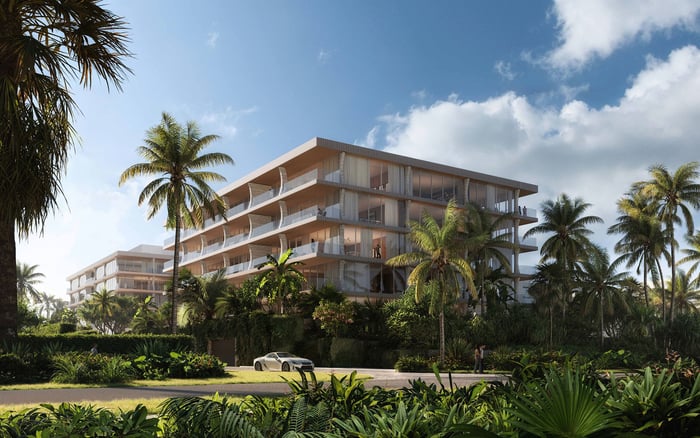
For Geneva buyers considering Palm Beach as a primary residence, the opportunity is real but layered. Florida’s income-tax profile, homestead rules, U.S. federal residency tests, Swiss tax residence, and estate planning should be coordinated before a purchase becomes a life decision.

For a Geneva family looking toward Palm Beach, the phrase “primary residence” can sound deceptively simple. In real estate, it often describes the home where life is centered: where wardrobes remain, guests arrive, and the calendar begins to orbit. In law and tax, the analysis is more exacting. Florida domicile, Florida homestead status, U.S. federal income tax residency, and Swiss tax residence are separate questions, and they can point in different directions.
That distinction is the foundation of prudent planning. South Florida can be highly attractive because Florida does not levy a state personal income tax on individuals. Yet a move from Geneva to Palm Beach is not merely a change in weather, architecture, and club routine. It may also bring U.S. worldwide-income taxation, foreign-account reporting, homestead decisions, and estate and gift tax considerations.
For buyers browsing Palm Beach Residences or considering a more urban base such as Alba West Palm Beach, the most valuable question is not simply “Can this be my primary home?” It is “What facts will support that position across every relevant system?”
Palm Beach offers a rare combination of privacy, year-round outdoor living, international air access, waterfront lifestyle, and mature wealth infrastructure. For Geneva buyers accustomed to discretion, banking sophistication, family offices, private schools, art, philanthropy, and wellness, the transition can feel culturally intuitive.
The tax contrast is also meaningful. Swiss residents are generally subject to tax on income and assets, while Florida does not impose state personal income tax on individuals. That does not mean a Palm Beach address automatically eliminates Swiss obligations or avoids U.S. federal taxation. It means the state-level framework can be favorable when the broader plan is coherent.
Residency should be treated as planning architecture, not a marketing label. A residence at Forté on Flagler West Palm Beach, a Palm Beach house, or a nearby Boca Raton home may suit different family rhythms, but each should be evaluated through the same disciplined lens: days, intent, documents, financial ties, family location, and reporting positions.
Calling a South Florida home a primary residence does not, by itself, determine U.S. federal tax residency. For non-citizens, U.S. resident alien status generally arises through either the green card test or the substantial presence test.
The substantial presence test is especially important for seasonal buyers. It requires at least 31 days in the United States during the current year and 183 weighted days over a three-year lookback period. The formula counts all U.S. days in the current year, one-third of the prior year’s U.S. days, and one-sixth of the second-prior year’s U.S. days. As a result, recurring winter seasons can create U.S. tax residency even if the buyer never spends a full six months in the United States in a single year.
Once a buyer becomes a U.S. resident alien, worldwide income is generally taxed in a broad manner similar to that of a U.S. citizen. For Geneva families with private companies, portfolios, trusts, foundations, foreign accounts, or multi-jurisdictional structures, that shift can be significant. The analysis should be completed before occupancy patterns become routine.
A Geneva buyer who becomes a U.S. tax resident may need to report foreign financial accounts if aggregate account values exceed the applicable threshold. U.S. taxpayers may also have reporting obligations for specified foreign financial assets, with thresholds depending on filing status and residence.
These rules matter because wealth that remains in Switzerland may become visible in a U.S. reporting context once U.S. tax residency is triggered. The issue is not whether the assets were moved to Florida. The issue is whether the person became subject to U.S. taxpayer reporting obligations.
For buyers choosing between a private island-style environment and city convenience, the lifestyle decision may be immediate. The reporting decision is technical. A residence such as The Ritz-Carlton Residences® West Palm Beach may support a refined local life, but the international balance sheet still needs coordinated treatment.
Florida homestead status is often misunderstood by high-net-worth seasonal owners. The homestead exemption is tied to a property being the owner’s permanent residence, not merely a beautiful second home or preferred winter address. For qualifying permanent residences, the exemption can reduce taxable value by up to $50,000, although the second $25,000 portion does not apply to school taxes.
The more powerful long-term feature may be the Save Our Homes assessment limitation. For homestead property, annual increases in assessed value are capped at the lower of 3% or the change in the Consumer Price Index. In markets where values can rise materially over time, that assessment stability can become a meaningful ownership benefit.
Florida’s constitutional homestead protection may also protect a qualifying homestead from forced sale by many creditors, subject to acreage limits and exceptions. For buyers with operating companies, global investments, or family governance concerns, this protection deserves careful review. Investment planning and asset protection planning are related, but they are not the same conversation.
A Florida declaration of domicile can help evidence an intention to make Florida the permanent home. It should not be treated as a magic certificate. The filing should align with actual conduct, including where the buyer spends time, where family life is centered, where important documents point, where vehicles and licenses are maintained, and how financial and civic ties are organized.
Voter registration, driver’s license changes, club memberships, school enrollment, banking relationships, medical providers, and estate planning documents can all be evidence. None should stand alone. The strongest position is a consistent factual pattern.
Waterfront buyers often focus on dockage, views, security, and service. Those preferences are appropriate, but the residency file should be built with equal care. If the home is meant to be permanent, the buyer’s life should begin to look permanent in Florida.
A buyer leaving Geneva should not assume Swiss residence disappears the day a Florida closing occurs. Swiss residence analysis remains important because Swiss residents are generally subject to tax on income and assets. If both Switzerland and the United States claim tax residency, the U.S.-Switzerland income tax treaty may become relevant, but treaty positions require careful analysis and proper filings.
The practical takeaway is coordination. Immigration planning, tax residence, family governance, entity ownership, trust structures, and estate plans should be reviewed together. A buyer considering The Residences at Mandarin Oriental Boca Raton as a quieter South Florida base may have the same cross-border issues as a buyer choosing Palm Beach proper.
U.S. estate and gift tax rules can also affect international buyers, particularly when a non-U.S. person acquires U.S. real estate directly or through an entity. Title structure should be addressed before signing, not after the first tax filing season.
The right Palm Beach primary-residence strategy begins with intention, but it is proven by facts. How many days will be spent in the United States? Will the buyer seek U.S. immigration status? Where will the spouse or children live? Will Swiss residence continue? What foreign accounts, entities, and assets could become reportable? Should the property qualify for Florida homestead? How should the asset be titled for estate and gift tax purposes?
For Geneva buyers, South Florida can be a superb platform for family life, capital preservation, and lifestyle continuity. The opportunity is strongest when the legal architecture is as considered as the residence itself.
Does buying in Palm Beach make me a Florida resident? Not by itself. Florida domicile depends on intent supported by conduct, while U.S. federal tax residency is determined under separate federal tests.
Does Florida tax individual income? Florida does not levy a state personal income tax on individuals, which is one reason the state appeals to international and domestic buyers.
Can seasonal stays trigger U.S. tax residency? Yes. The substantial presence formula can create U.S. tax residency through recurring stays over a three-year period.
What is the substantial presence day count? It generally requires at least 31 U.S. days in the current year and 183 weighted days over the current and prior two years.
Are U.S. resident aliens taxed on worldwide income? Generally, yes. U.S. resident aliens are broadly taxed on worldwide income in a manner similar to U.S. citizens.
Does Florida homestead apply to a second home? Homestead is tied to a permanent residence, not simply a luxury second home or seasonal address.
What is the Save Our Homes benefit? For homestead property, annual assessed-value increases are limited to the lower of 3% or the change in the Consumer Price Index.
Can a declaration of domicile prove Florida residence? It can help evidence intent, but it should match actual facts such as time spent, family location, documents, and financial ties.
Can Switzerland still treat me as resident after I buy in Florida? It may, depending on the facts. Swiss residence analysis should be coordinated before shifting life and assets toward Palm Beach.
Should title structure be reviewed before purchase? Yes. U.S. estate and gift tax rules can affect international buyers, so ownership structure should be planned before closing.
To compare the best-fit options with clarity, connect with MILLION.
If branded residences are on your mind — as a home or as an allocation — we would be glad to share what we are seeing, privately.
Begin a quiet conversation