A buyer-focused guide to assessing resale liquidity in specialized Hallandale Beach buildings, from buyer depth and floor-plan universality to pricing discipline, rental policy, and exit strategy.

In Hallandale Beach, the most compelling purchase is rarely judged by view alone. For a buyer entering a specialized building, whether boutique, branded, wellness-led, club-oriented, or architecturally distinctive, the central question is not simply whether the residence feels exceptional today. It is whether a deep enough pool of future buyers will understand and value those same qualities when it is time to resell.
Resale is not a secondary concern. It is part of the purchase architecture. A residence may be exquisitely finished, beautifully private, and emotionally persuasive, yet still require a narrower buyer than a more universally configured home. That does not make it a poor acquisition. It means the buyer should underwrite liquidity with the same care used to evaluate design, service, and waterfront exposure.
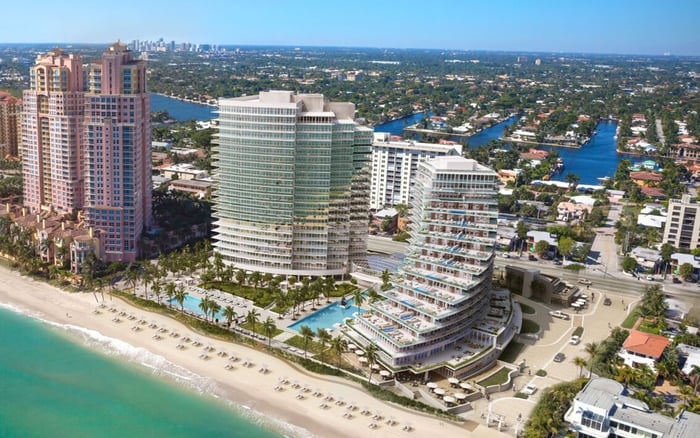
Hallandale Beach sits in a competitive luxury corridor, with buyers often comparing the city against Sunny Isles Beach, Hollywood, Aventura, Fort Lauderdale, Pompano Beach, and Miami Beach. That comparison set matters. A buyer considering 2000 Ocean Hallandale Beach should think beyond the residence itself and ask how the building’s resale story will read beside nearby options as inventory changes.
Before evaluating liquidity, define the specialization. Is the building specialized because of limited inventory, unusually large residences, a hospitality component, club-style amenities, architectural identity, strict use policies, high service intensity, or a particular lifestyle concept? Each category attracts a different future buyer.
A boutique building can be highly liquid when it offers privacy, manageable governance, and layouts that suit both primary and seasonal owners. It can be less liquid when the building’s identity is so personal that only a small audience can imagine living there. The same is true of branded and amenity-rich properties. The name may attract attention, but the monthly cost, rules, and lifestyle fit still determine who remains in the buyer pool.
The strongest specialized buildings usually combine distinction with legibility. A future buyer should be able to understand the value in one showing: the floor plan lives well, the service model is coherent, the building’s identity is clear, and the total cost of ownership feels defensible against comparable residences.
The easiest liquidity mistake is assuming the future buyer will want exactly what you want. A collector may prize dramatic entertaining space. A seasonal owner may prefer lock-and-leave simplicity. A family may need secondary bedrooms with real privacy. A relocating executive may focus on commute patterns and ease of daily living.
When a residence is highly specific, the buyer pool narrows. A heavily customized layout, unusual room allocation, dramatic but impractical finishes, or a terrace that dominates the interior logic can create admiration without urgency. The question is simple: if you removed your own preferences from the equation, how many qualified buyers would still compete for the home?
This is particularly important in Hallandale, where waterfront, golf, club, and ocean-oriented lifestyles can overlap but do not always attract the same buyer. A residence tied to a very particular rhythm of living should be priced and negotiated with that future selectivity in mind. The more specialized the experience, the more disciplined the entry basis should be.
Resale liquidity is shaped by substitutes. A future buyer may tour Hallandale Beach, then compare the residence with Sunny Isles, Pompano Beach, Fort Lauderdale, or Miami Beach. That buyer may care less about municipal boundaries than privacy, views, services, parking, outdoor space, and the sense of arrival.
This is why cross-market comparison is essential. A buyer looking at Shell Bay by Auberge Hallandale may also consider other specialized offerings in neighboring luxury markets. The exercise is not to declare one superior. It is to understand how each property explains its value to a future buyer.
If a Hallandale Beach residence commands a premium, the reason should be durable. A fleeting finish package, a fashionable amenity, or a one-time emotional response is not enough. Durable premiums tend to come from scarce orientation, intelligent plans, privacy, service quality, parking convenience, outdoor usability, and a building identity that remains desirable after the initial launch energy has faded.
Liquidity often begins at the front door. A strong plan reads immediately. The entry has purpose, the living area has proportion, bedrooms are sensibly separated, storage is adequate, and outdoor space enhances the home rather than compensating for a weakness inside.
Specialized buildings sometimes create unusual residences. That can be a virtue, but only when the plan still supports normal life. Buyers should be cautious with homes that depend on one dramatic feature while compromising everyday function. A future purchaser may admire the drama, then choose a simpler plan elsewhere.
Look closely at bedroom count, bathroom access, den usability, kitchen placement, service areas, elevator arrival, and the relationship between view and furniture layout. A residence that photographs well is not automatically liquid. A residence that lives well has a broader audience.
A building’s rules can either widen or narrow resale demand. Rental policy, pet policy, guest access, renovation procedures, parking assignment, service expectations, and governance culture all affect who can buy comfortably. Long-term rentals may appeal to some investors, while strict owner-use expectations may appeal to buyers seeking quiet residential character. Neither is inherently better. The key is alignment between policy and the likely future buyer.
Cost perception is equally important. Sophisticated buyers rarely look only at asking price. They consider assessments, monthly dues, insurance environment, reserve posture, service levels, and the cost of maintaining a residence at the expected standard. If the total ownership cost feels high, the building must offer a corresponding lifestyle advantage that is easy to articulate.
For investment-minded buyers, liquidity is not just the ability to sell. It is the ability to sell without relying on a perfect market. A disciplined acquisition assumes that the exit may occur during a less enthusiastic cycle, when buyers scrutinize costs and comparable options more aggressively.
The best resale strategy is often established before contract. A buyer who overpays for specialization may need years of market appreciation simply to recover flexibility. By contrast, a buyer who negotiates with future liquidity in mind can enjoy the residence while preserving more optionality.
Entry basis should reflect scarcity, condition, view, plan quality, building reputation, and the depth of the future audience. If the home requires a buyer with a very particular taste profile, that should influence the price. If the residence has broad appeal within a distinctive building, it may justify a firmer stance.
Resale discipline also means avoiding over-customization. Improvements should elevate the home without making it too personal. Neutral luxury, enduring materials, excellent lighting, and refined storage tend to travel well from one ownership cycle to the next.
A buyer does not need to become distracted by every new project in South Florida, but selective comparison is useful. In Pompano Beach, Armani Casa Residences Pompano Beach gives buyers another lens on branded waterfront living. In Sunny Isles Beach, Bentley Residences Sunny Isles offers a separate reference point for how a distinctive concept may attract a defined audience.
These comparisons help a Hallandale Beach buyer ask sharper questions. Is the subject residence easier to understand? Is its value more private, more service-driven, more location-driven, or more design-driven? Does it compete on calm discretion, resort energy, brand identity, scale, or access? The clearer the answer, the stronger the resale narrative.
A proper exit plan is not pessimistic. It is professional. Before purchasing, identify the likely resale audience, the probable competing buildings, the upgrades that would preserve value, and the conditions under which you would choose to sell or lease.
This is especially important in a specialized building because marketing time can depend on matching the residence to the right buyer rather than the first buyer. The residence may be rare, but rarity alone is not liquidity. Liquidity comes from rarity that the market recognizes, values, and can finance or justify with confidence.
The most intelligent Hallandale Beach purchase balances desire with restraint. Buy the residence that improves daily life, but do so with a clear understanding of how the next buyer will evaluate the same decision.
What does resale liquidity mean in a specialized building? It means how readily a residence can attract qualified buyers and sell at a defensible price when the owner chooses to exit.
Is a specialized building automatically harder to resell? Not necessarily. Specialization can strengthen demand when the concept is clear, the plan is usable, and the ownership cost feels justified.
Why does floor-plan flexibility matter so much? Flexible plans appeal to more buyer types. A beautiful but overly specific layout can limit urgency at resale.
Should buyers prioritize view or layout? Both matter, but a strong layout usually protects value more consistently. A view premium is strongest when the residence also lives well.
How should buyers think about boutique buildings? Boutique properties can be highly desirable when privacy and governance feel refined. Buyers should still test whether the future audience is broad enough.
Do rental policies affect resale liquidity? Yes. Rental rules influence investor demand, seasonal-owner flexibility, and the overall character of the building.
Is Hallandale Beach compared with nearby markets? Yes. Many luxury buyers compare Hallandale Beach with neighboring coastal and urban submarkets before making a final decision.
Can customization reduce liquidity? It can. Highly personal finishes may impress a narrow audience while making the residence harder for others to imagine owning.
What is the most important question before purchasing? Ask who the next buyer is likely to be and whether that buyer will value the home’s specialization as much as you do.
When should an exit plan be created? Before closing. The best time to protect future liquidity is when negotiating the entry price and evaluating the building’s long-term appeal.
When you're ready to tour or underwrite the options, connect with MILLION.
If branded residences are on your mind — as a home or as an allocation — we would be glad to share what we are seeing, privately.
Begin a quiet conversation