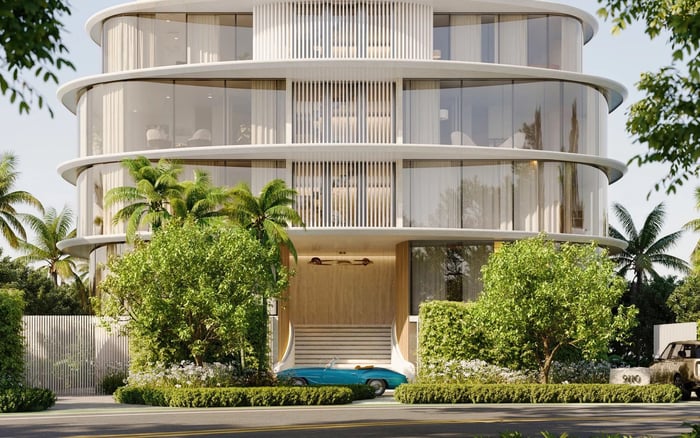
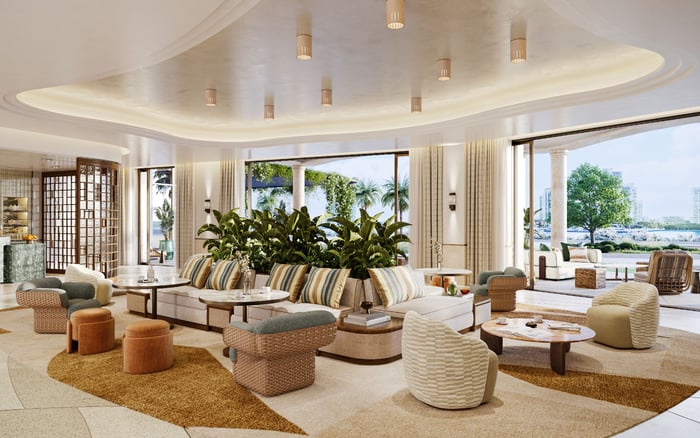
For an Aventura buyer with a meaningful art collection, the most consequential residential details may be largely invisible. A disciplined review should prioritize environmental control, lighting flexibility, storage, access, power, security, and the physical route each work must travel before decorative finishes.
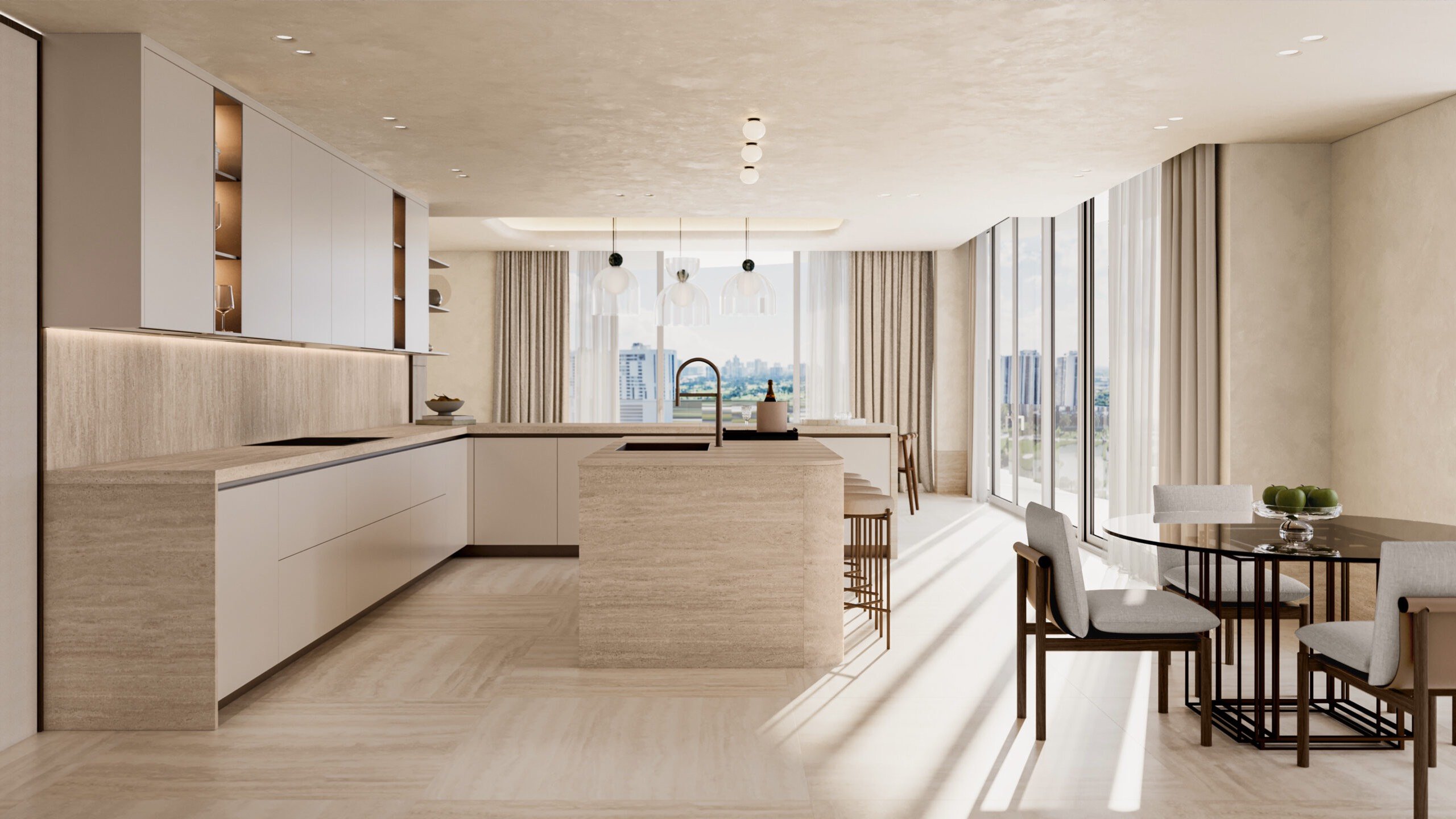
For a serious collector, a beautifully finished residence is not necessarily an art-ready one. Stone, millwork, and fixtures can be changed with relative clarity. The more consequential questions concern the conditions behind the walls and above the ceilings: where works can be stored, how they will be illuminated, whether environmental settings can be managed, and how large pieces will move from arrival to installation.
In Aventura, a disciplined purchase brief begins with the collection itself. Buyers should prepare an inventory organized by dimensions, medium, weight, framing, display preference, and storage needs. This is not a valuation exercise but a spatial-planning document, allowing an architect, art adviser, conservator, lighting designer, and building representative to identify conflicts before a contract or renovation plan becomes difficult to revise.
A second-home buyer should apply the same standard, particularly if the residence may remain unoccupied for extended periods. The question is not simply whether the rooms look composed during a showing. It is whether the home can sustain a consistent stewardship plan while the owner is elsewhere.
“Climate control” should never remain a vague amenity phrase. A collector needs to understand what can be monitored, adjusted, maintained, and documented within the specific residence under consideration. Appropriate settings depend on the works involved, so the buyer’s specialist should define the requirements rather than rely on a universal target.
Ask how the residence’s mechanical system is zoned, where sensors could be positioned, and what happens during maintenance, vacancy, or a power interruption. Determine whether a proposed art-storage room can function as intended without creating practical conflicts with doors, plumbing, service access, or daily household use. If supplemental equipment is contemplated, confirm that both the building and residence can accommodate it before plans are finalized.
Waterfront exposure may also shape the review of glazing, exterior openings, and room placement. That does not make every perimeter wall unsuitable for art. It means orientation, daylight, window treatments, and environmental monitoring should be assessed together-not as separate decorative choices.
Art lighting involves far more than selecting attractive fixtures. A useful plan begins with flexibility: different works may require distinct beam spreads, aiming positions, mounting heights, and control settings. A room suited to one installation may become restrictive when the collection rotates.
Before closing, identify likely art walls and map nearby power, switches, ceiling conditions, sprinklers, grilles, and architectural obstructions. Ask whether the lighting can be adjusted without repeatedly opening finished ceilings. Dimming, scene control, glare management, and daylight treatment should be evaluated in relation to the actual collection and alongside qualified specialists.
This is where design and architecture become operational rather than cosmetic. A restrained ceiling can conceal a carefully planned lighting strategy, while a dramatic decorative fixture may complicate sightlines or compete with the work. Buyers comparing Avenia Aventura with nearby coastal options such as Bentley Residences Sunny Isles should evaluate each available residence individually, applying the same collection-led checklist rather than assuming one specification suits every home.
Art storage is often relegated to leftover space. For a consequential collection, it should be intentionally located, appropriately secured, and planned around the dimensions and handling requirements of the works. The room must remain functional after accounting for racks, crates, packing materials, and safe working clearances.
The route to that room matters just as much. Trace the journey from the building’s designated arrival point through every door, corridor, turn, elevator, and threshold to the final display location. Measure clear openings rather than rely on nominal room dimensions. Confirm procedures for deliveries, installers, scheduling, common-area protection, and temporary staging directly with the relevant building representatives.
High floors can offer compelling outlooks, but elevation does not establish whether an oversized work can reach the residence. Likewise, a generous balcony may enrich daily life while reducing uninterrupted interior wall area. These are not defects. They are planning variables to reconcile with the collection before a buyer becomes attached to a view or floor plan.
For a broader comparison, residences at Turnberry Ocean Club Sunny Isles and Regalia Sunny Isles Beach can be approached with the same discipline: request current, residence-specific information, walk the handling route, and test proposed art locations against circulation and daylight.
A collector’s pre-closing team should distinguish essential infrastructure from discretionary decoration. The first category may include specialist assessments, electrical planning, controls, shading, security coordination, wall reinforcement, monitoring, and storage design. The second encompasses surfaces and furnishings that can be selected once the technical brief is resolved.
This order protects the design intent. It allows finished rooms to appear calm because practical requirements were addressed early rather than concealed as afterthoughts. It also gives the buyer a clearer basis for comparing residences that may look equally polished yet require very different levels of adaptation.
The strongest offer strategy is therefore informed by fit, not finishes alone. A residence need not be presented as a private gallery to serve a collector well. It needs a credible path from acquisition to installation, supported by professionals who understand the works, the home, and the building’s current rules.
Should finishes ever determine the choice of an Aventura residence? Yes, but only after the buyer establishes that the residence can support the collection’s environmental, spatial, lighting, and handling requirements.
Who should inspect a residence for an art collector? The team may include an architect, art adviser, conservator, lighting designer, security specialist, and other qualified professionals appropriate to the collection.
Is a spare bedroom automatically suitable for art storage? No. Its location, access, environmental management, security, usable clearances, and surrounding building systems all require review.
What should a buyer ask about lighting? Ask about aiming flexibility, dimming, controls, ceiling access, daylight treatment, power locations, and compatibility with the planned installation.
Why measure the delivery route before closing? A floor plan does not establish whether a large work can pass through elevators, doors, corridors, turns, and thresholds.
Can art be displayed near windows? That decision should reflect the work, orientation, glazing, shading, room conditions, and guidance from the buyer’s specialists.
Does a smart-home system solve collection monitoring? Not by itself. Buyers should verify what is measured, how alerts work, who receives them, and what response plan follows.
What should absentee owners prioritize? They should establish monitoring, maintenance, access, emergency, and communication protocols suited to the residence and collection.
Should building rules be reviewed before designing an installation? Yes. Confirm current procedures for deliveries, contractors, common-area protection, work hours, approvals, and any proposed modifications.
What is the best first step for a collector buying in Aventura? Create a collection-led brief, then test each residence against it before allowing decorative appeal to drive the decision.
If you'd like a private walkthrough and a curated shortlist, connect with MILLION.
If branded residences are on your mind — as a home or as an allocation — we would be glad to share what we are seeing, privately.
Begin a quiet conversation